Jennifer Maddocks – författare
Visar alla böcker från författaren Jennifer Maddocks. Handla med fri frakt och snabb leverans.
4 produkter
4 produkter
Inbunden, Engelska, 2026
1 358 kr
Kommande
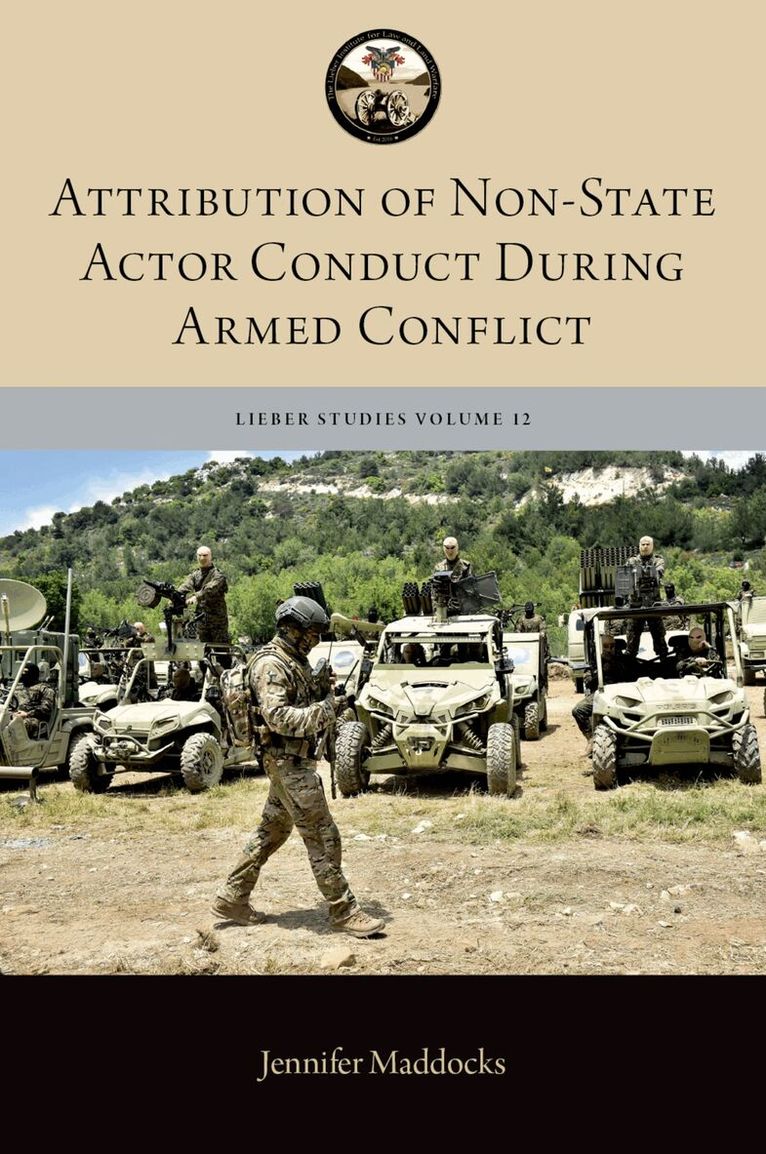
Armed conflict today involves a plethora of non-State actors including armed groups, private military companies, and hackers operating in the cyber domain. Frequently, these non-State actors act in a way that violates international law, for example by harming civilians, and they commonly act with the benefit of some form of State support. This raises critical questions about State responsibility. Attribution of Non-State Actor Conduct During Armed Conflict explores when and how international law attributes non-State actor conduct to a State, thereby triggering that State's international responsibility. Focusing on the six rules of attribution outlined in the International Law Commission's Articles on State Responsibility, the book provides a rigorous analysis of their practical application in the context of armed conflict. Using detailed case studies from the conflicts in Syria, Ukraine, and the Democratic Republic of the Congo, it examines each of the rules of attribution in turn, demonstrates when they would apply, and evaluates their effectiveness in holding States accountable for non-State actor conduct performed on their behalf. Critically assessing the legal and practical limitations of existing frameworks, the book argues that the predominant interpretation of the rules of attribution leaves an accountability gap, which enables States to act via proxy in a manner they could not lawfully operate via their own State organs. Combining doctrinal clarity with real-world relevance, it investigates how the inadequacies in the regulation of States' support to non-State actors in conflict situations should be remedied.
E-bok
Engelska, 20261 288 kr
Läs direkt efter köp
Armed conflict today involves a plethora of non-State actors including armed groups, private military companies, and hackers operating in the cyber domain. Frequently, these non-State actors act in a way that violates international law, for example by harming civilians, and they commonly act with the benefit of some form of State support. This raises critical questions about State responsibility. Attribution of Non-State Actor Conduct During Armed Conflict explores when and how international law attributes non-State actor conduct to a State, thereby triggering that State's international responsibility. Focusing on the six rules of attribution outlined in the International Law Commission's Articles on State Responsibility, the book provides a rigorous analysis of their practical application in the context of armed conflict. Using detailed case studies from the conflicts in Syria, Ukraine, and the Democratic Republic of the Congo, it examines each of the rules of attribution in turn, demonstrates when they would apply, and evaluates their effectiveness in holding States accountable for non-State actor conduct performed on their behalf. Critically assessing the legal and practical limitations of existing frameworks, the book argues that the predominant interpretation of the rules of attribution leaves an accountability gap, which enables States to act via proxy in a manner they could not lawfully operate via their own State organs. Combining doctrinal clarity with real-world relevance, it investigates how the inadequacies in the regulation of States' support to non-State actors in conflict situations should be remedied.
E-bok
PDF, Engelska, 20261 288 kr
Läs direkt efter köp
Armed conflict today involves a plethora of non-State actors including armed groups, private military companies, and hackers operating in the cyber domain. Frequently, these non-State actors act in a way that violates international law, for example by harming civilians, and they commonly act with the benefit of some form of State support. This raises critical questions about State responsibility. Attribution of Non-State Actor Conduct During Armed Conflict explores when and how international law attributes non-State actor conduct to a State, thereby triggering that State's international responsibility. Focusing on the six rules of attribution outlined in the International Law Commission's Articles on State Responsibility, the book provides a rigorous analysis of their practical application in the context of armed conflict. Using detailed case studies from the conflicts in Syria, Ukraine, and the Democratic Republic of the Congo, it examines each of the rules of attribution in turn, demonstrates when they would apply, and evaluates their effectiveness in holding States accountable for non-State actor conduct performed on their behalf. Critically assessing the legal and practical limitations of existing frameworks, the book argues that the predominant interpretation of the rules of attribution leaves an accountability gap, which enables States to act via proxy in a manner they could not lawfully operate via their own State organs. Combining doctrinal clarity with real-world relevance, it investigates how the inadequacies in the regulation of States' support to non-State actors in conflict situations should be remedied.
Inbunden, Engelska, 2026
1 358 kr
Kommande
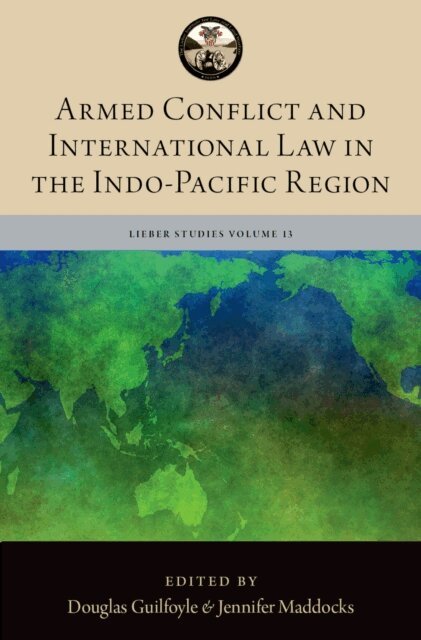
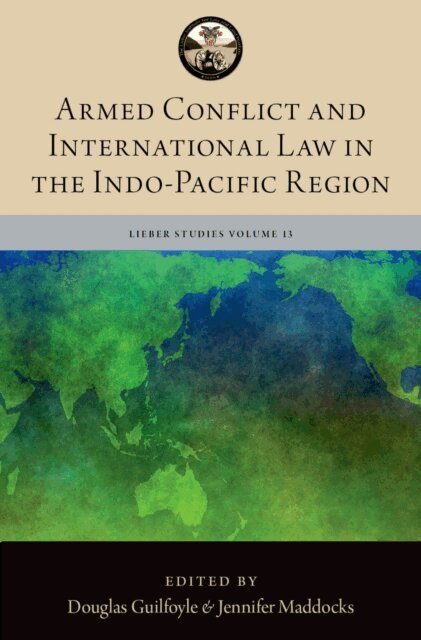
Armed Conflict and International Law in the Indo-Pacific Region provides a timely and regionally grounded analysis of how international law applies to potential armed conflict in one of the world's most strategically dynamic regions. Adopting a multi-domain approach, the volume explores the legal frameworks governing warfare across land, sea, air, space, cyber, and the information environment, while remaining attuned to the Indo-Pacific's evolving geopolitical landscape.Part I addresses foundational legal questions that may arise during any future conflict in the Indo-Pacific, including civilian protection, the law of neutrality, and the role of international law more broadly. Part II examines the legal rules guiding military operations in key domains of warfare: air, space, cyber, and the information environment. It also considers the maritime domain, highlighting the law applicable to auxiliary vessels and the weaknesses of the legal regime protecting undersea cables. Part III examines the legal implications of deepening regional cooperation, focusing on alliance politics, capability sharing, and legal interoperability, including a detailed analysis of the AUKUS security partnership. Part IV presents a focused case study on the legal issues that would arise in the event of a conflict over Taiwan.Bringing together contributions from military legal advisors, academic experts, and humanitarian practitioners, Armed Conflict and International Law in the Indo-Pacific Region combines analytical depth with practical insight. It fills a critical gap in existing scholarship, offering a comprehensive and forward-looking account of the legal challenges posed by future conflict in the Indo-Pacific.