Jennifer Peeples – författare
Visar alla böcker från författaren Jennifer Peeples. Handla med fri frakt och snabb leverans.
4 produkter
4 produkter
Inbunden, Engelska, 2016
1 299 kr
Skickas inom 10-15 vardagar
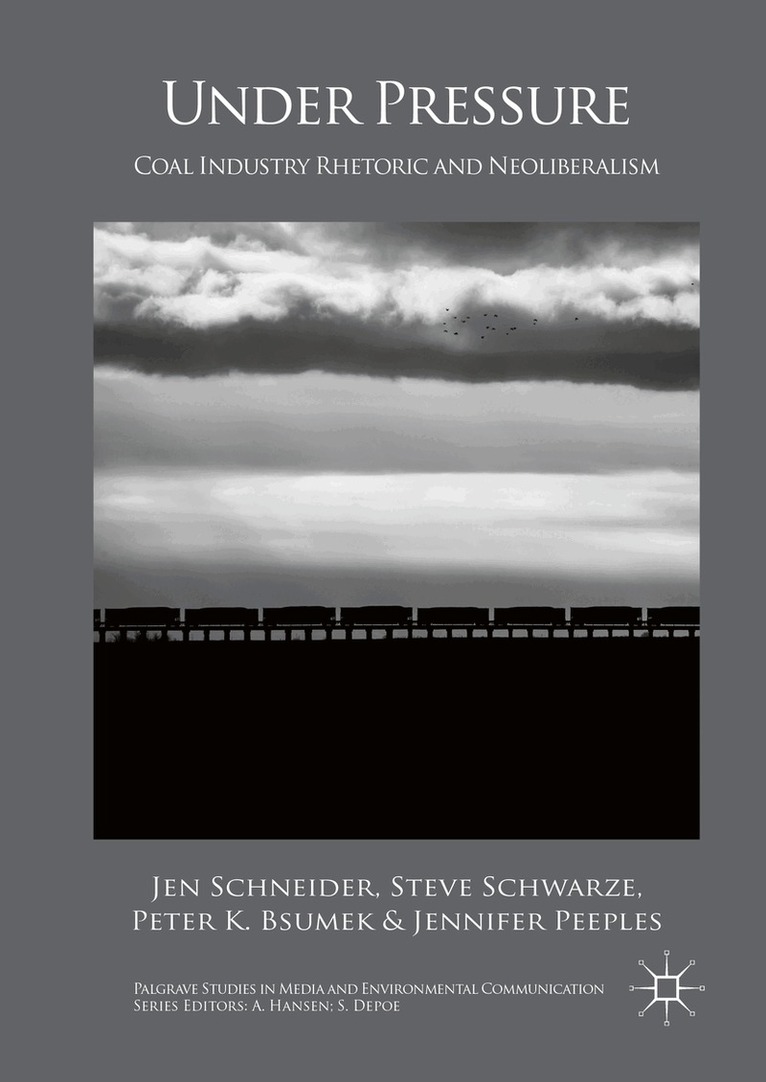
This book examines five rhetorical strategies used by the US coal industry to advance its interests in the face of growing economic and environmental pressures: industrial apocalyptic, corporate ventriloquism, technological shell game, hypocrite’s trap, and energy utopia. The authors argue that these strategies appeal to and reinforce neoliberalism, a discourse and set of practices that privilege market rationality and individual freedom and responsibility above all else. As the coal industry has become the leading target and leverage point for those seeking more aggressive action to mitigate climate change, their corporate advocacy may foreshadow rhetorical strategies available to other fossil fuel industries as they manage similar economic and cultural shifts. The authors’ analysis of coal’s corporate advocacy also identifies contradictions and points of vulnerability in the organized resistance to climate action as well as the larger ideological formation of neoliberalism.
E-bok
PDF, Engelska, 20161 733 kr
Läs direkt efter köp
This book examines five rhetorical strategies used by the US coal industry to advance its interests in the face of growing economic and environmental pressures: industrial apocalyptic, corporate ventriloquism, technological shell game, hypocrite’s trap, and energy utopia. The authors argue that these strategies appeal to and reinforce neoliberalism, a discourse and set of practices that privilege market rationality and individual freedom and responsibility above all else. As the coal industry has become the leading target and leverage point for those seeking more aggressive action to mitigate climate change, their corporate advocacy may foreshadow rhetorical strategies available to other fossil fuel industries as they manage similar economic and cultural shifts. The authors’ analysis of coal’s corporate advocacy also identifies contradictions and points of vulnerability in the organized resistance to climate action as well as the larger ideological formation of neoliberalism.
Häftad, Engelska, 2026
603 kr
Kommande
Toxins can be found in every body and every place around the globe, yet they are not always visible. Toxic Imaginary explores the multiple ways Western cultures “see” toxins. With incisive vision, Jennifer Peeples examines how individuals and societies use collective stories, images, symbols, and rituals to navigate the uncertainty of living in a toxic environment. Each chapter provides an example of everyday images that make up the Western toxic imaginary and introduces new rhetorical and environmental concepts for readers to critically engage with visual media. Peeples pays particular attention to the injustices and inequities of toxins, revealing how powerful entities use toxic images to obscure the reality that all people live in polluted spaces that are damaging to their health. As the number and potency of contaminants continues to rise, this exploration into how scientists, journalists, activists, designers, and artists make toxins visible is imperative for understanding how people engage with contaminants in their environments.
Inbunden, Engelska, 2026
1 426 kr
Kommande
Toxins can be found in every body and every place around the globe, yet they are not always visible. Toxic Imaginary explores the multiple ways Western cultures “see” toxins. With incisive vision, Jennifer Peeples examines how individuals and societies use collective stories, images, symbols, and rituals to navigate the uncertainty of living in a toxic environment. Each chapter provides an example of everyday images that make up the Western toxic imaginary and introduces new rhetorical and environmental concepts for readers to critically engage with visual media. Peeples pays particular attention to the injustices and inequities of toxins, revealing how powerful entities use toxic images to obscure the reality that all people live in polluted spaces that are damaging to their health. As the number and potency of contaminants continues to rise, this exploration into how scientists, journalists, activists, designers, and artists make toxins visible is imperative for understanding how people engage with contaminants in their environments.