Jennifer Van Horn – författare
Visar alla böcker från författaren Jennifer Van Horn. Handla med fri frakt och snabb leverans.
3 produkter
3 produkter
Inbunden, Engelska, 2022
575 kr
Skickas inom 5-8 vardagar
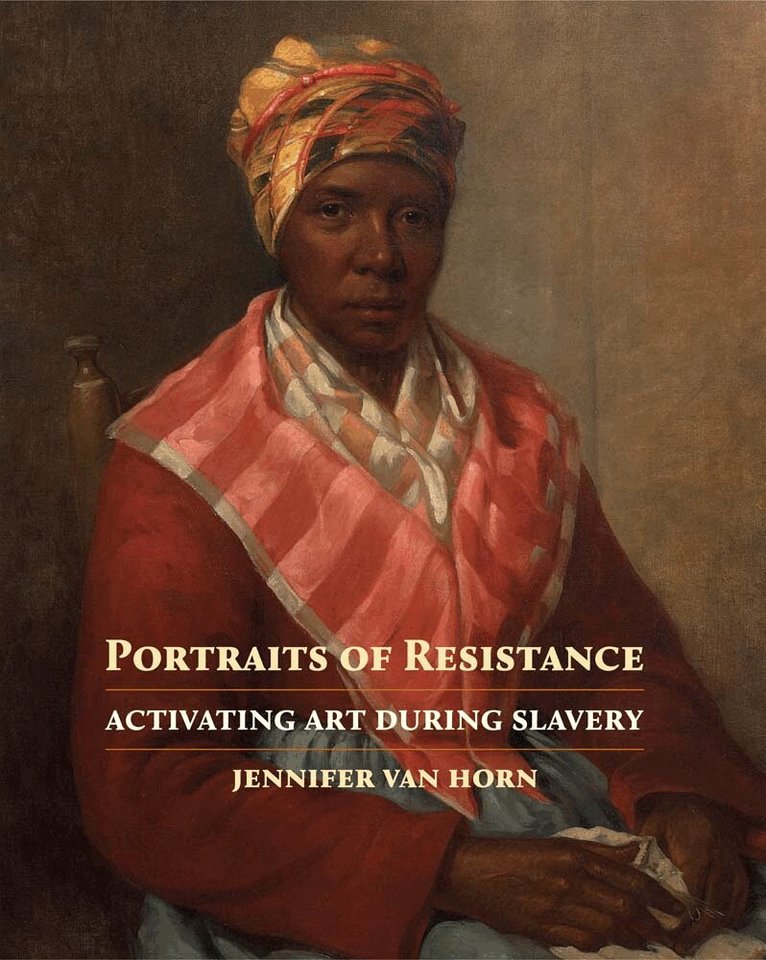
A highly original history of American portraiture that places the experiences of enslaved people at its center “An argument for a new kind of American art history . . . a textbook for the future of the field.”—Mia L. Bagneris, caa.reviews This timely and eloquent book tells a new history of American art: how enslaved people mobilized portraiture for acts of defiance. Revisiting the origins of portrait painting in the United States, Jennifer Van Horn reveals how mythologies of whiteness and of nation building erased the aesthetic production of enslaved Americans of African descent and obscured the portrait’s importance as a site of resistance. Moving from the wharves of colonial Rhode Island to antebellum Louisiana plantations to South Carolina townhouses during the Civil War, the book illuminates how enslaved people’s relationships with portraits also shaped the trajectory of African American art post-emancipation. Van Horn asserts that Black creativity, subjecthood, viewership, and iconoclasm constituted instances of everyday rebellion against systemic oppression. Portraits of Resistance is not only a significant intervention in the fields of American art and history but also an important contribution to the reexamination of racial constructs on which American culture was built.
1 039 kr
Kommande
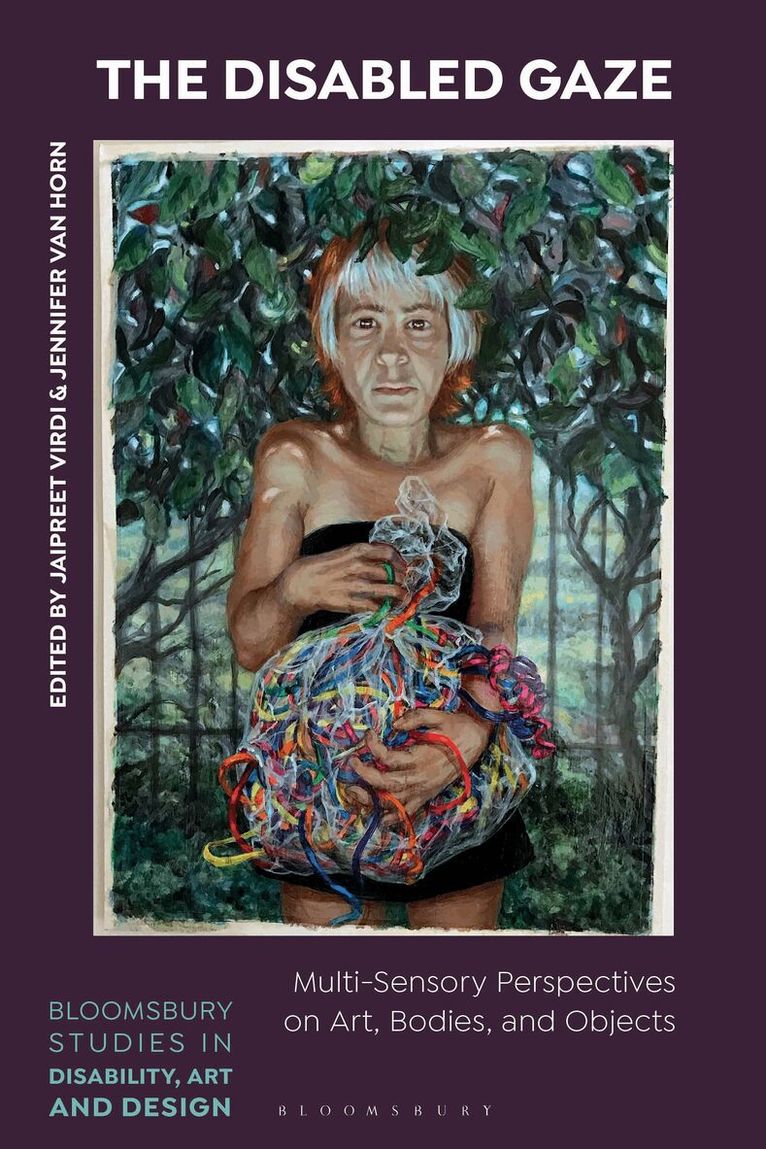
How does being disabled change the ways people experience the world and the things they create? This agenda-setting collection brings material, visual, artistic, and literary perspectives together to examine how disabled people have shaped representations of themselves in images, objects, and literature.Engaging with themes of cripping, resistance, and rethinking, the chapters unpack the creative, generative, and transformative approaches by which disabled people have aimed to capture power by controlling how they are perceived. Collectively the volume introduces the “disabled gaze”—an autonomous claiming of identity that disabled people use through making—as a guard against and redressing of ableism and stigma. The essays present a range of highly-illustrated case studies that center disabled people’s broader material worlds and resituate artefacts of all sorts, not just specialized design objects, as incubators for disability justice. These range from 19th-century ceramics depicting the British Sign Language manual alphabet, Claud Monet’s cataracts and their impact on his painting of the Water Lilies series, and the confraternities of artists with disabilities in early-modern Venice. Positioning the disabled gaze as both a theoretical model and an investigative lens, the collection affirms disabled people as subjects and the power of their gazes as they claim and assert their own performances, identity, and citizenship.Cutting edge in its interdisciplinary approach, the volume moves beyond the disabled gaze as a tactic limited to visual or optical acts of perception, with authors considering how the disabled gaze can be enacted through acts of touch—the “graze”—or even sound. Across the volume, disability itself comes to encompass multiple acts of making, shaping, sensing, and perceiving, and provides a vital perspective on how subjectivity is created through visual and material artefacts.
Häftad, Engelska, 2019
491 kr
Skickas inom 5-8 vardagar
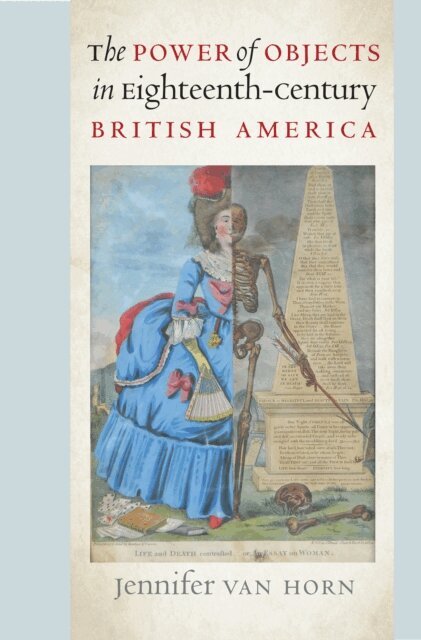
Over the course of the eighteenth century, Anglo-Americans purchased an unprecedented number and array of goods. The Power of Objects in Eighteenth-Century British America investigates these diverse artifacts—from portraits and city views to gravestones, dressing furniture, and prosthetic devices—to explore how elite American consumers assembled objects to form a new civil society on the margins of the British Empire. In this interdisciplinary transatlantic study, artifacts emerge as key players in the formation of Anglo-American communities and eventually of American citizenship. Deftly interweaving analysis of images with furniture, architecture, clothing, and literary works, Van Horn reconstructs the networks of goods that bound together consumers in Boston, New York, Philadelphia, and Charleston.Moving beyond emulation and the desire for social status as the primary motivators for consumption, Van Horn shows that Anglo-Americans' material choices were intimately bound up with their efforts to distance themselves from Native Americans and African Americans. She also traces women's contested place in forging provincial culture. As encountered through a woman's application of makeup at her dressing table or an amputee's donning of a wooden leg after the Revolutionary War, material artifacts were far from passive markers of rank or political identification. They made Anglo-American society.