Jenny Leigh Dupuis – författare
Visar alla böcker från författaren Jenny Leigh Dupuis. Handla med fri frakt och snabb leverans.
4 produkter
4 produkter
10 217 kr
Skickas inom 10-15 vardagar
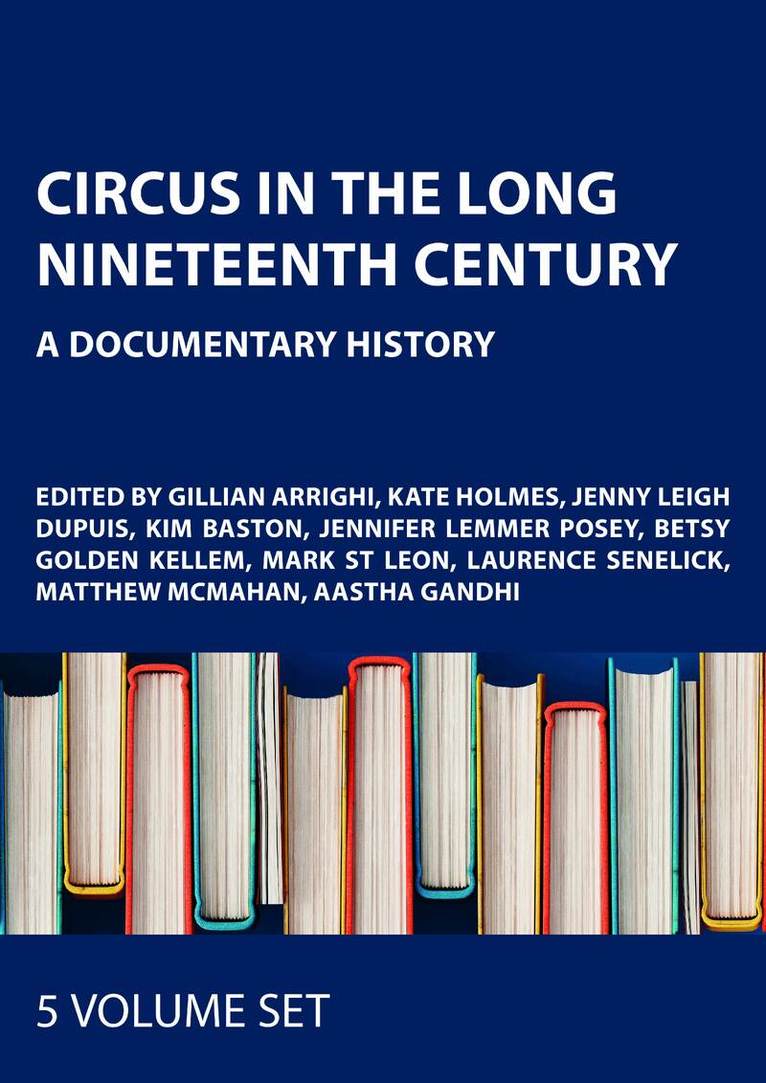
This collection of primary sources brings together a series of documents derived from archives, journals, newspapers, out-of-print books, memoirs, letters, and other written materials pertaining to the circus during the long nineteenth century (1789-1919). Historians concur that the ‘modern’ circus emerged in London in the late-eighteenth century, following the entrepreneurial initiatives of Philip Astley (1742-1814). It soon spread to Scotland, Ireland, France, Russia, Scandinavia, and other regions of Europe. Introduced to the United States by and English equestrian, John Bill Ricketts, in 1793, the modern circus transformed into a movable tent show by 1825. Following the Civil War and the development of railroad transport, the uniquely American circus transformed again into an ‘industrialized juggernaut’ capable of entertaining a large and diverse population from coast to coast. Transmitted across the globe through the British colonial project, the circus flourished in the colonies of Australasia, South Africa, South- and Southeast Asia, and was nourished by traditional performance forms of China, Japan, India, and Southeast Asia. The modern circus evolved through interaction with different geographies, socio-political contexts, new technologies, cultural heritage, and absorption of vernacular performance forms. Accompanied by extensive editorial commentary, and edited by an international team of scholars, this collection will be of great interest to students and researchers of circus studies, theatre and performance studies and cultural history.
Inbunden, Engelska, 2026
1 739 kr
Skickas inom 10-15 vardagar
This volume contextualizes the circus as a cultural force in North America during the long nineteenth century. Individually, resources provide insight into the business, people, acts, and audience experience in a period that witnessed explosive growth of population, print media, technology, and amusement. The selections are intended to foster comfort with working through the combination of firsthand accounts, manuscripts, and marketing jargon that comprise research into the historical record of the circus. These varied sources also point to the intersection of entertainment and culture, situating the traveling circus as a mirror showing something of the character of the society it entertained.
E-bok
PDF, Engelska, 2026936 kr
Läs direkt efter köp
This collection of primary sources brings together a series of documents derived from archives, journals, newspapers, out-of-print books, memoirs, letters, and other written materials pertaining to the circus during the long nineteenth century (1789-1919). Historians concur that the 'modern' circus emerged in London in the late-eighteenth century, following the entrepreneurial initiatives of Philip Astley (1742-1814). It soon spread to Scotland, Ireland, France, Russia, Scandinavia, and other regions of Europe. Introduced to the United States by and English equestrian, John Bill Ricketts, in 1793, the modern circus transformed into a movable tent show by 1825. Following the Civil War and the development of railroad transport, the uniquely American circus transformed again into an 'industrialized juggernaut' capable of entertaining a large and diverse population from coast to coast. Transmitted across the globe through the British colonial project, the circus flourished in the colonies of Australasia, South Africa, South- and Southeast Asia, and was nourished by traditional performance forms of China, Japan, India, and Southeast Asia. The modern circus evolved through interaction with different geographies, socio-political contexts, new technologies, cultural heritage, and absorption of vernacular performance forms.Accompanied by extensive editorial commentary, and edited by an international team of scholars, this collection will be of great interest to students and researchers of circus studies, theatre and performance studies and cultural history.
E-bok
Engelska, 2026936 kr
Läs direkt efter köp
This collection of primary sources brings together a series of documents derived from archives, journals, newspapers, out-of-print books, memoirs, letters, and other written materials pertaining to the circus during the long nineteenth century (1789-1919). Historians concur that the 'modern' circus emerged in London in the late-eighteenth century, following the entrepreneurial initiatives of Philip Astley (1742-1814). It soon spread to Scotland, Ireland, France, Russia, Scandinavia, and other regions of Europe. Introduced to the United States by and English equestrian, John Bill Ricketts, in 1793, the modern circus transformed into a movable tent show by 1825. Following the Civil War and the development of railroad transport, the uniquely American circus transformed again into an 'industrialized juggernaut' capable of entertaining a large and diverse population from coast to coast. Transmitted across the globe through the British colonial project, the circus flourished in the colonies of Australasia, South Africa, South- and Southeast Asia, and was nourished by traditional performance forms of China, Japan, India, and Southeast Asia. The modern circus evolved through interaction with different geographies, socio-political contexts, new technologies, cultural heritage, and absorption of vernacular performance forms.Accompanied by extensive editorial commentary, and edited by an international team of scholars, this collection will be of great interest to students and researchers of circus studies, theatre and performance studies and cultural history.