Jeremy C. Ganz – författare
Visar alla böcker från författaren Jeremy C. Ganz. Handla med fri frakt och snabb leverans.
7 produkter
7 produkter
Del 285 - Progress in Brain Research
Cranial Surgery - Part 2
Inbunden, Engelska, 2024
3 151 kr
Skickas inom 10-15 vardagar
This is a study of the evolution of the principles and techniques of cranial surgery from Hippocrates to the nineteenth century. The methods of conveying information by text and image are considered.Cranial SurgeryPrinting and ImagesSurgeons Conservatism
Del 215 - Progress in Brain Research
The History of the Gamma Knife
Inbunden, Engelska, 2014
3 250 kr
Skickas inom 10-15 vardagar
The History of the Gamma Knife presents the evolution of concepts and technology which ended in the production of the modern Gamma Knife. The story starts before the Second World War and links pioneers in Berkeley and Sweden. To the best of the author's belief it is the first detailed, factually accurate account of the development of this important therapeutic method.
The author has been involved in Gamma Knife surgery since the early days and has written 3 books and many papers on the topic The author is fluent in Scandinavian languages and knows the original pioneers in the field and has consulted with them to ensure the story is accurate The book is written in an informal easy to read style The book fills a vacuum in the literature. There are many short accounts of a few pages but no hopefully definitive account of the story of the Gamma Knife. Also these short accounts all too often contain errors which hopefully are absent from the current textE-bok
Engelska, 20143 208 kr
Läs direkt efter köp
The History of the Gamma Knife presents the evolution of concepts and technology which ended in the production of the modern Gamma Knife. The story starts before the Second World War and links pioneers in Berkeley and Sweden. To the best of the author''s belief it is the first detailed, factually accurate account of the development of this important therapeutic method.- The author has been involved in Gamma Knife surgery since the early days and has written 3 books and many papers on the topic- The author is fluent in Scandinavian languages and knows the original pioneers in the field and has consulted with them to ensure the story is accurate- The book is written in an informal easy to read style- The book fills a vacuum in the literature. There are many short accounts of a few pages but no hopefully definitive account of the story of the Gamma Knife. Also these short accounts all too often contain errors which hopefully are absent from the current text
E-bok
PDF, Engelska, 2026936 kr
Läs direkt efter köp
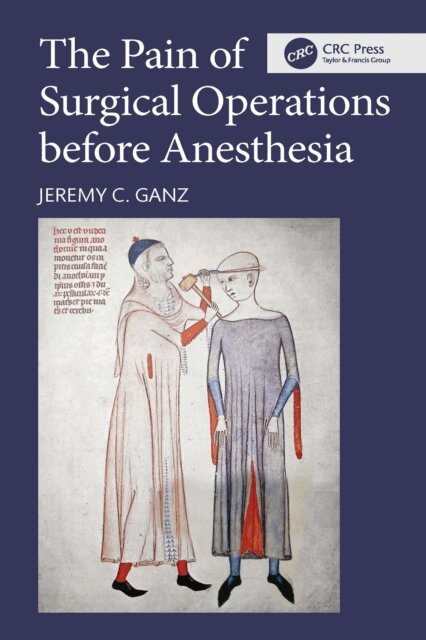
Covering a previously unexplored area in the history of surgery, this innovative resource provides a historical overview of how surgeons managed the pain of an operation. The definitive statement on this book's central topic was written by Celsus in the first century AD, which emphasized accepting the unavoidability of pain during surgery and how patient distress should not tempt surgeons to rush procedures before completion. Inhaled narcotics were occasionally recommended but never became a standard treatment. There was a consensus from classical times that ingested opium produced too many side effects to be used during an operation. In 1846, anaesthesia was introduced, solving the problem.Presenting these different eras in the history of surgery with a range of detailed examples, this book also offers inferential interpretations of how surgeons incorporated their understanding of pain into their surgical practice. Most surgeons demonstrated humanity, tempered by their beliefs and personalities, and managed pain by using specific techniques, instruments, and analgesic adjuncts.Key Features: Provides an overview of an underexplored area of history, filling a gap in the history of medicine by focusing on pain during surgery before modern anaesthetics Offers inferential explanations for the ways in which surgeons managed pain prior to anaesthesia, including how they utilized specialized techniques and instruments, as well as how patients coped with pain when awake and unanaesthetized Builds a comprehensive understanding of the history of surgery prior to anaesthesia through historical examples and primary sources With key topics, surgeons, and surgical techniques covered, this book will be suited to medical students taking courses on the history of surgery and will interest practitioners of various surgical specialties, anaesthetists, and medical historians.
E-bok
Engelska, 2026936 kr
Läs direkt efter köp
Covering a previously unexplored area in the history of surgery, this innovative resource provides a historical overview of how surgeons managed the pain of an operation. The definitive statement on this book's central topic was written by Celsus in the first century AD, which emphasized accepting the unavoidability of pain during surgery and how patient distress should not tempt surgeons to rush procedures before completion. Inhaled narcotics were occasionally recommended but never became a standard treatment. There was a consensus from classical times that ingested opium produced too many side effects to be used during an operation. In 1846, anaesthesia was introduced, solving the problem.Presenting these different eras in the history of surgery with a range of detailed examples, this book also offers inferential interpretations of how surgeons incorporated their understanding of pain into their surgical practice. Most surgeons demonstrated humanity, tempered by their beliefs and personalities, and managed pain by using specific techniques, instruments, and analgesic adjuncts.Key Features: Provides an overview of an underexplored area of history, filling a gap in the history of medicine by focusing on pain during surgery before modern anaesthetics Offers inferential explanations for the ways in which surgeons managed pain prior to anaesthesia, including how they utilized specialized techniques and instruments, as well as how patients coped with pain when awake and unanaesthetized Builds a comprehensive understanding of the history of surgery prior to anaesthesia through historical examples and primary sources With key topics, surgeons, and surgical techniques covered, this book will be suited to medical students taking courses on the history of surgery and will interest practitioners of various surgical specialties, anaesthetists, and medical historians.
Inbunden, Engelska, 2026
1 629 kr
Kommande
Covering a previously unexplored area in the history of surgery, this innovative resource provides a historical overview of how surgeons managed the pain of an operation. The definitive statement on this book’s central topic was written by Celsus in the first century AD, which emphasized accepting the unavoidability of pain during surgery and how patient distress should not tempt surgeons to rush procedures before completion. Inhaled narcotics were occasionally recommended but never became a standard treatment. There was a consensus from classical times that ingested opium produced too many side effects to be used during an operation. In 1846, anaesthesia was introduced, solving the problem.Presenting these different eras in the history of surgery with a range of detailed examples, this book also offers inferential interpretations of how surgeons incorporated their understanding of pain into their surgical practice. Most surgeons demonstrated humanity, tempered by their beliefs and personalities, and managed pain by using specific techniques, instruments, and analgesic adjuncts.Key Features:Provides an overview of an underexplored area of history, filling a gap in the history of medicine by focusing on pain during surgery before modern anaestheticsOffers inferential explanations for the ways in which surgeons managed pain prior to anaesthesia, including how they utilized specialized techniques and instruments, as well as how patients coped with pain when awake and unanaesthetizedBuilds a comprehensive understanding of the history of surgery prior to anaesthesia through historical examples and primary sourcesWith key topics, surgeons, and surgical techniques covered, this book will be suited to medical students taking courses on the history of surgery and will interest practitioners of various surgical specialties, anaesthetists, and medical historians.
Inbunden, Engelska, 2021
1 622 kr
Tillfälligt slut
The subject of this book, James Hill (1703-1776), was born into a Scotland which had been riven for half a century with political and economic conflicts, which had direct effects on his own family. King Charles II was restored to the UK throne in 1660 and a period of expansion of the arts science and trade followed in England. In Scotland, the period was quite different. Charles was the head of an Episcopalian church and was determined that Presbyterian Scotland should return to this form of worship. There followed years of persecution and mutual intolerance.James received his medical education as an apprentice to an Edinburgh surgeon, George Young who was closely involved in the Scottish Enlightenment. His apprenticeship was followed by two years at sea. He then returned to his home region of Dumfries and started to practice surgery in 1732, continuing there until 1776. As this book shows, he achieved a grand reputation as a surgeon, and was respected not only locally, but also in neighbouring counties and the capital. His greatest contribution was in the treatment of head injuries, treating 18 cases, of which only three died. Two of these had untreatable injuries and the third refused surgery. The book notes that, despite James Hill's close relationship to the harshness of religious conflicts, this does not seem to have been a major influence on him. On the other hand, the Enlightenment was clearly important given his attitude to prefer his own observations to the teachings of past authorities. His reputation persisted for a century after his death, but has since gradually faded, and, as such, this book documents the contribution of a most important surgeon in the management of cranial trauma.