Jeremy Gruber - Böcker
Visar alla böcker från författaren Jeremy Gruber. Handla med fri frakt och snabb leverans.
3 produkter
3 produkter
524 kr
Skickas inom 10-15 vardagar
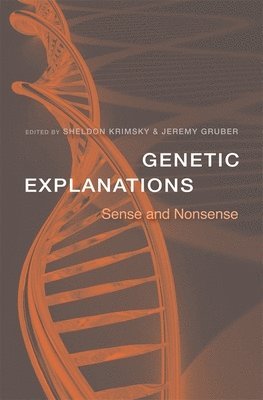
Can genes determine which fifty-year-old will succumb to Alzheimer’s, which citizen will turn out on voting day, and which child will be marked for a life of crime? Yes, according to the Internet, a few scientific studies, and some in the biotechnology industry who should know better. Sheldon Krimsky and Jeremy Gruber gather a team of genetic experts to argue that treating genes as the holy grail of our physical being is a patently unscientific endeavor. Genetic Explanations urges us to replace our faith in genetic determinism with scientific knowledge about how DNA actually contributes to human development.The concept of the gene has been steadily revised since Watson and Crick discovered the structure of the DNA molecule in 1953. No longer viewed by scientists as the cell’s fixed set of master molecules, genes and DNA are seen as a dynamic script that is ad-libbed at each stage of development. Rather than an autonomous predictor of disease, the DNA we inherit interacts continuously with the environment and functions differently as we age. What our parents hand down to us is just the beginning. Emphasizing relatively new understandings of genetic plasticity and epigenetic inheritance, the authors put into a broad developmental context the role genes are known to play in disease, behavior, evolution, and cognition.Rather than dismissing genetic reductionism out of hand, Krimsky and Gruber ask why it persists despite opposing scientific evidence, how it influences attitudes about human behavior, and how it figures in the politics of research funding.
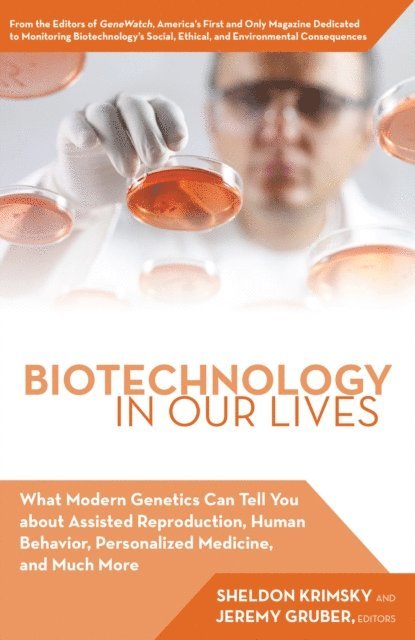
Biotechnology in Our Lives
What Modern Genetics Can Tell You about Assisted Reproduction, Human Behavior, and Personalized Medicine, and Much More
Inbunden, Engelska, 2013
208 kr
Skickas inom 11-20 vardagar
For a quarter of a century, the Council for Responsible Genetics has provided a unique historical lens into the modern history, science, ethics, and politics of genetic technologies. Since 1983 the Council has had leading scientists, activists, science writers, and public health advocates researching and reporting on a broad spectrum of issues, including genetically engineered foods, biological weapons, genetic privacy and discrimination, reproductive technologies, and human cloning.Biotechnology in Our Lives examines how these issues affect us daily whether we realize it or not. Written for the nonscientist, it looks at the many applications of genetics on the world around us by posing questions such as:What should we know about genetics and childbirth?Can our genes keep us from qualifying for health insurance?Can gene therapy cure cancer?Is behavior genetically determined?Why would the FBI want our genes?Are foreign genes in our food?And much moreUltimately, this definitive book on the subject also encourages us to think about the social, environmental, and moral ramifications of where this technology is taking us.
GMO Deception
What You Need to Know about the Food, Corporations, and Government Agencies Putting Our Families and Our Environment at Risk
Inbunden, Engelska, 2014
210 kr
Skickas inom 11-20 vardagar
Seventy-five percent of processed foods on supermarket shelvesfrom soda to soup, crackers to condimentscontain genetically engineered ingredients. The long-term effects of these foods on human health and ecology are still unknown, and public concern has been steadily intensifying.This new book from the Council for Responsible Genetics gathers the best, most thought-provoking essays by the leading scientists, science writers, and public health advocates. Collectively, they address such questions as:Are GM foods safe and healthy for us?Will GM food really solve world hunger?Who really controls the power structure of food production?Are GM foods ecologically safe and sustainable?Why is it so difficult to get GM foods labeled in the US?What kinds of regulations and policies should be instituted?How is seed biodiversity, of lack thereof, affecting developing countries?Should animals be genetically modified for food?How are other countries handling GM crops?Ultimately, this definitive book encourages us to think about the social, environmental, and moral ramifications of where this particular branch of biotechnology is taking us, and what we should do about it.