Jerome H. Barkow – författare
Visar alla böcker från författaren Jerome H. Barkow. Handla med fri frakt och snabb leverans.
9 produkter
9 produkter
E-bok
Engelska, 1995899 kr
Läs direkt efter köp
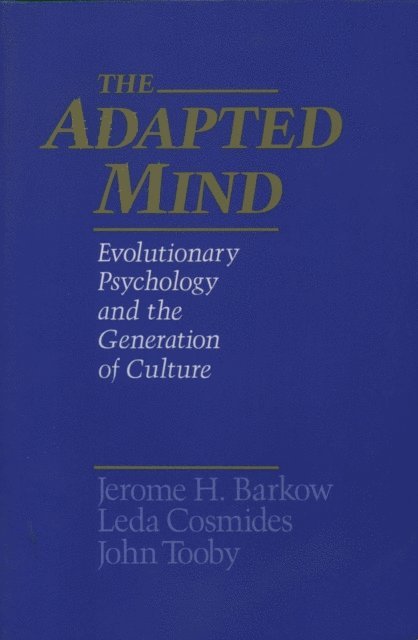
Although researchers have long been aware that the species-typical architecture of the human mind is the product of our evolutionary history, it has only been in the last three decades that advances in such fields as evolutionary biology, cognitive psychology, and paleoanthropology have made the fact of our evolution illuminating. Converging findings from a variety of disciplines are leading to the emergence of a fundamentally new view of the human mind, and with it a new framework for the behavioral and social sciences. First, with the advent of the cognitive revolution, human nature can finally be defined precisely as the set of universal, species-typical information-processing programs that operate beneath the surface of expressed cultural variability. Second, this collection of cognitive programs evolved in the Pleistocene to solve the adaptive problems regularly faced by our hunter-gatherer ancestors--problems such as mate selection, language acquisition, cooperation, and sexual infidelity. Consequently, the traditional view of the mind as a general-purpose computer, tabula rasa, or passive recipient of culture is being replaced by the view that the mind resembles an intricate network of functionally specialized computers, each of which imposes contentful structure on human mental organization and culture. The Adapted Mind explores this new approach--evolutionary psychology--and its implications for a new view of culture.
E-bok
Engelska, 2005783 kr
Läs direkt efter köp
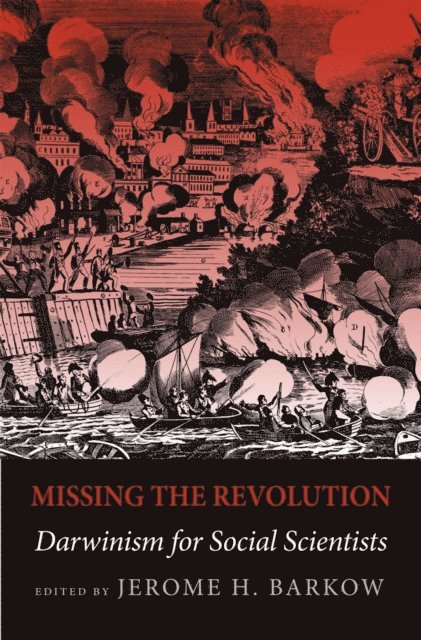
In The Adapted Mind, Jerome Barkow, along with Leda Cosmides and John Tooby, set out to redefine evolutionary psychology for the social sciences and to create a new agenda for the next generation of social scientists. While biologically oriented psychologists quickly accepted the work, social scientists in psychology and researchers in anthropology and sociology, who deal with the same questions of human behavior, were more resistant. Missing the Revolution is an invitation to researchers from these disciplines who, in Barkow''s view, have been missing the great evolution-revolution of our time to engage with Darwinian thought, which is now so large a part of the non-sociological study of human nature and society. Barkow asks the reader to put aside the preconceptions and stereotypes social scientists often have of the "biological" and to take into account a powerful paradigm that is far away from those past generations who would invoke a vocabulary of "genes" and "Darwin" as justification for genocide. The evolutionary perspective, Barkow maintains, provides no particular support for the status quo, no rationalizations for racism or any other form of social inequality. "Cultural" cannot possibly be opposed to "biological" because culture and society are the only means we have of expressing our evolved psychology; social-cultural constructionism is not only compatible with an evolutionary approach but demanded by it. To marshal evidence for his argument, Barkow has gathered together eminent scholars from a variety of disciplines to present applications of evolutionary psychology in a manner intended to illustrate their relevance to current concerns for social scientists. The contributors include, among others, evolutionary psychologist Anne Campbell, a Darwinian feminist who reaches out to feminist social cosntructionists; sociologist Ulica Segarsträle, who analyzes the opposition of the "cultural left" to Darwinism; sociologist Bernd Baldus, who criticizes evolutionists for ignoring agency; criminologist Anthony Walsh, who presents a biosocial criminology; and primatologists Lars Rodseth and Shannon A. Novak, who reveal an unexpected uniqueness to human social organization. Missing the Revolution is a challenge to scholars to think critically about a powerful social and intellectual movement which insists that the theoretical perspective that has been so successful when applied to the behavior of other animal species can be applied to our own.
Inbunden, Engelska, 2006
1 022 kr
Skickas inom 7-10 vardagar
Missing the Revolution is an invitation to social scientists who, in Barkow's view, have been missing the great evolution-revolution of our time to engage with Darwinian thought, which is now so large a part of the non-sociological study of human nature and society. Barkow asks the reader to put aside the preconceptions and stereotypes social scientists often have of the 'biological' and to take into account a powerful paradigm that is far away from those past generations who would invoke a vocabulary of 'genes' and 'Darwin' as justification for genocide. The evolutionary perspective, Barkow maintains, provides no particular support for the status quo, no rationalizations for racism or any other form of social inequality. 'Cultural' cannot possibly be opposed to 'biological' because culture and society are the only means we have of expressing our evolved psychology; social-cultural constructionism is not only compatible with evidence for his argument, Barkow has gathered together eminent scholars from a variety of disciplines to present applications of evolutionary psychology in a manner intended to illustrate their relevance to current concerns for social scientists.
E-bok
PDF, Engelska, 2005783 kr
Läs direkt efter köp
In The Adapted Mind, Jerome Barkow, along with Leda Cosmides and John Tooby, set out to redefine evolutionary psychology for the social sciences and to create a new agenda for the next generation of social scientists. While biologically oriented psychologists quickly accepted the work, social scientists in psychology and researchers in anthropology and sociology, who deal with the same questions of human behavior, were more resistant. Missing the Revolution is an invitation to researchers from these disciplines who, in Barkow''s view, have been missing the great evolution-revolution of our time to engage with Darwinian thought, which is now so large a part of the non-sociological study of human nature and society. Barkow asks the reader to put aside the preconceptions and stereotypes social scientists often have of the "biological" and to take into account a powerful paradigm that is far away from those past generations who would invoke a vocabulary of "genes" and "Darwin" as justification for genocide. The evolutionary perspective, Barkow maintains, provides no particular support for the status quo, no rationalizations for racism or any other form of social inequality. "Cultural" cannot possibly be opposed to "biological" because culture and society are the only means we have of expressing our evolved psychology; social-cultural constructionism is not only compatible with an evolutionary approach but demanded by it. To marshal evidence for his argument, Barkow has gathered together eminent scholars from a variety of disciplines to present applications of evolutionary psychology in a manner intended to illustrate their relevance to current concerns for social scientists. The contributors include, among others, evolutionary psychologist Anne Campbell, a Darwinian feminist who reaches out to feminist social cosntructionists; sociologist Ulica Segarsträle, who analyzes the opposition of the "cultural left" to Darwinism; sociologist Bernd Baldus, who criticizes evolutionists for ignoring agency; criminologist Anthony Walsh, who presents a biosocial criminology; and primatologists Lars Rodseth and Shannon A. Novak, who reveal an unexpected uniqueness to human social organization. Missing the Revolution is a challenge to scholars to think critically about a powerful social and intellectual movement which insists that the theoretical perspective that has been so successful when applied to the behavior of other animal species can be applied to our own.
E-bok
PDF, Engelska, 1995899 kr
Läs direkt efter köp
Although researchers have long been aware that the species-typical architecture of the human mind is the product of our evolutionary history, it has only been in the last three decades that advances in such fields as evolutionary biology, cognitive psychology, and paleoanthropology have made the fact of our evolution illuminating. Converging findings from a variety of disciplines are leading to the emergence of a fundamentally new view of the human mind, and with it a new framework for the behavioral and social sciences. First, with the advent of the cognitive revolution, human nature can finally be defined precisely as the set of universal, species-typical information-processing programs that operate beneath the surface of expressed cultural variability. Second, this collection of cognitive programs evolved in the Pleistocene to solve the adaptive problems regularly faced by our hunter-gatherer ancestors--problems such as mate selection, language acquisition, cooperation, and sexual infidelity. Consequently, the traditional view of the mind as a general-purpose computer, tabula rasa, or passive recipient of culture is being replaced by the view that the mind resembles an intricate network of functionally specialized computers, each of which imposes contentful structure on human mental organization and culture. The Adapted Mind explores this new approach--evolutionary psychology--and its implications for a new view of culture.
E-bok
Engelska, 2020950 kr
Läs direkt efter köp
The transformative wave of Darwinian insight continues to expand throughout the human sciences. While still centered on evolution-focused fields such as evolutionary psychology, ethology, and human behavioral ecology, this insight has also influenced cognitive science, neuroscience, feminist discourse, sociocultural anthropology, media studies, and clinical psychology. This handbook''s goal is to amplify the wave by bringing together world-leading experts to provide a comprehensive and up-to-date overview of evolution-oriented and influenced fields. While evolutionary psychology remains at the core of the collection, it also covers the history, current standing, debates, and future directions of the panoply of fields entering the Darwinian fold. As such, The Cambridge Handbook of Evolutionary Perspectives on Human Behavior is a valuable reference not just for evolutionary psychologists but also for scholars and students from many fields who wish to see how the evolutionary perspective is relevant to their own work.
E-bok
PDF, Engelska, 2020950 kr
Läs direkt efter köp
The transformative wave of Darwinian insight continues to expand throughout the human sciences. While still centered on evolution-focused fields such as evolutionary psychology, ethology, and human behavioral ecology, this insight has also influenced cognitive science, neuroscience, feminist discourse, sociocultural anthropology, media studies, and clinical psychology. This handbook''s goal is to amplify the wave by bringing together world-leading experts to provide a comprehensive and up-to-date overview of evolution-oriented and influenced fields. While evolutionary psychology remains at the core of the collection, it also covers the history, current standing, debates, and future directions of the panoply of fields entering the Darwinian fold. As such, The Cambridge Handbook of Evolutionary Perspectives on Human Behavior is a valuable reference not just for evolutionary psychologists but also for scholars and students from many fields who wish to see how the evolutionary perspective is relevant to their own work.
Häftad, Engelska, 2020
807 kr
Skickas inom 7-10 vardagar
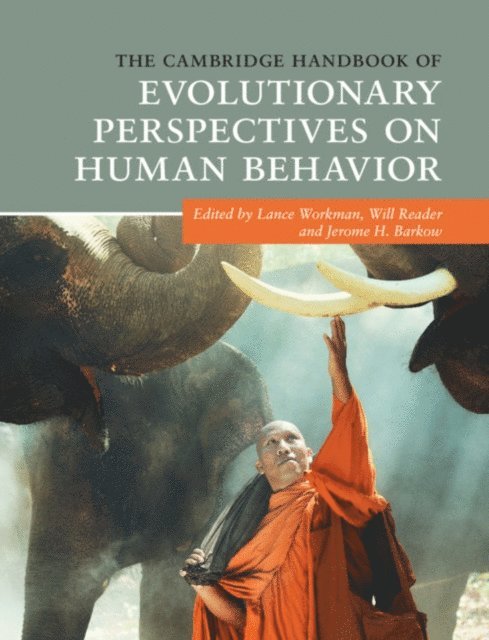
The transformative wave of Darwinian insight continues to expand throughout the human sciences. While still centered on evolution-focused fields such as evolutionary psychology, ethology, and human behavioral ecology, this insight has also influenced cognitive science, neuroscience, feminist discourse, sociocultural anthropology, media studies, and clinical psychology. This handbook's goal is to amplify the wave by bringing together world-leading experts to provide a comprehensive and up-to-date overview of evolution-oriented and influenced fields. While evolutionary psychology remains at the core of the collection, it also covers the history, current standing, debates, and future directions of the panoply of fields entering the Darwinian fold. As such, The Cambridge Handbook of Evolutionary Perspectives on Human Behavior is a valuable reference not just for evolutionary psychologists but also for scholars and students from many fields who wish to see how the evolutionary perspective is relevant to their own work.
Inbunden, Engelska, 2020
2 698 kr
Skickas inom 7-10 vardagar
The transformative wave of Darwinian insight continues to expand throughout the human sciences. While still centered on evolution-focused fields such as evolutionary psychology, ethology, and human behavioral ecology, this insight has also influenced cognitive science, neuroscience, feminist discourse, sociocultural anthropology, media studies, and clinical psychology. This handbook's goal is to amplify the wave by bringing together world-leading experts to provide a comprehensive and up-to-date overview of evolution-oriented and influenced fields. While evolutionary psychology remains at the core of the collection, it also covers the history, current standing, debates, and future directions of the panoply of fields entering the Darwinian fold. As such, The Cambridge Handbook of Evolutionary Perspectives on Human Behavior is a valuable reference not just for evolutionary psychologists but also for scholars and students from many fields who wish to see how the evolutionary perspective is relevant to their own work.