Jerome Tobis – författare
Visar alla böcker från författaren Jerome Tobis. Handla med fri frakt och snabb leverans.
3 produkter
3 produkter
Häftad, Engelska, 2007
416 kr
Skickas inom 5-8 vardagar
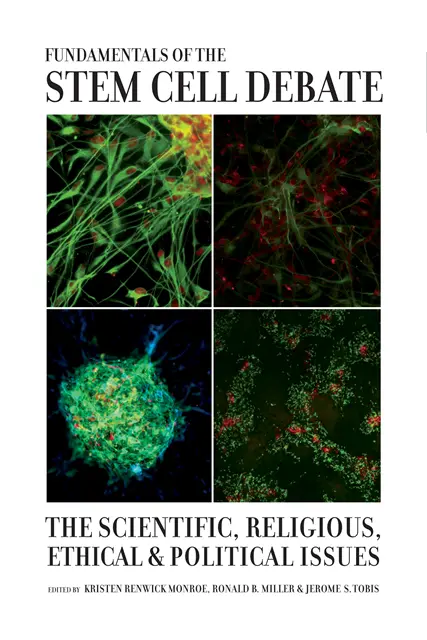
Few recent advances in science have generated as much excitement and controversy as human embryonic stem cells. The potential of these cells to replace diseased or damaged cells in virtually every tissue of the body heralds the advent of an extraordinary new field of medicine. Controversy arises, however, because current techniques required to harvest stem cells involve the destruction of the human blastocyst. This even-handed, lucidly written volume is an essential tool for understanding the complex issues - scientific, religious, ethical, and political - that currently fuel public debate about stem cell research. One of the few books to provide a comprehensive overview for a wide audience, the volume brings together leading scientists, ethicists, political scientists, and doctors to explain this new scientific development and explore its ramifications.
E-bok
Engelska, 2007487 kr
Läs direkt efter köp
Few recent advances in science have generated as much excitement and controversy as human embryonic stem cells. The potential of these cells to replace diseased or damaged cells in virtually every tissue of the body heralds the advent of an extraordinary new field of medicine. Controversy arises, however, because current techniques required to harvest stem cells involve the destruction of the human blastocyst. This even-handed, lucidly written volume is an essential tool for understanding the complex issues—scientific, religious, ethical, and political—that currently fuel public debate about stem cell research. One of the few books to provide a comprehensive overview for a wide audience, the volume brings together leading scientists, ethicists, political scientists, and doctors to explain this new scientific development and explore its ramifications.
E-bok
Engelska, 2009115 kr
Läs direkt efter köp
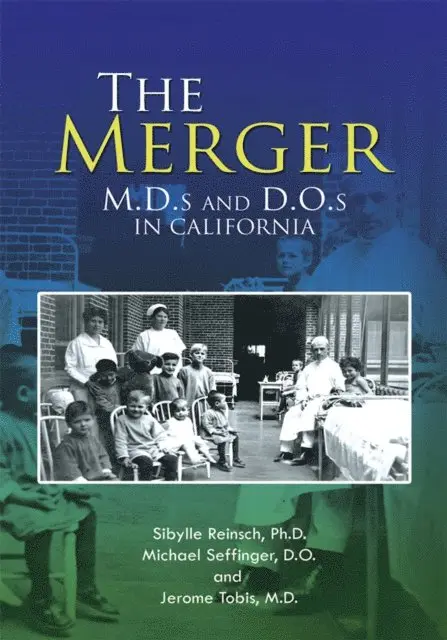
The Merger: M.D.s and D.O.s in CaliforniaIf you are interested in the recent history of the medical professions, this book is for you. If personal narratives of historical events speak to you as a second layer of documentation, this book is for you. If you are aware that in America there exist two separate yet equal, fully licensed physicians, M.D.s and D.O.s, you might be interested in learning about their unique relationship in California. If you know little about D.O.s, this book will give you a picture of their approach to patient care and to their M.D. colleagues.The osteopathic profession in California has a unique history, as it differs dramatically from the professions history in the rest of the nation. More than 100 years ago, a small pioneering group of osteopathic physicians established in Southern California the Pacific School of Osteopathy to graduate physicians and surgeons with the ability to acquire an unlimited license. Since then, the educational, research, and regulatory arenas of osteopathy have seen in California low points of near elimination and high points of recognition.Cultures are based on firm beliefs in the truth of their understanding of the world. Often they collide with those who respect different truths. Similarly, the medical culture in California went through collisions between osteopathic and allopathic medicine, often in response to competition and antagonism. Which values and beliefs about each others profession were held so fervently in California that prompted the unique event of absorbing the osteopathic profession into allopathic mainstream medicine? This project explores the events, unique to California but with repercussions nation-wide, of a merger between osteopathic and allopathic medicine. In 1962, the relatively small medical organization of fully licensed osteopathic physicians (the California Osteopathic Organization) merged with the much larger mainstream medical profession (the California Medical Association). What were the incentives for a fully licensed parallel healthcare profession to forfeit its identity and philosophy? What key players and leaders emerged? How did the individual practicing physician think and feel about the merger? While about two thousand osteopathic physicians changed to the M.D. degree, about two hundred California D.O.s did not merge but persevered in their battle to restore the licensing power of their profession in California. What social and personal motivational sources sustained this group for over a decade? How has osteopathys unique history affected medical education and professional relations, nation-wide and internationally?Answers to these questions have emerged in historical narratives by key persons figuring in the events. Most of them have not written about their lives and their social and political surroundings at the time of the merger and its repercussions. Many never learned the long-term outcomes of their endeavors. Our multidisciplinary research team transcribed in-depth interviews to capture the thoughts and feelings among individuals who played significant roles from the 1940s to the 70s. With the approval of the Institutional Review Board of the University of California, Irvine for the protection of the participants rights, we asked a diverse group, 35 in all, of physicians, administrators, lawyers and lobbyists, to provide their historical narratives and their suggestions for future directions. Our objective has been to give an unbiased account, listening equally to representatives of allopathy, osteopathy, and politics. Inspired by Dr. Gevitz cogent academic analysis of osteopathic medicine in America, this book presents personal perceptions of events, integrated with documented descriptions, stored in archives, to facilitate the readers understanding and analysis. The work has been based on the assumption