Jessica Clarke – författare
Visar alla böcker från författaren Jessica Clarke. Handla med fri frakt och snabb leverans.
2 produkter
2 produkter
Inbunden, Engelska, 2027
250 kr
Kommande
The untold story of how propaganda and power struggles toppled the Roman Republic – once the world’s most powerful democracy.In 49BC, Caesar crossed the Rubicon and Rome fell into a brutal civil war. The institutions that gave its people a voice crumbled and, after the dust settled, Rome was forevermore ruled by emperors.But Rome didn’t fall in a day. For centuries, its people had taken pride in the fact that they had overthrown their King and vowed that they would never have another. So why did the Romans give up their freedom? After the violent assassination of Caesar, why wasn’t the Republic restored? And why did those fighting for democracy lose the battle?This is not just another history of Rome; Jessica Clarke takes us right into the heart of the wars, back-stabbings, uprisings and creeping normalisation of propaganda and disinformation that fractured the Republic. Lifting the veil on the political machinations of a series of ruthlessly ambitious oligarchs, Circus is a page-turning exploration of the spectacular culture and theatrical politics of the final battle for the Roman Republic.
Inbunden, Engelska, 2025
2 035 kr
Skickas inom 5-8 vardagar
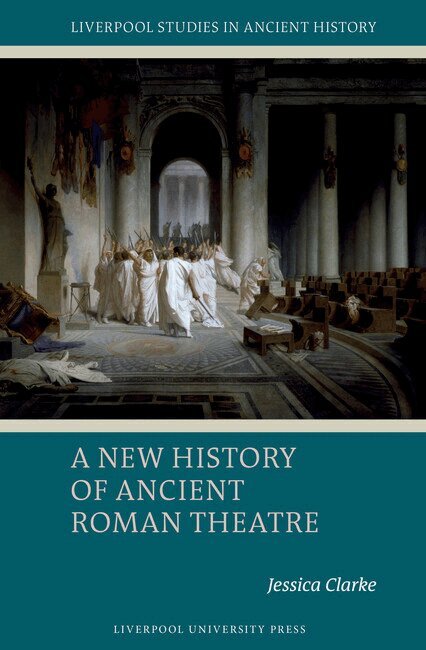
‘Roman theatre’ is a term often used to describe the theatre of ancient Italy during the second and third century BCE. Plautus and Terence are referred to as ‘Roman playwrights,’ and Rome itself is generally regarded as the driving force behind the development of theatrical culture in Italy. But was this early theatre in Italy specifically or characteristically Roman? Using previously marginalised archaeological source material and placing it in constructive dialogue with the surviving ancient literature, this book offers a significant reinterpretation of how theatre developed in the Italian peninsula, as well as a radical reappraisal of the role of Republican Rome as the impetus for cultural change. Challenging a long-held scholarly consensus, it is argued that whilst Rome would eventually rise to political and cultural dominance, the archaeological evidence does not encourage us to view Rome as a significant factor in the development of theatre in Italy until at least the end of the first century BCE and the construction of the Theatre of Pompey. Our attention is directed instead to other cities in the Italian peninsula during the third and second centuries BCE, which have hitherto been greatly overshadowed by imperialistic narratives of Roman cultural development.In addition to the book, Appendix B, a comprehensive catalogue of all the comic visual material produced in or imported to the Italian peninsula between the end of the fourth century BCE and the middle of the first century CE is available to download via the Liverpool University Press Digital Collaboration Hub. Due to the size of the dataset, it has not been produced in print and is available exclusively on the Liverpool University Press website.