Jessica Kritz – författare
Visar alla böcker från författaren Jessica Kritz. Handla med fri frakt och snabb leverans.
7 produkter
7 produkter
E-bok
Engelska, 2023285 kr
Läs direkt efter köp
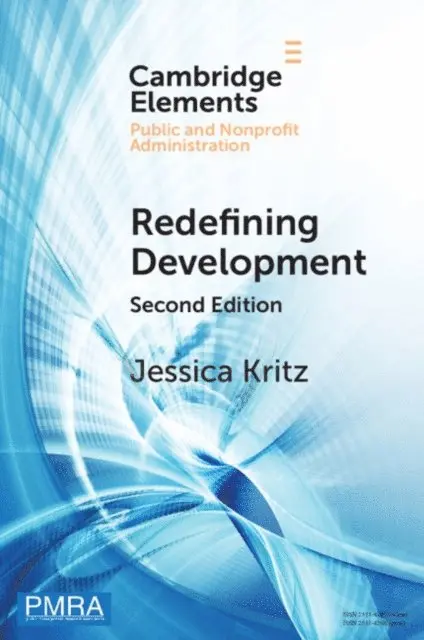
In 2015, Old Fadama, the largest informal community in Accra, was a government ''no-go zone.'' Armed guards accompanied a participatory action research team and stakeholders as they began an empirical research project. Their goals: resolve wicked problems, advance collaboration theory, and provide direct services to vulnerable beneficiaries. In three years, they designed a collaboration intervention based on rigorous evidence, Ghana''s culture and data from 300 core stakeholders. Sanitation policy change transformed the community, and government began to collaborate freely. By 2022, the intervention was replicated in Accra, Kumasi and eleven rural communities, providing health services to more than 10,000 kayayei (women head porters) and addressing complex challenges for 15,000 direct and hundreds of thousands of indirect beneficiaries. This collaboration intervention improved community participation, changed policy, and redefined development in theory and practice. This title is also available as Open Access on Cambridge Core.
E-bok
PDF, Engelska, 2023285 kr
Läs direkt efter köp
In 2015, Old Fadama, the largest informal community in Accra, was a government ''no-go zone.'' Armed guards accompanied a participatory action research team and stakeholders as they began an empirical research project. Their goals: resolve wicked problems, advance collaboration theory, and provide direct services to vulnerable beneficiaries. In three years, they designed a collaboration intervention based on rigorous evidence, Ghana''s culture and data from 300 core stakeholders. Sanitation policy change transformed the community, and government began to collaborate freely. By 2022, the intervention was replicated in Accra, Kumasi and eleven rural communities, providing health services to more than 10,000 kayayei (women head porters) and addressing complex challenges for 15,000 direct and hundreds of thousands of indirect beneficiaries. This collaboration intervention improved community participation, changed policy, and redefined development in theory and practice. This title is also available as Open Access on Cambridge Core.
Häftad, Engelska, 2023
239 kr
Skickas inom 7-10 vardagar
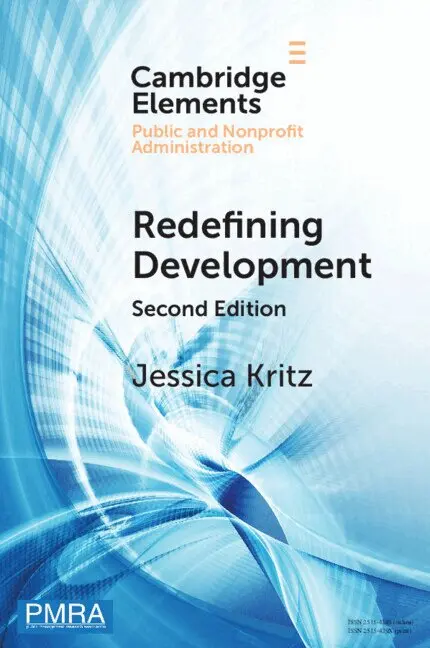
In 2015, Old Fadama, the largest informal community in Accra, was a government 'no-go zone.' Armed guards accompanied a participatory action research team and stakeholders as they began an empirical research project. Their goals: resolve wicked problems, advance collaboration theory, and provide direct services to vulnerable beneficiaries. In three years, they designed a collaboration intervention based on rigorous evidence, Ghana's culture and data from 300 core stakeholders. Sanitation policy change transformed the community, and government began to collaborate freely. By 2022, the intervention was replicated in Accra, Kumasi and eleven rural communities, providing health services to more than 10,000 kayayei (women head porters) and addressing complex challenges for 15,000 direct and hundreds of thousands of indirect beneficiaries. This collaboration intervention improved community participation, changed policy, and redefined development in theory and practice. This title is also available as Open Access on Cambridge Core.
Inbunden, Engelska, 2026
707 kr
Kommande
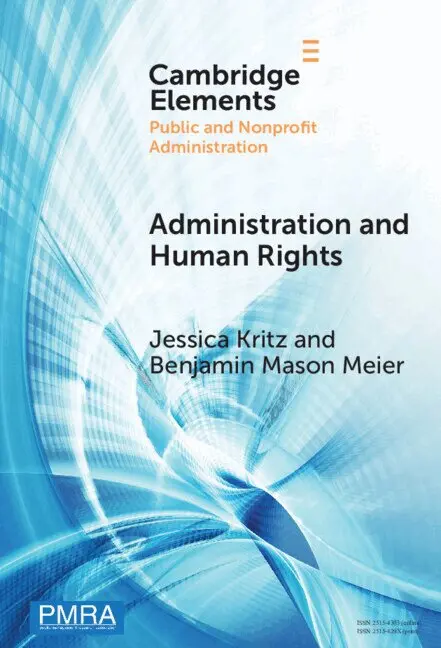
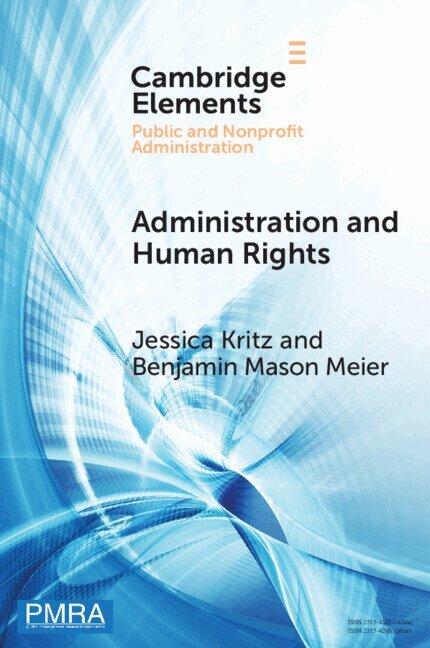
Human rights obligations are increasingly embedded in administrative practice, yet scholarship lacks a cohesive framework to guide a rights-based approach to public administration. This Element establishes a strategic foundation for Administration and Human Rights (AHR) at the intersection of administration, law, and human rights. The AHR framework is applied to three critical implementation priorities identified in recent scholarship: deliberate engagement between administration and law, binding norms obligating governments to deliver basic services, and rights-based participation to support democratic governance. Public administration is vital to realizing human rights, translating law and policy into practice. However, administrators who lack understanding of rights may fail to meet government obligations or unknowingly violate the very rights they are charged with implementing. AHR addresses this gap, offering analytical tools linking administrative practice with a rapidly evolving scholarly research agenda.
Häftad, Engelska, 2026
220 kr
Kommande
Human rights obligations are increasingly embedded in administrative practice, yet scholarship lacks a cohesive framework to guide a rights-based approach to public administration. This Element establishes a strategic foundation for Administration and Human Rights (AHR) at the intersection of administration, law, and human rights. The AHR framework is applied to three critical implementation priorities identified in recent scholarship: deliberate engagement between administration and law, binding norms obligating governments to deliver basic services, and rights-based participation to support democratic governance. Public administration is vital to realizing human rights, translating law and policy into practice. However, administrators who lack understanding of rights may fail to meet government obligations or unknowingly violate the very rights they are charged with implementing. AHR addresses this gap, offering analytical tools linking administrative practice with a rapidly evolving scholarly research agenda.
E-bok
Engelska, 2020285 kr
Läs direkt efter köp
In 2015, the Old Fadama slum of Accra, Ghana was a government ''no-go zone'' due to the generally lawless environment. Participatory action researchers (PAR) began working with three stakeholders to resolve complex challenges facing the community and city. In three years, they created a PAR cross-sector collaboration intervention incorporating data from 300 research participants working on sanitation. In 2018–2019, the stakeholders addressed the next priorities: community violence, solid waste, and a health clinic. The PAR intervention was replicated, supporting kayayei (women head porters) in Old Fadama, the Madina slum of Accra and four rural communities in northern Ghana. The process expanded, involving 2,400 stakeholders and an additional 2,048 beneficiaries. Cross-sector collaboration worked where other, more traditional development interventions did not. This PAR intervention provides developing-country governments with a solution for complex challenges: a low-cost, locally-designed tool that dramatically improved participation and resulted in projects that impact the public good. This title is available as Open Access on Cambridge Core.
E-bok
PDF, Engelska, 2020285 kr
Läs direkt efter köp
In 2015, the Old Fadama slum of Accra, Ghana was a government ''no-go zone'' due to the generally lawless environment. Participatory action researchers (PAR) began working with three stakeholders to resolve complex challenges facing the community and city. In three years, they created a PAR cross-sector collaboration intervention incorporating data from 300 research participants working on sanitation. In 2018–2019, the stakeholders addressed the next priorities: community violence, solid waste, and a health clinic. The PAR intervention was replicated, supporting kayayei (women head porters) in Old Fadama, the Madina slum of Accra and four rural communities in northern Ghana. The process expanded, involving 2,400 stakeholders and an additional 2,048 beneficiaries. Cross-sector collaboration worked where other, more traditional development interventions did not. This PAR intervention provides developing-country governments with a solution for complex challenges: a low-cost, locally-designed tool that dramatically improved participation and resulted in projects that impact the public good. This title is available as Open Access on Cambridge Core.