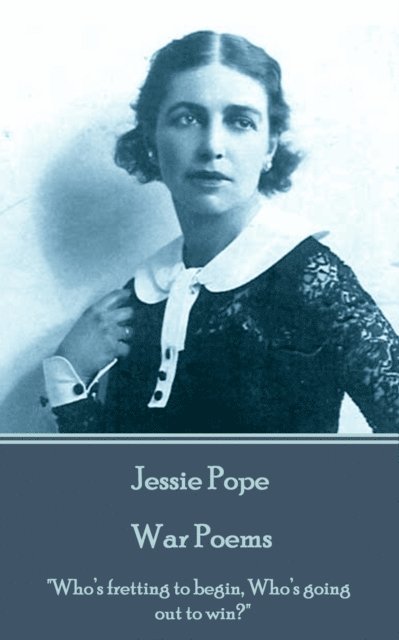
Jessie Pope – författare
398 kr
Skickas inom 5-8 vardagar
207 kr
Skickas inom 5-8 vardagar
370 kr
Skickas inom 5-8 vardagar
398 kr
Skickas inom 5-8 vardagar
185 kr
Skickas inom 5-8 vardagar
207 kr
Skickas inom 5-8 vardagar
135 kr
Skickas inom 5-8 vardagar
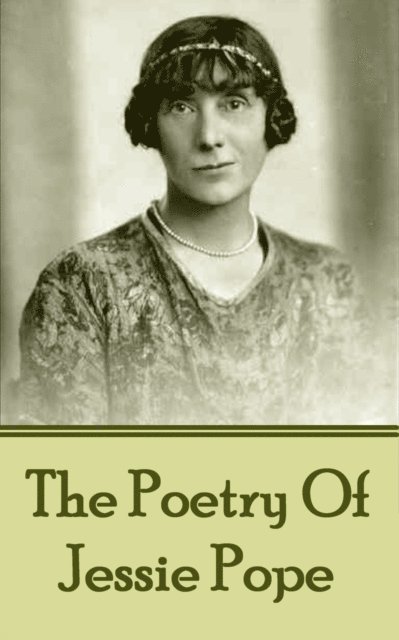
Jessie Pope was born in Leicester on March 18th 1868. Educated at North London Collegiate School and in her career became a regular contributor to Punch, The Daily Mail and The Daily Express, also writing for Vanity Fair, Pall Mall Magazine and the Windsor. Jessie wrote extensively for children and had her verse published in Pope also wrote verse for many illustrated collections for children, including The Little Soldier Book (1907), Babes and Birds (1910), Babes and Beasts (1912), The Adventures of Silversuit (1912), Three Jolly Anglers (1913), Tom, Dick and Harry: their Deeds and Misdeeds (1914), and Frolicsome Friends (1915). Her adult poetry is essentially patriotic and misses much of the carnage and brutality so powerfully portrayed by the War Poets. She was extensively published by The Daily Mail in order to encourage enlistment among young men. Her simple rhymes and jingoistic stance encouraged many to sign up and fight for the Allies. During the war she published three volumes of verse; Jessie Pope''s War Poems (1915), More War Poems (1915) and Simple Rhymes for Stirring Times (1916). After the war, Pope continued to write poems, a novel and children’s books. She married at age 61 in 1929 and moved from London to Fritton, near Great Yarmouth. Jessie Pope died on December, 14, 1941 in Devon.
14 kr
Läs direkt efter köp
Jessie Pope was born on 18th March 1868, in Leicester and was educated at North London Collegiate School. She was a regular contributor to many publications including Punch, The Daily Mail and The Daily Express, also writing for Vanity Fair, Pall Mall Magazine and the Windsor. Pope stands almost alone as an English female poet who was decidedly and patriotically vocal about the War. This was in marked contrast to her male colleagues, many of whom were soldier-poets, who, under slaughter in the in the trenches, were almost all against it. Her war poetry, mainly published in the Daily Mail, encouraged a public duty for enlistment and, shockingly, would hand a white feather to youths who would not join the colours. From todays’ perspective the poetry is jingoistic, with its simple rhythms and extensive use of rhetorical questions to persuade and pressure young men to join the war. Wilfred Owen in particular called her efforts into question with his poem Dulce et Decorum Est which was originally dedicated "To Jessie Pope etc." However, to balance this her war poetry between 1914-18 can be compartmentalised. Some, such as ‘War Girls’ do have a flavour of women’s rights attached to them and when her other works are included it can be seen that her reputation before the war was of a humourist and writer of light verse. She was even described, pre-war, as the "foremost woman humourist" of her day. Her other verse has also been used to show sympathetic portrayals of the poor and powerless. Her portrayal of the Suffragettes in a pair of counterpointed 1909 poems makes a case both for and against their actions. After the war, Pope continued to write; a novel, poems and children’s books. At age 61, she married a widower bank manager in 1929, and moved from London to Fritton, near Great Yarmouth. Jessie Pope died on 14th December 1941, in Devon.