Jiangping Zhou - Böcker
Visar alla böcker från författaren Jiangping Zhou. Handla med fri frakt och snabb leverans.
3 produkter
3 produkter
Big and Open Data for High-quality Transit Access
Design, Features, and Performance of Multi-modal Transit Catchment Areas
Häftad, Engelska, 2024
1 251 kr
Kommande
Big and Open Data for High-quality Transit Access: Design, Features, and Performance of Multi-modal Transit Catchment Areas revisits the concept of "transit area" and the existing, normative, and future practice of transit area planning against the backdrop of increasing availability and usage of big and open data in transit-land use planning. Using empirical data and case studies, it illustrates how transit area can be epitomized and defined in two dimensions: feature (form) and performance (function) and how big and open data and its combination with data from traditional sources can be used to characterize and quantify the two dimensions and to unravel their complex relationships. This book synthesizes the state-of-the-art in how big and open data has been exploited to facilitate transit-area planning, and it proposes a normative framework for transit-area planning. In this framework, big and open data, alone and in combination with data from traditional sources, can play a role that data from traditional sources alone cannot. The author takes a mixed-method approach to present and convey the contents to the reader. Survey data collected by the author are used to show what kind of big and open data has been and should be used in the current/future transit-area planning practices. Quantitative analysis and visualization based on real-world big and open data are employed when the book turns to issues concerning how transit area can be (re)defined and how to quantify and verify the relationships between the two dimensions of transit area: feature and performance. This book serves as a valuable reference to urban planners, researchers, students, and decision makers interested in the nexus of transit/transportation, land use, and sustainable development.
617 kr
Kommande
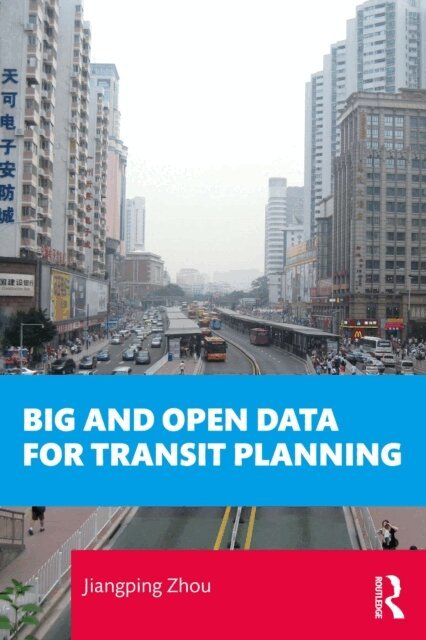
This book revisits the concept of the transit catchment area (TCA) and examines evolving practices in TCA planning against the backdrop of expanding big and open data in transit-oriented land use planning. In many developed countries and regions, car dependence and urban sprawl have led to undesirable outcomes. Improved transit and land use planning can help create well-connected areas where people, businesses, and employers want to be. But how can we make these transit zones more appealing? Big and open data is transforming how we understand and address this challenge. Drawing on empirical data and case studies, this book shows how TCAs can be defined across two dimensions—feature (form) and performance (function)—and how big and open data (BOD), combined with traditional sources, can be used to characterize these dimensions while revealing their complex interrelationships. The author employs a mixed-method approach that includes desktop research, survey data, and quantitative analysis with visualization. Readers will learn how to redefine TCAs and enhance planning practices by leveraging BOD sources such as smartcard data, OpenStreetMap, and social media—making transit areas more attractive while addressing car dependence, urban sprawl, and related challenges such as congestion, pollution, and declining social capital. Big and Open Data for Transit Planning will be useful for planners, officials, students, and academics who are interested in the nexus of transit/transportation, land use, and sustainable development.
2 258 kr
Kommande
This book revisits the concept of the transit catchment area (TCA) and examines evolving practices in TCA planning against the backdrop of expanding big and open data in transit-oriented land use planning. In many developed countries and regions, car dependence and urban sprawl have led to undesirable outcomes. Improved transit and land use planning can help create well-connected areas where people, businesses, and employers want to be. But how can we make these transit zones more appealing? Big and open data is transforming how we understand and address this challenge. Drawing on empirical data and case studies, this book shows how TCAs can be defined across two dimensions—feature (form) and performance (function)—and how big and open data (BOD), combined with traditional sources, can be used to characterize these dimensions while revealing their complex interrelationships. The author employs a mixed-method approach that includes desktop research, survey data, and quantitative analysis with visualization. Readers will learn how to redefine TCAs and enhance planning practices by leveraging BOD sources such as smartcard data, OpenStreetMap, and social media—making transit areas more attractive while addressing car dependence, urban sprawl, and related challenges such as congestion, pollution, and declining social capital. Big and Open Data for Transit Planning will be useful for planners, officials, students, and academics who are interested in the nexus of transit/transportation, land use, and sustainable development.