Jianming Cai – författare
Visar alla böcker från författaren Jianming Cai. Handla med fri frakt och snabb leverans.
6 produkter
6 produkter
Häftad, Engelska, 2026
608 kr
Kommande
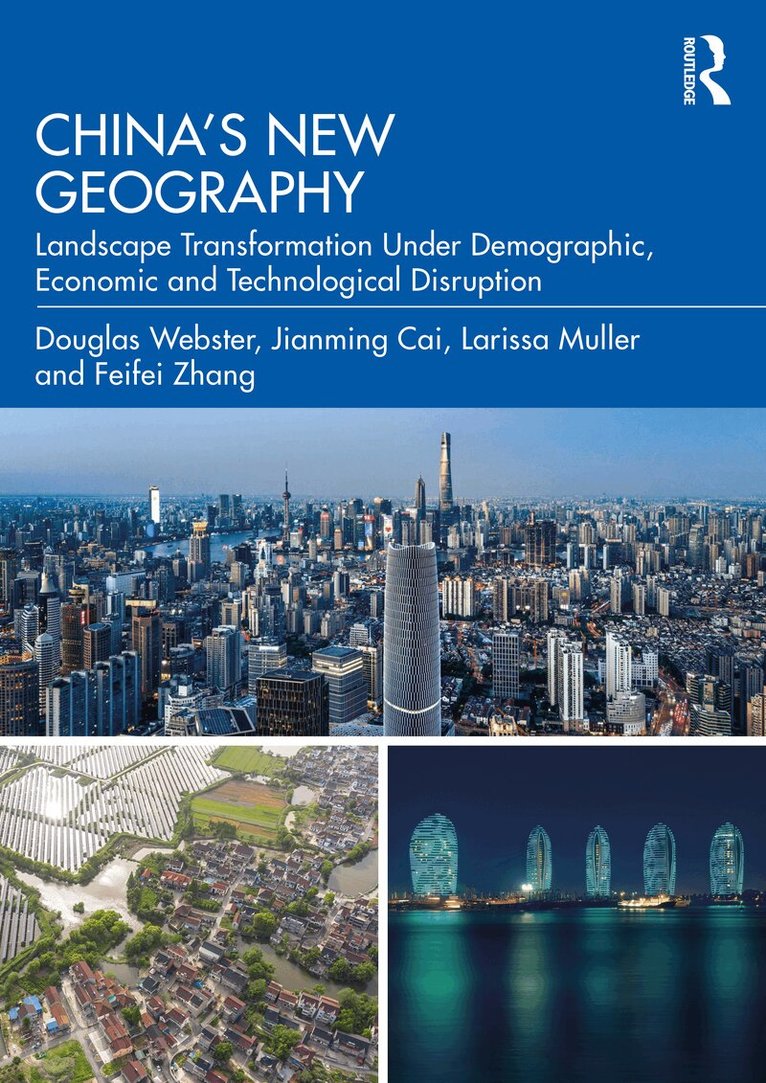
This book explores China’s spatial future through 2060, a future which will be dramatically different from both the Opening Up period starting in 1979, when the rules of landscape building were rewritten, and the Factory of the World era following China’s 2001 WTO accession. Drawing on decades of participation in China’s spatial transformation, the authors explore the country’s future landscape by analyzing the intersecting forces of demographic, societal, economic, policy, and technological change. They examine a rapidly changing context shaped by population decline, the pursuit of global technological leadership, and changing lifestyles and consumption patterns.The book addresses pressing questions: How will China’s hollowing out rural landscapes be transformed as new economic nodes emerge based on alternative energy production, digitally enabled agriculture, ecological restoration and amenity development? As urbanization peaks at 85% and China’s urban population declines by at least 125 million between 2030 and 2060, how will the national urban system be reshaped? Which urban clusters will emerge as new “Silicon Valleys”? Which will be caught in negative rust belt cycles? And as urban outward expansion and physical development slows dramatically, how will technological change, shifting social expectations, and new mobility and production systems reshape China’s built landscape? This will be a useful resource for designers, investors, developers and all those interested in better understanding China’s emerging new geography and landscape, as well as students and academics across a range of disciplines, including Urban and Regional Planning, Landscape Architecture, Geography and Asian Studies.
Inbunden, Engelska, 2026
2 225 kr
Kommande
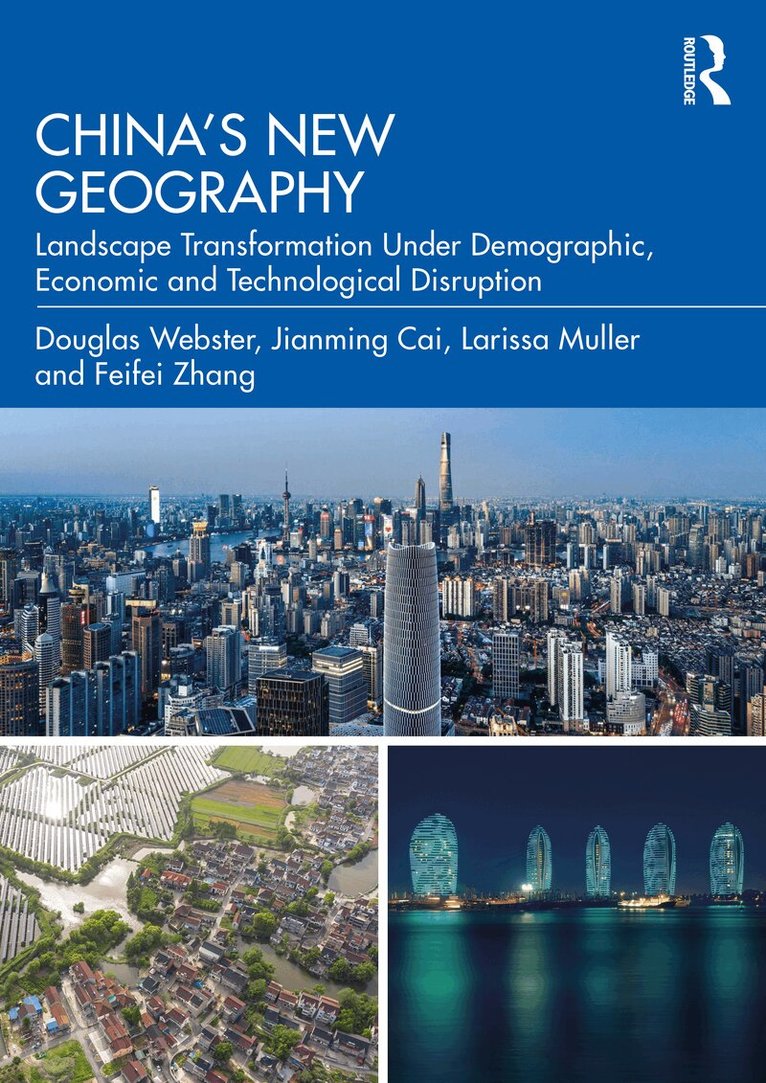
This book explores China’s spatial future through 2060, a future which will be dramatically different from both the Opening Up period starting in 1979, when the rules of landscape building were rewritten, and the Factory of the World era following China’s 2001 WTO accession. Drawing on decades of participation in China’s spatial transformation, the authors explore the country’s future landscape by analyzing the intersecting forces of demographic, societal, economic, policy, and technological change. They examine a rapidly changing context shaped by population decline, the pursuit of global technological leadership, and changing lifestyles and consumption patterns.The book addresses pressing questions: How will China’s hollowing out rural landscapes be transformed as new economic nodes emerge based on alternative energy production, digitally enabled agriculture, ecological restoration and amenity development? As urbanization peaks at 85% and China’s urban population declines by at least 125 million between 2030 and 2060, how will the national urban system be reshaped? Which urban clusters will emerge as new “Silicon Valleys”? Which will be caught in negative rust belt cycles? And as urban outward expansion and physical development slows dramatically, how will technological change, shifting social expectations, and new mobility and production systems reshape China’s built landscape? This will be a useful resource for designers, investors, developers and all those interested in better understanding China’s emerging new geography and landscape, as well as students and academics across a range of disciplines, including Urban and Regional Planning, Landscape Architecture, Geography and Asian Studies.
Inbunden, Engelska, 2021
1 023 kr
Skickas inom 5-8 vardagar
Inbunden, Engelska, 2021
1 681 kr
Skickas inom 10-15 vardagar
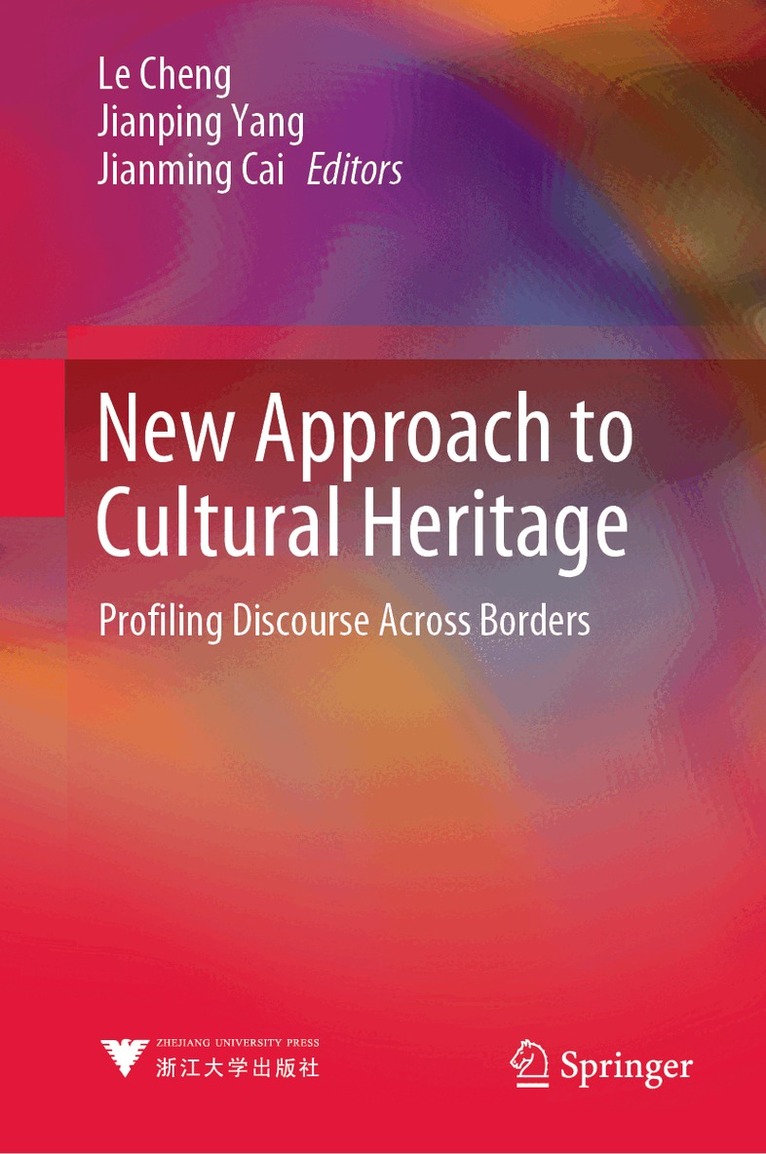
This book addresses questions about theories of heritage, its methodologies of research, and where its boundaries lie with tourism, urban development, post-disaster recovery, collective identities, memory, or conflict. This book is a collection of heritage studies from a critical perspective as a product of the 2018 ACHS (Association of Critical Heritage Studies) Conference in Hangzhou, the largest conference of its kind in Asia. The contributors cover a wide spectrum of issues in heritage studies, such as heritage management, accessibility to heritage, heritage conservation and heritage policy, and heritage representation. It also examines the various contexts within which heritage emerges and how heritage is constructed within that context. Analyses are based on not only representations of heritage but also on the performativity. Explorations touch upon community involvement, landscape history, children’s literature, endangered food, architecture, advertisement, allotment garden, and gender and visual art. As heritage has always been a locus of contested verities, the book offers a variegated approach to heritage studies. It provides students and scholars new perspectives on heritage study.
E-bok
Engelska, 20212 054 kr
Läs direkt efter köp
This book addresses questions about theories of heritage, its methodologies of research, and where its boundaries lie with tourism, urban development, post-disaster recovery, collective identities, memory, or conflict. This book is a collection of heritage studies from a critical perspective as a product of the 2018 ACHS (Association of Critical Heritage Studies) Conference in Hangzhou, the largest conference of its kind in Asia. The contributors cover a wide spectrum of issues in heritage studies, such as heritage management, accessibility to heritage, heritage conservation and heritage policy, and heritage representation. It also examines the various contexts within which heritage emerges and how heritage is constructed within that context. Analyses are based on not only representations of heritage but also on the performativity. Explorations touch upon community involvement, landscape history, children’s literature, endangered food, architecture, advertisement, allotment garden, and gender and visual art. As heritage has always been a locus of contested verities, the book offers a variegated approach to heritage studies. It provides students and scholars new perspectives on heritage study.
Häftad, Engelska, 2022
1 681 kr
Skickas inom 10-15 vardagar
This book addresses questions about theories of heritage, its methodologies of research, and where its boundaries lie with tourism, urban development, post-disaster recovery, collective identities, memory, or conflict. This book is a collection of heritage studies from a critical perspective as a product of the 2018 ACHS (Association of Critical Heritage Studies) Conference in Hangzhou, the largest conference of its kind in Asia. The contributors cover a wide spectrum of issues in heritage studies, such as heritage management, accessibility to heritage, heritage conservation and heritage policy, and heritage representation. It also examines the various contexts within which heritage emerges and how heritage is constructed within that context. Analyses are based on not only representations of heritage but also on the performativity. Explorations touch upon community involvement, landscape history, children’s literature, endangered food, architecture, advertisement, allotment garden, and gender and visual art. As heritage has always been a locus of contested verities, the book offers a variegated approach to heritage studies. It provides students and scholars new perspectives on heritage study.