Jianping Sun - Böcker
Visar alla böcker från författaren Jianping Sun. Handla med fri frakt och snabb leverans.
3 produkter
3 produkter
1 177 kr
Skickas inom 7-10 vardagar
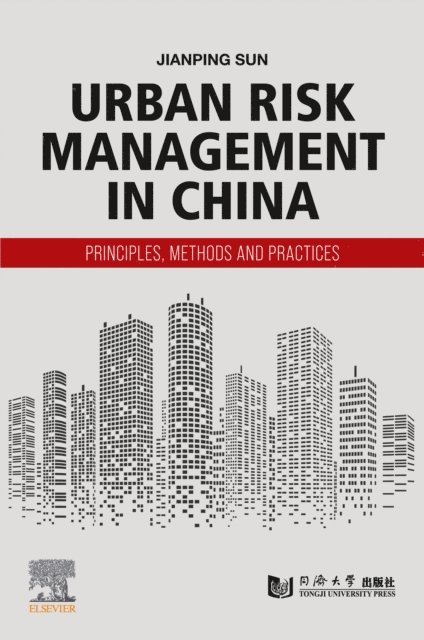
Urban Risk Management in China: Principles, Methods and Practices discusses the management of urban risk, the practical application of risk prevention, and the practice of control in the industry. Urban risk management is an emerging and interdisciplinary research field, and this book meets the urgent need to identify, analyze, and summarize urban risks and management difficulties that are experienced worldwide, especially in metropolitan cities. With rapid and large-scale urbanization, China's urban management experience in facing a series of comprehensive challenges provides a helpful way forward for urban planners around the world.This book clarifies the concept of urban risk, which includes urban land use, housing, infrastructure construction, economic and social development, and environmental protection, with an aim of analyzing the obstacles to urban risk management, forming a cognitive framework, organizing the practice of urban risk management, and finally forming a workable urban risk management system.Systematically discusses urban risk prevention and control in terms of its main forces, mechanisms, systems, and capabilities and presents a multidimensional pyramidal management framework between society, market, and governmentImproves the typology of academic courses related to urban risk management and clarifies different branches of theoretical concepts and practical applicationsProvides a solid foundation for an understanding of how urban risks evolve from accidents or incidents and identifies characteristics and patterns in risk sourcesProposes three mechanisms: co-governance, refined prevention and control, and multilayered guarantees as part of the full-lifecycle perspective in risk prevention, control, and management
1 849 kr
Kommande
This book provides a comprehensive introduction to the principles and practice of designing public health studies, with a focus on both observational and experimental designs commonly used in biomedical and population-based research. Drawing from years of teaching the 'Design of Public Health Studies' course at UNC, the book bridges theory and application to help readers understand, plan, and critically evaluate health research. Key study designs discussed include cross-sectional, case-control, cohort, and clinical trials, with in-depth treatment of core concepts such as validity, response measurement, sample size determination, matching, and randomization.The book is intended for graduate students, researchers, and public health professionals with foundational training in statistical methods (e.g., undergraduate-level Principles of Experimental Analysis or Basic Elements of Probability and Statistical Inference), especially those familiar with software like R or SAS. It will also be valuable to informed readers seeking to interpret health research critically.By emphasizing practical understanding and real-world relevance, this book equips readers with the skills needed to design strong studies, assess the methodological rigor of published research, and communicate statistical findings effectively in public health contexts.
909 kr
Kommande
This book provides a comprehensive introduction to the principles and practice of designing public health studies, with a focus on both observational and experimental designs commonly used in biomedical and population-based research. Drawing from years of teaching the 'Design of Public Health Studies' course at UNC, the book bridges theory and application to help readers understand, plan, and critically evaluate health research. Key study designs discussed include cross-sectional, case-control, cohort, and clinical trials, with in-depth treatment of core concepts such as validity, response measurement, sample size determination, matching, and randomization.The book is intended for graduate students, researchers, and public health professionals with foundational training in statistical methods (e.g., undergraduate-level Principles of Experimental Analysis or Basic Elements of Probability and Statistical Inference), especially those familiar with software like R or SAS. It will also be valuable to informed readers seeking to interpret health research critically.By emphasizing practical understanding and real-world relevance, this book equips readers with the skills needed to design strong studies, assess the methodological rigor of published research, and communicate statistical findings effectively in public health contexts.