Jill Didur – författare
798 kr
Skickas inom 5-8 vardagar
2 222 kr
Skickas inom 10-15 vardagar
858 kr
Läs direkt efter köp
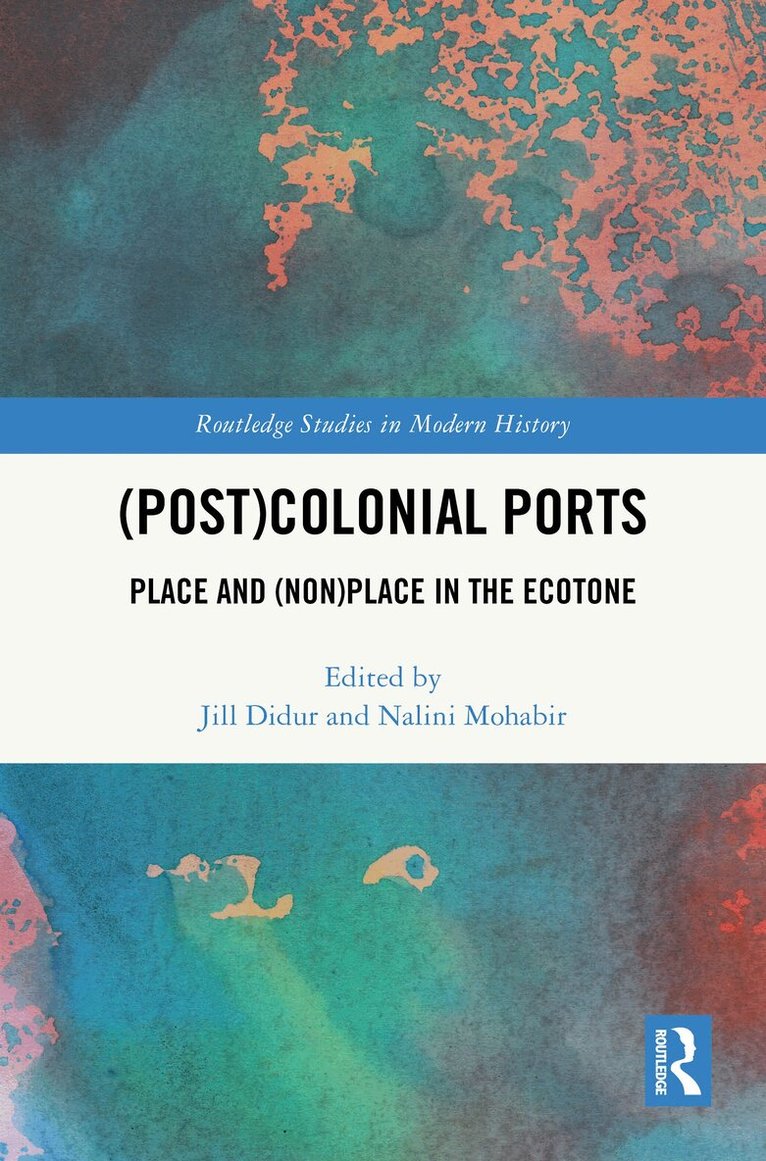
This book examines the role of (post)colonial ports in creating and shaping the ecotonal, cultural, historical, material, environmental, socio-political, and economic contexts in formerly colonized regions, spanning the Caribbean, Africa, North America, Europe, and the Pacific.
The essays assess the role that literature, visual culture, architecture, archives, and ethnography can play in enriching our understanding of the complex histories of ports and port cities. They present the relation between ports and colonial infrastructure such as immigration checkpoints, detention centers, mines, plantations, shipping containers, canals, sewers, and rivers, and their impact on human and more-than-human environments. The volume approaches (post)colonial ports through the “ecotone,” a concept borrowed from geography and ecology to describe a transition zone where two biological communities meet and mix—such as a forest and a grassland—to bring attention to port (non)spaces as a hinge between their environments, communities, and colonial infrastructure. It foregrounds postcolonial and decolonial approaches to the ecotone to draw attention to the cultural, ecological, and geographical dynamics that inform the social fabric of contemporary ports and port cities in the wake of the empire.
This volume is aimed at scholars and postgraduates across disciplines such as literature, geography, fine arts, cultural studies, and history.
858 kr
Läs direkt efter köp
This book examines the role of (post)colonial ports in creating and shaping the ecotonal, cultural, historical, material, environmental, socio-political, and economic contexts in formerly colonized regions, spanning the Caribbean, Africa, North America, Europe, and the Pacific.
The essays assess the role that literature, visual culture, architecture, archives, and ethnography can play in enriching our understanding of the complex histories of ports and port cities. They present the relation between ports and colonial infrastructure such as immigration checkpoints, detention centers, mines, plantations, shipping containers, canals, sewers, and rivers, and their impact on human and more-than-human environments. The volume approaches (post)colonial ports through the “ecotone,” a concept borrowed from geography and ecology to describe a transition zone where two biological communities meet and mix—such as a forest and a grassland—to bring attention to port (non)spaces as a hinge between their environments, communities, and colonial infrastructure. It foregrounds postcolonial and decolonial approaches to the ecotone to draw attention to the cultural, ecological, and geographical dynamics that inform the social fabric of contemporary ports and port cities in the wake of the empire.
This volume is aimed at scholars and postgraduates across disciplines such as literature, geography, fine arts, cultural studies, and history.
806 kr
Skickas inom 10-15 vardagar
2 721 kr
Skickas inom 10-15 vardagar
933 kr
Läs direkt efter köp
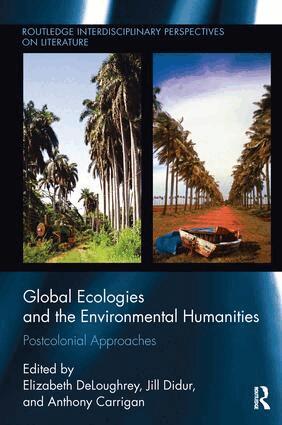
This book examines current trends in scholarly thinking about the new field of the Environmental Humanities, focusing in particular on how the history of globalization and imperialism represents a special challenge to the representation of environmental issues. Essays in this path-breaking collection examine the role that narrative, visual, and aesthetic forms can play in drawing attention to and shaping our ideas about long-term and catastrophic environmental challenges such as climate change, militarism, deforestation, the pollution and management of the global commons, petrocapitalism, and the commodification of nature.
The volume presents a postcolonial approach to the environmental humanities, especially in conjunction with current thinking in areas such as political ecology and environmental justice. Spanning regions such as Africa, Asia, Eastern Europe, Latin America and the Caribbean, Australasia and the Pacific, as well as North America, the volume includes essays by founding figures in the field as well as new scholars, providing vital new interdisciplinary perspectives on: the politics of the earth; disaster, vulnerability, and resilience; political ecologies and environmental justice; world ecologies; and the Anthropocene. In engaging critical ecologies, the volume poses a postcolonial environmental humanities for the twenty-first century. At the heart of this is a conviction that a thoroughly global, postcolonial, and comparative approach is essential to defining the emergent field of the environmental humanities, and that this field has much to offer in understanding critical issues surrounding the creation of alternative ecological futures.
933 kr
Läs direkt efter köp
This book examines current trends in scholarly thinking about the new field of the Environmental Humanities, focusing in particular on how the history of globalization and imperialism represents a special challenge to the representation of environmental issues. Essays in this path-breaking collection examine the role that narrative, visual, and aesthetic forms can play in drawing attention to and shaping our ideas about long-term and catastrophic environmental challenges such as climate change, militarism, deforestation, the pollution and management of the global commons, petrocapitalism, and the commodification of nature.
The volume presents a postcolonial approach to the environmental humanities, especially in conjunction with current thinking in areas such as political ecology and environmental justice. Spanning regions such as Africa, Asia, Eastern Europe, Latin America and the Caribbean, Australasia and the Pacific, as well as North America, the volume includes essays by founding figures in the field as well as new scholars, providing vital new interdisciplinary perspectives on: the politics of the earth; disaster, vulnerability, and resilience; political ecologies and environmental justice; world ecologies; and the Anthropocene. In engaging critical ecologies, the volume poses a postcolonial environmental humanities for the twenty-first century. At the heart of this is a conviction that a thoroughly global, postcolonial, and comparative approach is essential to defining the emergent field of the environmental humanities, and that this field has much to offer in understanding critical issues surrounding the creation of alternative ecological futures.
395 kr
Skickas inom 5-8 vardagar
474 kr
Läs direkt efter köp
439 kr
Läs direkt efter köp