Jim McAdam – författare
Visar alla böcker från författaren Jim McAdam. Handla med fri frakt och snabb leverans.
4 produkter
4 produkter
Inbunden, Engelska, 2008
2 500 kr
Skickas inom 10-15 vardagar
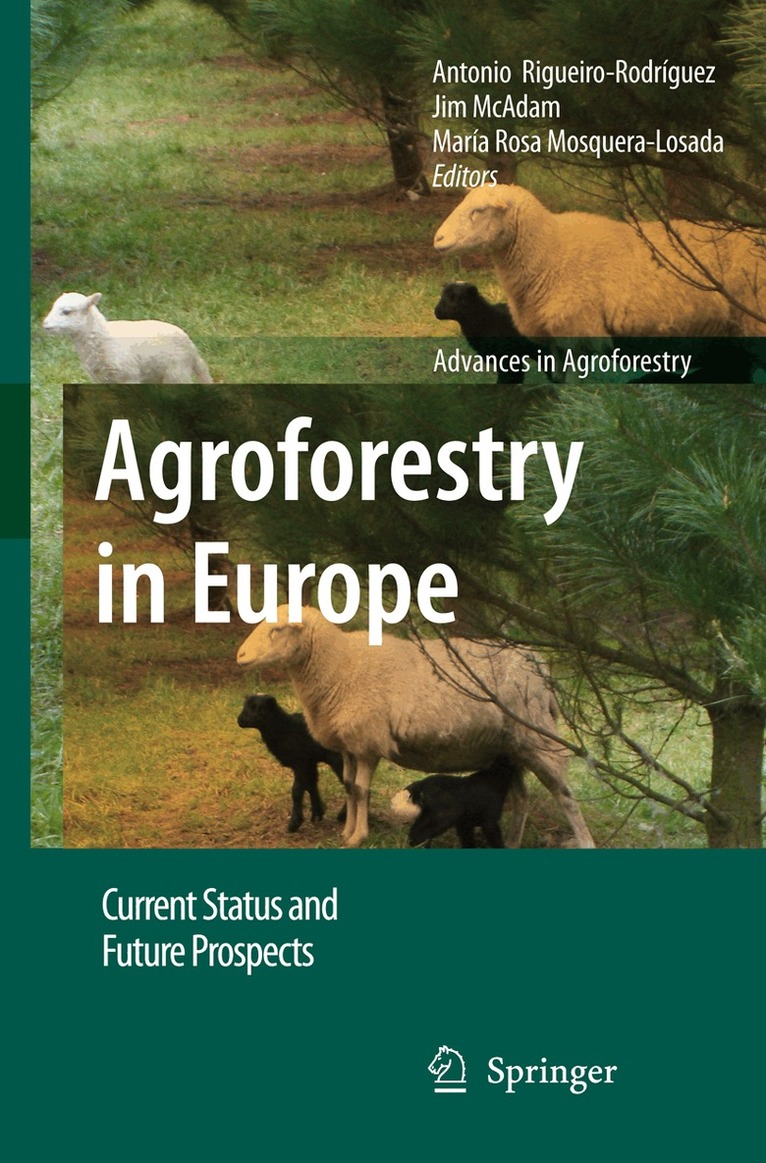
Agroforestry has come of age during the past three decades. The age-old practice of growing trees and crops and sometimes animals in interacting combinations – that has been ignored in the single-commodity-oriented agricultural and forestry development paradigms – has been brought into the realm of modern land-use. Today agroforestry is well on its way to becoming a specialized science at a level similar to those of crop science and forestry science. To most land-use experts, however, agroforestry has a tropical connotation. They consider agroforestry as something that can and can only be identified with the tropics. That is a wrong perception. While it is true that the tropics, compared to the temperate regions, have a wider array of agroforestry systems and hold greater promise for potential agroforestry interventions, it is also true that agroforestry has several opportunities in the temperate regions too. Indeed, the role of agroforestry is now recognized in Europe as exemplified by this book, North America, and elsewhere in the temperate zone. Current interest in ecosystem management in industrialized countries strongly suggests that there is a need to embrace and apply agroforestry principles to help mitigate the environmental problems caused or exacerbated by commercial agricultural and forestry production enterprises.
E-bok
PDF, Engelska, 20083 046 kr
Läs direkt efter köp
Agroforestry has come of age during the past three decades. The age-old practice of growing trees and crops and sometimes animals in interacting combinations – that has been ignored in the single-commodity-oriented agricultural and forestry development paradigms – has been brought into the realm of modern land-use. Today agroforestry is well on its way to becoming a specialized science at a level similar to those of crop science and forestry science. To most land-use experts, however, agroforestry has a tropical connotation. They consider agroforestry as something that can and can only be identified with the tropics. That is a wrong perception. While it is true that the tropics, compared to the temperate regions, have a wider array of agroforestry systems and hold greater promise for potential agroforestry interventions, it is also true that agroforestry has several opportunities in the temperate regions too. Indeed, the role of agroforestry is now recognized in Europe as exemplified by this book, North America, and elsewhere in the temperate zone. Current interest in ecosystem management in industrialized countries strongly suggests that there is a need to embrace and apply agroforestry principles to help mitigate the environmental problems caused or exacerbated by commercial agricultural and forestry production enterprises.
Del 124 - Burleigh Dodds Science: Instant Insights
Instant Insights: Silvopastoral Systems
Häftad, Engelska, 2026
684 kr
Skickas inom 3-6 vardagar
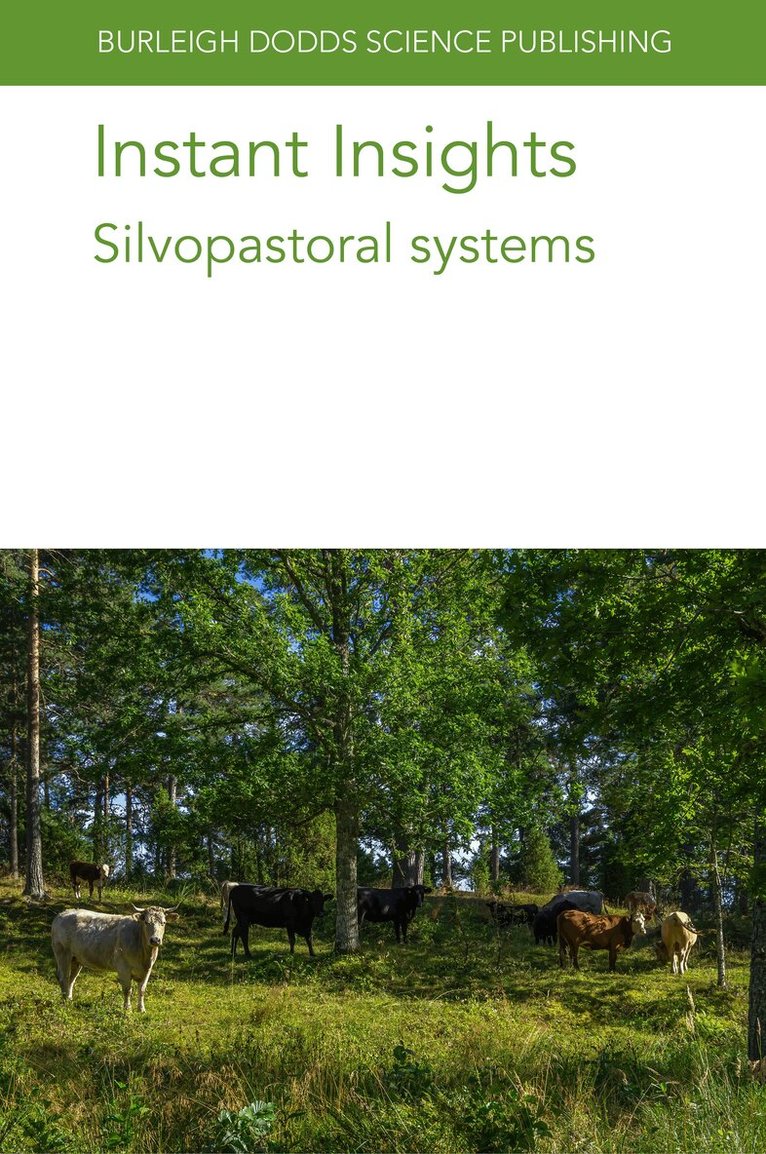
This book features three peer-reviewed reviews on silvopastoral systems.The first chapter begins with providing a detailed definition of silvopasture, before moving onto reviewing the different types of silvopastoral systems, from parklands and hedgerows to riparian buffers and shelterbelts. The chapter considers the role of silvopasture in delivering key ecosystem services such as improvements to soil health and water and air quality. A section on the factors governing uptake of silvopasture is also included.The second chapter discusses the integration of livestock (or forage) production with tree crops, particularly fruit trees and vines. After reviewing the current extent of fruit tree-based agroforestry systems, the chapter highlights the opportunities this integration offers in increasing overall land productivity, whilst minimising competition between forage and food production. The chapter concludes by discussing the many challenges this integration entails and how these challenges can be effectively addressed.The final chapter provides a brief overview of silvopastoral systems from around the world and highlights the importance of trees for livestock production. The chapter also considers best practices for designing and managing silvopastures to deliver key ecosystem services, focussing on their valued contribution to carbon sequestration and biodiversity conservation.
Häftad, Engelska, 2010
2 500 kr
Skickas inom 10-15 vardagar
Agroforestry has come of age during the past three decades. The age-old practice of growing trees and crops and sometimes animals in interacting combinations – that has been ignored in the single-commodity-oriented agricultural and forestry development paradigms – has been brought into the realm of modern land-use. Today agroforestry is well on its way to becoming a specialized science at a level similar to those of crop science and forestry science. To most land-use experts, however, agroforestry has a tropical connotation. They consider agroforestry as something that can and can only be identified with the tropics. That is a wrong perception. While it is true that the tropics, compared to the temperate regions, have a wider array of agroforestry systems and hold greater promise for potential agroforestry interventions, it is also true that agroforestry has several opportunities in the temperate regions too. Indeed, the role of agroforestry is now recognized in Europe as exemplified by this book, North America, and elsewhere in the temperate zone. Current interest in ecosystem management in industrialized countries strongly suggests that there is a need to embrace and apply agroforestry principles to help mitigate the environmental problems caused or exacerbated by commercial agricultural and forestry production enterprises.