
Jinjin Li – författare
Visar alla böcker från författaren . Handla med fri frakt och snabb leverans.
4 produkter
4 produkter
3 314 kr
Läs direkt efter köp
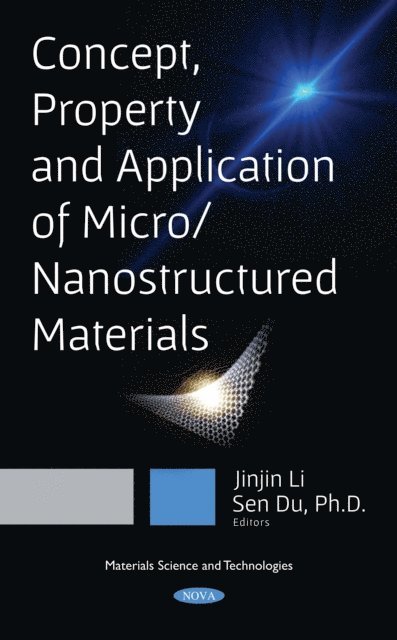
From the perspectives of theory and experiment, this book introduces several different micro/nanostructure materials, including the Mg-based alloy materials, carbon nanotubes and graphene-based materials, micro-crystals, nanostructured Al-SiC composites, optomechanical systems, compound containing functional groups, and biologically active diazoles. Using this book, readers will be able to understand, derive, and confidently implement the relevant phenomena in other complex micro/nanostructures that have not been investigated by traditional methods. Dozens of figures and diagrams throughout this book enhance the understandability through visualization of experimental techniques and computational procedures. Meanwhile, the extensive references and detailed index allow for the further exploration of this evolving area. This book provides a comprehensive treatment of the subject for graduates and researchers within material science, quantum chemistry, as well as atomic, molecular and solid-state physics.
Inbunden, Engelska, 2025
1 602 kr
Skickas inom 5-8 vardagar
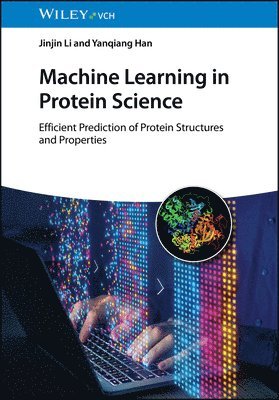
Harness the power of machine learning for quick and efficient calculations of protein structures and properties Machine Learning in Protein Science is a unique and practical reference that shows how to employ machine learning approaches for full quantum mechanical (FQM) calculations of protein structures and properties, thereby saving costly computing time and making this technology available for routine users. Machine Learning in Protein Science provides comprehensive coverage of topics including: Machine learning models and algorithms, from deep neural network (DNN) and transfer learning (TL) to hybrid unsupervised and supervised learningProtein structure predictions with AlphaFold to predict the effects of point mutationsModeling and optimization of the catalytic activity of enzymesProperty calculations (energy, force field, stability, protein-protein interaction, thermostability, molecular dynamics)Protein design and large language models (LLMs) of protein systemsMachine Learning in Protein Science is an essential reference on the subject for biochemists, molecular biologists, theoretical chemists, biotechnologists, and medicinal chemists, as well as students in related programs of study.
E-bok
Engelska, 20251 772 kr
Läs direkt efter köp
Harness the power of machine learning for quick and efficient calculations of protein structures and properties Machine Learning in Protein Science is a unique and practical reference that shows how to employ machine learning approaches for full quantum mechanical (FQM) calculations of protein structures and properties, thereby saving costly computing time and making this technology available for routine users. Machine Learning in Protein Science provides comprehensive coverage of topics including: Machine learning models and algorithms, from deep neural network (DNN) and transfer learning (TL) to hybrid unsupervised and supervised learning Protein structure predictions with AlphaFold to predict the effects of point mutations Modeling and optimization of the catalytic activity of enzymes Property calculations (energy, force field, stability, protein-protein interaction, thermostability, molecular dynamics) Protein design and large language models (LLMs) of protein systems Machine Learning in Protein Science is an essential reference on the subject for biochemists, molecular biologists, theoretical chemists, biotechnologists, and medicinal chemists, as well as students in related programs of study.
E-bok
PDF, Engelska, 20251 772 kr
Läs direkt efter köp
Harness the power of machine learning for quick and efficient calculations of protein structures and properties Machine Learning in Protein Science is a unique and practical reference that shows how to employ machine learning approaches for full quantum mechanical (FQM) calculations of protein structures and properties, thereby saving costly computing time and making this technology available for routine users. Machine Learning in Protein Science provides comprehensive coverage of topics including: Machine learning models and algorithms, from deep neural network (DNN) and transfer learning (TL) to hybrid unsupervised and supervised learning Protein structure predictions with AlphaFold to predict the effects of point mutations Modeling and optimization of the catalytic activity of enzymes Property calculations (energy, force field, stability, protein-protein interaction, thermostability, molecular dynamics) Protein design and large language models (LLMs) of protein systems Machine Learning in Protein Science is an essential reference on the subject for biochemists, molecular biologists, theoretical chemists, biotechnologists, and medicinal chemists, as well as students in related programs of study.