J.L. Sellink - Böcker
Visar alla böcker från författaren J.L. Sellink. Handla med fri frakt och snabb leverans.
3 produkter
3 produkter
549 kr
Skickas inom 10-15 vardagar
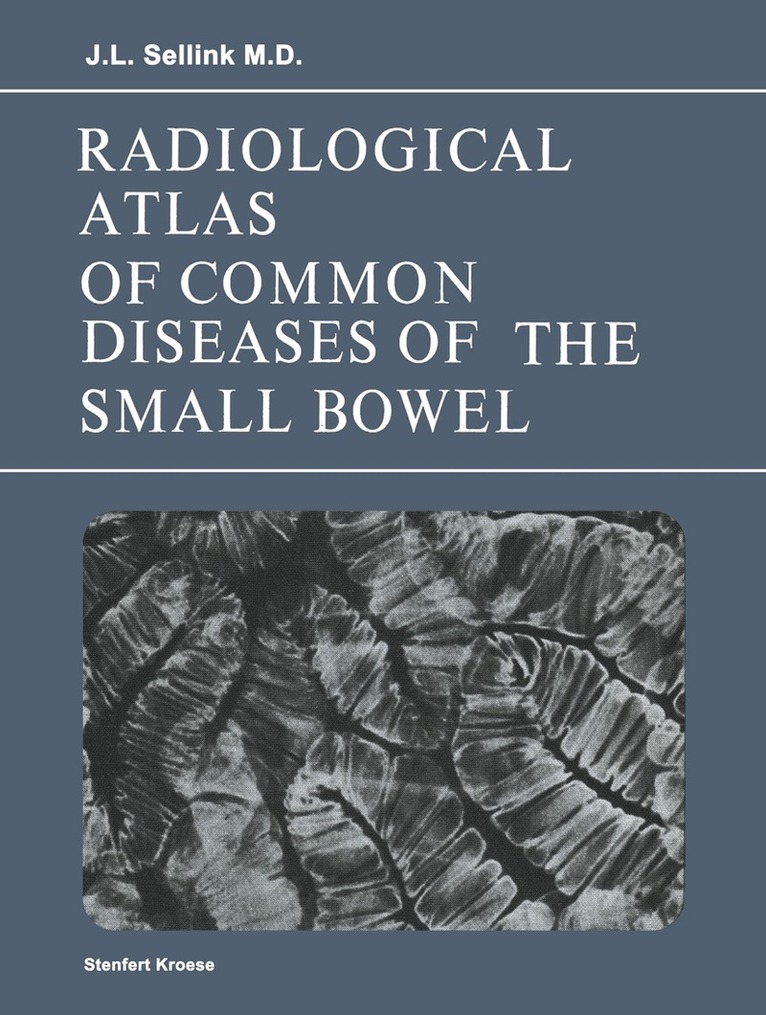
VI J. R. VON RONNEN PREFACE This atlas is a selection of the roentgenograms of patients who visited the Radiology Department at the University Hospital in Leiden between 1970 and 1974. The heads of this department are Prof. J. R. von Ronnen and Prof. A. E. van Voorthuisen. In this atlas, the most frequently occurring radiological abnormalities of the small intestine are illustrated as clearly as possible - without the shadows caused by flocculation or segmentation of the contrast fluid. The author hopes it will be a positive contribution towards the attainment of the highest possible diagnostic score. It should be remembered that the key to good diagnostics is not only a perfect examination technique, but also the knowledge and character of the physician. If these factors are optimal, then the best possible series of roentgenograms will be obtained, at least as far as technique is concerned. All patients were examined by the enteroclysis technique. With this method of examination of the small intestine, the contrast fluid is administered via an infusion directly into the duodenum instead of orally. The infusion method has added a new dimension to the radiological examination of the small intestine. This method has turned out to be especially suitable for the comparative evaluation of motility, and also for the study of disturbed motility.
549 kr
Skickas inom 10-15 vardagar
This atlas is a selection of roentgenograms of patients who visited the radiology departments at the University Hospital in Leiden between 1970 and 1978, the Free University Hospital in Amsterdam in 1979, and the radiology department at the Indiana University Medical School in Indianapolis in 1977. The most common radiological abnormalities of the small intestine are illustrated clearly, unhindered by flocculation or segmentation of the contrast fluid. The authors believe this book is a definite contribution to the goal of precise early small bowel diagnosis. However, the key to good diagnosis is not only a superb examination technique, but also the knowledge, the character, and the personal perfectionism of the physician. If these factors are optimal, then the best possible roentgenographic series will be obtained - at least as far as the technique is concerned. All patients illustrated here were examined by using the enteroclysis technique. With this method of small bowel examination, the contrast fluid is administered via an infusion directly into the duodenum instead of orally. The infusion method has added a new dimension to the usual radiological examination of the small intestine. This method is also especially suited for the comparative evaluation of motility, and the study of disturbed motility. Throughout the course of the examination, the technique can be adapted to special situations at any given moment and can be modified to produce precise diagnostic roentgenograms and diagnosis.
Del 15 - Series in Radiology
X-Ray Differential Diagnosis in Small Bowel Disease
A Practical Approach
Häftad, Engelska, 2011
549 kr
Skickas inom 10-15 vardagar
Publication of this book has been stimulated by 15 performed and duodenal abnormalities thus not years experience with contrast fluid irrigation visualised, occurred frequently. techniques of the small intestine and in particular All too frequently failure to maintain the proper by examinations performed and evaluated by col infusion rate, by many erroneously totally under legues. evaluated, had the result that disturbances in The classification of the X-ray pathology has motility were missed. been arranged to give a more effective application Additional and often too early administration in practice than is usually found in current of water, a measure that is seldom indicated and handbooks. Normally this classification is adapt tends to produce more bad results than good, is ed to that of formal anatomic pathology and quite frequently performed as a sort of panic internal medicine. In this book the classification reaction. The few indications for this procedure is based on the radiological symptomatology. ought to be known and strictly followed, super Thus, often completely unassociated conditions fluous application costs more time and causes are found listed as a possible cause for each unnecessary discomfort for the patient.