Jo-Anne Dillabough – författare
837 kr
Skickas inom 5-8 vardagar
1 713 kr
Skickas inom 10-15 vardagar
484 kr
Skickas inom 10-15 vardagar
2 054 kr
Skickas inom 10-15 vardagar
308 kr
Skickas inom 5-8 vardagar
2 327 kr
Skickas inom 10-15 vardagar
716 kr
Skickas inom 10-15 vardagar
850 kr
Läs direkt efter köp
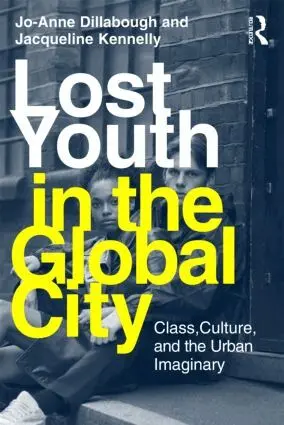
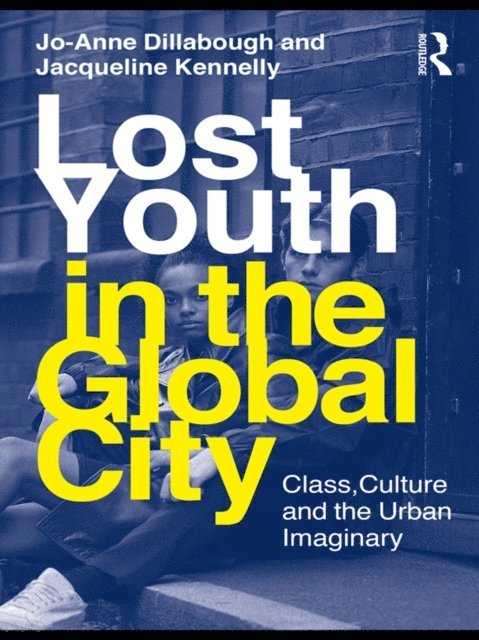
What does it mean to be young, to be economically disadvantaged, and to be subject to constant surveillance both from the formal agencies of the state and from the informal challenge of competing youth groups? What is life like for young people living on the fringe of global cities in late modernity, no longer at the center of city life, but pushed instead to new and insecure margins of the urban inner city? How are changing patterns of migration and work, along with shifting gender roles and expectations, impacting marginalized youth in the radically transformed urban city of the twenty-first century?
In Lost Youth in the Global City, Jo-Anne Dillabough and Jacqueline Kennelly focus on young people who live at the margins of urban centers, the "edges" where low-income, immigrant, and other disenfranchised youth are increasingly finding and defining themselves. Taking the imperative of multi-sited ethnography and urban youth cultures as a starting point, this rich and layered book offers a detailed exploration of the ways in which these groups of young people, marked by economic disadvantage and ethnic and religious diversity, have sought to navigate a new urban terrain and, in so doing, have come to see themselves in new ways. By giving these young people shape and form – both looking across their experiences in different cities and attending to their particularities – Lost Youth in the Global City sets a productive and generative agenda for the field of critical youth studies.
850 kr
Läs direkt efter köp
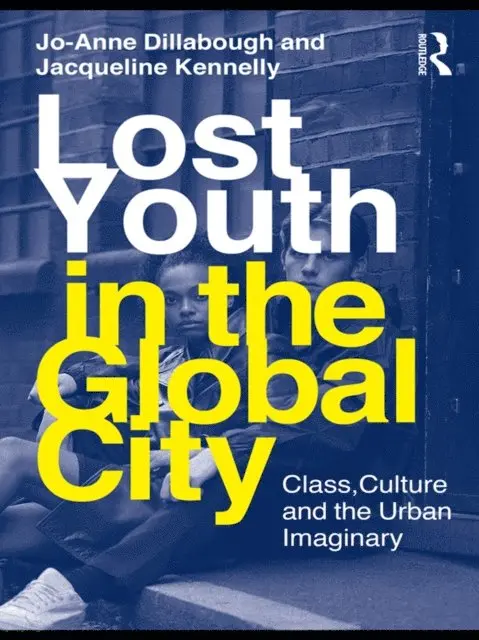
What does it mean to be young, to be economically disadvantaged, and to be subject to constant surveillance both from the formal agencies of the state and from the informal challenge of competing youth groups? What is life like for young people living on the fringe of global cities in late modernity, no longer at the center of city life, but pushed instead to new and insecure margins of the urban inner city? How are changing patterns of migration and work, along with shifting gender roles and expectations, impacting marginalized youth in the radically transformed urban city of the twenty-first century?
In Lost Youth in the Global City, Jo-Anne Dillabough and Jacqueline Kennelly focus on young people who live at the margins of urban centers, the "edges" where low-income, immigrant, and other disenfranchised youth are increasingly finding and defining themselves. Taking the imperative of multi-sited ethnography and urban youth cultures as a starting point, this rich and layered book offers a detailed exploration of the ways in which these groups of young people, marked by economic disadvantage and ethnic and religious diversity, have sought to navigate a new urban terrain and, in so doing, have come to see themselves in new ways. By giving these young people shape and form – both looking across their experiences in different cities and attending to their particularities – Lost Youth in the Global City sets a productive and generative agenda for the field of critical youth studies.
572 kr
Läs direkt efter köp
This collection establishes a highly topical, new, international field of study: that of gender, education and citizenship. It brings together for the first time important cutting-edge research on the contribution of the educational system to the formation of male and female citizens. It shows how gender relations operate behind apparently neutral concepts of liberal democratic citizenship and citizenship education.The editors asked leading international educationalists to describe the theoretical frameworks and methodologies they used to research gender and citizenship.Challenging Democracy suggests ways in which the educational system could help develop genuinely inclusive democratic societies in which men and women play an equal role in shaping the meaning of citizenship.
572 kr
Läs direkt efter köp
This collection establishes a highly topical, new, international field of study: that of gender, education and citizenship. It brings together for the first time important cutting-edge research on the contribution of the educational system to the formation of male and female citizens. It shows how gender relations operate behind apparently neutral concepts of liberal democratic citizenship and citizenship education.The editors asked leading international educationalists to describe the theoretical frameworks and methodologies they used to research gender and citizenship.Challenging Democracy suggests ways in which the educational system could help develop genuinely inclusive democratic societies in which men and women play an equal role in shaping the meaning of citizenship.
278 kr
Läs direkt efter köp
This book explores new questions and lines of analysis within the field of ‘gender and education’, conveying some of the style and diversity of contemporary research directions. It celebrates as well as assesses the achievements of feminist work in education, acknowledging this legacy while also ‘troubling’ and opening up for critical reflection any potential stalemates and sticking points in research trends on gender and education. The collection has a strong cross-cultural focus, with chapters exploring experiences of students and teachers in the UK, the US, Australia, Canada, Hawaii and South Africa. The chapters examine topics relevant to both boys’ and girls’ education and to forms of education which span different sectors and both informal and formal spaces. Issues examined include citizenship and belonging, affect, authority and pedagogy, sexuality and the body, racism, and national identity and new and emerging forms of masculinity and femininity. Across these varied terrains, each of the authors engages with theoretical work informed by a broad range of disciplinary and interdisciplinary approaches from across the social sciences and humanities, drawing variously from postcolonial, queer, and new sociological theories of modernity and identity, as well as from fields such as cultural geography and narrative studies.
This collection of thought-provoking essays is essential reading for scholars and graduate students wanting to understand the current state of play on research and theory on ‘gender and education’.
This book was published in a special issue of Discourse: Studies in the Cultural Politics of Education.

278 kr
Läs direkt efter köp
This book explores new questions and lines of analysis within the field of ‘gender and education’, conveying some of the style and diversity of contemporary research directions. It celebrates as well as assesses the achievements of feminist work in education, acknowledging this legacy while also ‘troubling’ and opening up for critical reflection any potential stalemates and sticking points in research trends on gender and education. The collection has a strong cross-cultural focus, with chapters exploring experiences of students and teachers in the UK, the US, Australia, Canada, Hawaii and South Africa. The chapters examine topics relevant to both boys’ and girls’ education and to forms of education which span different sectors and both informal and formal spaces. Issues examined include citizenship and belonging, affect, authority and pedagogy, sexuality and the body, racism, and national identity and new and emerging forms of masculinity and femininity. Across these varied terrains, each of the authors engages with theoretical work informed by a broad range of disciplinary and interdisciplinary approaches from across the social sciences and humanities, drawing variously from postcolonial, queer, and new sociological theories of modernity and identity, as well as from fields such as cultural geography and narrative studies.
This collection of thought-provoking essays is essential reading for scholars and graduate students wanting to understand the current state of play on research and theory on ‘gender and education’.
This book was published in a special issue of Discourse: Studies in the Cultural Politics of Education.