Joan A. Graen – författare
Visar alla böcker från författaren Joan A. Graen. Handla med fri frakt och snabb leverans.
8 produkter
8 produkter
607 kr
Skickas inom 5-8 vardagar
This third volume of LMX Leadership: The Series addresses the question of how leaders prepare their teams for required loosely directed, highly coordinated, and above all, flexible operations. It is our hope that this volume will stimulate scholarly sweat, blood, and tears needed to make continued progress toward our goal of understanding how the powerful tools of relational leadership can be employed properly to create the flexible organizational structures required to compete successfully in the environmental turbulence of the 21st century. As we stated before, the rapidly changing information age is all around us and we are struggling to cope with our out-dated, rigid bureaucratic structures. The “China Price” has redefined the standards of performance world wide and they cannot be met with obsolete organizing designs.
1 074 kr
Skickas inom 5-8 vardagar
This third volume of LMX Leadership: The Series addresses the question of how leaders prepare their teams for required loosely directed, highly coordinated, and above all, flexible operations. It is our hope that this volume will stimulate scholarly sweat, blood, and tears needed to make continued progress toward our goal of understanding how the powerful tools of relational leadership can be employed properly to create the flexible organizational structures required to compete successfully in the environmental turbulence of the 21st century. As we stated before, the rapidly changing information age is all around us and we are struggling to cope with our out-dated, rigid bureaucratic structures. The “China Price” has redefined the standards of performance world wide and they cannot be met with obsolete organizing designs.
557 kr
Skickas inom 5-8 vardagar
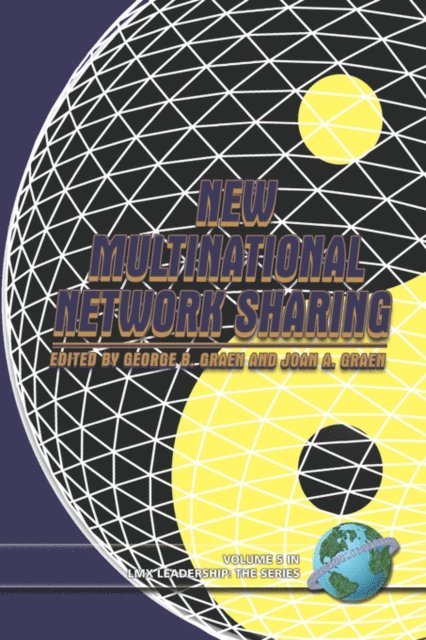
This book employs a network-centric approach to the new field of multinational leadership and network sharing. Networks go beyond teams but may include teams of various types from homogeneous project teams to multinational strategy teams and every type of team between. Conventional wisdom was that nothing larger than a relatively small team could be led effectively because the number of relationships between people is about one half of the square of the size of the team. For a team in which every member depends on every other member, the number of interdependent relationships becomes overwhelming with relatively small team sizes. Fortunately, recent technical advances in network analysis and multicultural cooperation have been developed to rescue us from mind boggling bombardments of everyone trying to communicate over all others at once. Merely thinking about such a Kafkaesque situation hurts our heads. Armed with these two breakthroughs fairly large networks, both national and multinational, can be led effectively with appropriate selection and training. This book furthers our attempts to make functional networks perform their promise of becoming “superteams.”
1 038 kr
Skickas inom 5-8 vardagar
This book employs a network-centric approach to the new field of multinational leadership and network sharing. Networks go beyond teams but may include teams of various types from homogeneous project teams to multinational strategy teams and every type of team between. Conventional wisdom was that nothing larger than a relatively small team could be led effectively because the number of relationships between people is about one half of the square of the size of the team. For a team in which every member depends on every other member, the number of interdependent relationships becomes overwhelming with relatively small team sizes. Fortunately, recent technical advances in network analysis and multicultural cooperation have been developed to rescue us from mind boggling bombardments of everyone trying to communicate over all others at once. Merely thinking about such a Kafkaesque situation hurts our heads. Armed with these two breakthroughs fairly large networks, both national and multinational, can be led effectively with appropriate selection and training. This book furthers our attempts to make functional networks perform their promise of becoming “superteams.”
556 kr
Skickas inom 5-8 vardagar
When the tried and true formula for an organization’s performance (its game plan) begins to fail, it must change its game or become obsolete. Publicly recognizing that the old formula is becoming less useful and a new formula must be developed and implemented is difficult for most stakeholders, but for survival the stages of grief must be endured and the conclusion accepted. Moreover, the romance of the “grand old formula” must be overcome by the realization that a new and more attractive formula must be invented or found to replace it. The fate of thousands of organizations that did not change their games when WalMart came to town bears witness to the Iron Law of Capitalistic Markets: “Change your game when necessary to remain competitive”. As Mr. Sam Walton told my son, Mike, stay the course as long as you can, but be willing to change it when it’s not working. Clearly, Mr. Sam’s protégés got the message.This book describes game-changing designs using the latest research-based strategies for inside organizational participants from CEOs, Boards of Directors, top, middle and lower managers and participants, and those people outside with a stake in its continued performance.We have had the unique opportunity to understand from the “inside-out” both Mr. Sam Walton’s miracle at WalMart and the great turnaround at Cincinnati’s Procter and Gamble over the last 15 plus years. We conclude from these studies that Mr. Sam has become a modern patron saint of American game-changers. WalMart has been seen by most business reviewers as a clear business case study of a “stay the course” formula of “lowest price” for the customer, but our research shows that Mr. Sam created a “game-changing design culture”. Yes, Mr. Sam began to build his juggernaut using a “lowest price” strategy that changed the game by “shock and awe” strategies in small markets. Moreover, Mr. Sam next changed the game by employing advanced information technology to reduce supply chain costs and go international. Later, Mr. Sam changed the game again by partnering with his reluctant vendors and requiring that most large suppliers maintain a permanent WalMart team near WalMart headquarters in Bentonville, Arkansas. Later, Mr. Scott, the CEO successor to Mr. Sam, changed the game again by “going green”. In addition, the effective integrative partnering with originally adversarial supplier teams by Mike Graen’s coaches set of new standard for inter-organizational cooperation. Mr. Sam’s legacy continues to inspire new game-changing designs across many different kinds of organizations in America and beyond. Once CEOs understand that their competition is as bright and hard working as they and they need to leap-frog to new games, Mr. Sam’s examples of carefully designed and implemented game-changing research-based innovations become their bible. As our domestic and international markets have become increasingly discontinuous and what worked yesterday doesn’t work today, our CEOs should look to Mr. Sam’s approach that changed the game before his competitors many times.
1 036 kr
Skickas inom 5-8 vardagar
When the tried and true formula for an organization’s performance (its game plan) begins to fail, it must change its game or become obsolete. Publicly recognizing that the old formula is becoming less useful and a new formula must be developed and implemented is difficult for most stakeholders, but for survival the stages of grief must be endured and the conclusion accepted. Moreover, the romance of the “grand old formula” must be overcome by the realization that a new and more attractive formula must be invented or found to replace it. The fate of thousands of organizations that did not change their games when WalMart came to town bears witness to the Iron Law of Capitalistic Markets: “Change your game when necessary to remain competitive”. As Mr. Sam Walton told my son, Mike, stay the course as long as you can, but be willing to change it when it’s not working. Clearly, Mr. Sam’s protégés got the message.This book describes game-changing designs using the latest research-based strategies for inside organizational participants from CEOs, Boards of Directors, top, middle and lower managers and participants, and those people outside with a stake in its continued performance.We have had the unique opportunity to understand from the “inside-out” both Mr. Sam Walton’s miracle at WalMart and the great turnaround at Cincinnati’s Procter and Gamble over the last 15 plus years. We conclude from these studies that Mr. Sam has become a modern patron saint of American game-changers. WalMart has been seen by most business reviewers as a clear business case study of a “stay the course” formula of “lowest price” for the customer, but our research shows that Mr. Sam created a “game-changing design culture”. Yes, Mr. Sam began to build his juggernaut using a “lowest price” strategy that changed the game by “shock and awe” strategies in small markets. Moreover, Mr. Sam next changed the game by employing advanced information technology to reduce supply chain costs and go international. Later, Mr. Sam changed the game again by partnering with his reluctant vendors and requiring that most large suppliers maintain a permanent WalMart team near WalMart headquarters in Bentonville, Arkansas. Later, Mr. Scott, the CEO successor to Mr. Sam, changed the game again by “going green”. In addition, the effective integrative partnering with originally adversarial supplier teams by Mike Graen’s coaches set of new standard for inter-organizational cooperation. Mr. Sam’s legacy continues to inspire new game-changing designs across many different kinds of organizations in America and beyond. Once CEOs understand that their competition is as bright and hard working as they and they need to leap-frog to new games, Mr. Sam’s examples of carefully designed and implemented game-changing research-based innovations become their bible. As our domestic and international markets have become increasingly discontinuous and what worked yesterday doesn’t work today, our CEOs should look to Mr. Sam’s approach that changed the game before his competitors many times.
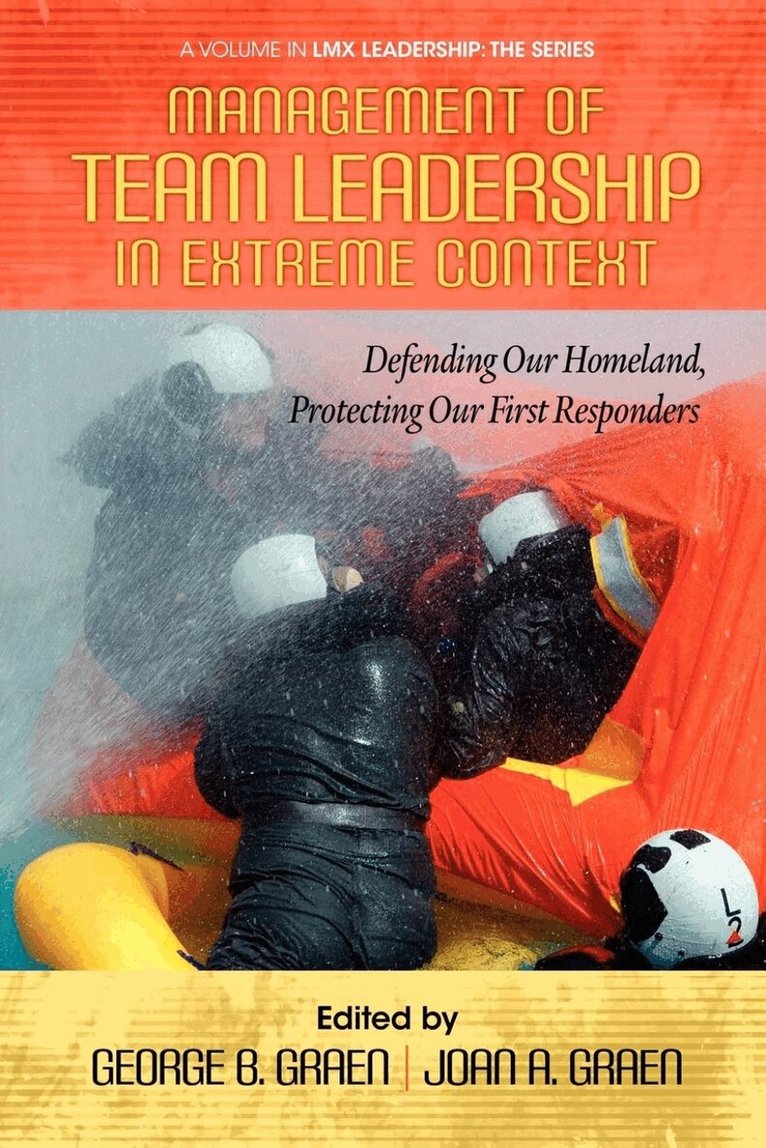
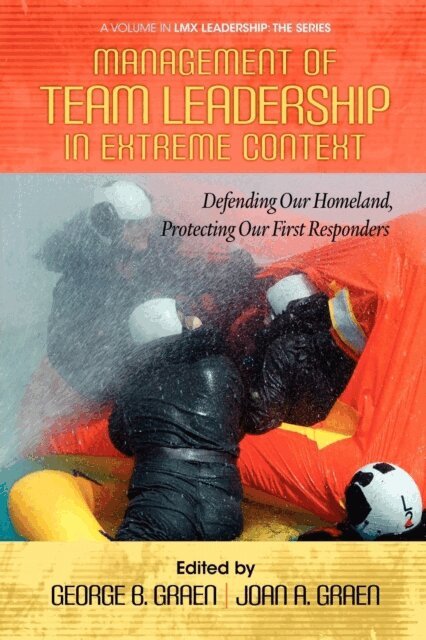
Management of Team Leadership in Extreme Context
Defending Our Homeland, Protecting Our First Responders
Häftad, Engelska, 2012
557 kr
Skickas inom 5-8 vardagar
The proper balance of managerial “administrative-control” and managerial “team-leadership” depends upon the work context. After organizational procedures are designed by work-process engineers, managers and their directreports in the business units, are charged to “save our ship” (SOS) by their employers. Their ships, their business units, often were built for calm seas. Unfortunately, turbulent seas may happen unexpectedly and stress their ships and crews. Under extreme conditions, the sea may put their ships squarely in “harm’s way”. If they are not well prepared, their chances of survival are few and none. This book is about managing and being managed under conditions of “extreme contexts” where only the “special teams” survive and prosper.
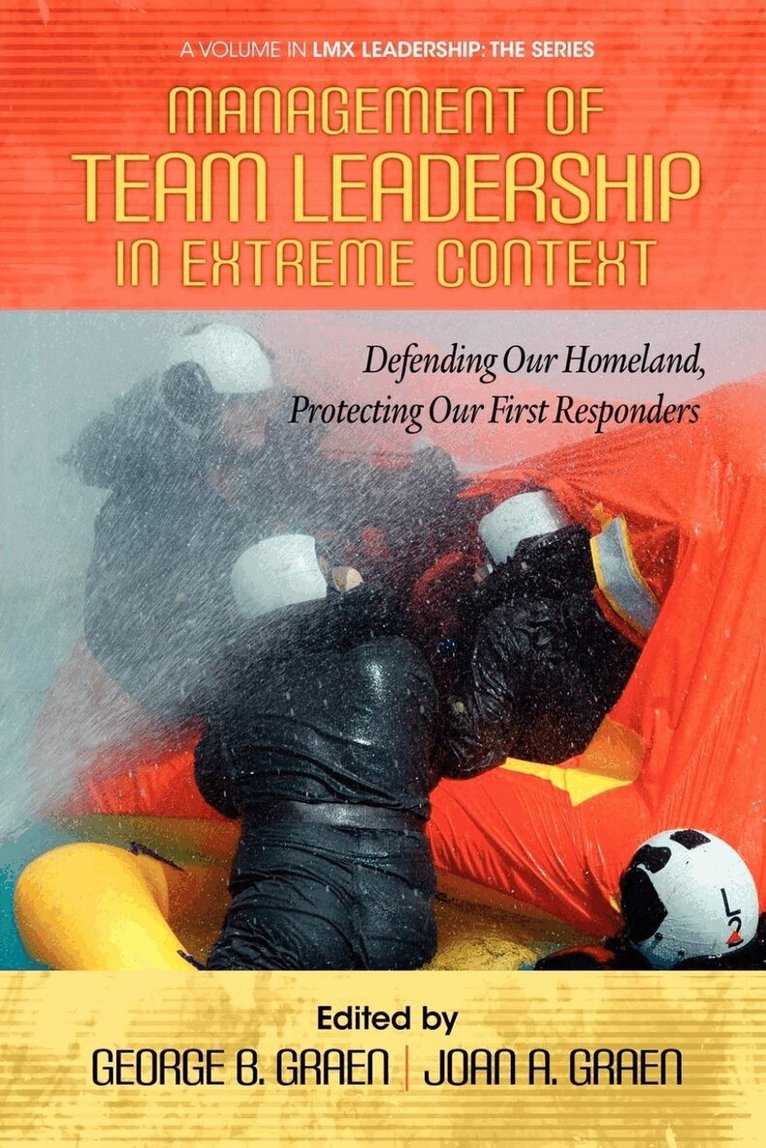
Management of Team Leadership in Extreme Context
Defending Our Homeland, Protecting Our First Responders
Inbunden, Engelska, 2012
1 038 kr
Skickas inom 5-8 vardagar
The proper balance of managerial “administrative-control” and managerial “team-leadership” depends upon the work context. After organizational procedures are designed by work-process engineers, managers and their directreports in the business units, are charged to “save our ship” (SOS) by their employers. Their ships, their business units, often were built for calm seas. Unfortunately, turbulent seas may happen unexpectedly and stress their ships and crews. Under extreme conditions, the sea may put their ships squarely in “harm’s way”. If they are not well prepared, their chances of survival are few and none. This book is about managing and being managed under conditions of “extreme contexts” where only the “special teams” survive and prosper.