Joana Silva – författare
Visar alla böcker från författaren Joana Silva. Handla med fri frakt och snabb leverans.
13 produkter
13 produkter
Häftad, Engelska, 2014
381 kr
Skickas inom 5-8 vardagar
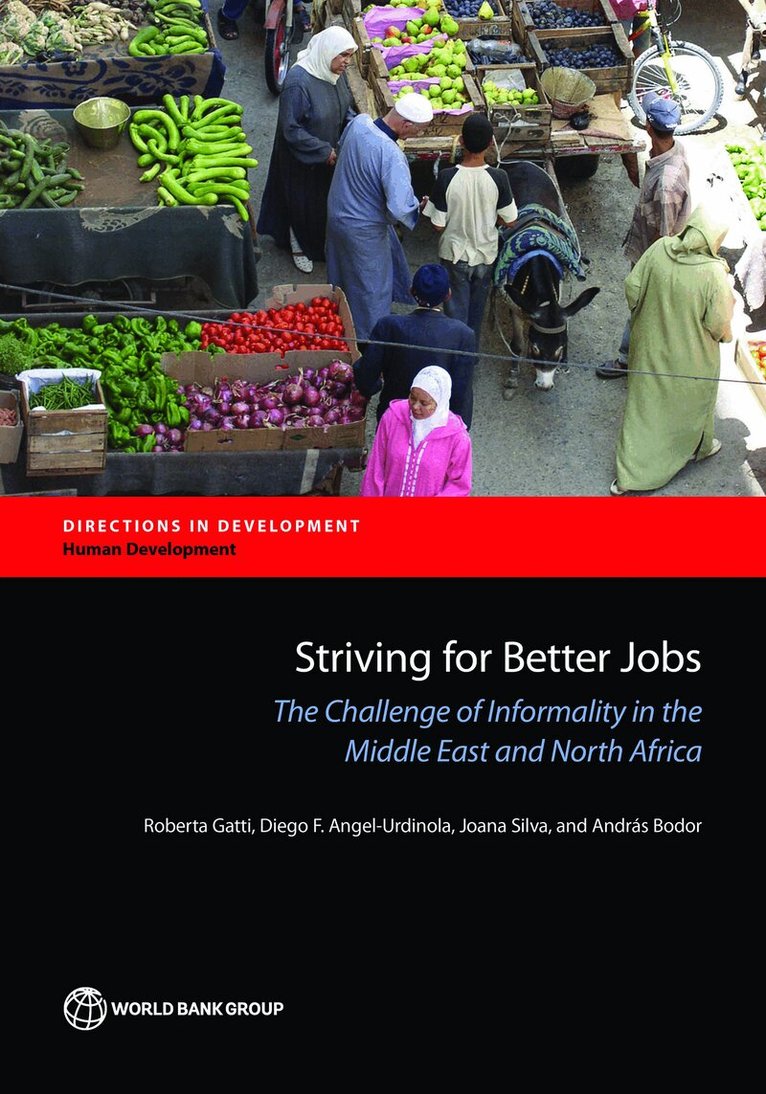
While economic growth has been sustained for a number of years in many countries in the Middle East and North Africa (MENA) region, this has not resulted in the creation of an adequate number of jobs and has succeeded, at best, in generating low-quality, informal jobs. While there is a great deal of heterogeneity across countries, informality in MENA is widespread, and some countries in the region are amongst the most informal economies in the world. The book looks at informality through a human development angle and focuses specifically on informal employment. In line with this approach, the working definition for informality adopted in the book is “lack of social security coverage” (usually understood as pensions, or if a pension system does not exist, as health insurance), which captures well the vulnerability associated with informal employment. Informal workers in MENA are generally engaged in low productivity jobs - more so than in comparator countries -, are paid less for otherwise similar work in the formal sector, and self-report low levels of satisfaction at work. Also, informal workers in MENA face important mobility barriers into formal employment and thus lack of social security coverage against health, unemployment, and old-age risks. Formal employment in the MENA region is strongly associated with public sector employment. Opportunities for formal employment in the private sector in the region remain very limited. The book identifies 5 strategic directions to promote long-term inclusive growth and formality, namely: (i) fostering competition; (ii) realigning incentives in the public sector; (iii) moving towards labor regulations that promote labor mobility and provide support to workers in periods of transition; (iv) enhancing the productivity of informal workers through training and skills upgrading; and (v) reforming existing social insurance systems and introduce new instruments for coverage extension. This book is addressed to policy makers, academics, and practitioners who wish to understand the phenomenon of informal employment, and policy options for promoting more inclusive and productive labor market opportunities.
Häftad, Engelska, 2013
320 kr
Skickas inom 5-8 vardagar
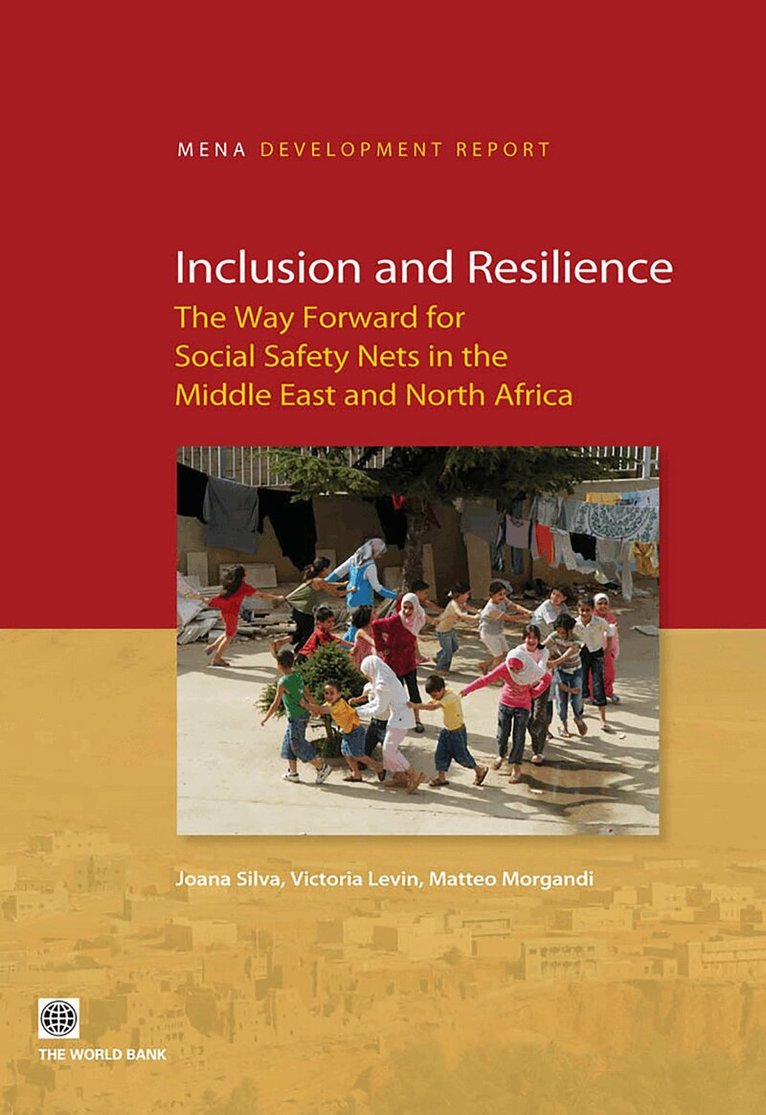
The report aims to meet two broad objectives: (a) enhance knowledge about the current state of existing social safety nets (SSNs) and assess their effectiveness in responding to new and emerging challenges to the poor and vulnerable in the region by bringing together new evidence, data, and country-specific analysis; and (b) open up and inform a debate on feasible policy options to make SSNs in the Middle East and North Africa more effective and innovative. The first chapter, 'a framework for SSN reform', describes and illustrates the reasons for the region's growing need for SSN reform and establishes the framework for renewed SSNs. It identifies key goals for SSNs (promoting social inclusion, livelihood, and resilience) and illustrates how these goals have been achieved in some parts of the region and elsewhere.The second chapter, 'key challenges that call for renewed SSNs', analyses the challenges facing the region's poor and vulnerable households, which SSNs could focus on as a priority. Two large groups are at higher-than-average poverty risk: children and those who live in rural or lagging areas. The third chapter, 'the current state of SSNs in the Middle East and North Africa', analyses SSN spending and assesses different aspects of the SSN systems' performance.The fourth chapter, 'the political economy of SSN reforms in the Middle East and North Africa: what do citizens want?' presents new evidence on citizens' preferences concerning redistribution and SSN design, using newly collected data. It also discusses how political economy considerations could be taken into account in designing renewed SSNs in the region. The fifth chapter, 'the way forward: how to make safety nets in the Middle East and North Africa more effective and innovative,' proposes an agenda for reform and the path for moving forward, using global experience and the evidence presented in the preceding chapters.
Häftad, Engelska, 2015
392 kr
Skickas inom 5-8 vardagar
Continued social and economic progress in Brazil will depend on high employment, sustained labor productivity and income growth, and opportunities for the poor and disadvantaged to upgrade their own productivity and convert it into sustainable incomes.
Häftad, Engelska, 2017
443 kr
Skickas inom 10-15 vardagar
This report seeks to explain the over-time trends in wage inequality in Latin America and the Caribbean (LAC) since the mid-1990s. It explains how wage inequality has been associated with household-income inequality in LAC in the past decades, and discusses how labor-supply and labour-demand trends have affected wage inequality.The Latin American region achieved something truly remarkable during the 2000s: it sustained vigorous economic growth with declining inequality. Other regions in the world grew strongly during this period, but this growth was not shared equitably. However, lower commodity prices and slower growth in China have reduced Latin America’s growth prospects in recent years. At the same time, inequality reduction has halted in many countries. As the new low-growth scenario hits labor markets, it is important to ask whether the social gains of the 2000s can be sustained. Will lower wage growth occur across all segments of the wage distribution in Latin America, or will the slowdown disproportionately hurt those who have less? Will the economic slowdown put the brakes on the reduction of wage inequality in Latin America? To answer these forward-looking questions and to know what to expect, it is essential to understand the causes of the observed changes in wage inequality in the past decades, which is the focus of this research project.
Häftad, Engelska, 2021
498 kr
Skickas inom 10-15 vardagar
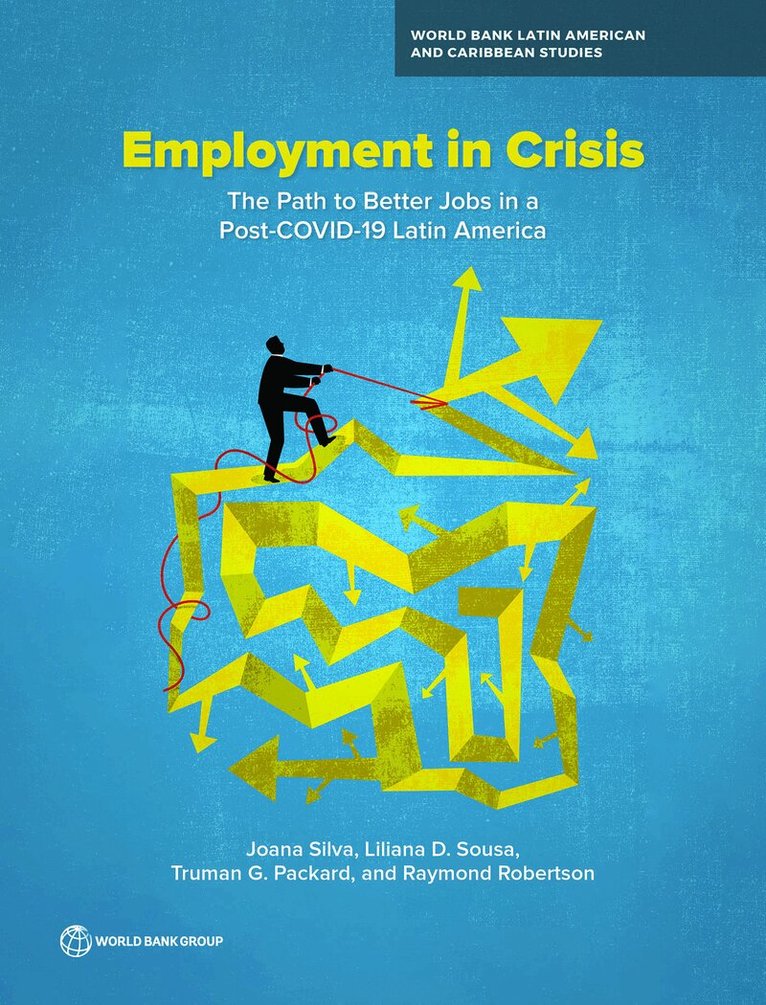
A better policy framework for preventing, managing, and helping people recover from crises is crucial to lifting long-term growth and livelihoods in Latin America and the Caribbean (LAC). The need for this policy framework has never been more urgent as the region faces the monumental task of recovery from the worldwide COVID-19 pandemic. Whether specific policy responses will deliver the expected growth dividends will depend on the underlying vision of how labor markets adjust to crises and the quality of the policies enacted. This report estimates how crises change labor market flows, assesses how these changes affect people, and discusses the key policy responses.The key findings are threefold. First, crises have significant impacts on employment dynamics and structure in Latin America. Different labor market dynamics hide behind similar reductions in labor demand. Crises increase unemployment. This is the principal margin of adjustment despite highly informal labor markets. Across the region, the biggest employment losses are in the formal sector, driven by a reduction in job-finding rates rather than higher job-loss rates. Adjustment through reduction in hours worked does not seem to be an important factor in most countries' formal or informal sectors. Crises do not just shape worker flows temporarily—they have significant after-crisis effects on the structure of employment that last for several years. These effects are such that good job opportunities are gradually shrinking. Whereas in some countries the whole economy shrinks, in others informality serves as a partial buffer. Second, crises leave scars. Some workers recover from displacement and other livelihood shocks, while others are permanently scarred. For lower-skilled workers, earnings losses are persistent. Workers with higher education suffer no impacts of the crisis on their wages and very short-lived impacts on their employment. The responses are similar across male and female workers and workers with high and low previous participation in the formal labor market. New entrants to the labor market during a crisis face a worse career start – one from which it is difficult to recover. Yet, crises also bring efficiency gains, as detailed in this report.This study finds that both the structure of product markets and the conditions in local labor markets matter for the severity of crisis-induced employment and earnings losses across localities and sectors. Workers in more protected sectors that enjoy rents are sheltered from adjustment, while workers in localities with more informality cope better. This suggests the need for integrated responses at the worker, sector, and locality levels.Third, this study considers how the region’s policy frameworks can more effectively respond to crises—mitigating scarring, speeding adjustment, and promoting long-term growth. It proposes a three-pronged strategy, including (i) creating a more stable macroeconomic environment at the aggregate level to smooth the impacts of crises, including "automatic stabilizers" such as countercyclical, publicly-financed income support that is lacking in LAC; (ii) increasing the capacity of social protection and labor policies to provide income support as well prepare workers for change through reemployment assistance; and (iii) tackling structural issues, including addressing product market competition, contestability issues, and the spatial dimension behind poor labor market adjustment.
Häftad, Spanska, 2021
498 kr
Skickas inom 10-15 vardagar
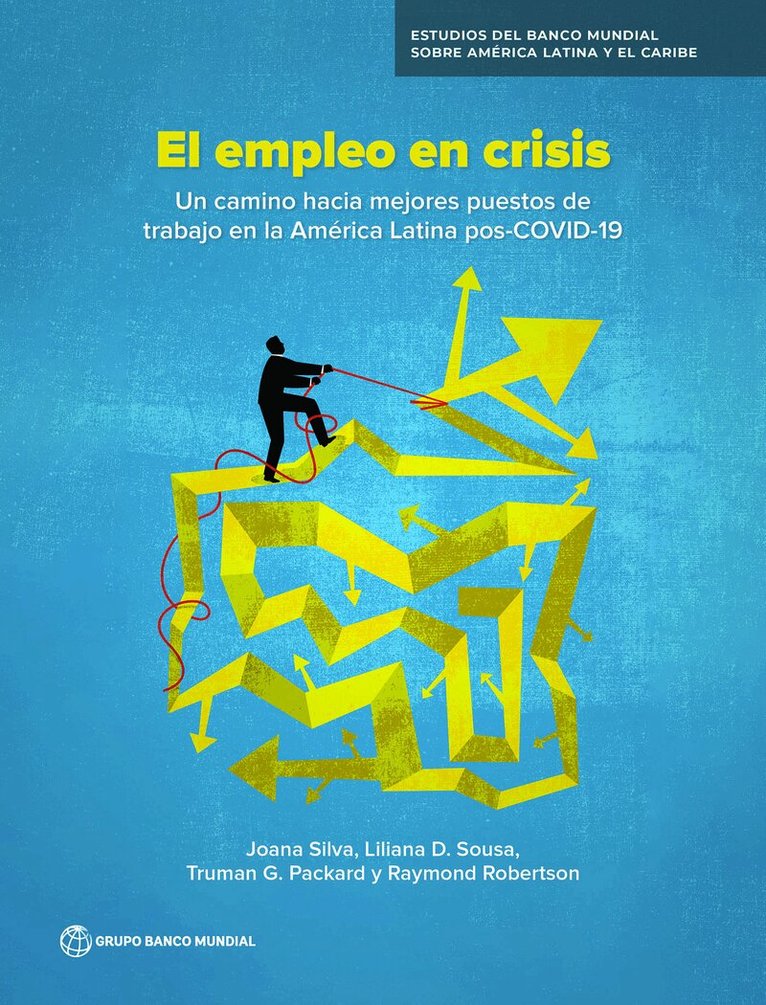
A better policy framework for preventing, managing, and helping people recover from crises is crucial to lifting long-term growth and livelihoods in Latin America and the Caribbean (LAC). The need for this policy framework has never been more urgent as the region faces the monumental task of recovery from the worldwide COVID-19 pandemic. Whether specific policy responses will deliver the expected growth dividends will depend on the underlying vision of how labor markets adjust to crises and the quality of the policies enacted. This report estimates how crises change labor market flows, assesses how these changes affect people, and discusses the key policy responses.The key findings are threefold. First, crises have significant impacts on employment dynamics and structure in Latin America. Different labor market dynamics hide behind similar reductions in labor demand. Crises increase unemployment. This is the principal margin of adjustment despite highly informal labor markets. Across the region, the biggest employment losses are in the formal sector, driven by a reduction in job-finding rates rather than higher job-loss rates. Adjustment through reduction in hours worked does not seem to be an important factor in most countries' formal or informal sectors. Crises do not just shape worker flows temporarily—they have significant after-crisis effects on the structure of employment that last for several years. These effects are such that good job opportunities are gradually shrinking. Whereas in some countries the whole economy shrinks, in others informality serves as a partial buffer.Second, crises leave scars. Some workers recover from displacement and other livelihood shocks, while others are permanently scarred. For lower-skilled workers, earnings losses are persistent. Workers with higher education suffer no impacts of the crisis on their wages and very short-lived impacts on their employment. The responses are similar across male and female workers and workers with high and low previous participation in the formal labor market. New entrants to the labor market during a crisis face a worse career start – one from which it is difficult to recover. Yet, crises also bring efficiency gains, as detailed in this report.This study finds that both the structure of product markets and the conditions in local labor markets matter for the severity of crisis-induced employment and earnings losses across localities and sectors. Workers in more protected sectors that enjoy rents are sheltered from adjustment, while workers in localities with more informality cope better. This suggests the need for integrated responses at the worker, sector, and locality levels.Third, this study considers how the region’s policy frameworks can more effectively respond to crises—mitigating scarring, speeding adjustment, and promoting long-term growth. It proposes a three-pronged strategy, including (i) creating a more stable macroeconomic environment at the aggregate level to smooth the impacts of crises, including "automatic stabilizers" such as countercyclical, publicly-financed income support that is lacking in LAC; (ii) increasing the capacity of social protection and labor policies to provide income support as well prepare workers for change through reemployment assistance; and (iii) tackling structural issues, including addressing product market competition, contestability issues, and the spatial dimension behind poor labor market adjustment.
Häftad, Portugisiska, 2021
498 kr
Skickas inom 10-15 vardagar
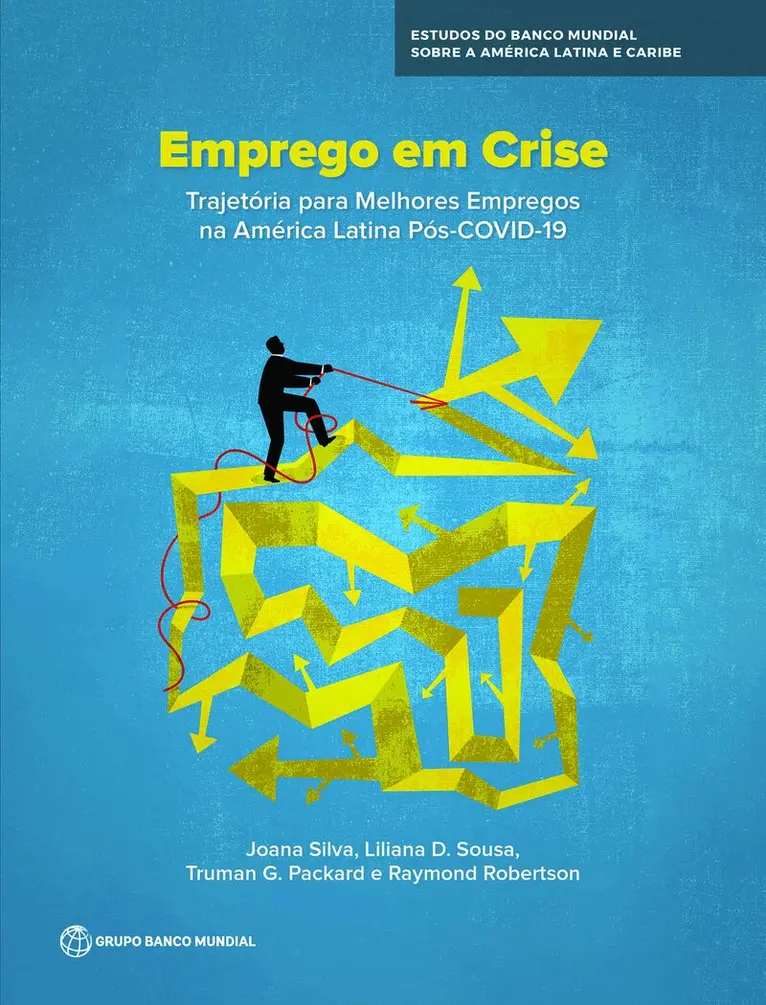
A better policy framework for preventing, managing, and helping people recover from crises is crucial to lifting long-term growth and livelihoods in Latin America and the Caribbean (LAC). The need for this policy framework has never been more urgent as the region faces the monumental task of recovery from the worldwide COVID-19 pandemic. Whether specific policy responses will deliver the expected growth dividends will depend on the underlying vision of how labor markets adjust to crises and the quality of the policies enacted. This report estimates how crises change labor market flows, assesses how these changes affect people, and discusses the key policy responses.The key findings are threefold. First, crises have significant impacts on employment dynamics and structure in Latin America. Different labor market dynamics hide behind similar reductions in labor demand. Crises increase unemployment. This is the principal margin of adjustment despite highly informal labor markets. Across the region, the biggest employment losses are in the formal sector, driven by a reduction in job-finding rates rather than higher job-loss rates. Adjustment through reduction in hours worked does not seem to be an important factor in most countries' formal or informal sectors. Crises do not just shape worker flows temporarily—they have significant after-crisis effects on the structure of employment that last for several years. These effects are such that good job opportunities are gradually shrinking. Whereas in some countries the whole economy shrinks, in others informality serves as a partial buffer.Second, crises leave scars. Some workers recover from displacement and other livelihood shocks, while others are permanently scarred. For lower-skilled workers, earnings losses are persistent. Workers with higher education suffer no impacts of the crisis on their wages and very short-lived impacts on their employment. The responses are similar across male and female workers and workers with high and low previous participation in the formal labor market. New entrants to the labor market during a crisis face a worse career start – one from which it is difficult to recover. Yet, crises also bring efficiency gains, as detailed in this report.This study finds that both the structure of product markets and the conditions in local labor markets matter for the severity of crisis-induced employment and earnings losses across localities and sectors. Workers in more protected sectors that enjoy rents are sheltered from adjustment, while workers in localities with more informality cope better. This suggests the need for integrated responses at the worker, sector, and locality levels.Third, this study considers how the region’s policy frameworks can more effectively respond to crises—mitigating scarring, speeding adjustment, and promoting long-term growth. It proposes a three-pronged strategy, including (i) creating a more stable macroeconomic environment at the aggregate level to smooth the impacts of crises, including "automatic stabilizers" such as countercyclical, publicly-financed income support that is lacking in LAC; (ii) increasing the capacity of social protection and labor policies to provide income support as well prepare workers for change through reemployment assistance; and (iii) tackling structural issues, including addressing product market competition, contestability issues, and the spatial dimension behind poor labor market adjustment.
Häftad, Engelska, 2023
491 kr
Skickas inom 5-8 vardagar
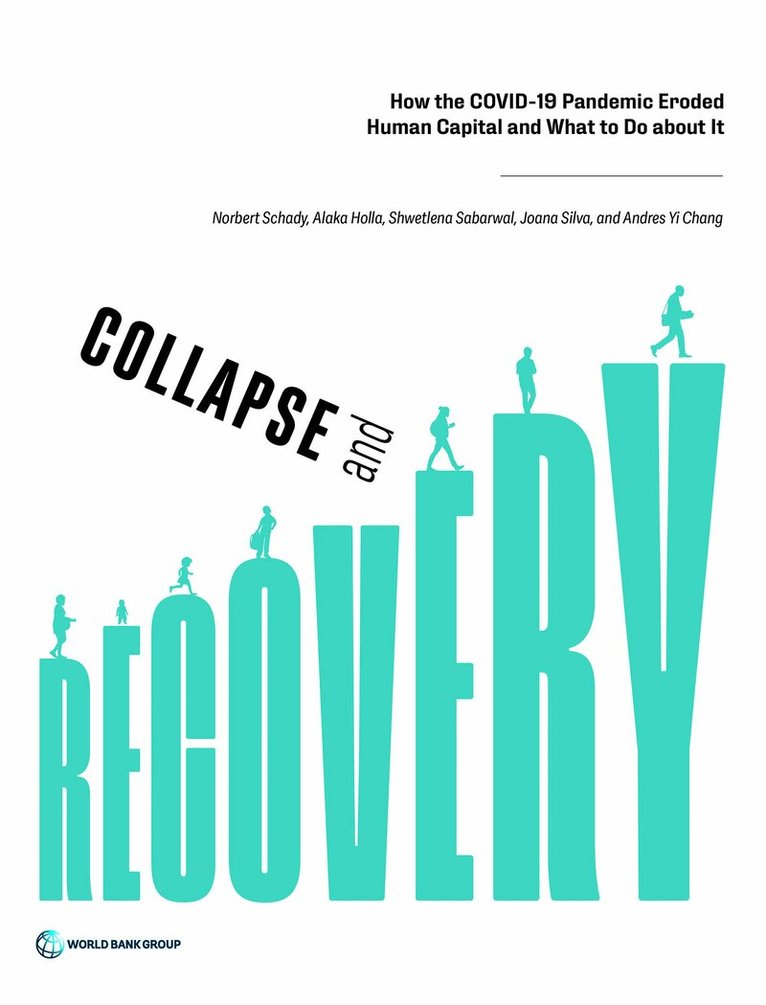
The COVID-19 pandemic has dealt a severe blow to human capital. This report presents new evidence and analysis to provide a comprehensive diagnostic of the effects of the pandemic on human capital outcomes and identify promising policy responses for governments faced with the task of rebuilding human capital in the wake of the pandemic. The report identifies the mechanisms through which COVID-19 affected the human capital of people at different points in the life cycle and provides estimates of the magnitude of these losses. This analysis underlines differences in impact across countries and groups within countries to understand how the reported blow on human capital has been unequal, exacerbating existing gaps and creating new ones. Grounded in the diagnostic, the report discusses policy responses that attend to afflicted groups in the short-term as well as the medium- to long-term agenda to build back better human capital and make systems more resilient. The long-term policy discussion recognizes COVID-19 as an inflection point, using the opportunity to reimagine systems and institutions, thinking in a completely different way about some key issues. In conclusion, the report reflects on what we have learned from failed policy responses as well as the innovations that proved successful across sectors in preventing or mitigating human capital losses associated with the COVID-19 crisis, and how these lessons can be incorporated across sectors going forward.
Häftad, Engelska, 2026
443 kr
Skickas inom 3-6 vardagar
This new human capital report emphasizes that the places where people grow up, live, and work have a powerful impact on their health, learning, and job prospects. By focusing on homes, neighborhoods, and workplaces, it reveals untapped opportunities to improve lives, reduce poverty, and drive long-term economic progress.
Häftad, Portugisiska, 2023
385 kr
Skickas inom 5-8 vardagar
Häftad, Engelska, 2020
701 kr
Skickas inom 5-8 vardagar
Häftad, Italienska, 2023
604 kr
Skickas inom 3-6 vardagar
Häftad, Portugisiska, 2024
813 kr
Skickas inom 5-8 vardagar