Joe Day – författare
Visar alla böcker från författaren Joe Day. Handla med fri frakt och snabb leverans.
7 produkter
Corrections and Collections
Architectures for Art and Crime
Av Joe Day
Inbunden, 2013
3158 kr
Lägg i varukorg
America holds more than two million inmates in its prisons and jails, and hosts more than two million daily visits to museums, figures which represent a ten-fold increase in the last twenty-five years. Corrections and Collections explores and connects these two massive expansions in our built …
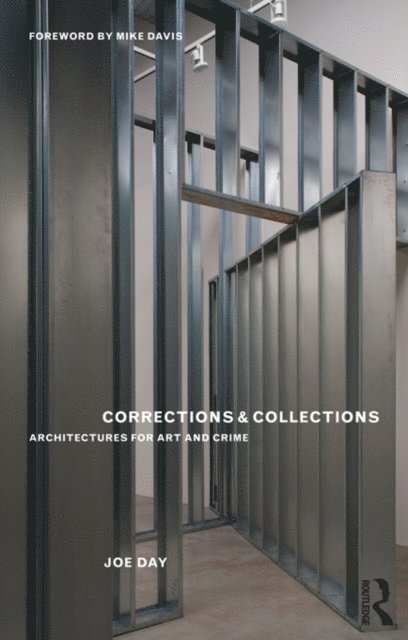
Corrections and Collections
Architectures for Art and Crime
Av Joe Day
Häftad, 2013
742 kr
Lägg i varukorg
America holds more than two million inmates in its prisons and jails, and hosts more than two million daily visits to museums, figures which represent a ten-fold increase in the last twenty-five years. Corrections and Collections explores and connects these two massive expansions in our built …
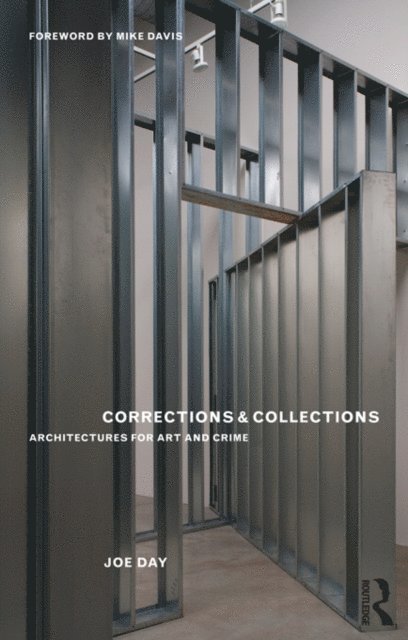
Corrections and Collections
Architectures for Art and Crime
Av Joe Day
E-bok, 2013
874 kr
Lägg i varukorg
America holds more than two million inmates in its prisons and jails, and hosts more than two million daily visits to museums, figures which represent a ten-fold increase in the last twenty-five years. Corrections and Collections explores and connects these two massive expansions in our built …
Corrections and Collections
Architectures for Art and Crime
Av Joe Day
E-bok, 2013
855 kr
Lägg i varukorg
America holds more than two million inmates in its prisons and jails, and hosts more than two million daily visits to museums, figures which represent a ten-fold increase in the last twenty-five years. Corrections and Collections explores and connects these two massive expansions in our built …
Cultural Cues
Louis I. Kahn Visiting Assistant Professorship
Av Joe Day, Tom Wiscombe m. fl.
Häftad, 2018
402 kr
Lägg i varukorg
Joe Day: Essays
Häftad, 2026
291 kr
Kommande
A compilation of the designer and architectural theorist's writings on the interstices of art, architecture and cities from the past 30 yearsIn this comprehensive survey of his writing to date, Los Angeles–based designer and architectural theorist Joe Day (born 1967), who leads Deegan-Day Design …
Forays
Av Joe Day
Häftad, 2021
359 kr
Lägg i varukorg
How does one envision architecture? Foraysgathers the work of Joe Day and Deegan-Day Design into six diptychs, unified by this question. Working in a wide range of media and scales, Day's work mines the differentials between perspective and projection.Foraysis organised in six diptychs, the first …