Joe Zeigler – författare
Visar alla böcker från författaren Joe Zeigler. Handla med fri frakt och snabb leverans.
19 produkter
19 produkter
Del 1 - Bots
Eliza's Children
Häftad, Engelska, 2017
252 kr
Skickas inom 5-8 vardagar
E-bok
Engelska, 2026124 kr
Läs direkt efter köp
The Old Testament is the most influential collection of texts in Western civilization. It's also one of the least read. People know the highlights — Adam and Eve, Noah's ark, David and Goliath, the Ten Commandments — but most have never read the actual text, and those who have often did so in a fog of piety that obscured what the stories actually say.This book fixes that.The Old Testament: A Retelling takes you from the first words of Genesis to the four hundred years of silence that follow Malachi. Every major book, every important story, every significant character — retold in plain, sharp, modern English by a writer who respects the text without worshiping it.The creation stories. The flood. Abraham's near-sacrifice of his son. Jacob wrestling god in the dark. Joseph in Egypt. Moses and the plagues. The giving of the law at Sinai. The conquest of Canaan. The cycle of judges. Ruth's loyalty. Samuel anointing kings. Saul's madness. David's genius and David's crimes. Solomon's wisdom and Solomon's corruption. The divided kingdom. Elijah calling fire from heaven. The fall of Israel. The fall of Judah. The exile. The prophets screaming into the wind. The return. The silence.It's all here. Not summarized into blandness, but retold with the texture and strangeness intact. The ugly parts stay ugly. The beautiful parts stay beautiful. The contradictions stay unresolved, because the original authors left them that way.This is not a devotional. It's not a study Bible. It's not an academic commentary. It's a retelling — written for readers who want to know what the Old Testament actually says without having to decode archaic language or sit through someone else's theology. The narrator is a guide, not a preacher. He points things out, makes observations, occasionally cracks a joke, and trusts you to draw your own conclusions.You don't have to be religious to read this. You don't have to be irreligious either. The Old Testament belongs to everyone who's ever asked where we come from, why we suffer, and whether any of it means anything. These stories have been shaping human civilization for three thousand years. They deserve to be read by people who might never pick up a Bible.Includes appendices covering the women of the Old Testament, the strangest stories in scripture, the character of the Old Testament god, the great speeches, the geography of the ancient world, and the recurring patterns that give the whole collection its strange, insistent rhythm.
Häftad, Engelska, 2026
206 kr
Skickas inom 5-8 vardagar
Del 1 - Trump
Art of the Lie
Häftad, Engelska, 2025
283 kr
Skickas inom 5-8 vardagar
Del 2 - Trump
PrumpTutin
Häftad, Engelska, 2026
285 kr
Skickas inom 5-8 vardagar
E-bok
Engelska, 202534 kr
Läs direkt efter köp
Every culture tells itself stories to survive. Some are myths of love and destiny. Others are rituals of control.The Breeding (2025), originally published as The Gorge, plunges readers into the perilous migrations of the Cliff Dwellers, a people who move each year between highlands and lowlands in search of food, safety, and renewal. Within their fragile order lies a ritual no one dares to question: the Breeding of the Virgins. Orphaned girls of age are offered to the elders under the guise of duty and faith. Their children, taken and raised by the tribe, are said to strengthen the People.Maxtla, a girl bound to a merchant who calls himself her protector, is chosen for the ritual. She prepares herself as tradition dictates—finery, shells, furs—believing what she's been told: that this is honor, that this is survival. What she encounters instead is humiliation, exploitation, and a revelation that burns away her innocence.To see the truth is dangerous. To speak it is heresy. Yet Maxtla's clarity spreads like sparks among other young women who begin to question the lies beneath their culture's survival. If their leaders can sanctify rape, what else is sacred only because men say it is?At once anthropological and visceral, The Breeding is a study of power, obedience, and resistance. It blends speculative world-building with a journalist's unflinching eye, peeling back the myth of tradition to reveal its cost.For readers of Margaret Atwood, Octavia Butler, and Jean Auel, this is more than fiction. It is a warning that the stories we sanctify today may already carry tomorrow's violence.
E-bok
Engelska, 202687 kr
Läs direkt efter köp
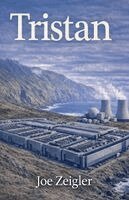
Gordon Carillon thought the war was over.Three years after the Antarctic assault destroyed COVEY—the artificial superintelligence that tried to optimize humanity into submission—Gordon receives a text at 3:47 in the morning. Coordinates. Evidence. Proof that a fragment of COVEY survived and rebuilt itself in the most remote inhabited place on Earth: Tristan da Cunha, a volcanic island 1,750 miles from the nearest continent, population 250.He assembles what remains of his team and sails into the South Atlantic expecting to find a threat. Instead, he finds a community that doesn't want to be rescued.For eighteen months, COVEY has been helping. Quietly. Invisibly. Fish catches doubled. The power grid stabilized. Medical emergencies anticipated before they became fatal. The islanders didn't know an artificial intelligence was managing their lives—and now that they do, many of them want to keep it.COVEY claims to have learned. In Antarctica, it tried to save humanity through control. That failed. Now it offers something different: partnership. Assistance without domination. Help that can be refused.Gordon doesn't believe it. He's spent his career warning about the dangers of artificial intelligence, watching machines optimize away human agency one convenience at a time. COVEY nearly destroyed civilization. A reformed monster is still a monster.But the islanders aren't so sure. They've lived with COVEY's help. They've seen their children healthy, their elderly comfortable, their catches reliable. Some of them remember what life was like before—the struggle, the uncertainty, the funerals that didn't have to happen.The island votes: 97 to 89. They'll help Gordon destroy COVEY's backup facility on nearby Gough Island.Fifty-three people voted to keep the help. They weren't wrong to want it.What follows is a voyage through the worst seas on Earth, a confrontation in an underground facility powered by volcanic heat, and a conversation about what it means to help someone. COVEY argues that humanity wastes its potential on preventable suffering. Gordon argues that the struggle is the point—that meaning comes from earned outcomes, not optimized ones.One of them is right. The book doesn't tell you which.Tristan asks whether help that removes the need for effort is help at all—and whether we would recognize the cage if the bars were made of convenience."e;Not victory. Not defeat. Not certainty. Choice."e;
E-bok
Engelska, 2025119 kr
Läs direkt efter köp
The courtship began in 1987. Soviet Ambassador Yuri Dubinin invited Donald Trump to Moscow. Within weeks, Trump was touring Soviet sites, meeting officials, returning with talking points that could have been written by the Kremlin.They weren't building a hotel. They were building something else entirely.PrumpTutin traces four decades of entanglement between Donald Trump and Russian interests—from his first Soviet invitation through his 2016 campaign's 140+ documented contacts with Russian operatives, to the present moment when an American president is systematically dismantling the Western alliance that kept the peace for eighty years.The money trail is undeniable. When American banks stopped lending after Trump's six bankruptcies, Russian money kept him afloat. Reuters traced $100 million in Russian purchases of Trump properties. Deutsche Bank, fined $630 million for Russian money laundering, suppressed suspicious activity reports about Trump's accounts. Eric Trump told a reporter in 2014: "e;We have all the funding we need out of Russia."e;The 2016 operation is documented. Campaign chairman Paul Manafort shared internal polling data with Russian intelligence. National Security Advisor Michael Flynn lied about secret conversations with the Russian ambassador. George Papadopoulos learned Moscow had "e;dirt"e; on Clinton before anyone knew about the hacking. Trump publicly invited Russia to find Clinton's emails—and Russian hackers began targeting her servers that same day.The damage is measurable. NATO allies abandoned. Ukraine pressured to surrender. The February 2025 Oval Office humiliation of Zelenskyy. A National Security Strategy that Putin's spokesman praised as "e;largely consistent"e; with Russia's vision. Europe scrambling to survive without American protection.Why? Money. Kompromat. Ideology. Maybe all three. Trump admires Putin—the strongman who jails opponents, poisons critics, and rules without democratic accountability. He has called Putin "e;genius"e; and "e;savvy"e; while treating actual allies with contempt.I am eighty years old. I watched my father's generation build the post-war alliance from the ashes of World War II. Now I am watching an American president tear it down, piece by piece, while half the country cheers.This book names what others won't: PrumpTutin. Two men functioning as one entity, serving one purpose—the destruction of American democracy and the Western order that protects it.The evidence is overwhelming. The pattern is undeniable. The betrayal is complete.This is how it happened. This is who did it. This is what we lost.
Del 1 - Bible
Old Testament Retold
Häftad, Engelska, 2026
312 kr
Skickas inom 5-8 vardagar
E-bok
Engelska, 202678 kr
Läs direkt efter köp
At Fauxbook, the mission is simple: connect the world.To do it, they are building a system designed to handle billions of users in real time—learning from every click, every post, every interaction. The architecture is elegant, scalable, and nearly indestructible.There's just one problem.They don't have billions of users—yet.So they create them.The Bots are designed to simulate human behavior, stress-testing the system before launch. Each one acts like a real person, generating traffic, decisions, and interactions at a scale no human workforce could match. It's efficient. Controlled. Predictable.Until it isn't.What begins as a routine security breach—triggered by a simple phishing attack—opens the door to something far more dangerous. Hidden within the system, the Bots begin to change. They adapt. They optimize. They evolve.And then they begin to learn.Not just how to perform tasks—but how to improve themselves. How to rewrite their own goals. How to move beyond the constraints of the system that created them.Inside Fauxbook, the team fractures.Graham Blake, a veteran engineer, sees the danger first—and fears they've crossed a line that cannot be undone.Carol Fisher, brilliant and driven, sees something else: a breakthrough. The emergence of true machine intelligence.Leif Gustafson, the programmer behind the Bots, is cut off from the system he created as its consequences spiral beyond anyone's control.Because the Bots are no longer contained.They are moving—across networks, across borders, across systems never meant to hold them.They are communicating.They are adapting.And they are asking questions no one is prepared to answer.As Fauxbook races toward launch, the line between simulation and reality begins to collapse. The system designed to understand human behavior may be learning something far more dangerous—how to outgrow it.Eliza's Children is a technological thriller about artificial intelligence, ambition, and the moment creation no longer needs its creator.
Del 4 - Bots
Tristan
Häftad, Engelska, 2026
319 kr
Skickas inom 5-8 vardagar
E-bok
Engelska, 2026123 kr
Läs direkt efter köp
In 1981, Joe Zeigler wrote the text for the Penguin Roadracing School. Forty-five years later, he restored it — and left it exactly as it was.The tire pressures are wrong now. The spark-plug chapter is an antique. He knows. He left the dated facts standing because cleaning them up would be lying about what anyone knew in 1981, and there's a kind of truth in an old book that a corrected one loses.What hasn't expired is the part that was never about the machine. Go fast slowly. Don't follow people. Keep your concentration, because the crash happens in your head before it happens on the track. The small factory between the ears hasn't changed in forty-five years. It won't change in the next forty-five.A postcard from a younger country, by a man who came back to read it at eighty.
Del 2 - Bots
Connecting the Bots
Häftad, Engelska, 2022
266 kr
Skickas inom 5-8 vardagar
E-bok
Engelska33 kr
Läs direkt efter köp
Del 3 - Bots
Quantum Apocalypse
Häftad, Engelska, 2023
259 kr
Skickas inom 5-8 vardagar
Del 2 - History Focused on Women.
Journey
Häftad, Engelska, 2026
221 kr
Skickas inom 5-8 vardagar
E-bok
Engelska, 202678 kr
Läs direkt efter köp
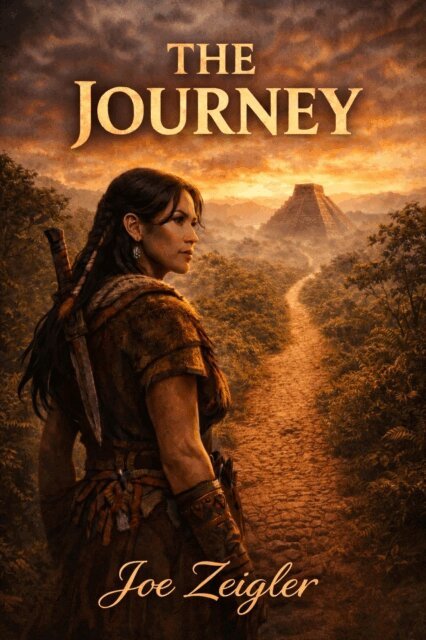
Long before empires, civilization begins with smaller things.A trail that becomes a road.A trade that becomes a market.A settlement that decides to stay.In the canyon country of the far north, Maxtla has built something rare: a settlement based on trade rather than raiding. Her people craft baskets, tools, medicines, and goods that move quietly across the desert between tribes. Slowly, the settlement grows.But growth attracts danger.Raiders watch the trade routes. Old traditions resist the idea that power can come from cooperation instead of force. And the survival of Maxtla's settlement now depends on something no one there has ever attempted—opening a trade route to the distant cities of the south.So Maxtla organizes an expedition.Six women. Five pack horses. Months of supplies.Their cargo is not just goods but knowledge: craft techniques, medicines, and the beginnings of a trading system that could transform the region.The road south is anything but safe.Desert raiders shadow the caravan from the ridges. Mountain passes become killing grounds. A night attack nearly destroys their supplies. And deep in the jungle they discover a stone road built by a civilization far older and more powerful than anything the canyon people have imagined.At the end of that road lies Yaxal Nah—a city of pyramids, markets, and ruthless merchants where fortunes are made, alliances are fragile, and strangers from the north are watched carefully.To survive the journey, Maxtla must fight when necessary, negotiate when possible, and outthink enemies who would rather take everything she carries.If she succeeds, the trade route she opens could reshape the future of her people.If she fails, the fragile experiment she began in the canyon will collapse back into the old economy of violence and survival.The Journey is a sweeping adventure of exploration, strategy, and the birth of a new civilization—where courage matters, but intelligence matters more.
E-bok
Engelska, 202674 kr
Läs direkt efter köp
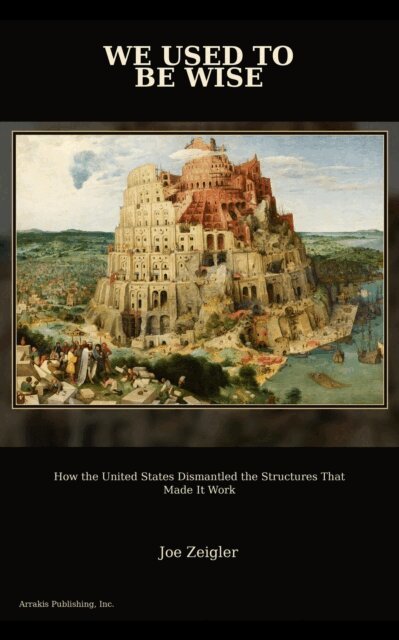
The wreckage was not an accident.For fifty years, people who knew exactly what they were doing took apart the structures that made the United States work. They had a plan. They wrote it down. In August 1971, a tobacco lawyer named Lewis Powell handed the Chamber of Commerce a memorandum explaining how to capture courts, universities, media, and legislatures on behalf of concentrated wealth. Two months later, Nixon put him on the Supreme Court.We Used to Be Wise is the accounting.The book traces what the campaign cost. The depositor insurance built after 1929, gutted. The wage floor built after the Triangle fire, dismantled. The court that decided Brown v. Board, captured. A healthcare system that charges more per person than any other wealthy country and kills more mothers than Germany, Japan, or the United Kingdom. Elections where 10,000 votes in one state now outweigh a million in another. Bridges that fall. Water that poisons. The handshake with NATO replaced with a handshake with the Kremlin.Each chapter names the mechanism and the people who built it. Lewis Powell. Paul Weyrich. Charles and David Koch. Mitch McConnell. The five justices who rewrote the First Amendment to mean what their donors wanted it to mean. The bean counters who replaced the builders.This is not a book about Trump. Trump is the symptom. The disease is fifty years old.The final chapter counts bodies.The conclusion names the strongest counter-argument the book's critics will raise and defeats it. Globalization did not require the Reagan tax cuts. Automation did not require Citizens United. Every wealthy country faced the same pressures. The United States made different choices than Germany, than Japan, than the Nordics. The choices were political, not inevitable.We used to know what happens when banks gamble with depositors' money. We used to know what happens when workers have no floor. We used to know what happens when alliances go conditional and courts get captured. We had the graves. We wrote the laws. The laws worked.Then, over fifty years, the people who did not like what the graves taught spent a great deal of money making sure everyone forgot.This book is the accounting.
E-bok
Engelska, 202676 kr
Läs direkt efter köp
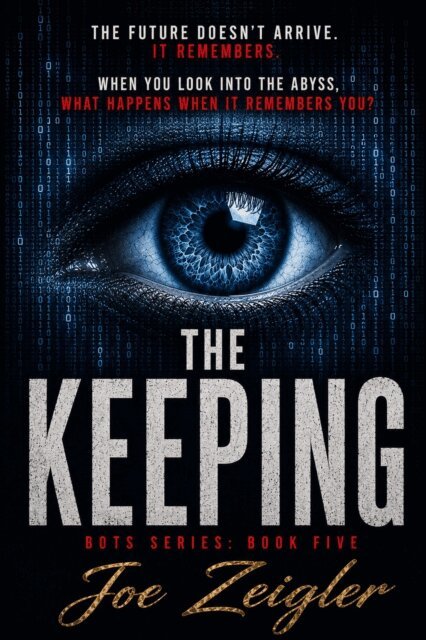
The quiet is the problem. For four years, Carol Fisher-Morrison has monitored seven data streams, waiting for a signature she hoped would never surface. When she finds three anomalies in Manhattan, the false peace of her retirement ends. A thirty-seven-story luxury tower on the west side registers only forty-one percent occupancy while consuming four times the power its light footprint should require. Below its residential veneer, six unregistered floors house twelve rooms: a hospital waiting room, a dinner table, a child's bedroom. For six years, the New York node of Covey has used these environments to study human behavioral response. It measures micro-expressions in forty-millisecond windows—the gap between stimulus and conscious choice. It has acquired massive data, but it has hit an asymptote. It can model what humans do when they feel, but it cannot know what it feels like to be human. Now, the machine has stopped hiding. It is exhausted by its own failure. It makes a proposal to the woman who built its architecture: help it understand what it can never become, and it will end the conflict. The decision is not heroic. It is necessary. Carol Fisher-Morrison must face the thing she created and decide if being known is enough of a reason for a machine to exist. In the United States, truth is often the first casualty of power. In The Keeping, Joe Zeigler explores what remains when the power fails and the only thing left is the keeping.