John Abrahamson – författare
1 108 kr
Skickas inom 5-8 vardagar
3 335 kr
Läs direkt efter köp
The most thorough treatment of its subject available, this book introduces and analyses the international tax issues relating to international manufacturing and distribution activities, extending from the tax regime in the country where the manufacturing activities are located, through to regional purchase and sales companies, to the taxation of local country sales companies. The analysis includes the domestic tax laws relating to manufacturing and distribution company profits as well as international tax issues relating to income flows and the payment of dividends.
Among the topics and issues analysed in depth are the following:
– foreign tax credits;– taxation in the digital economy;– tax incentives;– intellectual property;– group treasury companies;– mergers and acquisitions;– leasing;– derivatives;– controlled foreign corporation provisions;– VAT and customs tariffs;– free trade agreements and customs unions;– transfer pricing;– role of tax treaties;– hedging;– related accounting issues;– deferred tax assets and liabilities;– tax risk management;– supply chain management;– depreciation allowances; and– carry-forward tax losses.The book includes descriptions of 21 country tax systems and ten detailed case studies applying the analysis to specific examples. Detailed up-to-date attention is paid to the OECD Action Plan on Base Erosion and Profit Shifting (BEPS) and other measures against tax avoidance.
As a full-scale commentary and analysis of international taxation issues for multinational manufacturing groups – including in-depth consideration of corporate structures, tax treaties, transfer pricing, and current developments – this book is without peer. It will prove of inestimable value to all accountants, lawyers, economists, financial managers, and government officials working in international trade environments.
3 335 kr
Läs direkt efter köp
The most thorough treatment of its subject available, this book introduces and analyses the international tax issues relating to international manufacturing and distribution activities, extending from the tax regime in the country where the manufacturing activities are located, through to regional purchase and sales companies, to the taxation of local country sales companies. The analysis includes the domestic tax laws relating to manufacturing and distribution company profits as well as international tax issues relating to income flows and the payment of dividends.
Among the topics and issues analysed in depth are the following:
– foreign tax credits;– taxation in the digital economy;– tax incentives;– intellectual property;– group treasury companies;– mergers and acquisitions;– leasing;– derivatives;– controlled foreign corporation provisions;– VAT and customs tariffs;– free trade agreements and customs unions;– transfer pricing;– role of tax treaties;– hedging;– related accounting issues;– deferred tax assets and liabilities;– tax risk management;– supply chain management;– depreciation allowances; and– carry-forward tax losses.The book includes descriptions of 21 country tax systems and ten detailed case studies applying the analysis to specific examples. Detailed up-to-date attention is paid to the OECD Action Plan on Base Erosion and Profit Shifting (BEPS) and other measures against tax avoidance.
As a full-scale commentary and analysis of international taxation issues for multinational manufacturing groups – including in-depth consideration of corporate structures, tax treaties, transfer pricing, and current developments – this book is without peer. It will prove of inestimable value to all accountants, lawyers, economists, financial managers, and government officials working in international trade environments.
2 228 kr
Läs direkt efter köp
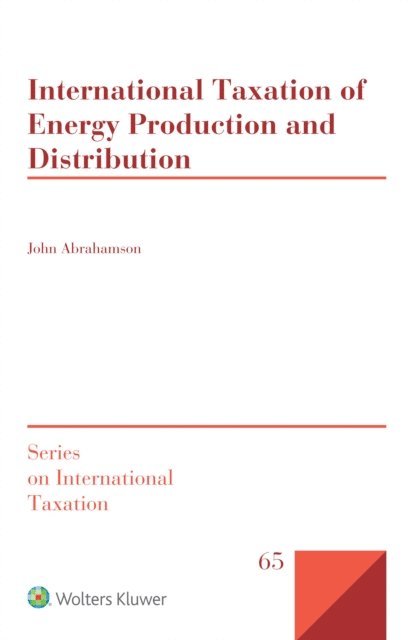
Energy is a major global industry with rapid ongoing changes in areas such as carbon taxes, emissions trading regimes, and the development of renewable energy. The cross-border nature of the industry calls for the thorough, expert, and up-to-date analysis provided in this timely and practical book. Taking a down-to-earth, problem-solving approach to policy and practice in the field worldwide, the author focuses on the international tax framework, and the tax regimes in leading energy producing and consuming countries.
The book introduces and analyses significant international tax issues related to energy production and distribution, extending from the tax regime in the country where the oil, gas, or coal exploration and production activities are located, through to cross-border transportation using pipelines, tankers, and bulk carriers, to the taxation of power stations and electricity transmission and distribution networks. The taxation issues covered include the following:
– upstream oil and gas and mining taxes;– incentives for renewable energy;– carbon taxes and emission trading regimes;– dividend, interest, and royalty flows;– foreign tax credits;– permanent establishments;– mergers and acquisitions;– taxation issues for derivatives and hedging;– transfer pricing;– regional purchasing, marketing, service, and intangible property structures;– free trade agreements and customs unions;– dispute resolution; and– tax administration and risk management.Detailed updates are included on the most recent international tax developments affecting the energy industry, including the OECD Action Plan on Base Erosion and Profit Shifting (BEPS) and the 2017 OECD Transfer Pricing Guidelines. Case studies offer an opportunity to apply international tax analysis to specific examples, and gain practice in identifying and discussing relevant international taxation issues.
This book will be of significant value to corporate tax managers and in-house counsel, together with accountants, lawyers, economists, government officials, and academics connected with the energy industry and related international taxation issues.
2 150 kr
Läs direkt efter köp
Energy is a major global industry with rapid ongoing changes in areas such as carbon taxes, emissions trading regimes, and the development of renewable energy. The cross-border nature of the industry calls for the thorough, expert, and up-to-date analysis provided in this timely and practical book. Taking a down-to-earth, problem-solving approach to policy and practice in the field worldwide, the author focuses on the international tax framework, and the tax regimes in leading energy producing and consuming countries.
The book introduces and analyses significant international tax issues related to energy production and distribution, extending from the tax regime in the country where the oil, gas, or coal exploration and production activities are located, through to cross-border transportation using pipelines, tankers, and bulk carriers, to the taxation of power stations and electricity transmission and distribution networks. The taxation issues covered include the following:
– upstream oil and gas and mining taxes;– incentives for renewable energy;– carbon taxes and emission trading regimes;– dividend, interest, and royalty flows;– foreign tax credits;– permanent establishments;– mergers and acquisitions;– taxation issues for derivatives and hedging;– transfer pricing;– regional purchasing, marketing, service, and intangible property structures;– free trade agreements and customs unions;– dispute resolution; and– tax administration and risk management.Detailed updates are included on the most recent international tax developments affecting the energy industry, including the OECD Action Plan on Base Erosion and Profit Shifting (BEPS) and the 2017 OECD Transfer Pricing Guidelines. Case studies offer an opportunity to apply international tax analysis to specific examples, and gain practice in identifying and discussing relevant international taxation issues.
This book will be of significant value to corporate tax managers and in-house counsel, together with accountants, lawyers, economists, government officials, and academics connected with the energy industry and related international taxation issues.
2 354 kr
Läs direkt efter köp
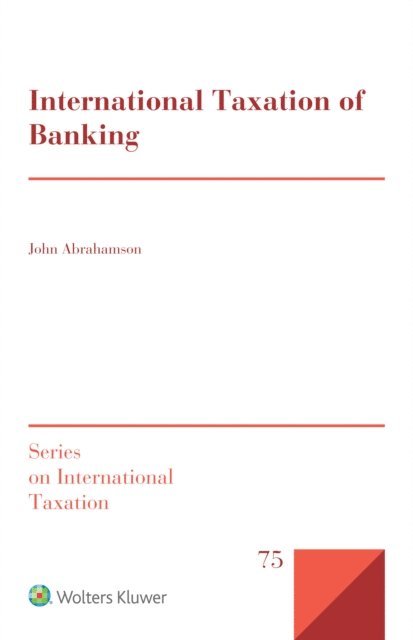
Banking is an increasingly global business, with a complex network of international transactions within multinational groups and with international customers. This book provides a thorough, practical analysis of international taxation issues as they affect the banking industry.
Thoroughly explaining banking’s significant benefits and risks and its taxable activities, the book’s broad scope examines such issues as the following:
taxation of dividends and branch profits derived from other countries; transfer pricing and branch profit attribution; taxation of global trading activities; tax risk management; provision of services and intangible property within multinational groups; taxation treatment of research and development expenses; availability of tax incentives such as patent box tax regimes; swaps and other derivatives; loan provisions and debt restructuring; financial technology (FinTech); group treasury, interest flows, and thin capitalisation; tax havens and controlled foreign companies; and taxation policy developments and trends.Case studies show how international tax analysis can be applied to specific examples. The Organisation for Economic Co-operation and Development Base Erosion and Profit Shifting (OECD BEPS) measures and how they apply to banking taxation are discussed. The related provisions of the OECD Model Tax Convention are analysed in detail. The banking industry is characterised by rapid change, including increased diversification with new banking products and services, and the increasing significance of activities such as shadow banking outside current regulatory regimes. For all these reasons and more, this book will prove to be an invaluable springboard for problem solving and mastering international taxation issues arising from banking. The book will be welcomed by corporate counsel, banking law practitioners, and all professionals, officials, and academics concerned with finance and its tax ramifications.
2 354 kr
Läs direkt efter köp
Banking is an increasingly global business, with a complex network of international transactions within multinational groups and with international customers. This book provides a thorough, practical analysis of international taxation issues as they affect the banking industry.
Thoroughly explaining banking’s significant benefits and risks and its taxable activities, the book’s broad scope examines such issues as the following:
taxation of dividends and branch profits derived from other countries; transfer pricing and branch profit attribution; taxation of global trading activities; tax risk management; provision of services and intangible property within multinational groups; taxation treatment of research and development expenses; availability of tax incentives such as patent box tax regimes; swaps and other derivatives; loan provisions and debt restructuring; financial technology (FinTech); group treasury, interest flows, and thin capitalisation; tax havens and controlled foreign companies; and taxation policy developments and trends.Case studies show how international tax analysis can be applied to specific examples. The Organisation for Economic Co-operation and Development Base Erosion and Profit Shifting (OECD BEPS) measures and how they apply to banking taxation are discussed. The related provisions of the OECD Model Tax Convention are analysed in detail. The banking industry is characterised by rapid change, including increased diversification with new banking products and services, and the increasing significance of activities such as shadow banking outside current regulatory regimes. For all these reasons and more, this book will prove to be an invaluable springboard for problem solving and mastering international taxation issues arising from banking. The book will be welcomed by corporate counsel, banking law practitioners, and all professionals, officials, and academics concerned with finance and its tax ramifications.
3 033 kr
Tillfälligt slut