John Benedict Buescher – författare
Visar alla böcker från författaren John Benedict Buescher. Handla med fri frakt och snabb leverans.
3 produkter
3 produkter
Inbunden, Engelska, 2006
538 kr
Skickas inom 10-15 vardagar
John Murray Spear was one of nineteenth-century America's most interesting characters. A leading social agitator against slavery and capital punishment, Spear also became the nation's most flamboyant spiritualist, inventor of "spirit machines," and advocate of free love. In his captivating biography, John Buescher brings to life Spear's superlatively odd story. While no photograph or engraving of Spear exists, and his letters and personal papers are scarce, Buescher recreates in this book a sympathetic, even heroic, figure who spent the most energetic decades of his career absent, in a sense, from his own life, displaced by other spirits.Born in 1804, John Murray Spear started his career as a Universalist minister. He later was a close colleague of William Lloyd Garrison and Theodore Parker in the abolitionist movement, an operator on the underground railroad in Boston, an influential leader in the effort to end the death penalty and to reform prison conditions, and a public advocate of the causes of pacifism, women's rights, labor reform, and socialism. Buescher chronicles Spear's work as an activist among the New England reformers and Transcendentalists such as Bronson Alcott, Lydia Maria Child, and Dorothea Dix.In mid-life Spear turned to the new revelation of spiritualism and came under the thrall of what he believed were spirit messages. Spear's spirits dictated that he and a small group of associates embark on plans for a perpetual motion machine, an electric ship propelled by psychic batteries, a vehicle that would levitate in the air, and a sewing machine that would work with no hands. As Buescher documents, Spear's spirit-guided efforts to harness technology to human liberation—sexual and otherwise—were far stranger than anyone outside his closest associates imagined, and were aimed at the eventual manufacturing of human beings and the improvement of the race. Buescher also examines the way in which Spear's story was minimized by his embarrassed fellow radicals. In the last years of his life, retired by the spirits and regarded by fellow Gilded Age progressives as a visitor from another age, if not another planet, Spear helped organize support for anarchist, socialist, peace, and labor causes. Buescher portrays Spear's life as an odd mixture of comic absurdity and serious foreshadowing of the future—for both good and ill—that provides us with a unique perspective on nineteenth-century American religious and social life.
Häftad, Engelska, 2021
457 kr
Skickas inom 5-8 vardagar
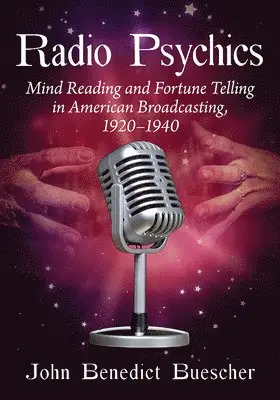
When radio broadcasting began in the early 1920s, the radio was a magic box aglow with the future, drawing humanity into a new age. Some thought it would dissolve the distance between time and place, others that human minds would become transparent, one tuned to another. Performers claiming psychic powers turned radio broadcasting into a fabulous money machine. These "mentalists," born from vaudeville, circuses, sideshows, and the Spiritualist and New Thought movements of the mid-late 19th century, used the language of wireless technology to explain their ability to see the past, present, and future. Casting their mystical knowledge as a scientifically honed craft, these mentalists persuaded millions to pay for dubious advice until governmental and public pressures forced them off the air. This book is a history of over 25 performers who practiced their art behind studio microphones during the early years of radio broadcasting, from about 1920 to 1940. Here, laid out for the first time, is the tale of how they made cash rain from the heavens and harnessed the sensation of the radio in search of wealth, health, love, and success.
Häftad, Engelska, 2026
317 kr
Kommande
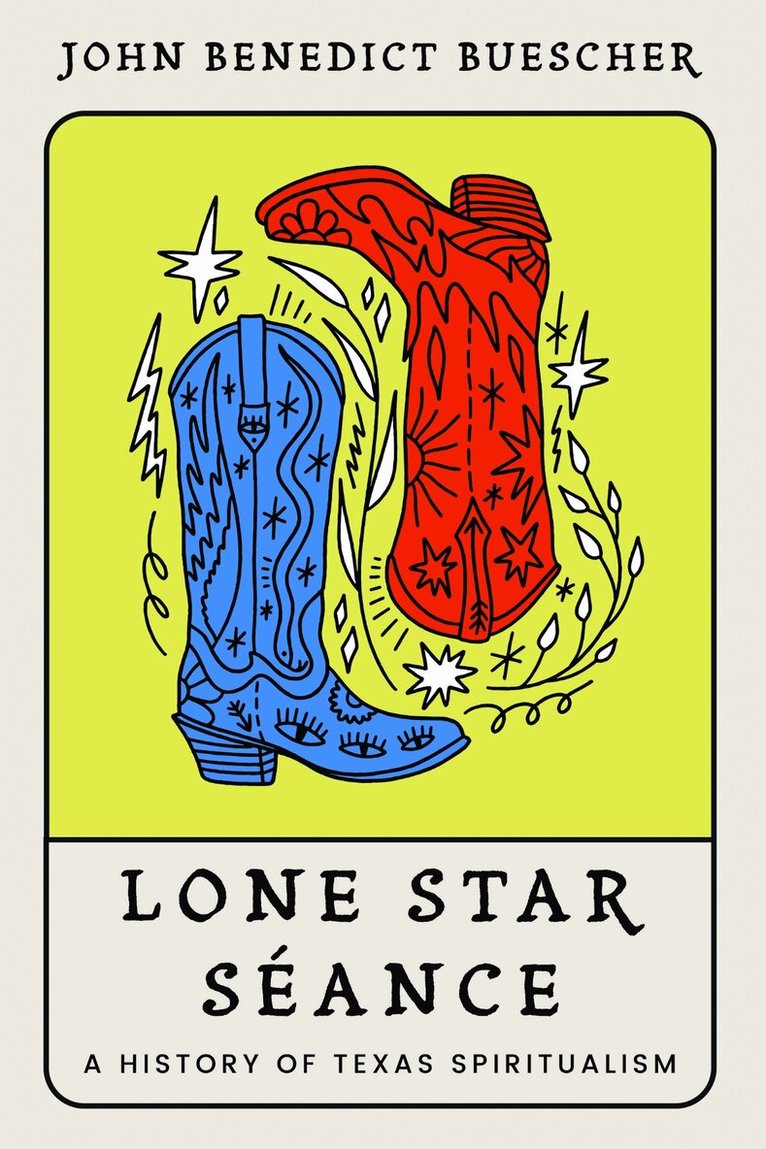
In the mid-nineteenth century, a strange new fire swept across the American landscape. It was Spiritualism: the radical belief that the living could—and should—commune with the dead. While historians have long looked to the North for the heart of this movement, John Benedict Buescher reveals a darker, wilder, and distinctly Texan story.Lone Star Séance is a journey into the borderlands of belief, where parlor tables rattled in the same rooms in which pistols were drawn. From the invisible counsel pursued by Sam Houston and Anson Jones to the mystical visions of Quanah Parker and Francisco Madero, Buescher brings the shadows of the Lone Star State into the light.It is a saga of independent minds rejecting religious dogma to become their own prophets and the tragicomic backlash that followed. Part occult history, part frontier Western, this is the story of a "cultural infection" that became a Texas obsession. Forget the Alamo for a moment—and remember the séance.