John C. O'Neal – författare
Visar alla böcker från författaren John C. O'Neal. Handla med fri frakt och snabb leverans.
4 produkter
4 produkter
Häftad, Engelska, 1996
648 kr
Skickas inom 5-8 vardagar
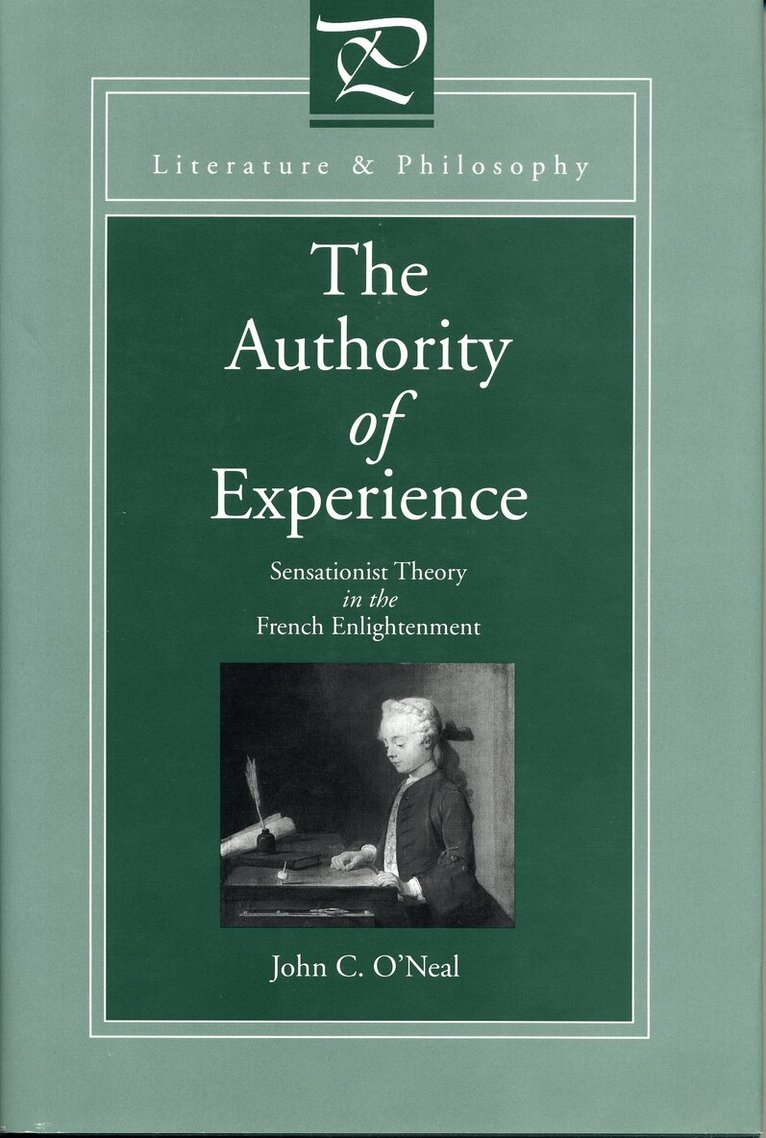
Sensationism, a philosophy that gained momentum in the French Enlightenment as a response to Lockean empiricism, was acclaimed by Hippolyte Taine as "the doctrine of the most lucid, methodical, and French minds to have honored France." The first major general study in English of eighteenth-century French sensationism, The Authority of Experience presents the history of a complex set of ideas and explores their important ramifications for literature, education, and moral theory.The study begins by presenting the main ideas of sensationist philosophers Condillac, Bonnet, and Helvétius, who held that all of our ideas come to us through the senses. The experience of the body in seeing, hearing, smelling, tasting, and touching enabled individuals, as John C. O'Neal points out, to challenge the sometimes arbitrary authority of institutions and people in positions of power. After a general introduction to sensationism, the author develops a theory of sensationist aesthetics that not only reveals the interconnections of the period's philosophy and literature but also enhances our awareness of the forces at work in the French novel. He goes on to examine the relations between sensationism and eighteenth-century French educational theory, materialism, and idéologie. Ultimately, O'Neal opens a discussion of the implications of sensationist thought for issues of particular concern to society today.
Häftad, Engelska, 2008
1 605 kr
Skickas inom 5-8 vardagar
Research on Rousseau’s innovative last work is changing direction. Long situated in a context of autobiographical writing, its moral and philosophical content is now a major critical preoccupation. The Nature of Rousseau’s ‘Rêveries’: physical, human, aesthetic brings together the work of international specialists to explore new approaches to the defining feature - the ‘nature’ - of the Rêveries. In essays which range from studies of botany or landscape painting to thematic or stylistic readings, authors re-examine Rousseau’s intellectual understanding of and personal relationship with different conceptions of nature. Drawing connections between this text and earlier theoretical writings, authors analyse not only the philosophical and personal implications of Rousseau’s reflections on the outer world but also and his attempts to examine and validate both his own nature and that of ‘l’homme naturel’.In The Nature of Rousseau’s ‘Rêveries’: physical, human, aesthetic the contributors offer new insights into the character of Rousseau’s last major work and suggest above all its experimental, elusive quality, hovering between inner and outer worlds, escape and fulfilment, experience and writing. They underline the unique richness of the Rêveries, a work to be situated not simply at the end of Rousseau’s life, but at the very centre of his thought.
Häftad, Engelska, 2003
454 kr
Skickas inom 5-8 vardagar
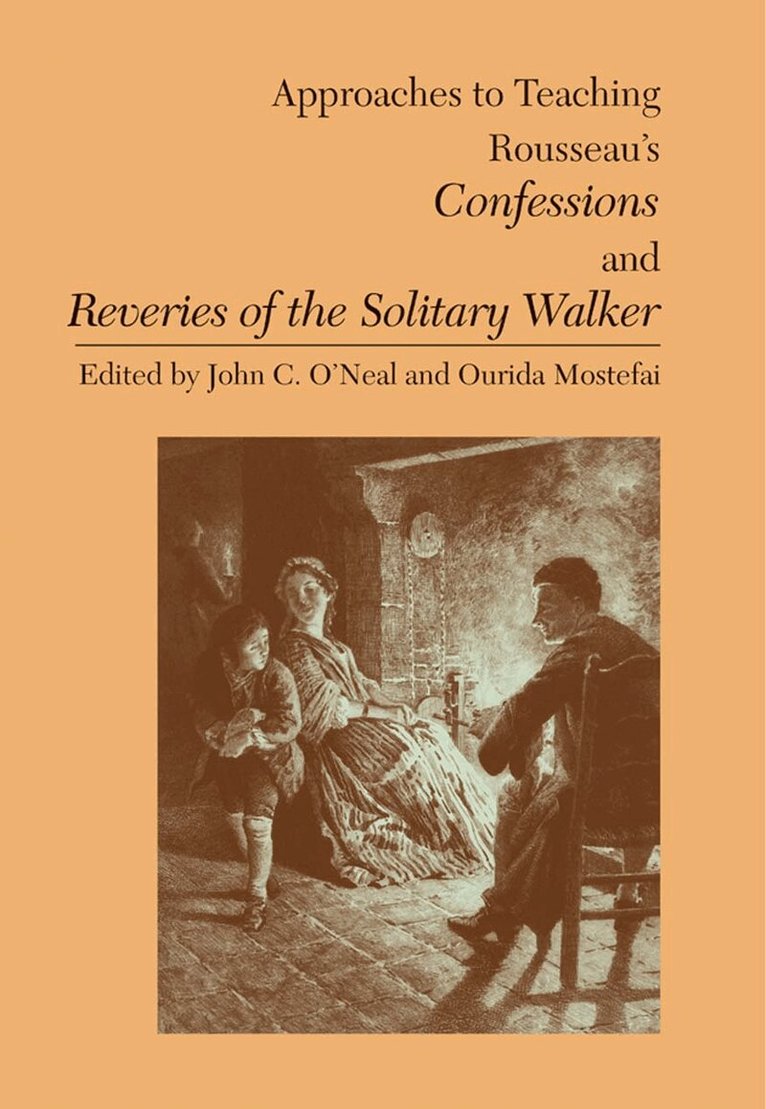
Today Rousseau's diverse writings are listed in the syllabi of innumerable courses in many different disciplines. Thus this volume truly responds to a need on the part of teachers and students. A useful book to the specialist as well as the educated reader and a notable contribution to the profession.
E-bok
Engelska, 20111 251 kr
Läs direkt efter köp
In The Progressive Poetics of Confusion in the French Enlightenment, John C. O''Neal draws largely on the etymological meaning of the word confusion as the action of mixing or blending in order to trace the development of this project which, he claims, aimed to reject dogmatic thinking in all of its forms and recognized the need to embrace complexity. Eighteenth-century thinkers used the notion of confusion in a progressive way to reorganize social classes, literary forms, metaphysical substances, scientific methods, and cultural categories such as taste and gender.In this new work, O''Neal explores some of the paradoxes of the Enlightenment''s theories of knowledge. Each of the chapters in this book attempts to address the questions raised by the eighteenth century''s particular approach to confusion as a paradoxical reorganizing principle for the period''s progressive agenda. Perhaps the most paradoxical thinker of his times, Diderot occupies a central place in this study of confusion. Other authors include Marivaux, Crébillon, Voltaire, and Pinel, among others. Rousseau and Sade serve as counterexamples to this kind of enlightenment but ultimately do not so much oppose the period''s poetics of confusion as they complement it. The final chapter on Sade combines contemporary discussions of politics, society, culture, philosophy, and science in an encyclopedic way that at once reflects the entire period''s tendencies and establishes important differences between Sade''s thinking and that of the mainstream philosophies. Ultimately, confusion serves, O''Neal argues, as an overarching positive notion for the Enlightenment and its progressive ideals.