John D. Grainger – författare
Visar alla böcker från författaren John D. Grainger. Handla med fri frakt och snabb leverans.
45 produkter
45 produkter
Inbunden, Engelska, 1990
2 934 kr
Skickas inom 5-8 vardagar
This book is the first detailed study of the foundation, history, government, growth and decline of the cities founded in Syria by Seleukos I in 301BC shortly after the time of Alexander the Great. It throws new light on an important period in ancient history. In particular, Dr Grainger concentrates on the relationship between the kings and the cities in their kingdoms and reveals that former theories concerning such a relationship require drastic revision. Most importantly the relationship is shown to have been much more to the kings' advantage than previous discussions on Hellenistic states have supposed. He argues in fact that neither the kings nor the cities intended the cities to be autonomous or independent since they were far too reliant on royal support against the enmity of the surrounding population. Evidence for this can be seen in the actions of the cities on the collapse of the Seleukid dynasty in the first century BC; then they were forced to cast about for a new protector and eventually accepted Rome albeit reluctantly. Dr Grainger discusses the differing fate of the cities during this process when some failed altogether, most declined, and only one, Antioch, prospered.
Inbunden, Engelska, 1991
2 624 kr
Skickas inom 5-8 vardagar
The Phoenicians have long been known for their trading, colonizing, and seafaring skills, but their history has too often seemed to stop short at the time of Alexander the Great. Alexander's destruction of the city of Tyre, however, only marked a new stage in Phoenician history, not its end. During the next three centuries this numerically small people had to live in a violent world dominated by Greeks and Macedonians. Their cities were destroyed, their land was reduced in size, and then divided up among mutually hostile kings. Yet they survived and enjoyed long periods of peace in which they evidently prospered.This is the first full account of Hellenistic Phoenicia. Within the basic chronological framework of their political history, the study pursues the themes of trade and economic history and the Hellenization of the Phoenicians' culture. The adaptation of the Phoenicians to life in the Hellenistic world shows a number of features common to that world as a whole, but also some which are distinctive to the Phoenicians themselves. A final chapter considers the changes in their role in the world outside their homeland.
Häftad, Engelska, 2020
643 kr
Skickas inom 10-15 vardagar
The study of Syria as a Roman province has been neglected by comparison with equivalent geographical regions such as Italy, Egypt, Greece and even Gaul. It was, however, one of the economic powerhouses of the empire from its annexation until after the empire’s dissolution. As such it clearly deserves some particular consideration, but at the same time it was a major contributor to the military strength of the empire, notably in the form of the recruitment of auxiliary regiments, several dozens of which were formed from Syrians. Many pagan gods, such as Jupiter Dolichenus and Jupiter Heliopolitanus Dea Syra, and also Judaism, originated in Syria and reached the far bounds of the empire. This book is a consideration, based on original sources, of the means by which Syrians, whose country was only annexed to the empire in 64 BC, saw their influence penetrate into all levels of society from private soldiers and ordinary citizens to priests and to imperial families.
Häftad, Engelska, 2019
643 kr
Skickas inom 10-15 vardagar
Diplomacy is a neglected aspect of Hellenistic history, despite the fact that war and peace were the major preoccupations of the rulers of the kingdoms of the time. It becomes clear that it is possible to discern a set of accepted practices which were generally followed by the kings from the time of Alexander to the approach of Rome. The republican states were less bound by such practices, and this applies above all to Rome and Carthage. By concentrating on diplomatic institutions and processes, therefore, it is possible to gain a new insight into the relations between the kingdoms. This study investigates the making and duration of peace treaties, the purpose of so-called 'marriage alliances', the absence of summit meetings, and looks in detail at the relations between states from a diplomatic point of view, rather than only in terms of the wars they fought. The system which had emerged as a result of the personal relationships between Alexander's successors, continued in operation for at least two centuries. The intervention of Rome brought in a new great power which had no similar tradition, and the Hellenistic system crumbled therefore under Roman pressure.
Inbunden, Engelska, 2002
2 215 kr
Skickas inom 10-15 vardagar
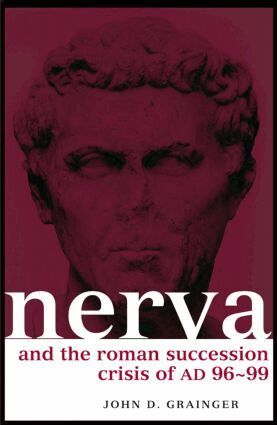
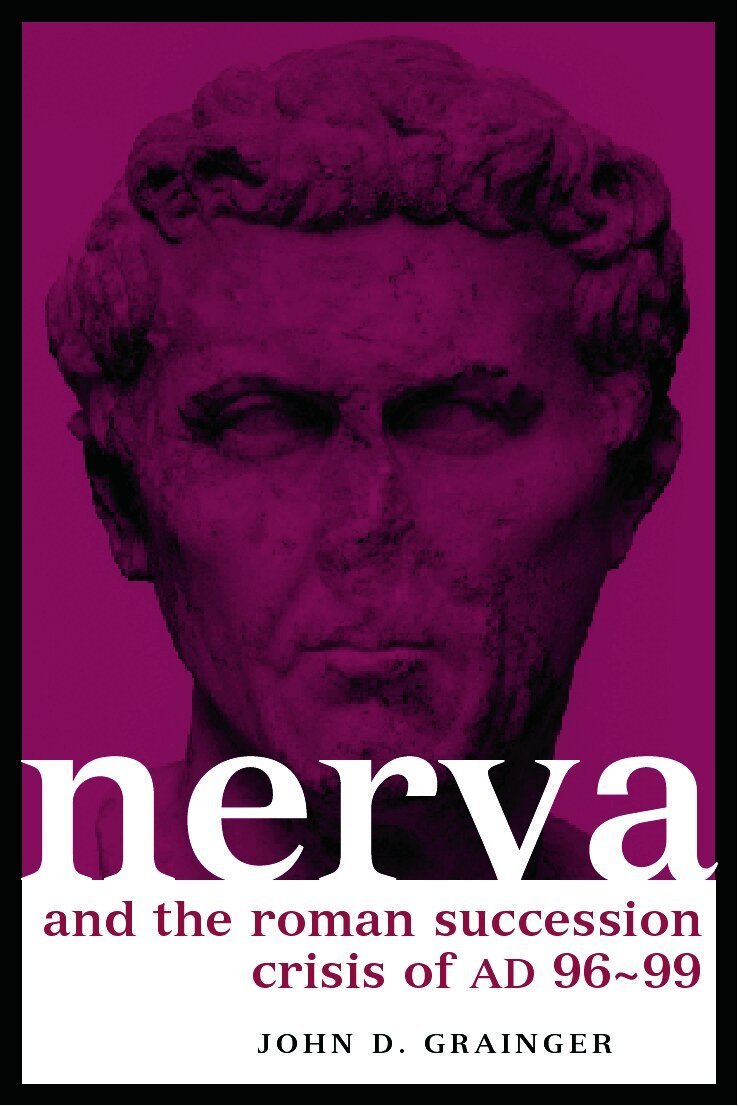
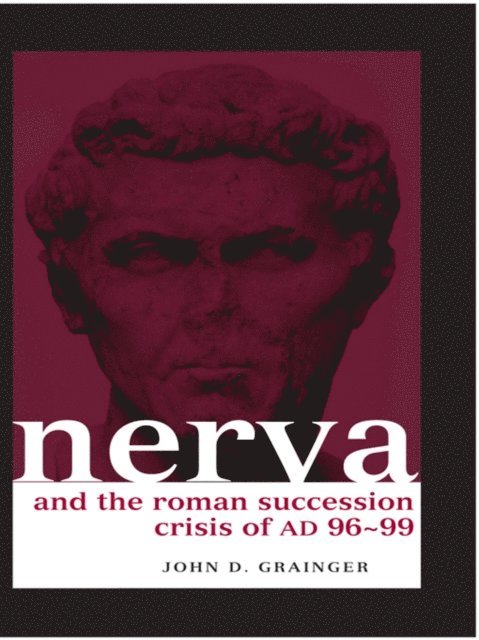
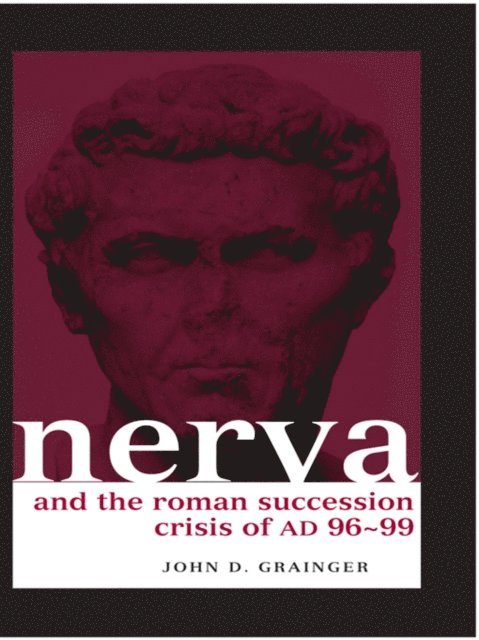
The imperial succession at Rome was notoriously uncertain, and where possible hereditary succession was preferred. John Grainger's detailed study looks at aperiod of intrigue and conspiracy. He explores how, why and by whom Domitian was killed, the rule of Nerva, chosen to succeed him, and finally Nerva's own choice of successor, Trajan, who became a strong and respected emperor against the odds.Perhaps most significantly Grainger investigates the effects of this dynastic uncertainty both inside and outside the ruling group in Rome, asking why civil war did not occur in this time of political upheaval.The last time a dynasty had failed, in AD 68, a damaging military conflict had resulted; at the next failure in AD 192, another war broke out; by the third century civil war was institutionalized, and was one of the main reasons for the eventual downfall of the entire imperial structure. Grainger argues that though AD 96-98 stands out as the civil war that did not happen, it was a perilously close-run thing.
Häftad, Engelska, 2004
624 kr
Skickas inom 10-15 vardagar
The imperial succession at Rome was notoriously uncertain, and where possible hereditary succession was preferred. John Grainger's detailed study looks at aperiod of intrigue and conspiracy. He explores how, why and by whom Domitian was killed, the rule of Nerva, chosen to succeed him, and finally Nerva's own choice of successor, Trajan, who became a strong and respected emperor against the odds.Perhaps most significantly Grainger investigates the effects of this dynastic uncertainty both inside and outside the ruling group in Rome, asking why civil war did not occur in this time of political upheaval.The last time a dynasty had failed, in AD 68, a damaging military conflict had resulted; at the next failure in AD 192, another war broke out; by the third century civil war was institutionalized, and was one of the main reasons for the eventual downfall of the entire imperial structure. Grainger argues that though AD 96-98 stands out as the civil war that did not happen, it was a perilously close-run thing.
Inbunden, Engelska, 2013
2 714 kr
Skickas inom 10-15 vardagar
Following the death of Alexander the Great in 323 BC, one of his commanders, Seleukos Nikator, rose over a period of forty years from being a landless refugee to the most successful of the Successor kings. This biography, first published in 1990, makes use of both historical and archaeological sources to trace the stages of Seleukos’ life as he added province to province, kingdom to kingdom, gradually building an empire which stretched from India to Greece and founding a state which lasted for the next two centuries. This strangely neglected figure in ancient history emerges as a modestly proficient general, an excellent strategist, a consummate diplomat, and an inventive and constructive ruler, the diversity of his empire demanding intelligence of a high order to hold it together. Seleukos Nikator will be of interest to students of ancient history and the politics of the Hellenistic world.
Häftad, Engelska, 2015
848 kr
Skickas inom 10-15 vardagar
Following the death of Alexander the Great in 323 BC, one of his commanders, Seleukos Nikator, rose over a period of forty years from being a landless refugee to the most successful of the Successor kings. This biography, first published in 1990, makes use of both historical and archaeological sources to trace the stages of Seleukos’ life as he added province to province, kingdom to kingdom, gradually building an empire which stretched from India to Greece and founding a state which lasted for the next two centuries. This strangely neglected figure in ancient history emerges as a modestly proficient general, an excellent strategist, a consummate diplomat, and an inventive and constructive ruler, the diversity of his empire demanding intelligence of a high order to hold it together. Seleukos Nikator will be of interest to students of ancient history and the politics of the Hellenistic world.
Häftad, Engelska, 2009
386 kr
Skickas inom 10-15 vardagar
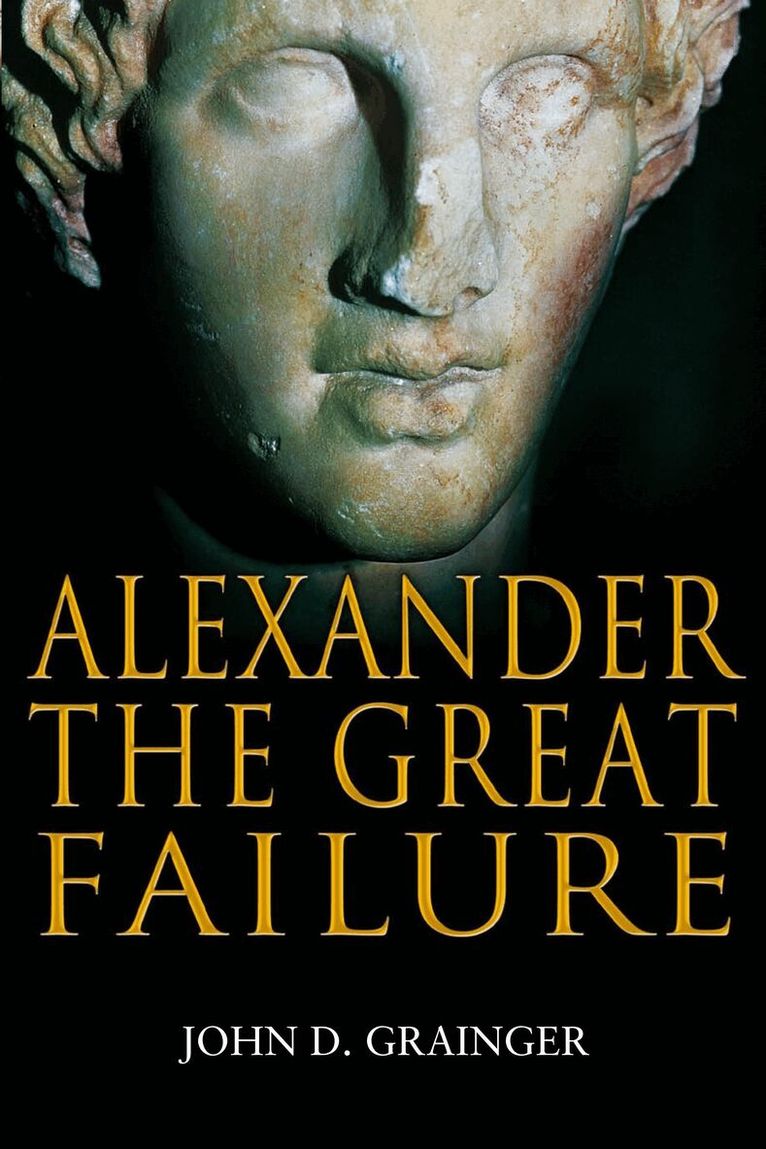
In this authoritative book John Grainger explores the foundations of Alexander's empire and why it did not survive after his untimely death in 323 BC. Alexander the Great's empire stretched across three continents and his achievements changed the nature of the ancient world. But for all his military prowess and success as a conqueror, John Grainger argues that he was one of history's great failures. Alexander's arrogance was largely responsible for his own premature death and he was personally culpable for the failure of his imperial enterprise. For Alexander was king of a society where the ruler was absolutely central to the well-being of society as a whole. When the king failed, the Macedonian kingdom imploded, something which had happened every generation for two centuries before him and happened again when he died. For the good of his people, Alexander needed an adult successor, but he refused to provide one while also killing any man who could be seen as one. The consequence was fifty years of warfare after his death and the destruction of his empire.The work of Philip II, Alexander's father, in extending and developing the kingdom of the Macedonians was the foundation for Alexander's career of conquest. Philip's murder in 336 BC brought Alexander to the kingship in the first undisputed royal succession on record.
Inbunden, Engelska, 2024
313 kr
Skickas
The end of the Great War in the Near East began with the Turkish Armistice but was not complete until the final peace treaty in 1923. During that five-year period the British Navy dealt with the overspill from the Russian Revolution in the Caucasus, the Caspian Sea and Central Asia as well, and then in the Aegean Sea and the Straits confronting the resurgent Turkish forces under Mustafa Kemal.The British in India were very concerned about Bolshevik activities in Central Asia and had sent two battalions of Indian troops under a British general to attempt to cope with it. They were successful in battle against larger forces, but politically they were unable to reach any sort of settlement. They were withdrawn when an Afghan war broke out.A second expedition was sent early in 1918 from Iraq through Persia to gain control of the oil fields at Baku in Azerbaijan. The object here was to prevent the oil falling into German or Turkish hands. This was an expedition at the limit of military capabilities, but it did succeed in seizing Baku and preventing a German conquest. In the process ships in the Caspian Sea were captured and turned into a Caspian Sea flotilla to fight Russian Bolshevik advances.These adventures happened before the Turkish Armistice. Constantinople had been occupied, but holding it became increasingly difficult and required the use of considerable forces, mainly British. The other allies gradually faded away or adopted the Turkish side.The resurgence of Turkish power in Anatolia eventually led to a tense confrontation between British and Turkish forces at Chanak on the Dardanelles and a difficult negotiation between generals. The result was a truce, British withdrawal from all occupied areas, and the collapse of the Lloyd George government in Britain, which was prepared to indulge in another war over the issues.
Inbunden, Engelska, 2025
313 kr
Skickas
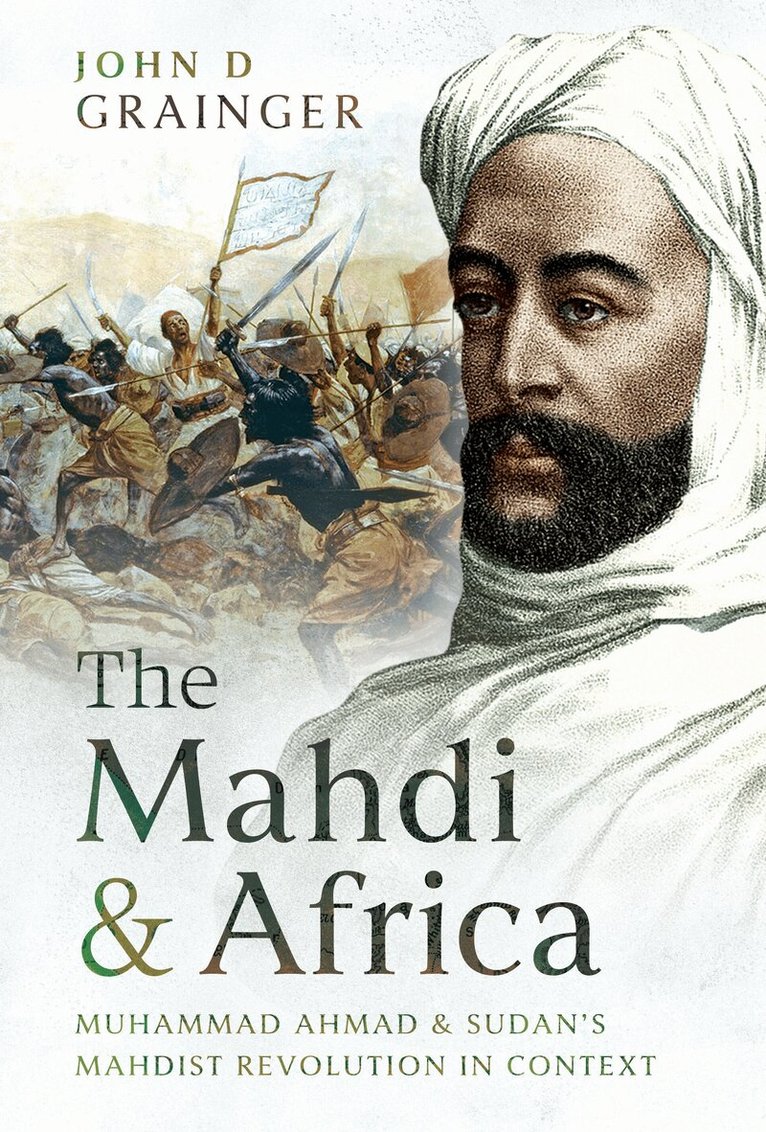
The story of the Mahdi of Sudan is generally related from the British point of view, though it was more an African event. The Mahdi’s uprising was the latest in a series of Islamic rebellions and wars which began in the eighteenth century. It also had a profound effect on the rest of North and East Africa, destroying the Egyptian Empire, provoking Ethiopia into a new unification, which allowed it to successfully resist the Mahdists, the Egyptians, and the Italians; it brought British forces forward from the East African coast as far as Uganda for fear that some European power would seize the sources of the Nile and block the river’s flow.Eventually (but only after several humiliating defeats) the Mahdist state was overthrown by a British invasion (led by Kitchener and participated in by Churchill); this also produced a difficult confrontation at Fashoda between the British conquerors and a French expedition – sparking a European crisis. The author sets the Mahdist war in the wider context of Africa and Islam, and in the context of the development of African states, but also with a glance forward to the present day, where the most important development in Africa is the extensive Islamic uprising, which is replicating that of the nineteenth century.
Häftad, Engelska, 2024
160 kr
Skickas
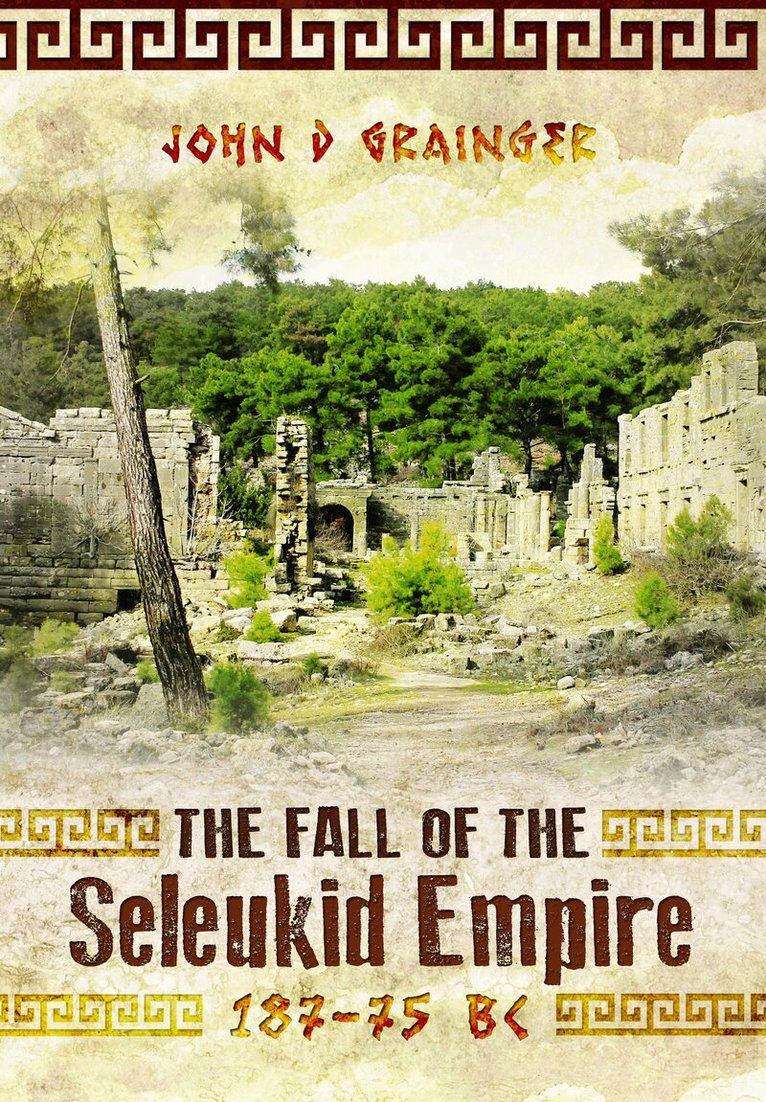
The concluding part of John D Grainger's history of the Seleukids traces the tumultuous last century of their empire. In this period it was riven by dynastic disputes, secessions and rebellions, the religiously-inspired insurrection of the Jewish Maccabees, civil war and external invasion from Egypt in the West and the Parthians in the East. By the 80s BC, the empire was disintegrating, internally fractured and squeezed by the converging expansionist powers of Rome and Parthia. This is a fittingly, dramatic and colourful conclusion to John Grainger's masterful account of this once-mighty empire.
Inbunden, Engelska, 2026
262 kr
Kommande
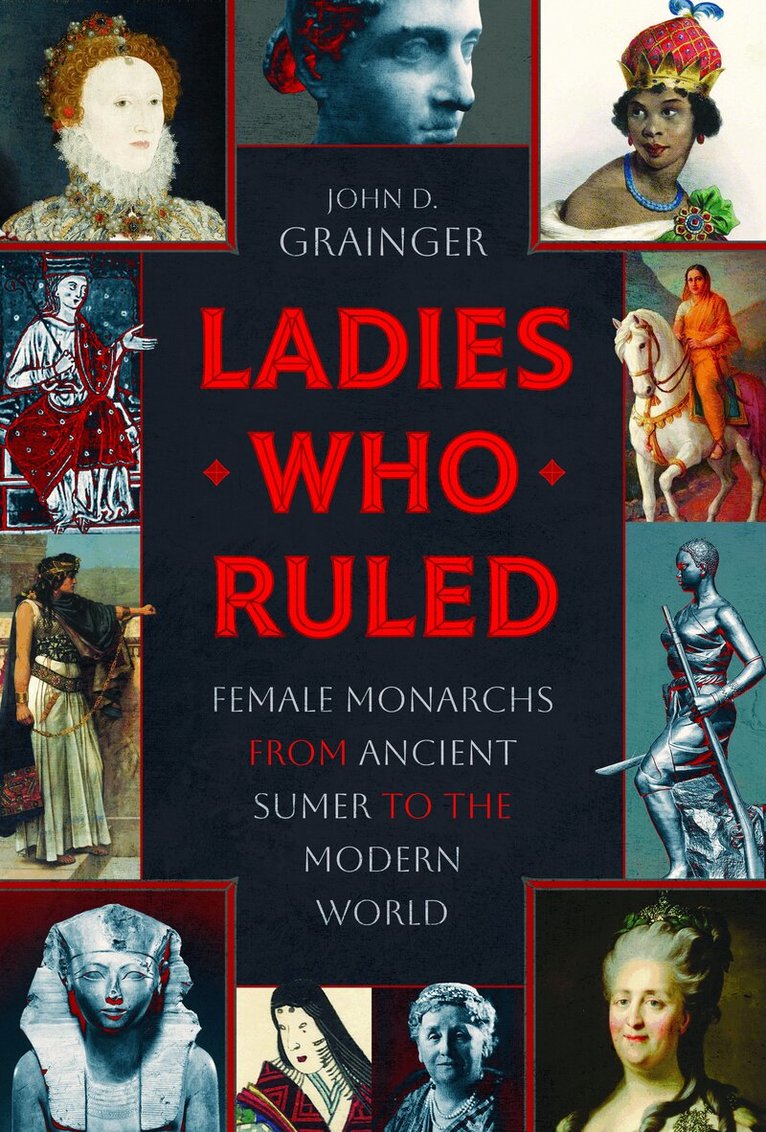
John Grainger presents a unique survey and catalogue of the many women who have ruled in their own right. The immense scope of the work, which is truly global and covers around five thousand years of history, from ancient Sumer to the modern world, throws up interesting insights and surprises, such as the large number of female rulers from Muslim countries and their almost total absence from North America, China and elsewhere. There are over three hundred entries, each with a concise biography where sources allow, and many are illustrated. That the number is not larger highlights the issues of patriarchy but at the same time they show that female rulers have been more prevalent than a misogynistic historical tradition has led us to believe. The author’s stated aim is that by listing the ladies who ruled in all societies, the contrasts between those societies becomes much more obvious, as does the negligence of historians in ignoring them, and that the large number of women who have ruled somewhere, even in the most misogynistic societies becomes clearer. The result is a valuable reference resource for anyone interested in societies and power structures generally, but especially in the role of women throughout history.
Inbunden, Engelska, 2026
262 kr
Kommande
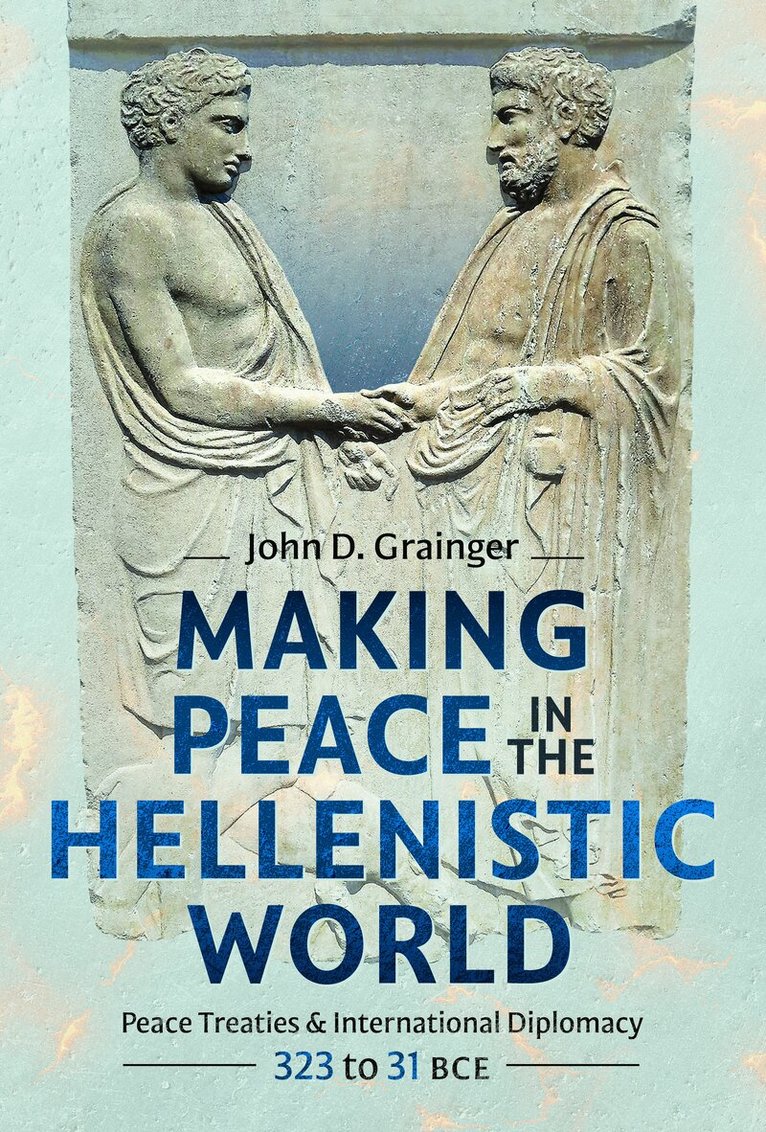
International relations in the ancient world is generally written about in terms of wars. But wars have to start and end, and the spaces between them are times of peace. This book concentrates on the making of peace at the end of wars. It concentrates on the Hellenistic period because that was when a particular set of circumstances existed in which a set of diplomatic rules were enunciated and observed for well over a century.The great powers of the Hellenistic period were first of all absolute monarchies. The kings were all descended from the Macedonian chiefs in the war against the Persian Empire, and who made themselves kings afterwards. From 300 BC the Macedonian kings all knew each other, and could make peace relatively easily. That friendship translated into a diplomatic system which then operated successfully for well over a century, in which peace continued while the kings involved lived. The system was broken up by the intrusion of the Rome republic, which did not fit.Non-Hellenistic monarchies – Syracuse, Parthia, Baktria, and so on - fitted into the system easily, but most republican states, generally small, never did. Republican Rome, with its own agenda and methods, then intervened and gradually destroyed the diplomatic system, though monarchies maintained it when they could. John Grainger's unusual emphasis on peace processes, judging them as important as war, offers a refreshing perspective on this period.
Inbunden, Engelska, 2017
2 151 kr
Skickas inom 10-15 vardagar
The study of Syria as a Roman province has been neglected by comparison with equivalent geographical regions such as Italy, Egypt, Greece and even Gaul. It was, however, one of the economic powerhouses of the empire from its annexation until after the empire’s dissolution. As such it clearly deserves some particular consideration, but at the same time it was a major contributor to the military strength of the empire, notably in the form of the recruitment of auxiliary regiments, several dozens of which were formed from Syrians. Many pagan gods, such as Jupiter Dolichenus and Jupiter Heliopolitanus Dea Syra, and also Judaism, originated in Syria and reached the far bounds of the empire. This book is a consideration, based on original sources, of the means by which Syrians, whose country was only annexed to the empire in 64 BC, saw their influence penetrate into all levels of society from private soldiers and ordinary citizens to priests and to imperial families.
Inbunden, Engelska, 2021
262 kr
Skickas
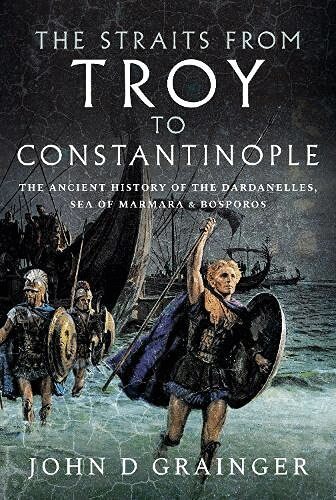
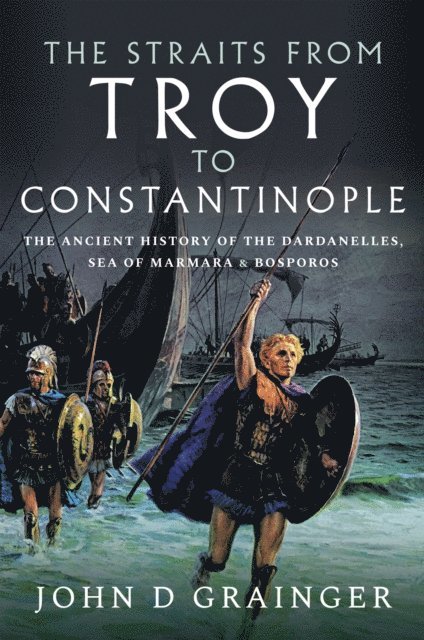
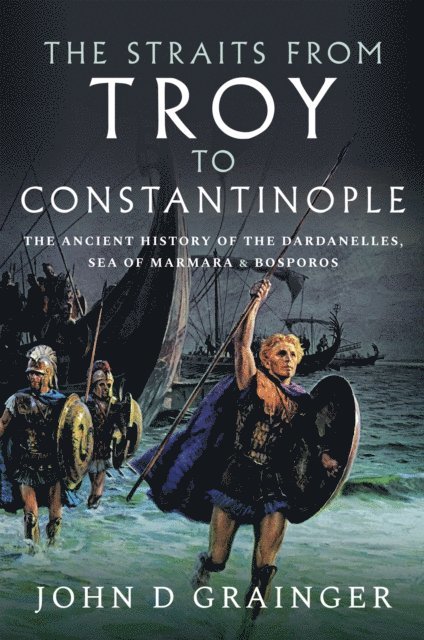
In ancient times, the series of waterways now known as the Turkish Straits, comprising the Dardanelles (or Hellespont), Sea of Marmara and the Bosporus, formed both a divide and a bridge between Europe and Asia. Its western and eastern entrances were guarded, at different times, by two of the most fabled cities of all time: respectively Troy (in Asia) and Byzantion (or Byzantium, on the European coast). The narrow crossing points at the Hellespont and Bosporus were strategically important invasion routes while the waters themselves were vital routes of travel and commerce, particularly the supply of grain from the hinterland of the Black Sea to the Greek cities. This made them sought after prizes and sources of friction between successive empires, Persians, Macedonians and Romans among them, and ensured they were associated with some of the great names of history, from Odysseus to Xerxes, Alexander to Constantine the Great. John D Grainger relates the fascinating history of this pivotal region from the Trojan War to Byzantion's refounding as the new capital of the Roman Empire. Renamed Constantinople it dominated the straits for a thousand years.
Häftad, Engelska, 2026
160 kr
Skickas
Although also known as the Third English Civil War, the author makes it clear that this was the last war between the Scots and English as separate states. He narrates in detail the the events following the exiled King Charles II’s landing in Scotland and his alliance with the Scots Covenanters, erstwhile allies of the English Parliamentarians.Cromwell’s preemptive invasion of Scotland led to the Battle of Dunbar, a crushing defeat for the Scots under David Leslie, though this only unified the Scottish cause and led to the levying of the Army of the Kingdom under Charles II himself. Charles II led a desperate counter-invasion over the border, hoping to raise a royalist rebellion and forcing Cromwell to follow him, though he left Monck to complete the pacification of Scotland.Cromwell caught up with Charles II at Worcester, where the Scots/Royalist army was decisively defeated and destroyed, thousands of the prisoners being sold into slavery in the West Indies and the American colonies.This revised and updated edition contains an expanded chapter on the aftermath of the war and the fate of the POWs, drawing on major new archaeological evidence, as well as an expanded Conclusion.
Inbunden, Engelska, 2024
262 kr
Skickas
The death of Ptolemy VI brought his younger brother Ptolemy VIII to the kingship. This was the start of a prolonged, if intermittent, turbulent period of family strife, punctuated by rebellions, plots and wars. One king, Ptolemy VII, was murdered, Ptolemy VIII’s two simultaneous wives plotted and rebelled, and when he died one of these, Kleopatra III, was his effective successor.Ptolemy VIII was in fact not a bad king in some ways, and encouraged the exploitation of the discovery of the monsoon climate of the Indian Ocean to develop trade with India, as well as using his (much reduced) navy to maintain contact with the lands of the Mediterranean. Kleopatra III made a renewed effort to reconquer Palestine, but failed (Eighth Syrian War).From the death of Ptolemy IX in 80 BC there were two overriding problems. Ptolemy IX was the last legitimate Ptolemy, and the succession was constantly in dispute from then on. And looming over all was the rising power of Rome. This had been largely absent from the eastern Mediterranean until the Mithradatic wars brought its power repeatedly into the East. Egypt gradually became drawn into the republic’s orbit, mainly as a source of cash to fund its wars and the greed of the Roman aristocracy until, choosing the side of Mark Antony, the final Ptolemy, Kleopatra VII, went down to defeat before Octavian’s forces.
Inbunden, Engelska, 2023
262 kr
Skickas
The second volume of this ground-breaking trilogy covers the reigns of Ptolemy II, III, IV, V and VI, who between them reigned for a century. Ptolemy III's rule brought the acquisition of Cyrenaica (through marriage) and territorial gains in Syria, the Aegean, Asia Minor and Thrace due to unexpected military successes in the Third Syrian War. These victories over the Seleukids, marked the apogee of Ptolemaic power. However, the rest of his reign was accompanied by internal trouble in Egypt.On Ptolemy III's death, his minister Sosibius organized the accession of Ptolemy IV, had the new king's mother and siblings murdered and continued as effective ruler for the whole reign. He also dominated that of Ptolemy V. There was a surprising success in the Fourth Syrian War but this was followed by a major rebellion and defeat in the Fifth Syrian War, with the loss of Syria/Palestine and Ptolemaic holdings in Asia Minor. The murder of Ptolemy V in 180 was followed by the long and troubled reign of Ptolemy VI, one of the ablest of the Ptolemies, but hampered by continued trouble in Egypt and in the court. A disastrous war against the Seleukid Antiochos IV set back the Ptolemaic recovery. Ptolemy did eventually manage a complete victory, only to die of wounds received in battle. John Grainger clearly recounts and analyses this dramatic period of war, politics, murder and court intrigue.
Inbunden, Engelska, 2022
262 kr
Skickas
In this first volume of his trilogy on the Ptolemies, John Grainger explains how Ptolemy I established the dynasty's power in Egypt in the wake of Alexander the Great's death. Egypt had been independent for most of the fourth century BC, but was reconquered by the Persian Empire in the 340s. This is essential background for Ptolemaic history since it meant that Alexander was welcomed as a liberator and, after the tyranny of Kleomenes, so was Ptolemy. This was the essential basis of Ptolemy's power. He conciliated the Egyptians, but reinforced his military strength with Greek settlers, mainly retired or available soldiers. He built the city of Alexandria, but to his own requirements, not those planned by Alexander.The empire outside Egypt was acquired, perhaps for defence, perhaps by sheer greed. Ptolemy took over Cyrenaica (with difficulty), Cyprus and Syria/Palestine. These had to be defended against his rivals, hence the development of his navy, and the Syrian Wars.The succession was carefully managed, but was not directly hereditary (Ptolemy II was not the eldest son), and the new king was very different. He fought repeated wars in Syria, and in the Aegean, built up his navy to the greatest seen in the ancient world, and extended his empire into the lands of the Red Sea, Sudan and Ethiopia. He taxed the Egyptians mercilessly to fund all these activities. Yet few of his wars were successful, and he stored up trouble for his successors.
Inbunden, Engelska, 2022
262 kr
Skickas
The great city of Byzantion/Constantinople/Istanbul stands on a commanding cape overlooking a busy waterway. It has been the target of repeated attempts to capture it for the past two and a half millennia. Most of these attacks failed, but some did so in spectacular fashion, such as the great Arab sieges. The inhabitants fought hard in almost every siege, with the result that when the city was captured it was also destroyed, or at least suffered a hideous sack. Almost every nation between the Atlantic and the Steppes of Asia have made attempts to capture the city, some repeatedly but only a few - a Roman emperor, the Crusaders, the Turks - have succeeded. And there is no sign that some have given up the hope of taking it - the last sieges were just before and then during the Great War, by the Bulgars, and then by the Allies, who got no closer than Gallipoli, but the city had to submit to enemy occupation when the empire it ruled collapsed. It is still surrounded by envious neighbours, who wish to control it. The city has been besieged forty times, and has been captured on three or four occasions; it cannot be said to be safe yet. It is still 'The City of the World's Desire'.
Inbunden, Engelska, 2016
2 359 kr
Skickas inom 10-15 vardagar
Diplomacy is a neglected aspect of Hellenistic history, despite the fact that war and peace were the major preoccupations of the rulers of the kingdoms of the time. It becomes clear that it is possible to discern a set of accepted practices which were generally followed by the kings from the time of Alexander to the approach of Rome. The republican states were less bound by such practices, and this applies above all to Rome and Carthage. By concentrating on diplomatic institutions and processes, therefore, it is possible to gain a new insight into the relations between the kingdoms. This study investigates the making and duration of peace treaties, the purpose of so-called 'marriage alliances', the absence of summit meetings, and looks in detail at the relations between states from a diplomatic point of view, rather than only in terms of the wars they fought. The system which had emerged as a result of the personal relationships between Alexander's successors, continued in operation for at least two centuries. The intervention of Rome brought in a new great power which had no similar tradition, and the Hellenistic system crumbled therefore under Roman pressure.
Inbunden, Engelska, 2019
262 kr
Skickas
Antipater was a key figure in the rise of Macedon under Philip II and instrumental in the succession of Alexander III (the Great). Alexander entrusted Antipater with ruling Macedon in his long absence and he defeated the Spartans in 331 BC. After Alexander's death he crushed a Greek uprising and became regent of the co-kings, Alexander's mentally impaired half-brother (Philip III Arrhideus) and infant son (Alexander IV). He brokered a settlement between the contending Successors but died in 319 BC, having first appointed Polyperchon to succeed as regent in preference to his own sons.Antipater's eldest son Cassander later became regent of Macedon but eventually had Alexander IV killed and made himself king. Three of his sons in turn briefly succeeded him but could not retain the throne. Antipater's female heirs are shown to be just as important, both as pawns and surprisingly independent players in this Macedonian game of thrones. The saga ends with the failed bid by Nikaia, the widow of Antipater's great grandson Alexander of Corinth, to become independent ruler of Macedon.
Inbunden, Engelska, 2020
262 kr
Skickas
John D Grainger analyses the Roman imperial succession, demonstrating that the empire organized by Augustus was fundamentally flawed in the method it used to find emperors. Augustus' system was a mixture of heredity, senatorial and military influences, and these were generally antagonistic. Consequently the Empire went through a series of crises, in which the succession to a previous, usually dead, emperor was the main issue. The infamous Year of the Four Emperors', AD 69, is only the most famous of these crises, which often involved bouts of bloody and destructive civil war, assassinations and purges. These were followed by a period, usually relatively short, in which the victor in the crisis' established a new system, juggling the three basic elements identified by Augustus, but which was as fragile and short lived as its predecessor; these consequences' of each crisis are discussed. The lucid and erudite text is supported by numerous genealogical tables and dozens of depictions of emperors.
Inbunden, Engelska, 2020
262 kr
Skickas
The eastern Celtic tribes, known to the Greeks as Galatians, exploited the waning of Macedonian power after Alexander the Great's death to launch increasingly ambitious raids and expeditions into the Balkans. In 279 BC they launched a major invasion, defeating and beheading the Macedonian king, Ptolemy Keraunos, before sacking the Greeks' most sacred oracle at Delphi. Eventually forced to withdraw northwards, they were defeated by Antigonus Gonatus at Lysimachia in 277 BC but remained a threat.A large Galatian contingent was invited to cross to Asia to intervene in a war in Bithynia but they went on to seize much of central Anatolia for themselves, founding the state of Galatia. Antiochos I curbed their power in the Elephant Victory in 273 BC' but they remained a force in the region and their fierce warriors served as mercenaries in many armies throughout the eastern Mediterranean. John Grainger narrates and analyses the fortunes of these eastern Celts down to their eventual subjugation by the Romans, Galatia becoming a Roman province in 30 BC.
Häftad, Engelska, 2020
160 kr
Skickas
Egypt was the last of the Macedonian Successor states to be swallowed up by Roman expansion. The Ptolemaic rulers had allied themselves to Rome while their rivals went down fighting. However, Cleopatra's famous love affair with Marc Antony ensured she was on the wrong side of the Roman civil war between him and Octavian (later to become Caesar Augustus). After the defeat of Antony and Cleopatra at the naval battle of Actium, Octavian swiftly brought it under direct Roman control, though it took several campaigns to fully subjugate the whole country. These campaigns have previously been largely neglected. Judaea was a constant source of trouble for the Romans, as it had been for the Seleucids, the previous overlords of the region. The Romans at first were content to rule through client kings like the infamous Herod but were increasingly sucked in to direct military involvement to suppress religiously-inspired revolts. Like the other volumes in this series, this book gives a clear narrative of the course of these campaigns, explaining how the Roman war machine coped with formidable new foes and the challenges of unfamiliar terrain and climate. Specially-commissioned colour plates by the renowned Graham Sumner bring the main troop types vividly to life in meticulously-researched detail.
Häftad, Engelska, 2020
160 kr
Skickas
The period covered in this book, is well known for its epic battles and grand campaigns of territorial conquest, but Hellenistic monarchies, Carthaginians and the rapacious Roman Republic were scarcely less active at sea. Huge resources were poured into maintaining fleets not only as symbols of prestige but as means of projecting real military power across the Mediterranean arena. Taking the period between Alexander the Great's conquests and the Battle of Actium, John Grainger analyses the developments in naval technology and tactics, the uses and limitations of sea power and the differing strategies of the various powers. He shows, for example, how the Rhodians and the Romans eschewed the ever-larger monster galleys favoured by most Hellenistic monarchs in favour of smaller vessels. This will be a fascinating study of a neglected aspect of ancient warfare.
Inbunden, Engelska, 2021
213 kr
Skickas
Although also known as the Third English Civil War, the author makes it clear that this was the last war between the Scots and English as separate states. He narrates in detail the the events following the exiled King Charles II's landing in Scotland and his alliance with the Scots Covenanters, erstwhile allies of the English Parliamentarians.Cromwell's preemptive invasion of Scotland led to the Battle of Dunbar, a crushing defeat for the Scots under David Leslie, though this only unified the Scottish cause and led to the levying of the Army of the Kingdom under Charles II himself. Charles II led a desperate counter-invasion over the border, hoping to raise a royalist rebellion and forcing Cromwell to follow him, though he left Monck to complete the pacification of Scotland.Cromwell caught up with Charles II at Worcester, where the Scots/Royalist army was decisively defeated and destroyed, thousands of the prisoners being sold into slavery in the West Indies and the American colonies.This revised and updated edition contains an expanded chapter on the aftermath of the war and the fate of the POWs, drawing on major new archaeological evidence, as well as an expanded Conclusion.
Häftad, Engelska, 2016
454 kr
Skickas inom 5-8 vardagar
A very substantial, comprehensive dictionary containing entries on all the battles fought at sea by British fleets and ships since Anglo-Saxon times.This very substantial, comprehensive dictionary contains entries on all the battles fought at sea by British fleets and ships since Anglo-Saxon times. Major battles, such as Trafalgar or Jutland, minor actions, often convoy and frigate actions, troop landings, bombardments and single ship actions are all covered. Most accounts of British naval power focus on the big battles and the glorious victories - the picture which emerges from the rich detail in thisdictionary, however, is of a busy, dispersed navy, almost constantly engaged in small scale activity - taking prizes in the eighteenth century, escorting convoys and being attacked by, and attacking, U-boats in the twentieth century, attacking minor as well as major enemy ports in all periods. Moreover, the action, which very often takes place not in proximity to Britain, but on a world stage, is not always successful and sometimes disastrous. The dictionary covers all periods comprehensively - medieval, early and late, and early modern as well as modern - and encompasses "Britain" in all its forms - England, Scotland, and British colonies including those in North America. It isan essential reference work for all enthusiasts of maritime history. "A well organised and detailed compilation, written with confidence and authority" - Professor Roger Knight, University of Greenwich. JOHN GRAINGER has published extensively on maritime history, including books for The Navy Records Society.
Inbunden, Engelska, 2017
1 219 kr
Skickas inom 5-8 vardagar
A comprehensive overview of the activities of the British navy in the Mediterranean from the earliest times until the present.This book presents a comprehensive overview of the activities of the British navy in the Mediterranean Sea from the earliest times until the twentieth century. It traces developments from Anglo-Saxon times, through the Crusades,and to the seventeenth century, when the Barbary corsairs became a major problem. It outlines Britain's involvement in the wars of the long eighteenth century, when Britain obtained bases at Gibraltar, Minorca and Malta and repeatedly defeated the French and Spanish navies. It examines the navy's activities during the First and Second World Wars, when the Mediterranean was again of crucial strategic significance and a major theatre of war, and goes on toconsider Britain's withdrawal from the Mediterranean in the later twentieth century. Throughout, the book relates naval activity to patterns of trade, including the rise and decline of the Levant Company, and to wider international politics.JOHN D. GRAINGER is the author of numerous books for a variety of publishers, including seven previously published books for Boydell and Brewer, including The British Navy in the Baltic, Dictionaryof British Naval Battles and The First Pacific War: Britain and Russia, 1854-56.