John Downing - Böcker
Visar alla böcker från författaren John Downing. Handla med fri frakt och snabb leverans.
2 produkter
2 produkter
221 kr
Tillfälligt slut
John Downing was the pre-eminent press photographer of his generation, winning British Press Photographer of the Year seven times. As a photojournalist Downing recognised a good story, and how to tell it. Aperture is a fascinating and engaging mix of recording the heyday of Fleet Street – multi-million daily sales of the only source of readable news and information, driven by dynamic characters and with its own cultures – and Downing’s less glamorous personal experiences on the job. These included long assignments in hotspots around the world, including South Sudan, Afghanistan, Nicaragua, Uganda, Bangladesh and Chernobyl, which are vividly described. Widely respected by colleagues, Downing’s work includes some of the iconic images of the period, including the only photograph of Thatcher immediately after the IRA bombing.Aperture describes the glamour and excitement of journalism at the time: the hard-nosed editors, the rivalries, the ‘work hard play hard culture’, foreign assignments issued at the drop of a hat, the toll on journalists and photographers. Newspapers were hugely important in the daily lives of their readers then, the world was less accessible than now, and newspapers played a vital role in shining light into some of its darker, more inaccessible parts. John Downing played a significant part in this, though not without some personal cost. Completed shortly before his death, with the help of colleague Wendy Holden, Downing filed a story for the final time: his own remarkable life.
234 kr
Skickas inom 3-6 vardagar
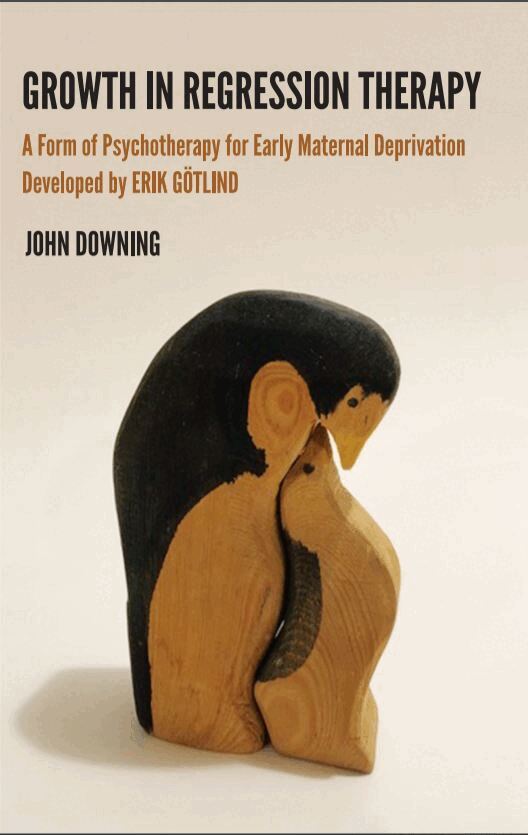
Erik Götlind’s findings and ideas and the development of GRT are drawn from over 40 years of clinical experience from therapies or supervision of therapies with psychotic patients, and others with severe deficit pathology, including severe personality disorders or severe depressions, and also people with a basically neurotic personality structure but who nevertheless also suffer from deficit pathology. Growth in Regression Therapy (GRT) is based on the clinical finding that it is possible, in a person who suffered from early maternal deprivation, to recapitulate therapeutically the first years of life again, in a partially regressed state lasting several months, the early process phase of the GRT. During this time he or she receives, in a nurturing caring relationship, the close human contact that was originally lacking, and thus the original state of deficit is repaired or undone. Thereafter the patient continues in the growth process out of the regression. Thus GRT is a self-strengthening technique. This finding is basically in contradiction to the traditionally held psychoanalytic view. The process takes place at a very deep, almost biological level of attachment. GRT has immensely broadened the scope of our possibilities to work with these conditions psychotherapeutically. Moreover, having gone through this form of therapy initially, many of these patients are then able to tolerate intensive in-depth explorative therapy which very often would not have been possible before, due to an insufficiently strong self or ego structure, and at best achieve full healing. Thus GRT adds a qualitatively new dimension to psychotherapy, that is, it is more than just a new alternative technique among many others. In many patients it can be seen as an essential and decisive element and phase in a long term on-going psychotherapeutic process.