John H. Wigger – författare
Visar alla böcker från författaren John H. Wigger. Handla med fri frakt och snabb leverans.
3 produkter
3 produkter
Inbunden, Engelska, 1998
1 990 kr
Skickas inom 5-8 vardagar
Following the Revolutionary War, American Methodism grew at an astonishing rate, rising from fewer than 1000 members in 1770 to over 250,000 by 1820. John H. Wigger seeks to explain the puzzle of this remarkable growth, offering a provocative reassessment of the role of popular religion in American life. Wigger argues that in the post-Revolutionary years Methodism's style, tone, and agenda worked their way deep into the fabric of American life, influencing all other mass religious movements that would follow, and many facets of American life not directly connected to the church as well.
E-bok
PDF, Engelska, 19981 797 kr
Läs direkt efter köp
Following the Revolutionary War, American Methodism grew at an astonishing rate, rising from fewer than 1000 members in 1770 to over 250,000 by 1820. In Taking Heaven by Storm, John H. Wigger seeks to explain this remarkable expansion, offering a provocative reassessment of the role of popular religion in American life. Early Methodism was neither bland nor predictable; rather, it was a volatile and innovative movement, both driven and constrained by the hopes and fears of the ordinary Americans who constituted its core. Methodism''s style, tone, and agenda worked their way deep into the fabric of American life, Wigger argues, influencing all other mass religious movements that would follow, as well as many facets of American life not directly connected to the church. Wigger examines American Methodism from a variety of angles, focusing in turn on the circuit riders who relentlessly pushed the Methodist movement forward, the critical role of women and African Americans within the movement, the enthusiastic nature of Methodist worship, and the unique community structure of early American Methodism. Under Methodism''s influence, American evangelism became far more enthusiastic, egalitarian, entrepreneurial, and lay oriented--characteristics that continue to shape and define popular religion today.
Häftad, Engelska, 2001
225 kr
Skickas inom 5-8 vardagar
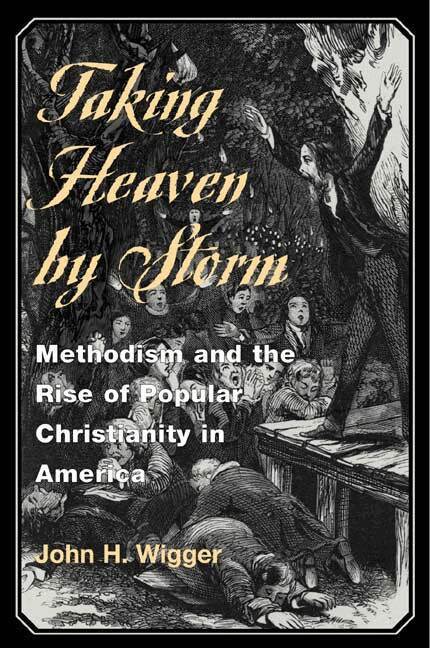
In 1770 there were fewer than 1,000 Methodists in America. Fifty years later, the church counted more than 250,000 adherents. Identifying Methodism as America's most significant large-scale popular religious movement of the antebellum period, John H. Wigger reveals what made Methodism so attractive to post-revolutionary America. Taking Heaven by Storm shows how Methodism fed into popular religious enthusiasm as well as the social and economic ambitions of the "middling people on the make"--skilled artisans, shopkeepers, small planters, petty merchants--who constituted its core. Wigger describes how the movement expanded its reach and fostered communal intimacy and "intemperate zeal" by means of an efficient system of itinerant and local preachers, class meetings, love feasts, quarterly meetings, and camp meetings. He also examines the important role of African Americans and women in early American Methodism and explains how the movement's willingness to accept impressions, dreams, and visions as evidence of the work and call of God circumvented conventional assumptions about education, social standing, gender, and race. A pivotal text on the role of religion in American life, Taking Heaven by Storm shows how the enthusiastic, egalitarian, entrepreneurial, lay-oriented spirit of early American Methodism continues to shape popular religion today.