John Ise – författare
Visar alla böcker från författaren John Ise. Handla med fri frakt och snabb leverans.
10 produkter
10 produkter
Häftad, Engelska, 1983
334 kr
Skickas inom 10-15 vardagar
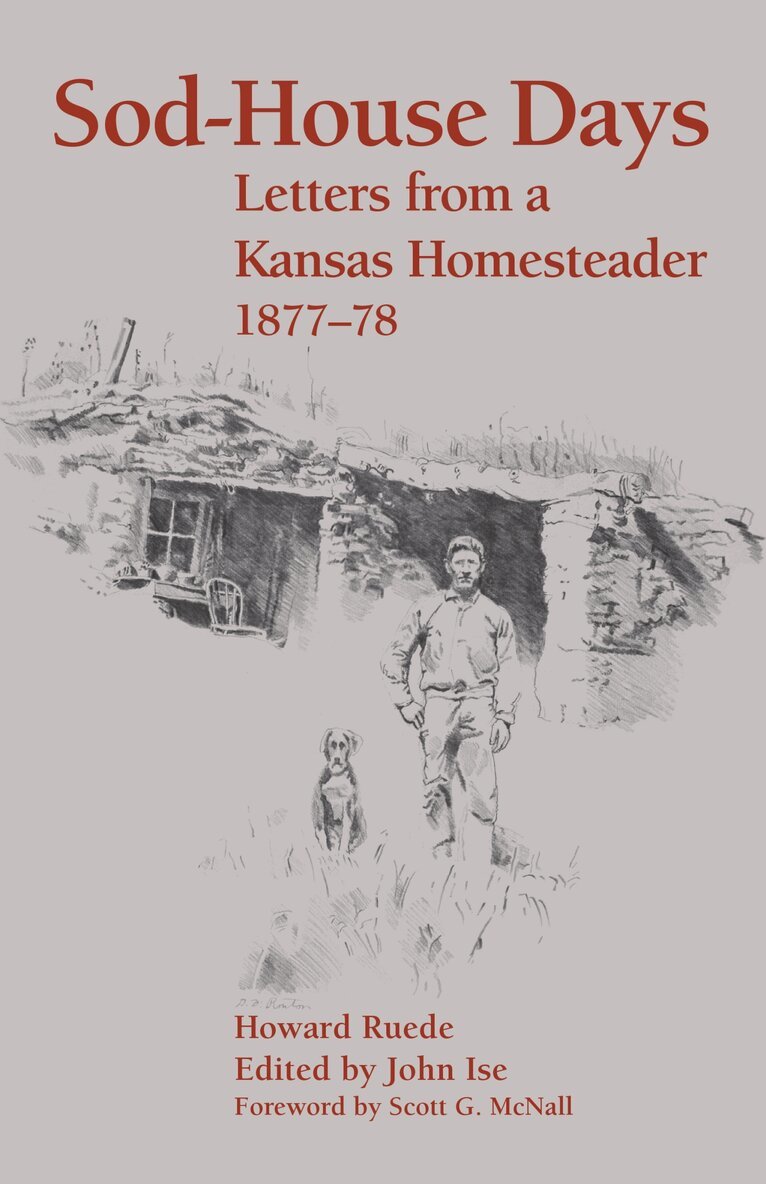
Howard Ruede was twenty-two years old in March of 1877 when he rode on a freight wagon into Osborne City, a community in west-central Kansas. A young man of courage, common sense, and independence, Ruede was filled with the optimism and determination typical of the men and women who took up the challenge of homesteading on the prairie. Brought together by economist John Ise and first published in 1937, Sod-House Days is a collection of the letters Ruede wrote to his family in Pennsylvania chronicling his first year in Kansas. In minute detail these letters show the hard, wearying work faced by homesteaders in the 1870s, their almost unbelievable poverty, the hardships of poor food, inadequate clothing, crowding, unsanitary conditions, the lack of decent drinking water, the bedbugs and fleas, flies and mosquitoes. We see Ruede struggling to stay out of debt, walking miles to pick up the mail or to visit a neighbor, working until his bare feet are rubbed raw by the wheat stubble of the fields, going without meat because he hasn't been able to kill a jackrabbit, cooking biscuits in a kettle over his sod fireplace. Taken together, his observations constitute a careful and graphic picture of the pioneer community in which he lived, one that joins recent studies such as Sandra Myres's Westering Women and the Frontier Experience in presenting an accurate, if brutal, picture of life on the western frontier. In a perceptive new foreword, sociologist Scott G. McNall considers the context within which the story of Howard Ruede unfolded. He delineates the forces and factors that contributed to the rapid settlement of the Great Plains. He reads the dominant themes that run through Ruede's letters: an almost religious faith in progress and hard work, and a tremendous concern for the idea of community. He also addresses a central question: What made these people stay? McNall writes, ""The value of these materials has been not at all reduced by the passage of time. . . . [This] is the story of an ordinary person with heroic dimensions. Reading these letters, we see what values people had which allowed them to try, and then try again, after they had seen their efforts destroyed by drought, grasshoppers, prairie fires, and other disasters. . . . It is a story of struggle with the environment, of creative adaption to circumstance, of people as active participants in creating the society around them.
Inbunden, Engelska, 1996
518 kr
Skickas inom 5-8 vardagar
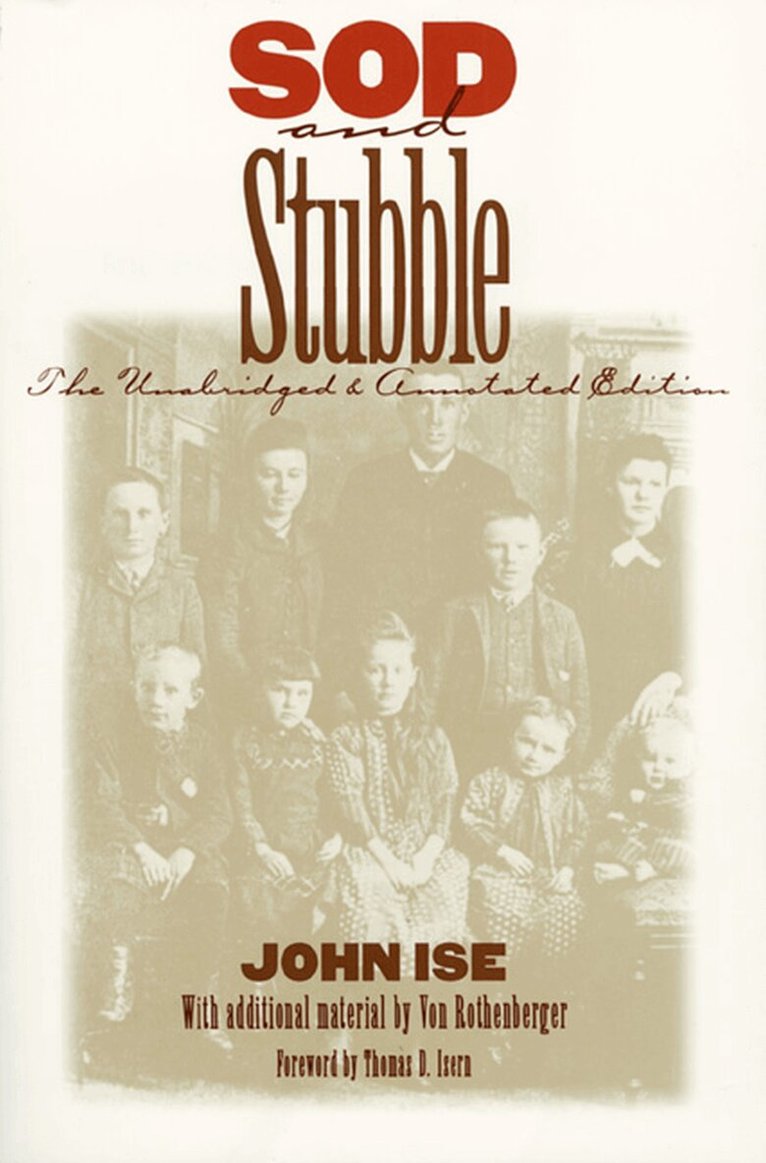
Deeply moved by his mother's memories of a waning era and rapidly disappearing lifestyle, John Ise records the adventures and adversities of his family and boyhood neighbours, the early homesteaders of Osborne County, Kansas, presented here in this work.
Häftad, Engelska, 1996
344 kr
Skickas inom 10-15 vardagar
Deeply moved by his mother's memories of a waning era and rapidly disappearing lifestyle, John Ise records the adventures and adversities of his family and boyhood neighbours, the early homesteaders of Osborne County, Kansas, presented here in this work.

Inbunden, Engelska, 2022
446 kr
Skickas inom 5-8 vardagar
Häftad, Engelska, 2022
323 kr
Skickas inom 5-8 vardagar
Inbunden, Engelska, 2026
427 kr
Skickas inom 5-8 vardagar
Inbunden, Engelska, 2026
469 kr
Skickas inom 5-8 vardagar
Häftad, Engelska, 2026
387 kr
Skickas inom 5-8 vardagar
Häftad, Engelska, 2026
434 kr
Skickas inom 5-8 vardagar
E-bok
Engelska, 201557 kr
Läs direkt efter köp
“A few years ago, as I listened one night to my mother telling incidents of her life pioneering in the semi-arid region of Western Kansas, it occurred to me that the picture of that early time was worth drawing and preserving for the future, and that, if this were ever to be done, it must be done soon, before all of the old settlers were gone. This book is the result-an effort to picture that life truly and realistically. It is the story of an energetic and capable girl, the child of German immigrant parents, who at the age of seventeen married a young German farmer, and moved to a homestead on the wind-swept plains of Kansas, where she reared eleven of her twelve children, and remembering regretfully her own half-day in school, sent nine of them through college. It is a story of grim and tenacious devotion in the face of hardships and disappointments, devotion that never flagged until the long, hard task of near a lifetime was done.”—John Ise (from the preface) Deeply moved by his mother’s memories of a waning era and rapidly disappearing lifestyle, John Ise painstakingly recorded the adventures and adversities of his family and boyhood neighbors—the early homesteaders of Osborne County, Kansas. First published in 1936, his “nonfiction novel” Sod and Stubble has since become a widely read and much loved classic. In the original, Ise changed some identities and time sequences but accurately retained the uplifting and disheartening realities of prairie life. Ushering us through a dynamic period of pioneering history, from the 1870s to the turn of the century, Sod and Stubble abounds with the events and issues—fires and droughts, parties and picnics, insect infestations and bumper crops, prosperity and poverty, divisiveness and generosity, births and deaths—that shaped the lives and destinies of Henry and Rosa Ise, their family, and their community.-Print ed.