John Keay – författare
Visar alla böcker från författaren John Keay. Handla med fri frakt och snabb leverans.
40 produkter
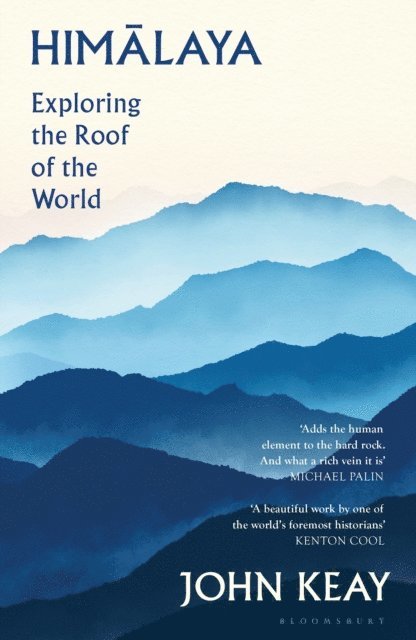
Himalaya
Exploring the Roof of the World
Av John Keay
Häftad, 2023
168 kr
Lägg i varukorg
'John Keay is the master storyteller and historian. This grand narrative of Himalaya is as epic as the mountains and peoples he describes' Dan Snow'Adds the human element to the hard rock. And what a rich vein it is' Michael PalinHistory has not been kind to Himalaya. Empires have collided here, …
Honourable Company
Av John Keay
Häftad, 1993
167 kr
Lägg i varukorg
During 200 years the East India Company grew from a loose association of Elizabethan tradesmen into "the grandest society of merchants in the universe". As a commercial enterprise it came to control half the world's trade and as a political entity it administered an embryonic empire. Without it …
Mad About the Mekong
Exploration and Empire in South East Asia
Av John Keay
Häftad, 2006
179 kr
Lägg i varukorg
The story of both a dramatic journey retracing the historic voyage of France’s greatest 19th-century explorer up the mysterious Mekong river, and a portrait of the river and its peoples today.Any notion of sailing up the Mekong in homage to Francis Garnier has been unthinkable until now. From its …
India
A History
Av John Keay
Häftad, 2010
191 kr
Lägg i varukorg
The most authoritative and highly regarded single-volume history of India – from ancient time to the modern day. Five millennia of the sub-continent’s social, economic, political and cultural history are interpreted by one of our finest writers on India and the Far East. India’s history begins with …
China
A History
Av John Keay
Häftad, 2009
218 kr
Lägg i varukorg
Three thousand years of Chinese history in an accessible and authoritative single volume.Despite the recent rise of China to a position of dominance on the world economic stage, Chinese history remains an elusive subject. Yet it is this vast narrative of appalling loss, superhuman endeavour and …
Kashmir, Kashmir
Av John Keay
Inbunden, 2027
301 kr
Kommande
A lively and uniquely comprehensive history of one of Asia's most cherished and contested states, spanning more than a millennium, from acclaimed historian John Keay. What emerges in this landmark history is not the familiar tale of a paradise lost to modern politics, but the portrait of a …
China
A History
Av John Keay
Häftad, 2026
166 kr
Kommande
Three thousand years of Chinese history in an accessible and authoritative single volume.Most histories of China appear to have been written by sinologists for sinologists. As China rejoins and perhaps comes to dominate our world order, the need for an authoritative yet engaging history is …
Great Arc
The Dramatic Tale of How India Was Mapped and Everest Was Named
Av John Keay
Häftad, 2001
139 kr
Lägg i varukorg
A vivid description of one of the most ambitious scientific projects undertaken in the 19th century, and the men who undertook the measurement of the Himalayas and the mapping of the Indian subcontinent: William Lambton and George Everest.The graphic story of the measurement of a meridian, or …
India Discovered
The Recovery of a Lost Civilization
Av John Keay
Häftad, 2001
137 kr
Lägg i varukorg
Two hundred years ago, India was seen as a place with little history and less culture.Today it is revered for a notable prehistory, a magnificent classical age and a cultural tradition unique in both character and continuity. How this extraordinary change in perception came about is the subject of …
China
A History
Av John Keay
E-bok, 2010
146 kr
Lägg i varukorg
Three thousand years of Chinese history in an accessible and authoritative single volume.Despite the recent rise of China to a position of dominance on the world economic stage, Chinese history remains an elusive subject. Yet it is this vast narrative of appalling loss, superhuman endeavour and …
India
A History
Av John Keay
E-bok, 2013
120 kr
Lägg i varukorg
The first single-volume history of India since the 1950s, combining narrative pace and skill with social, economic and cultural analysis. Five millennia of the sub-continent’s history are interpreted by one of our finest writers on India and the Far East. This edition does not include …
Honourable Company
Av John Keay
E-bok, 2010
120 kr
Lägg i varukorg
A history of the English East India company.During 200 years the East India Company grew from a loose association of Elizabethan tradesmen into "the grandest society of merchants in the universe". As a commercial enterprise it came to control half the world's trade and as a political entity it …
India Discovered
The Recovery of a Lost Civilization
Av John Keay
E-bok, 2010
88 kr
Lägg i varukorg
Two hundred years ago, India was seen as a place with little history and less culture.Today it is revered for a notable prehistory, a magnificent classical age and a cultural tradition unique in both character and continuity. How this extraordinary change in perception came about is the subject of …
Great Arc
The Dramatic Tale of How India Was Mapped and Everest Was Named (Text Only)
Av John Keay
E-bok, 2012
88 kr
Lägg i varukorg
A vivid description of one of the most ambitious scientific projects undertaken in the 19th century, and the men who undertook the measurement of the Himalayas and the mapping of the Indian subcontinent: William Lambton and George Everest.The graphic story of the measurement of a meridian, or …
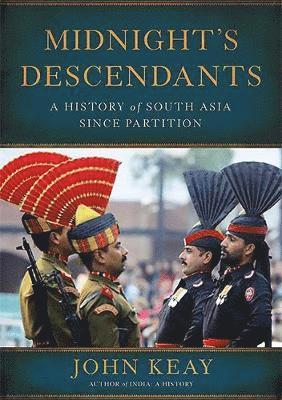
Midnight’s Descendants
South Asia from Partition to the Present Day
Av John Keay
E-bok, 2014
102 kr
Lägg i varukorg
The first modern history of all South Asia’s peoples.If British India had not been partitioned in 1947, its population would today be the world’s largest. At c1.5 billion, Midnight’s Descendants (the offspring of those affected by `the midnight hour’ Partition) already outnumber Europeans and …
Mad About the Mekong
Exploration and Empire in South East Asia (Text Only)
Av John Keay
E-bok, 2012
102 kr
Lägg i varukorg
The story of both a dramatic journey retracing the historic voyage of France’s greatest 19th-century explorer up the mysterious Mekong river, and a portrait of the river and its peoples today.Any notion of sailing up the Mekong in homage to Francis Garnier has been unthinkable until now. From its …
Kashmir, Kashmir
Av John Keay
Häftad, 2027
230 kr
Kommande
In a lively and uniquely comprehensive narrative of Kashmir’s past and current predicament, the book reinstates the cultural and political centrality of one of Asia’s most cherished but maligned states. What emerges in this landmark history is not the familiar tale of a paradise lost to modern …
India
A History
Av John Keay
Ljudbok, 2025
233 kr
Lägg i varukorg
The most authoritative and highly regarded single-volume history of India – from ancient time to the modern day. Five millennia of the sub-continent’s social, economic, political and cultural history are interpreted by one of our finest writers on India and the Far East.India’s history begins with …
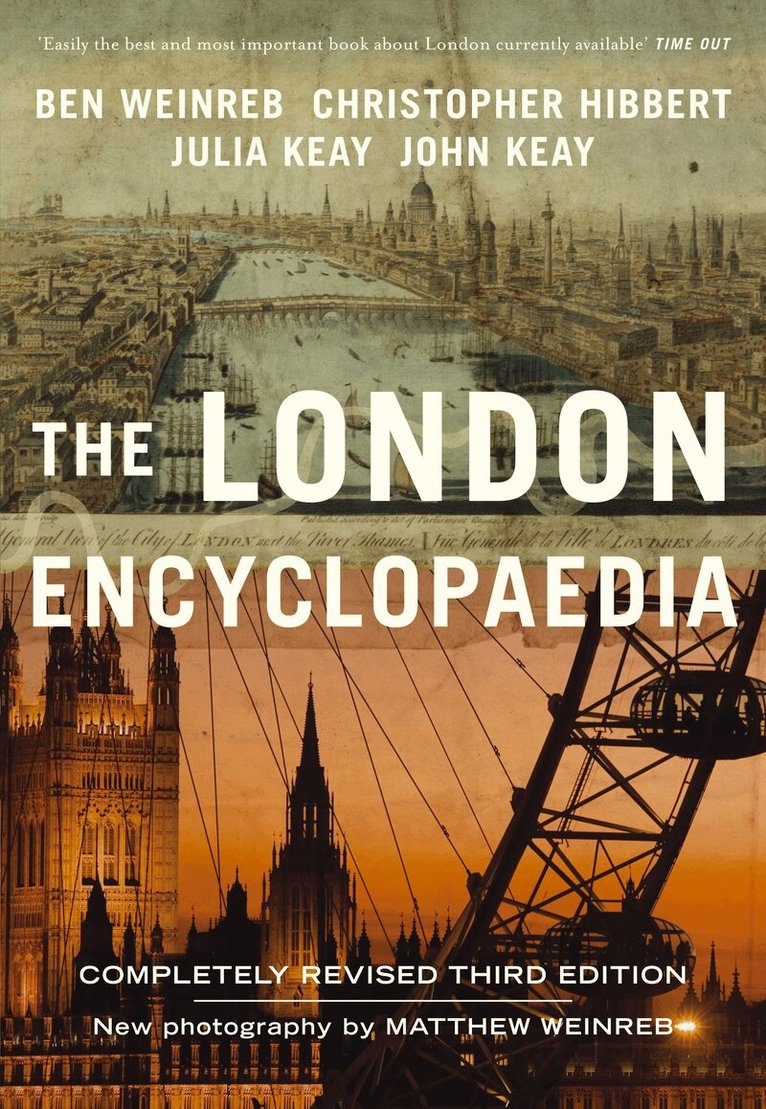
London Encyclopaedia (3rd Edition)
Av Christopher Hibbert, Ben Weinreb m. fl.
E-bok, 2011
302 kr
Lägg i varukorg
‘There is no one-volume book in print that carries so much valuable information on London and its history’ Illustrated London NewsThe London Encyclopaedia is the most comprehensive book on London ever published. In its first new edition in over ten years, completely revised and updated, it …
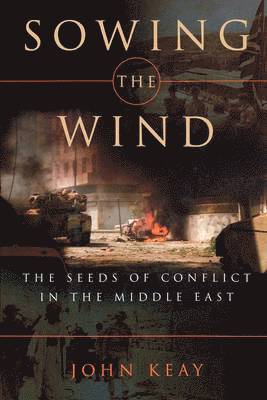
Sowing the Wind
The Seeds of Conflict in the Middle East
Av John Keay
Häftad, 1980
412 kr
Lägg i varukorg
Sowing the Wind tells of how and why this happened. The subject is painful and essentially sombre, but John Keay illuminates it with lucid analysis and anecdotes. This is that rarest of works, a history with humour, an epic with attitude, a dirge that delights. Here are unearthed a host of …
Himalaya
Exploring the Roof of the World
Av John Keay
E-bok, 2022
164 kr
Lägg i varukorg
'John Keay is the master storyteller and historian. This grand narrative of Himalaya is as epic as the mountains and peoples he describes' Dan Snow'Adds the human element to the hard rock. And what a rich vein it is' Michael PalinHistory has not been kind to Himalaya. Empires have collided here, …
Mammoth Book of Travel in Dangerous Places: Central and South Asia
Av John Keay
E-bok, 2012
50 kr
Lägg i varukorg
Alarms amongst the Uzbeks - Alexander Burnes Of all the "forbidden" cities (Timbuktu, Mecca, Lhasa, Riyadh and so on) none enjoyed a more fearsome reputation that Bukhara in Uzbekistan. The first British Indian expedition, that of William Moorcroft in 1819-26, had never returned. Moorcroft''s …
Mammoth Book of Travel in Dangerous Places: Arabia
Av John Keay
E-bok, 2012
51 kr
Lägg i varukorg
Escape from Riyadh - William Gifford Palgrave A scholar and a solider, a Jesuit and a Jew, a French spy and a British ambassador- Palgrave was a man of contradictions, all of them highly compromised when in 1862-3, fortified by Pius IX''s blessing and Napoleon III''s cash, he attempted the first …
Mammoth Book of Travel in Dangerous Places: West Africa
Av John Keay
E-bok, 2012
51 kr
Lägg i varukorg
Alone in Africa - Mungo Park Park''s 1795-7 odyssey in search of the Niger first awakened the world to the feasibility of a white man penetrating sub-Saharan Africa. But unlike his illustrious successors, this quiet tenant farmer''s son from the Scottish Borders travelled alone; relieved of his …
Mammoth Book of Travel in Dangerous Places: East and Central Africa
Av John Keay
E-bok, 2012
51 kr
Lägg i varukorg
Among the Sudanese - James Bruce Bruce reached the source of the Blue Nile in 1771, a century before the search for the source of the White Nile became headline news. His descriptions of the cruelties and orgies at Gondar, the Ethiopian capital, were greeted with disbelief; so was his account of …
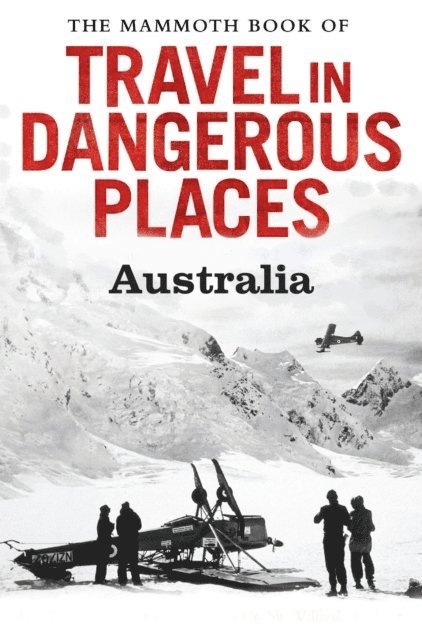
Mammoth Book of Travel in Dangerous Places: Australia
Av John Keay
E-bok, 2012
51 kr
Lägg i varukorg
Landfall at Botany Bay - James Cook The son of a Yorkshire farm labourer, Cook won distinction as a naval hydrographer but was still a controversial choice to command a voyage of scientific observation to the Pacific in 1768. Its results, including the first coastal surveys of New Zealand and …
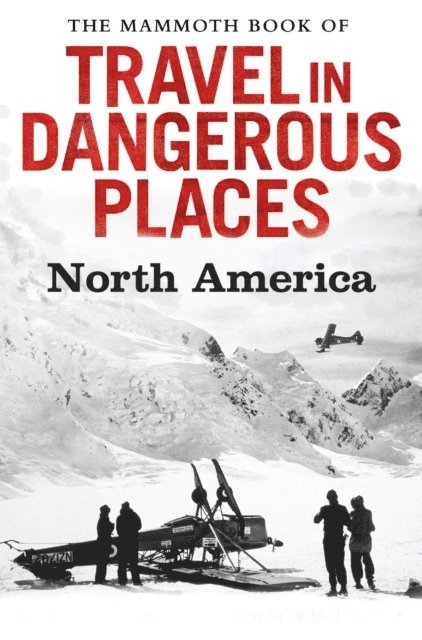
Mammoth Book of Travel in Dangerous Places: North America
Av John Keay
E-bok, 2012
50 kr
Lägg i varukorg
First Crossing of America - Alexander Mackenzie "Endowed by nature with an acquisitive mind and an enterprising spirit", Mackenzie, a Scot engaged in the Canadian fur trade, resolved, as he out it "to test the practicability of penetrating across the continent of America". In 1789 he followed a …