John Lockwood – författare
Visar alla böcker från författaren . Handla med fri frakt och snabb leverans.
10 produkter
10 produkter
Inbunden, Engelska, 2011
369 kr
Skickas inom 5-8 vardagar
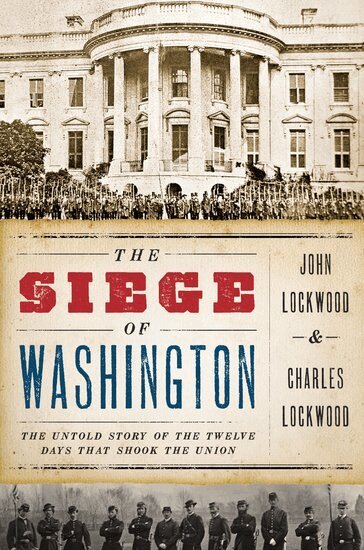
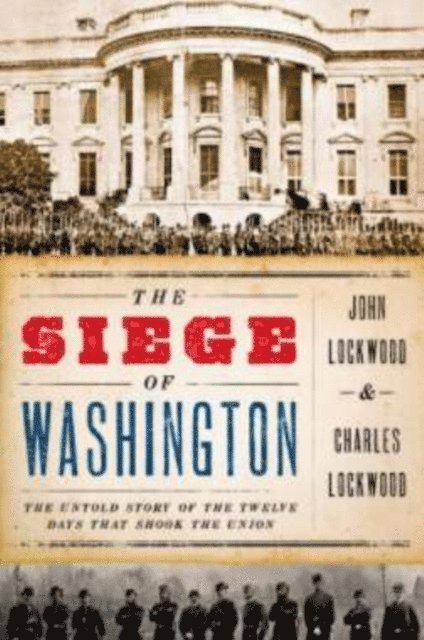
On April 14, 1861, following the surrender of Fort Sumter, Washington was "put into the condition of a siege," declared Abraham Lincoln. Located sixty miles south of the Mason-Dixon Line, the nation's capital was surrounded by the slave states of Maryland and Virginia. With no fortifications and only a handful of trained soldiers, Washington was an ideal target for the Confederacy. The South echoed with cries of "On to Washington!" and Jefferson Davis's wife sent out cards inviting her friends to a reception at the White House on May 1. Lincoln issued an emergency proclamation on April 15, calling for 75,000 troops to suppress the rebellion and protect the capital. One question now transfixed the nation: whose forces would reach Washington first-Northern defenders or Southern attackers?For 12 days, the city's fate hung in the balance. Washington was entirely isolated from the North-without trains, telegraph, or mail. Sandbags were stacked around major landmarks, and the unfinished Capitol was transformed into a barracks, with volunteer troops camping out in the House and Senate chambers. Meanwhile, Maryland secessionists blocked the passage of Union reinforcements trying to reach Washington, and a rumored force of 20,000 Confederate soldiers lay in wait just across the Potomac River. Drawing on firsthand accounts, The Siege of Washington tells this story from the perspective of leading officials, residents trapped inside the city, Confederates plotting to seize it, and Union troops racing to save it, capturing with brilliance and immediacy the precarious first days of the Civil War.
E-bok
PDF, Engelska, 2011245 kr
Läs direkt efter köp
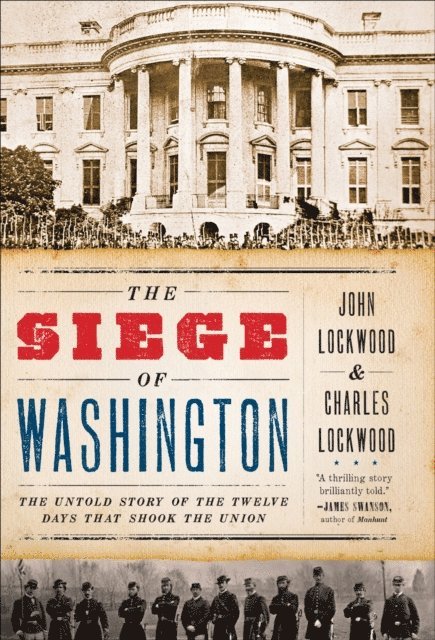
On April 14, 1861, following the surrender of Fort Sumter, Washington was "put into the condition of a siege," declared Abraham Lincoln. Located sixty miles south of the Mason-Dixon Line, the nation''s capital was surrounded by the slave states of Maryland and Virginia. With no fortifications and only a handful of trained soldiers, Washington was an ideal target for the Confederacy. The South echoed with cries of "On to Washington!" and Jefferson Davis''s wife sent out cards inviting her friends to a reception at the White House on May 1. Lincoln issued an emergency proclamation on April 15, calling for 75,000 troops to suppress the rebellion and protect the capital. One question now transfixed the nation: whose forces would reach Washington first-Northern defenders or Southern attackers?For 12 days, the city''s fate hung in the balance. Washington was entirely isolated from the North-without trains, telegraph, or mail. Sandbags were stacked around major landmarks, and the unfinished Capitol was transformed into a barracks, with volunteer troops camping out in the House and Senate chambers. Meanwhile, Maryland secessionists blocked the passage of Union reinforcements trying to reach Washington, and a rumored force of 20,000 Confederate soldiers lay in wait just across the Potomac River. Drawing on firsthand accounts, The Siege of Washington tells this story from the perspective of leading officials, residents trapped inside the city, Confederates plotting to seize it, and Union troops racing to save it, capturing with brilliance and immediacy the precarious first days of the Civil War.
E-bok
Engelska, 2011245 kr
Läs direkt efter köp
On April 14, 1861, following the surrender of Fort Sumter, Washington was "put into the condition of a siege," declared Abraham Lincoln. Located sixty miles south of the Mason-Dixon Line, the nation''s capital was surrounded by the slave states of Maryland and Virginia. With no fortifications and only a handful of trained soldiers, Washington was an ideal target for the Confederacy. The South echoed with cries of "On to Washington!" and Jefferson Davis''s wife sent out cards inviting her friends to a reception at the White House on May 1. Lincoln issued an emergency proclamation on April 15, calling for 75,000 troops to suppress the rebellion and protect the capital. One question now transfixed the nation: whose forces would reach Washington first-Northern defenders or Southern attackers?For 12 days, the city''s fate hung in the balance. Washington was entirely isolated from the North-without trains, telegraph, or mail. Sandbags were stacked around major landmarks, and the unfinished Capitol was transformed into a barracks, with volunteer troops camping out in the House and Senate chambers. Meanwhile, Maryland secessionists blocked the passage of Union reinforcements trying to reach Washington, and a rumored force of 20,000 Confederate soldiers lay in wait just across the Potomac River. Drawing on firsthand accounts, The Siege of Washington tells this story from the perspective of leading officials, residents trapped inside the city, Confederates plotting to seize it, and Union troops racing to save it, capturing with brilliance and immediacy the precarious first days of the Civil War.
Häftad, Engelska, 2013
267 kr
Skickas inom 5-8 vardagar
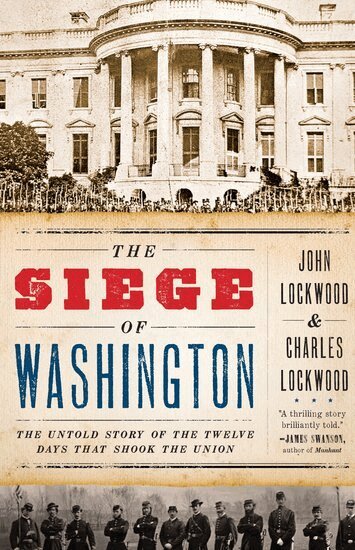
On April 14, 1860, the day Fort Sumter fell to Confederate forces, Washington, D.C.--surrounded by slave states and minimally defended--was ripe for invasion. In The Siege of Washington, John and Charles Lockwood offer a heart-pounding, minute-by-minute account of the first twelve days of the Civil War, when the fate of the Union hung in the balance. The fall of Washington would have been a disaster: it would have crippled the federal government, left the remaining Northern states in disarray, and almost certainly triggered the secession of Maryland. Indeed, it would likely have ended the fight to preserve the Union before it had begun in earnest. On April 15, Lincoln quickly issued an emergency proclamation calling upon the Northern states to send 75,000 troops to Washington. The North, suddenly galvanized by the attack on Sumter, responded enthusiastically. Yet one crucial question gripped Washington, and the nation at large--who would get to the capital first, Northern defenders or Southern attackers? Drawing from rarely seen primary documents, this compelling history places the reader on the scene with immediacy, brilliantly capturing the precarious first days of America's Civil War.
277 kr
Skickas inom 3-6 vardagar
Häftad, Engelska, 2008
359 kr
Skickas inom 3-6 vardagar
E-bok
Engelska, 201819 kr
Läs direkt efter köp
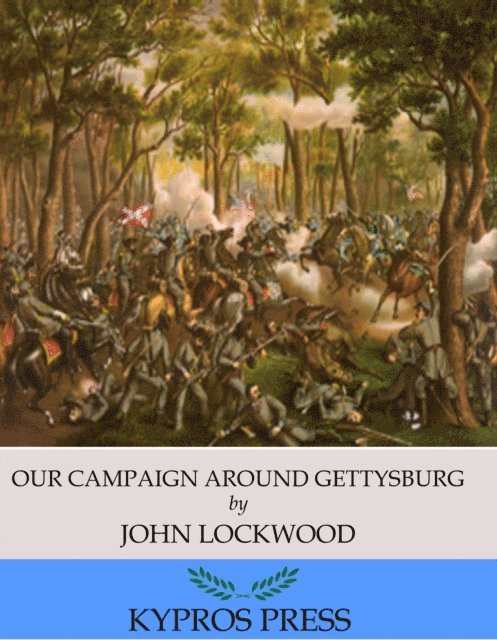
This is a memoir written by a Union soldier from New York who fought in the Civil War, most notably at the Battle of Gettysburg. Without question, the most famous battle of the American Civil War took place outside of the small town of Gettysburg, Pennsylvania, which happened to be a transportation hub, serving as the center of a wheel with several roads leading out to other Pennsylvanian towns. From July 1-3, Robert E. Lee’s Confederate Army of Northern Virginia tried everything in its power to decisively defeat George Meade’s Union Army of the Potomac, unleashing ferocious assaults that inflicted nearly 50,000 casualties in all.After the South had lost the war, the importance of Gettysburg as one of the “high tide” marks of the Confederacy became apparent to everyone, making the battle all the more important in the years after it had been fought. While former Confederate generals cast about for scapegoats, with various officers pointing fingers at Robert E. Lee, James Longstreet, and James Stuart, historians and avid Civil War fans became obsessed with studying and analyzing all the command decisions and army movements during the entire campaign. Despite the saturation of coverage, Americans refuse to grow tired of visiting the battlefield and reliving the biggest battle fought in North America.
Häftad, Engelska, 2020
367 kr
Skickas inom 5-8 vardagar
Häftad, Engelska, 2017
322 kr
Skickas inom 5-8 vardagar
Häftad, Engelska, 2017
251 kr
Skickas inom 5-8 vardagar