John M. Merriman – författare
Visar alla böcker från författaren John M. Merriman. Handla med fri frakt och snabb leverans.
8 produkter
8 produkter
Inbunden, Engelska, 1985
1 917 kr
Skickas inom 5-8 vardagar
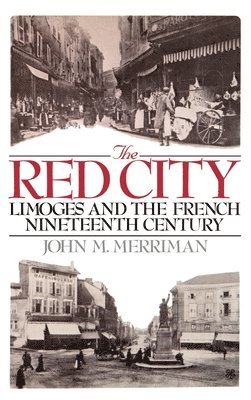
This imaginative study recaptures 100 years in the life of Limoges, France's first socialist city, at a time when Limoges rode high on the crest of every wave of social, political, and industrial change. The story of this single city is the story of urban transformation and political radicalism in 19th-century France, of the struggle between tradition and modernity in French society and politics that took place not only within cities but also between cities and the countryside. Here, Merriman offers vivid portraits of particular social groups, neighborhoods, and events in 19th-century Limoges to describe and analyze the impact of large-scale industrialization, the social bases of political conflict, and the eventual emergence of a powerful working class. The central characters of Merriman's study are the very ordinary denizens of this extraordinary city--its butchers, porcelain workers, laundresses, priests--through whom one sees the effects of urbanization and industrialization on their quarters, work, religion, culture, and political life. The close of the 19th century marked the end of one of France's last truly revolutionary situations, concludes Merriman, as growing centralization dampened revolutionary zeal and the 20th century ushered in a combination of industrial capitalism and a powerful state that was seemingly invulnerable to revolutionary challenges from the working class.
Inbunden, Engelska, 1991
1 324 kr
Skickas inom 5-8 vardagar
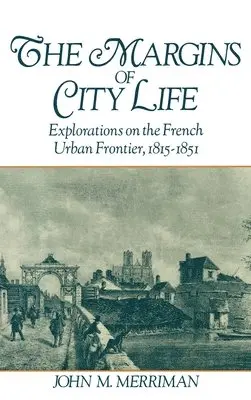
Unlike most historians of France, who draw a sharp contrast between cities and the countryside, John Merriman focuses on the spatial and social margins of urban life, the faubourgs, or suburbs, where rural migrants and the labouring poor of the cities congregated in growing numbers in the first half of the nineteenth century. In the eyes of the urban elite, the women and men of the periphery resembled barbarians at the gates of civilization. The book examines the cultural and social traditions - as expressed in festivals, in songs, in strikes, and in political movements - that took root in these areas. Neighbourhood solidarities developed that were based on a collective sense of exclusion from the urban centre. Urban elites came to realize that the `disreputable' persons they had cast out to the suburbs were becoming a ring of organized worker communities, `the cord that might wring our necks one day'. To know the margins is also to know the centre, Merriman argues, for the periphery of urban life was a mirror in which the French upper classes viewed the most frightening aspects of their world.
E-bok
PDF, Engelska, 1991743 kr
Läs direkt efter köp
The Margins of Urban Life brings to life the "floating worlds of the periphery" in nineteenth-century French cities--the world of beggars, the most miserable prostitutes, ragpickers, casual labor, and unwanted people; the location of slaughterhouses, gas factories, tanneries, and, increasingly, even executions. The men and women of the suburbs and faubourgs were long identified by urban elites and government officials with the turbulent "dangerous classes" who might one day fall upon the wealthy quarters of the center. Merriman analyzes and evokes the social, class, neighborhood, cultural, and political solidarities--the shared sense of not belonging--that made the marginal people in peripheral places emerge as contenders for political power. His investigation explores the world of the Catalan agricultural laborers, the textile workers of the "high town" of Reims, the bitter rivalry between Catholic and Protestant workers in the faubourge of Nimes, the haven for under- and unemployed proletarians in Ingouville, above Le Havre, and France''s strange frontier town, Napol''eon-Vend''ee.
E-bok
PDF, Engelska, 19851 663 kr
Läs direkt efter köp
This imaginative study recaptures 100 years in the life of Limoges, France''s first socialist city, at a time when Limoges rode high on the crest of every wave of social, political, and industrial change. The story of this single city is the story of urban transformation and political radicalism in 19th-century France, of the struggle between tradition and modernity in French society and politics that took place not only within cities but also between cities and the countryside. Here, Merriman offers vivid portraits of particular social groups, neighborhoods, and events in 19th-century Limoges to describe and analyze the impact of large-scale industrialization, the social bases of political conflict, and the eventual emergence of a powerful working class. The central characters of Merriman''s study are the very ordinary denizens of this extraordinary city--its butchers, porcelain workers, laundresses, priests--through whom one sees the effects of urbanization and industrialization on their quarters, work, religion, culture, and political life. The close of the 19th century marked the end of one of France''s last truly revolutionary situations, concludes Merriman, as growing centralization dampened revolutionary zeal and the 20th century ushered in a combination of industrial capitalism and a powerful state that was seemingly invulnerable to revolutionary challenges from the working class.
E-bok
Engelska, 2016155 kr
Läs direkt efter köp
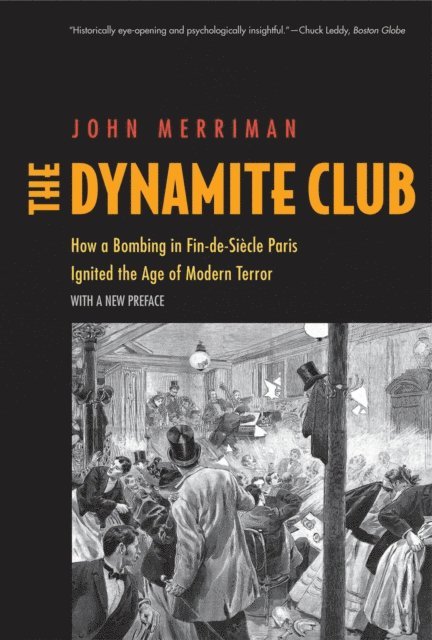
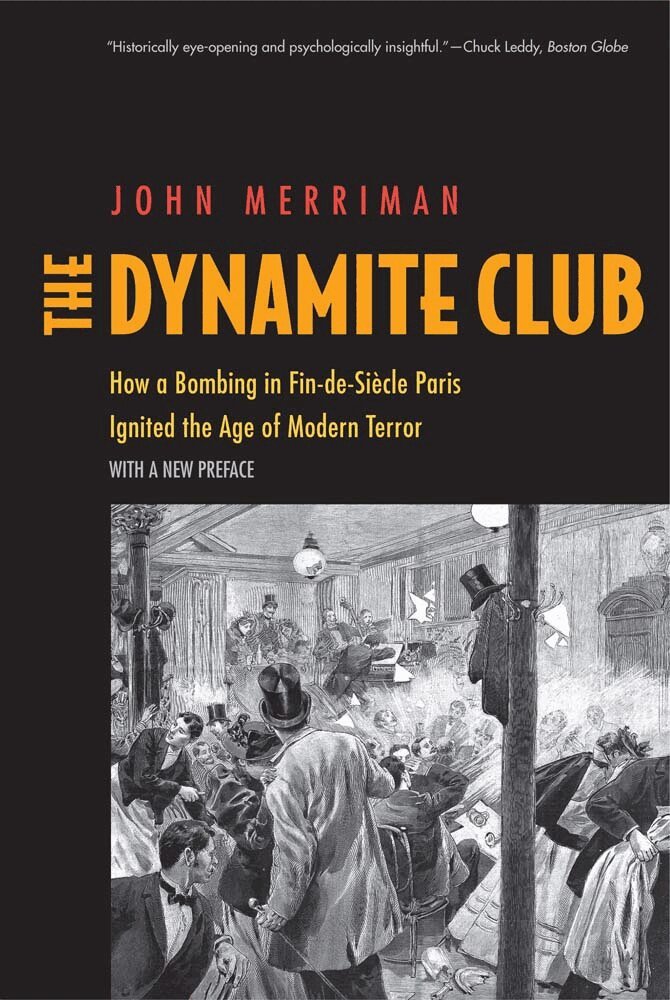
Distinguished historian John Merriman maintains that the Age of Modern Terror began in Paris on February 12, 1894, when anarchist Emile Henry set off a bomb in the Café Terminus, killing one and wounding twenty French citizens. The true story of the circumstances that led a young radical to commit a cold-blooded act of violence against innocent civilians makes for riveting reading, shedding new light on the terrorist mindset and on the subsequent worldwide rise of anarchism by deed. Merriman’s fascinating study of modern history’s first terrorists, emboldened by the invention of dynamite, reveals much about the terror of today.
Häftad, Engelska, 2016
160 kr
Skickas inom 5-8 vardagar
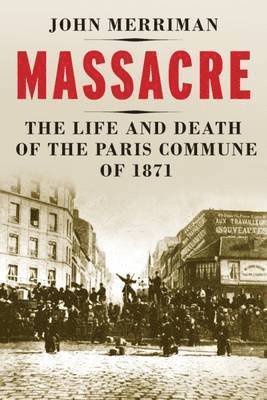
One of the most dramatic chapters in the history of nineteenth-century Europe, the Commune of 1871 was an eclectic revolutionary government that held power in Paris across eight weeks between 18 March and 28 May. Its brief rule ended in ‘Bloody Week’ – the brutal massacre of as many as 15,000 Parisians, and perhaps even more, who perished at the hands of the provisional government’s forces. By then, the city’s boulevards had been torched and its monuments toppled. More than 40,000 Parisians were investigated, imprisoned or forced into exile – a purging of Parisian society by a conservative national government whose supporters were considerably more horrified by a pile of rubble than the many deaths of the resisters. In this gripping narrative, John Merriman explores the radical and revolutionary roots of the Commune, painting vivid portraits of the Communards – the ordinary workers, famous artists and extraordinary fire-starting women – and their daily lives behind the barricades, and examining the ramifications of the Commune on the role of the state and sovereignty in France and modern Europe. Enthralling, evocative and deeply moving, this narrative account offers a full picture of a defining moment in the evolution of state terror and popular resistance.
Inbunden, Engelska
483 kr
Skickas inom 3-6 vardagar
Häftad, Engelska
366 kr
Skickas inom 3-6 vardagar