John M. Pafford – författare
Visar alla böcker från författaren . Handla med fri frakt och snabb leverans.
8 produkter
8 produkter
Häftad, Engelska, 2020
537 kr
Skickas inom 5-8 vardagar
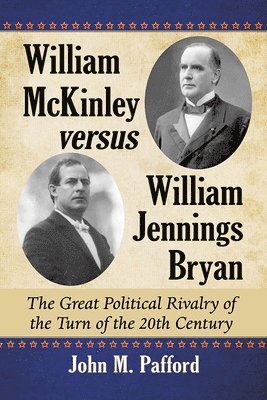
The clashes between William McKinley and William Jennings Bryan during the 1896 and 1900 presidential elections changed the course of American politics. Prior to Bryan's candidacy, the Democratic Party was slightly more conservative than the Republican Party. At the 1896 Democratic National Convention, Bryan's dramatic "Cross of Gold" speech stampeded the delegates left-of-center--a position the party has traditionally held since.Most Americans, though, rejected this new wave, remained conservative and twice elected McKinley. These were dramatic years for the country as it continued its rise to become a major world economic and military. Significantly, freedom increased for those now within the American orbit.
Häftad, Engelska, 2009
229 kr
Skickas inom 5-8 vardagar
Häftad, Engelska, 2013
339 kr
Skickas inom 5-8 vardagar
E-bok
PDF, Engelska, 20102 572 kr
Läs direkt efter köp
Russell Kirk is widely regarded as the individual most responsible for the revival of conservative thought in the latter half of the twentieth century. Kirk''s conservative philosophy was well-established with his magnum opus, The Conservative Mind, published in 1953, and remained constant until his death in 1994. His Christianity, though, grew from something seen as the foundation of Western Civilization to being also a personal faith. He became a Roman Catholic, drawn by its universality, its traditionalism, and his love for the woman he married. Although he believed in certain Catholic distinctives, such as purgatory, he generally seemed to be more of a generic Christian than a dogmatic follower of Rome.
Inbunden, Engelska, 2010
2 378 kr
Skickas inom 10-15 vardagar
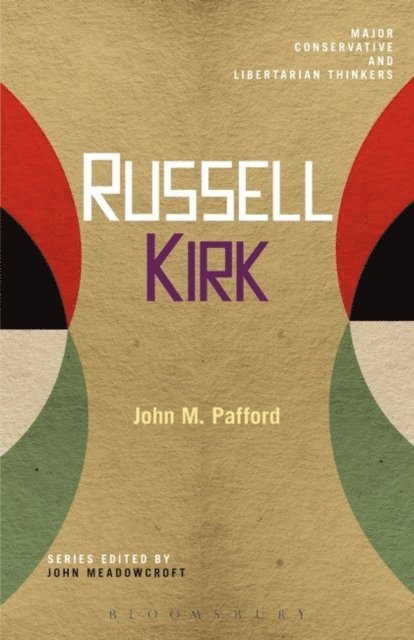
Volume 12 in the "Major Conservative and Libertarian Thinkers" series focuses on Russell Kirk's conservative philosophy. Russell Kirk is widely regarded as the individual most responsible for the revival of conservative thought in the latter half of the twentieth century. Kirk's conservative philosophy was well-established with his magnum opus, "The Conservative Mind", published in 1953, and remained constant until his death in 1994. His Christianity, though, grew from something seen as the foundation of Western Civilization to being also a personal faith. He became a Roman Catholic, drawn by its universality, its traditionalism, and his love for the woman he married. Although he believed in certain Catholic distinctives, such as purgatory, he generally seemed to be more of a generic Christian than a dogmatic follower of Rome. "Major Conservative and Libertarian Thinkers" provides comprehensive accounts of the works of seminal conservative thinkers from a variety of periods, disciplines, and traditions - the first series of its kind. Even the selection of thinkers adds another aspect to conservative thinking, including not only theorists but also writers and practitioners.The series comprises twenty volumes, each including an intellectual biography, historical context, critical exposition of the thinker's work, reception and influence, contemporary relevance, bibliography including references to electronic resources, and an index.
E-bok
Engelska, 2013706 kr
Läs direkt efter köp
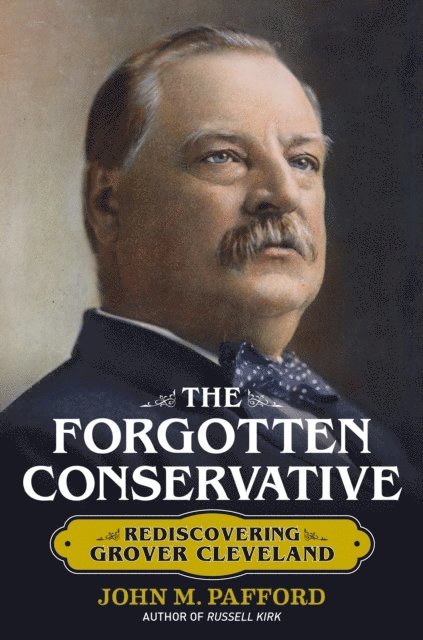
Grover Cleveland is truly the forgotten conservative: a man of dignity, integrity, and courage often overlooked by the history books. Historian and author John Pafford reveals a president who deserves more attention. Cleveland might not have presided over deeply troubled times, but he set a standard for principled leadership in office that is especially relevant today.
E-bok
Engelska, 2019132 kr
Läs direkt efter köp
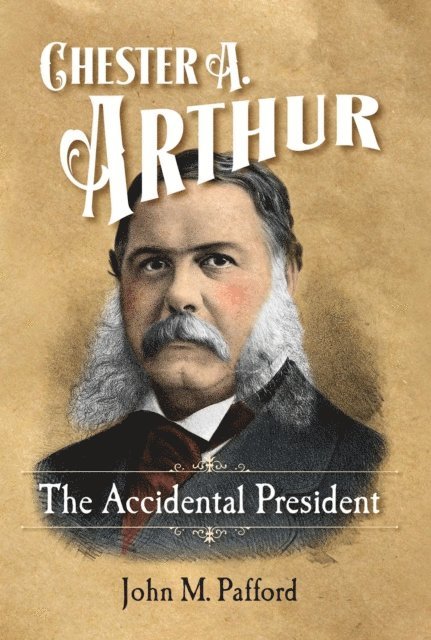
Chester Alan Arthur, surely our unlikeliest president, may have been saved from complete obscurity only by the mutton-chop whiskers that stand out among the full-bearded visages of late-nineteenth-century presidents. But as this highly readable portrait of Arthur and his age reveals, duty’s unexpected call turned the quintessential patronage politician into a statesman who skillfully guided America’s first steps on the road to becoming a world power.No one is likely to follow Arthur’s path to the White House again. A product of the spoils system that once governed the federal civil service, Arthur had been rewarded for his loyalty to the Republican machine with the most lucrative patronage position in the country—customs collector of the Port of New York. In 1880, having never held elective office, he was chosen as James Garfield’s running mate in a bid to heal a factional rift in the party. When Garfield’s death from an assassin’s bullet early in his term made Arthur president, dismayed observers expected the worst.Instead, this “accidental” president rose to an unexpected level of principle and accomplishment and led his country to the threshold of greatness. In John Pafford’s absorbing study, you’ll learn:Why the wounded President Garfield’s incapacity sent Vice President Arthur and the U.S. government into uncharted constitutional watersWhy a president who owed his career to the patronage system championed civil service reform and remade the federal governmentHow Arthur’s far-sighted determination to rebuild America’s shriveled navy changed the course of U.S. historyWhy massive immigration from Asia inflamed American politics and how Arthur used his veto power to moderate Congress’s responseHow dramatic developments in the 1880s in theology, science, economics, and political philosophy set the stage for sweeping cultural change in AmericaOnly fifteen years after the United States emerged from the rubble of civil war, Chester Arthur—to all appearances the embodiment of unreformed machine politics—emerged from obscurity to lead the nation through one of the most dynamic stretches of its history. And though his career was cut short by a fatal disease diagnosed after his first year in office, his quiet prudence and devotion to duty earned him the respect of his contemporaries and an honored place among American presidents.
E-bok
Engelska, 20132 572 kr
Läs direkt efter köp
Russell Kirk is widely regarded as the individual most responsible for the revival of conservative thought in the latter half of the twentieth century. Kirk's conservative philosophy was well-established with his magnum opus, The Conservative Mind, published in 1953, and remained constant until his death in 1994. His Christianity, though, grew from something seen as the foundation of Western Civilization to being also a personal faith. He became a Roman Catholic, drawn by its universality, its traditionalism, and his love for the woman he married. Although he believed in certain Catholic distinctives, such as purgatory, he generally seemed to be more of a generic Christian than a dogmatic follower of Rome.