John M. Rist – författare
Visar alla böcker från författaren John M. Rist. Handla med fri frakt och snabb leverans.
27 produkter
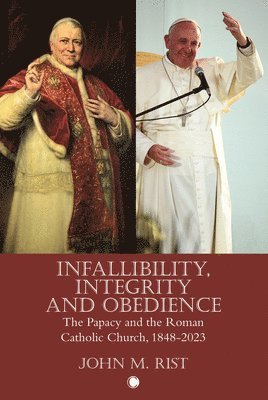
Infallibility, Integrity and Obedience
The Papacy and the Roman Catholic Church, 1848-2023
Av John M. Rist
Häftad, 2023
300 kr
Lägg i varukorg
An excoriating study of the history of papal authority in the Roman Catholic Church since the late nineteenth century, and how it has led to the present doctrinal crisis.The doctrinal and structural revolution currently underway in the Roman Catholic Church is alarming for several reasons, not …
Stoics
Av John M. Rist
Häftad, 1978
614 kr
Lägg i varukorg
The Stoics, edited by John M. Rist, gathers leading scholarship to reassess one of antiquity’s most influential philosophical schools. Once dismissed as pedantic or derivative, the Stoics are now recognized as innovators whose contributions to logic, ethics, physics, and philosophical psychology …
Stoics
Av John M. Rist
Inbunden, 1978
821 kr
Lägg i varukorg
The Stoics, edited by John M. Rist, gathers leading scholarship to reassess one of antiquity’s most influential philosophical schools. Once dismissed as pedantic or derivative, the Stoics are now recognized as innovators whose contributions to logic, ethics, physics, and philosophical psychology …
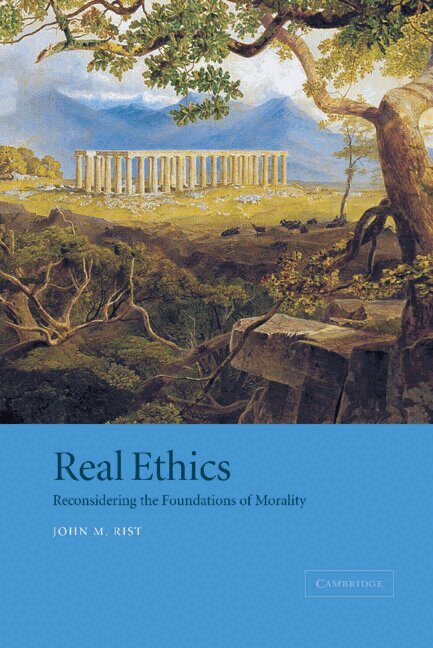
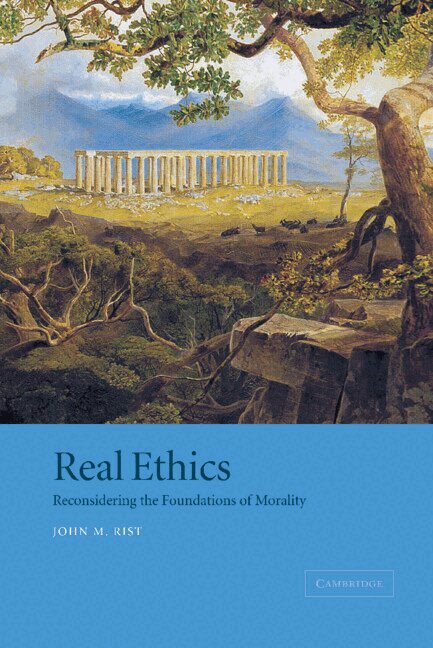
Real Ethics
Reconsidering the Foundations of Morality
Av John M. Rist
Häftad, 2001
618 kr
Lägg i varukorg
John Rist surveys the history of ethics from Plato to the present and offers a vigorous defence of an ethical theory based on a revised version of Platonic realism. In a wide-ranging discussion he examines well-known alternatives to Platonism, in particular Epicurus, Hobbes, Hume and Kant as well …
On the Independence of Matthew and Mark
Häftad, 2005
557 kr
Lägg i varukorg
It has for long been generally assumed that the relationship between our canonical texts of the Gospels of Mark and Matthew is to be explained in terms of direct literary dependence, either of Matthew on Mark, or of Mark on Matthew. Professor Rist questions this assumption vigourously, and argues …
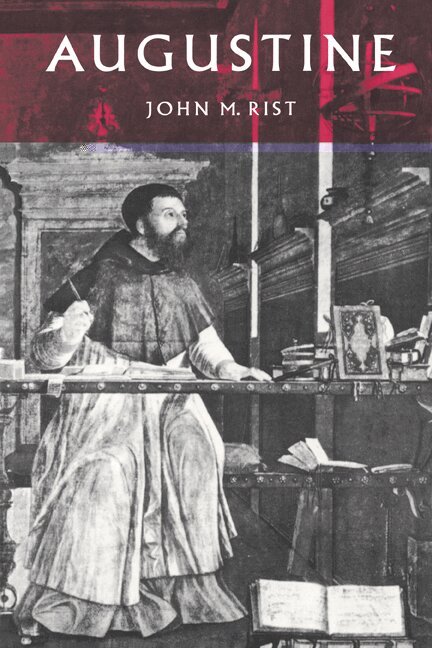
Augustine
Ancient Thought Baptized
Av John M. Rist
Häftad, 1996
471 kr
Lägg i varukorg
This major work constitutes a significant attempt to provide a detailed and accurate account of the character and effects of Augustine's thought as a whole. It describes the transformation of Greco-Roman philosophy into the version that was to become the most influential in the history of Western …
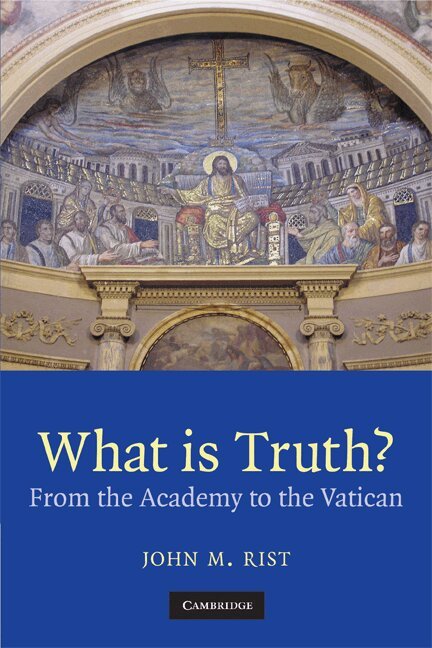
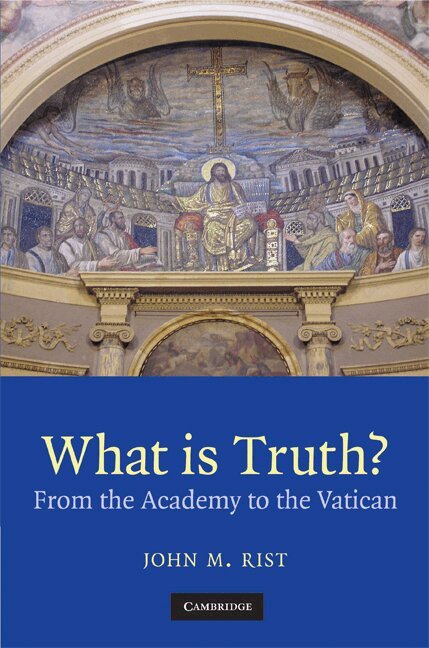
What is Truth?
From the Academy to the Vatican
Av John M. Rist
Häftad, 2008
699 kr
Lägg i varukorg
This book studies the nature, growth and prospects of Roman Catholic culture, viewed as capable of appropriating all that is noble both from internal and external sources. John Rist tests his argument via a number of avenues: man's creation in the image of God and historical difficulties about …
Real Ethics
Reconsidering the Foundations of Morality
Av John M. Rist
Inbunden, 2001
1351 kr
Lägg i varukorg
John Rist surveys the history of ethics from Plato to the present and offers a vigorous defence of an ethical theory based on a revised version of Platonic realism. In a wide-ranging discussion he examines well-known alternatives to Platonism, in particular Epicurus, Hobbes, Hume and Kant as well …
What is Truth?
From the Academy to the Vatican
Av John M. Rist
Inbunden, 2008
1058 kr
Lägg i varukorg
This book studies the nature, growth and prospects of Roman Catholic culture, viewed as capable of appropriating all that is noble both from internal and external sources. John Rist tests his argument via a number of avenues: man's creation in the image of God and historical difficulties about …
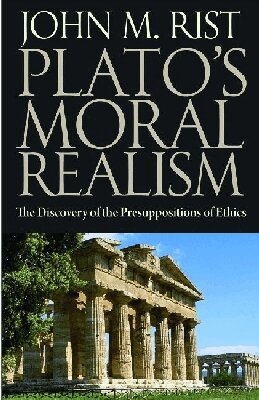
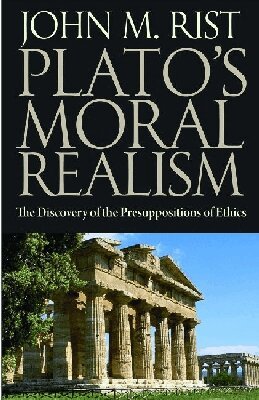
Plato's Moral Philosophy
The Discovery of the Presuppositions of Ethics
Av John M. Rist
Häftad, 2012
330 kr
Lägg i varukorg
Surveying many of Plato's dialogues from the early, middle, and late periods, prominent philosopher John M. Rist shows how Plato gradually came to realize the need for metaphysics to support his ethical position and that a rigorous ethics required a secure metaphysics grounded in universal values. …
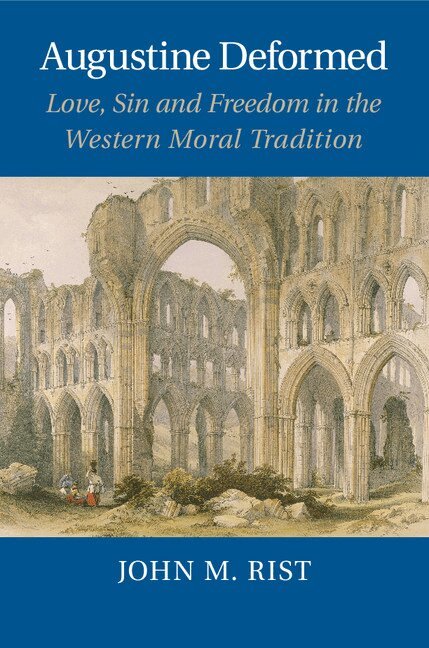
Augustine Deformed
Love, Sin and Freedom in the Western Moral Tradition
Av John M. Rist
Inbunden, 2014
1753 kr
Lägg i varukorg
Augustine established a moral framework that dominated Western culture for more than a thousand years. His partly flawed presentation of some of its key concepts (love, will and freedom), however, prompted subsequent thinkers to attempt to repair this framework, and their efforts often aggravated …
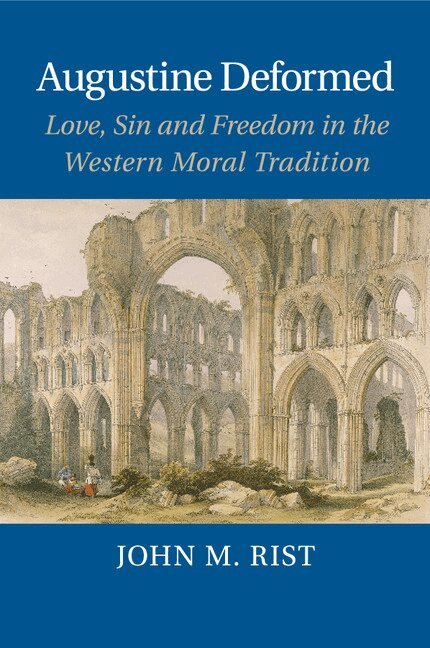
Augustine Deformed
Love, Sin and Freedom in the Western Moral Tradition
Av John M. Rist
Häftad, 2016
667 kr
Lägg i varukorg
Augustine established a moral framework that dominated Western culture for more than a thousand years. His partly flawed presentation of some of its key concepts (love, will and freedom), however, prompted subsequent thinkers to attempt to repair this framework, and their efforts often aggravated …
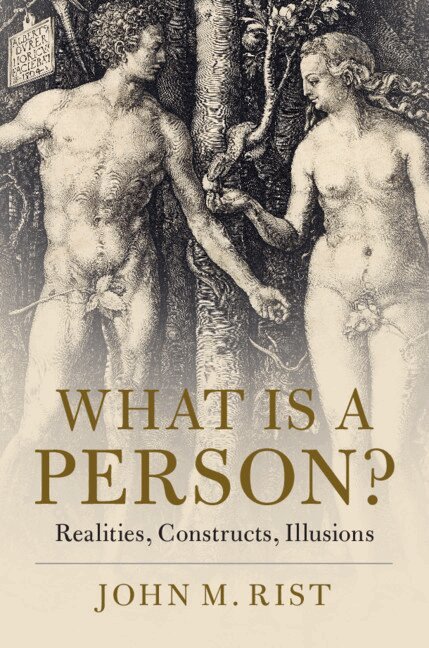
What is a Person?
Realities, Constructs, Illusions
Av John M. Rist
Inbunden, 2019
487 kr
Lägg i varukorg
In this book, John M. Rist offers an account of the concept of 'person' as it has developed in the West, and how it has become alien in a post-Christian culture. He begins by identifying the 'mainline tradition' about persons as it evolved from the time of Plato to the High Middle Ages, then turns …
What is a Person?
Realities, Constructs, Illusions
Av John M. Rist
Häftad, 2025
465 kr
Lägg i varukorg
In this book, John M. Rist offers an account of the concept of 'person' as it has developed in the West, and how it has become alien in a post-Christian culture. He begins by identifying the 'mainline tradition' about persons as it evolved from the time of Plato to the High Middle Ages, then turns …
What is a Person?
Realities, Constructs, Illusions
Av John M. Rist
E-bok, 2019
463 kr
Lägg i varukorg
In this book, John M. Rist offers an account of the concept of ''person'' as it has developed in the West, and how it has become alien in a post-Christian culture. He begins by identifying the ''mainline tradition'' about persons as it evolved from the time of Plato to the High Middle Ages, then …
Mind of Aristotle
A Study in Philosophical Growth
Av John M. Rist
E-bok, 1989
656 kr
Lägg i varukorg
Until the nineteenth century it was common to assume that philosophers said more or less the same things throughout their lives. Such an attitude led their successors to turn their thoughts into harmonious systems which, though often of great philosophical interest, failed to reflect the detailed …
Eros and Psyche
Studies in Plato, Plotinus, and Origen
Av John M. Rist
E-bok, 1964
544 kr
Lägg i varukorg
This study makes a substantial contribution to our understanding of the development of ancient Platonism and of the influence of Greek philosophy on Christian thought. The author examines a number of themes such as Eros, Virtue, and Knowledge in the writings of Plato himself, and shows that, in our …
Mind of Aristotle
A Study in Philosophical Growth
Av John M. Rist
Häftad, 1989
508 kr
Lägg i varukorg
Until the nineteenth century it was common to assume that philosophers said more or less the same things throughout their lives. Such an attitude led their successors to turn their thoughts into harmonious systems which, though often of great philosophical interest, failed to reflect the detailed …
Eros and Psyche
Studies in Plato, Plotinus, and Origen
Av John M. Rist
Häftad, 1964
427 kr
Lägg i varukorg
This study makes a substantial contribution to our understanding of the development of ancient Platonism and of the influence of Greek philosophy on Christian thought. The author examines a number of themes such as Eros, Virtue, and Knowledge in the writings of Plato himself, and shows that, in our …
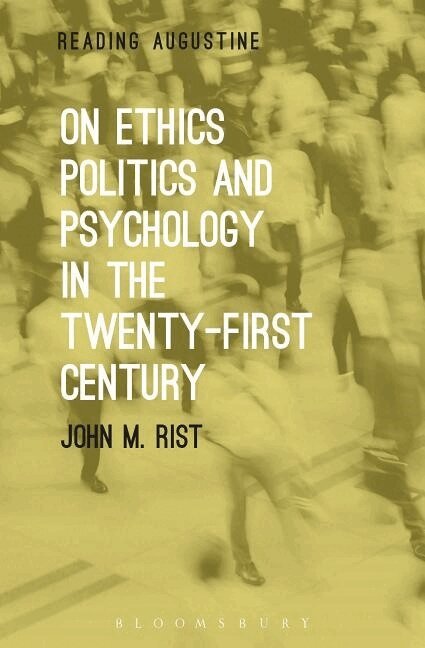
On Ethics, Politics and Psychology in the Twenty-First Century
Av John M. Rist, Miles Hollingworth
Häftad, 2017
361 kr
Lägg i varukorg
The Reading Augustine series presents concise, personal readings of St. Augustine of Hippo from leading philosophers and religious scholars. John Rist takes the reader through Augustine’s ethics, the arguments he made and how he arrived at them, and shows how this moral philosophy remains vital for …
On Ethics, Politics and Psychology in the Twenty-First Century
Av John M. Rist, Miles Hollingworth
Inbunden, 2017
1211 kr
Lägg i varukorg
The Reading Augustine series presents concise, personal readings of St. Augustine of Hippo from leading philosophers and religious scholars. John Rist takes the reader through Augustine’s ethics, the arguments he made and how he arrived at them, and shows how this moral philosophy remains vital for …
On Ethics, Politics and Psychology in the Twenty-First Century
Av John M. Rist
E-bok, 2017
378 kr
Lägg i varukorg
The Reading Augustine series presents concise, personal readings of St. Augustine of Hippo from leading philosophers and religious scholars. John Rist takes the reader through Augustine's ethics, the arguments he made and how he arrived at them, and shows how this moral philosophy remains vital for …
On Ethics, Politics and Psychology in the Twenty-First Century
Av John M. Rist
E-bok, 2017
381 kr
Lägg i varukorg
The Reading Augustine series presents concise, personal readings of St. Augustine of Hippo from leading philosophers and religious scholars. John Rist takes the reader through Augustine's ethics, the arguments he made and how he arrived at them, and shows how this moral philosophy remains vital for …
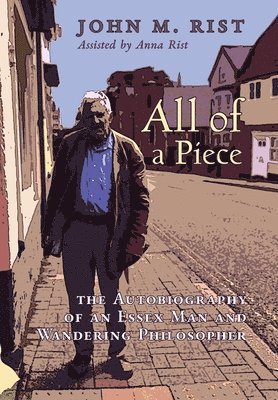
All of a Piece
The Autobiography of an Essex Man and Wandering Philosopher
Av John M Rist
Häftad, 2025
336 kr
Lägg i varukorg
All of a Piece
The Autobiography of an Essex Man and Wandering Philosopher
Av John M Rist
Inbunden, 2025
448 kr
Lägg i varukorg
Plato's Moral Philosophy
The Discovery of the Presuppositions of Ethics
Av John M. Rist
Inbunden, 2012
737 kr
Tillfälligt slut
Surveying many of Plato's dialogues from the early, middle, and late periods, prominent philosopher John M. Rist shows how Plato gradually came to realize the need for metaphysics to support his ethical position and that a rigorous ethics required a secure metaphysics grounded in universal values. …