John McPhee – författare
Visar alla böcker från författaren John McPhee. Handla med fri frakt och snabb leverans.
66 produkter
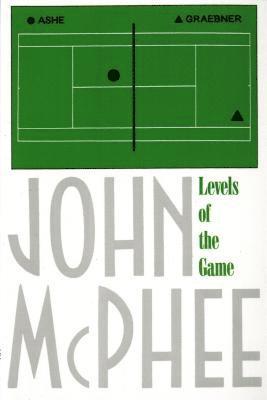
Levels of the Game
Av John McPhee
Häftad, 1979
5,0 utav 5 stjärnor. Totalt antal röster: (3)
198 kr
Lägg i varukorg
Levels of the Game is John McPhee's astonishing account of a tennis match played by Arthur Ashe against Clark Graebner at Forest Hills in 1968. It begins with the ball rising into the air for the initial serve and ends with the final point. McPhee provides a brilliant, stroke-by-stroke description …
Draft No. 4
On the Writing Process
Av John McPhee
Häftad, 2018
5,0 utav 5 stjärnor. Totalt antal röster: (1)
234 kr
Lägg i varukorg
Draft No. 4 is a master class on the writer’s craft. In a series of playful, expertly wrought essays, John McPhee shares insights he has gathered over his career and has refined while teaching at Princeton University, where he has nurtured some of the most esteemed writers of recent decades. McPhee …
Draft No. 4
On the Writing Process
Av John McPhee
E-bok, 2017
182 kr
Lägg i varukorg
The long-awaited guide to writing long-form nonfiction by the legendary author and teacher Draft No. 4 is a master class on the writer’s craft. In a series of playful, expertly wrought essays, John McPhee shares insights he has gathered over his career and has refined while teaching at Princeton …
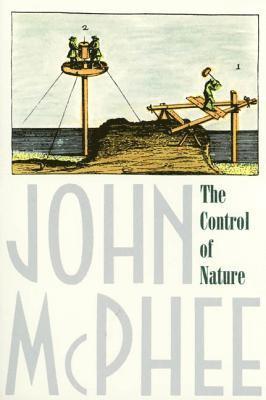
Control of Nature
Av John McPhee
Häftad, 1990
208 kr
Lägg i varukorg
The Control of Nature is John McPhee's bestselling account of places where people are locked in combat with nature. Taking us deep into these contested territories, McPhee details the strageties and tactics through which people attempt to control nature. Most striking is his depiction of the main …
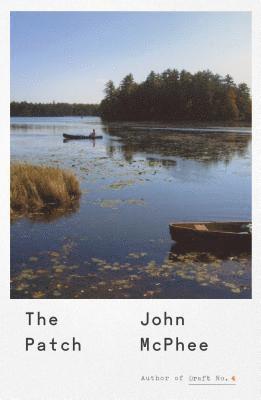
The Patch
Av John McPhee
Inbunden, 2018
160 kr
Lägg i varukorg
The Patch is the seventh collection of essays by the nonfiction master, all published by Farrar, Straus and Giroux. It is divided into two parts. Part 1, “The Sporting Scene,” consists of pieces on fishing, football, golf, and lacrosse—from fly casting for chain pickerel in fall in New Hampshire to …
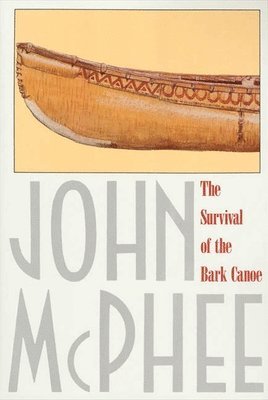
The Survival of the Bark Canoe
Av John McPhee
Häftad, 1982
197 kr
Lägg i varukorg
In Greenville, New Hampshire, a small town in the southern part of the state, Henri Vaillancourt makes birch-bark canoes in the same manner and with the same tools that the Indians used. The Survival of the Bark Canoe is the story of this ancient craft and of a 150-mile trip through the Maine woods …
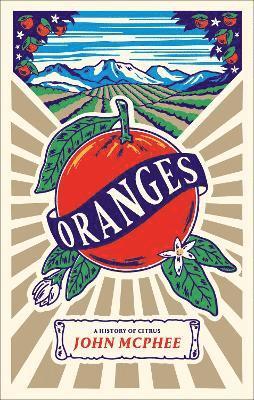
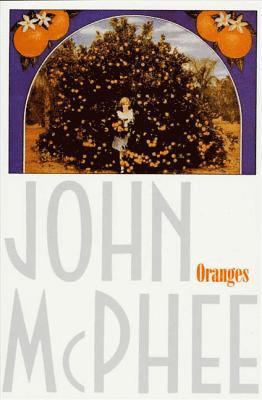
Oranges
Av John McPhee
Häftad, 1975
197 kr
Lägg i varukorg
A classic of reportage, Oranges was first conceived as a short magazine article about oranges and orange juice, but the author kept encountering so much irresistible information that he eventually found that he had in fact written a book. It contains sketches of orange growers, orange botanists, …
Encounters with the Archdruid
Av John McPhee
Häftad, 1977
249 kr
Lägg i varukorg
The narratives in this book are of journeys made in three wildernesses - on a coastal island, in a Western mountain range, and on the Colorado River in the Grand Canyon. The four men portrayed here have different relationships to their environment, and they encounter each other on mountain trails, …
The Pine Barrens
Av John McPhee
Häftad, 1978
241 kr
Lägg i varukorg
Most people think of New Jersey as a suburban-industrial corridor that runs between New York and Philadelphia. Yet in the low center of the state is a near wilderness, larger than most national parks, which has been known since the seventeenth century as the Pine Barrens. The term refers to the …
Crofter and the Laird
Av John McPhee
Häftad, 1978
241 kr
Lägg i varukorg
When John McPhee returned to the island of his ancestorsColonsay, twenty-five miles west of the Scottish mainlanda hundred and thirty-eight people were living there. About eighty of these, crofters and farmers, had familial histories of unbroken residence on the island for two or three hundred …
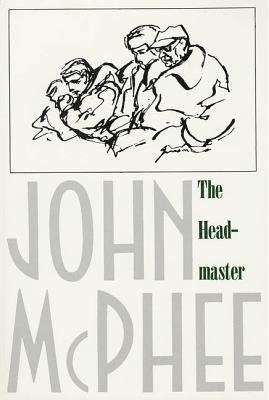
Headmaster
Frank L. Boyden of Deerfield
Av John McPhee
Häftad, 1992
255 kr
Lägg i varukorg
Starting in 1902 at a country school that had an enrollment of fourteen, Frank Boyden built an academy that has long since taken its place on a level with Andover and Exeter. Boyden, who died in 1972, was the school's headmaster for sixty-six years. John McPhee portrays a remarkable man "at the …
Basin and Range
Av John McPhee
Häftad, 1982
258 kr
Lägg i varukorg
The first of John McPhee's works in his series on geology and geologists, Basin and Range is a book of journeys through ancient terrains, always in juxtaposition with travels in the modern world—a history of vanished landscapes, enhanced by the histories of people who bring them to light. The title …
The John McPhee Reader
Av John McPhee, William L. Howarth
Häftad, 1982
328 kr
Lägg i varukorg
The John McPhee Reader , first published in 1976, is comprised of selections from the author's first twelve books. In 1965, John McPhee published his first book, A Sense of Where You Are ; a decade later, he had published eleven others. His fertility, his precision and grace as a stylist, his wit …
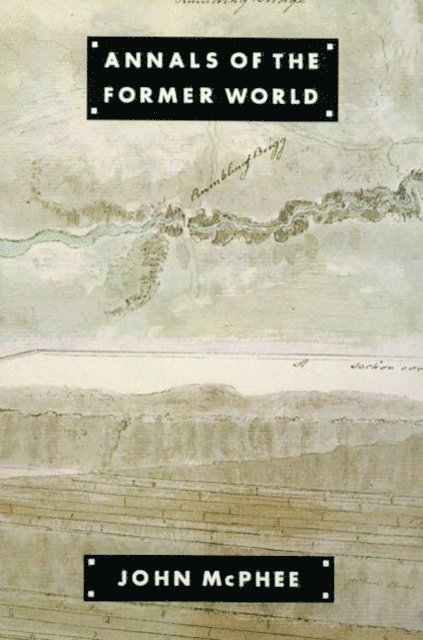
Annals of the Former World
Av John McPhee
Häftad, 2000
324 kr
Lägg i varukorg
Taking a cross-section of the United States at the fortieth parallel, the author offers fascinating multi-layered portrait of the continent's geology and history. Reprint.
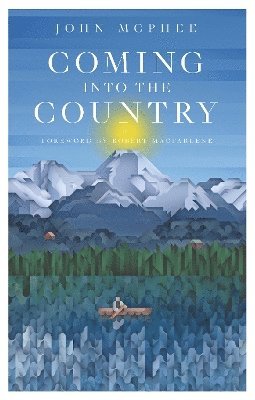
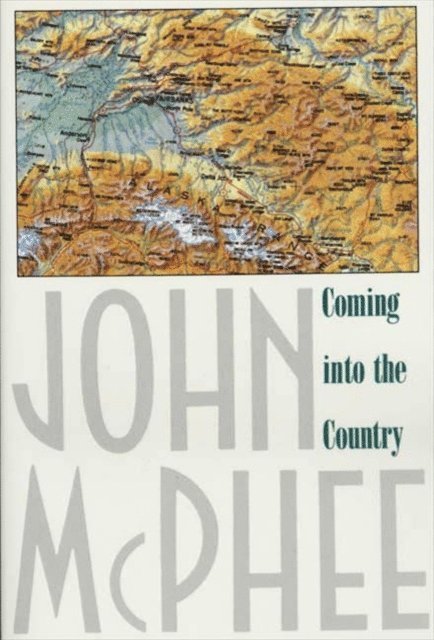
Coming into the Country
Av John McPhee
Häftad, 1991
298 kr
Lägg i varukorg
Coming into the Country is an unforgettable account of Alaska and Alaskans. It is a rich tapestry of vivid characters, observed landscapes, and descriptive narrative, in three principal segments that deal, respectively, with a total wilderness, with urban Alaska, and with life in the remoteness of …
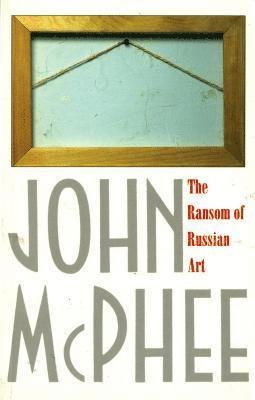
The Ransom of Russian Art
Av John McPhee
Häftad, 1998
193 kr
Lägg i varukorg
John McPhee's The Ransom of Russian Art is a suspenseful, chilling, and fascinating report on a covert operation like no other. It offers unprecedented insight into Soviet culture at the brink of the Union's collapse. In the 1960s and 1970s, an American professor of Soviet economics forayed on his …
A Sense of Where You Are
Bill Bradley at Princeton
Av John McPhee
Häftad, 1999
205 kr
Lägg i varukorg
When John McPhee met Bill Bradley, both were at the beginning of their careers. A Sense of Where You Are , McPhee's first book, is about Bradley when he was the best basketball player Princeton had ever seen. McPhee delineates for the reader the training and techniques that made Bradley the …
Silk Parachute
Av John McPhee
Häftad, 2011
239 kr
Lägg i varukorg
A WONDROUS NEW BOOK OF MCPHEE'S PROSE PIECES—IN MANY ASPECTS HIS MOST PERSONAL IN FOUR DECADES The brief, brilliant essay "Silk Parachute," which first appeared in The New Yorker a decade ago, has become John McPhee's most anthologized piece of writing. In the nine other pieces here—highly varied …
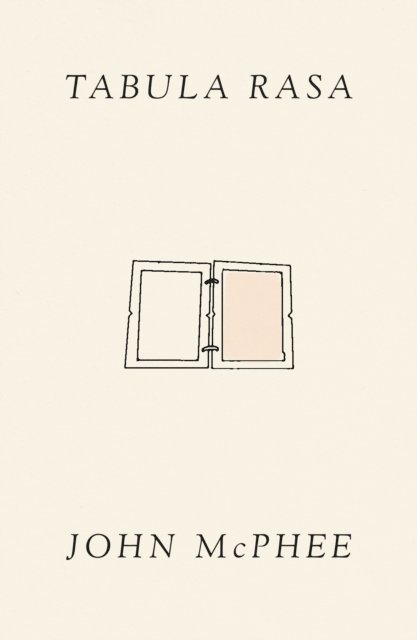
Tabula Rasa
Volume 1
Av John McPhee
E-bok, 2023
192 kr
Lägg i varukorg
A literary legend’s engaging review of his career, stressing the work he never completed, and why. Over seven decades, John McPhee has set a standard for literary nonfiction. Assaying mountain ranges, bark canoes, experimental aircraft, the Swiss Army, geophysical hot spots, ocean shipping, shad …
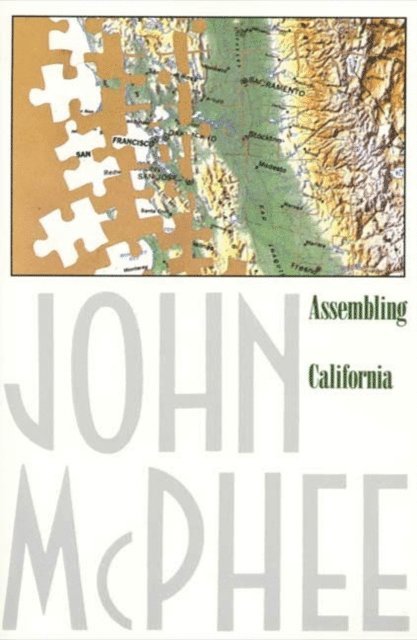
Assembling California
Av John McPhee
E-bok, 2010
214 kr
Lägg i varukorg
At various times in a span of fifteen years, John McPhee made geological field surveys in the company of Eldridge Moores, a tectonicist at the University of California at Davis. The result of these trips is Assembling California, a cross-section in human and geologic time, from Donner Pass in the …
Coming into the Country
Av John McPhee
E-bok, 2011
220 kr
Lägg i varukorg
Coming into the Country is an unforgettable account of Alaska and Alaskans. It is a rich tapestry of vivid characters, observed landscapes, and descriptive narrative, in three principal segments that deal, respectively, with a total wilderness, with urban Alaska, and with life in the remoteness of …
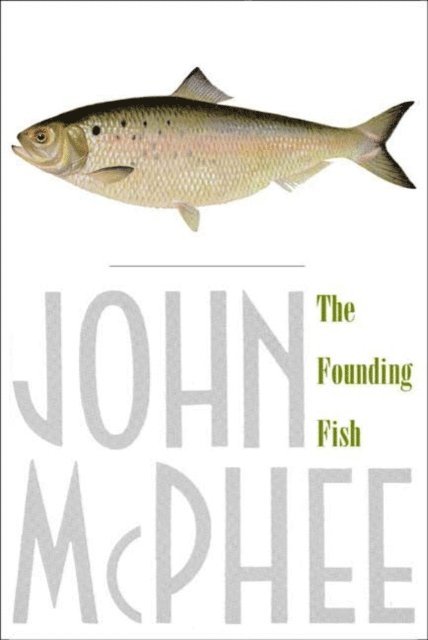
Founding Fish
Av John McPhee
E-bok, 2003
246 kr
Lägg i varukorg
John McPhee''s twenty-sixth book is a braid of personal history, natural history, and American history, in descending order of volume. Each spring, American shad-Alosa sapidissima-leave the ocean in hundreds of thousands and run heroic distances upriver to spawn. McPhee--a shad fisherman …
Second John McPhee Reader
Av John McPhee
E-bok, 1996
267 kr
Lägg i varukorg
This second volume of The John McPhee Reader includes material from his eleven books published since 1975, including Coming into the Country, Looking for a Ship, The Control of Nature , and the four books on geology that comprise Annals of the Former World .
Annals of the Former World
Av John McPhee
E-bok, 2000
273 kr
Lägg i varukorg
The Pulitzer Prize-winning view of the continent, across the fortieth parallel and down through 4.6 billion years Twenty years ago, when John McPhee began his journeys back and forth across the United States, he planned to describe a cross section of North America at about the fortieth parallel …
Irons in the Fire
Av John McPhee
E-bok, 2011
203 kr
Lägg i varukorg
In this collection John McPhee once agains proves himself as a master observer of all arenas of life as well a powerful and important writer.
Ransom of Russian Art
Av John McPhee
E-bok, 2011
230 kr
Lägg i varukorg
John McPhee''s The Ransom of Russian Art is a suspenseful, chilling, and fascinating report on a covert operation like no other. It offers unprecedented insight into Soviet culture at the brink of the Union''s collapse. In the 1960s and 1970s, an American professor of Soviet economics forayed on …
Control of Nature
Av John McPhee
E-bok, 2011
177 kr
Lägg i varukorg
While John McPhee was working on his previous book, Rising from the Plains , he happened to walk by the engineering building at the University of Wyoming, where words etched in limestone said: "Strive on--the control of Nature is won, not given." In the morning sunlight, that central phrase--"the …