John N. Paden – författare
Visar alla böcker från författaren John N. Paden. Handla med fri frakt och snabb leverans.
8 produkter
8 produkter
Häftad, Engelska, 2022
576 kr
Skickas inom 5-8 vardagar
Religion and Political Culture in Kano provides an in-depth exploration of how Islamic traditions have shaped political authority and community in northern Nigeria’s most influential urban center. Focusing on Kano Emirate and later Kano State, the study situates religion within a wider context of urbanization, ethnicity, and class, demonstrating how Islamic law, clerical leadership, and Sufi brotherhoods became central to political life. Particular attention is given to the Tijaniyya and Qadiriyya reform movements, which redefined the structures of authority and community and provided new bases for legitimacy across ethnic lines. By tracing these developments, the book illuminates the ways in which religious values and symbols informed political organization and social integration.Covering the transition from precolonial emirate rule through colonial indirect administration and into the era of Nigerian independence, the book analyzes how crises of legitimacy and efforts at reform repeatedly reshaped both authority and community. It examines succession and protest, the role of emirate institutions, and the transformation of local identities amid broader processes of national integration. Drawing on historical documents, survey data, and ethnographic detail, the study offers both a richly textured account of Kano’s religious and political history and a framework for understanding the interplay of religion and politics in multiethnic societies.This title is part of UC Press's Voices Revived program, which commemorates University of California Press’s mission to seek out and cultivate the brightest minds and give them voice, reach, and impact. Drawing on a backlist dating to 1893, Voices Revived makes high-quality, peer-reviewed scholarship accessible once again using print-on-demand technology. This title was originally published in 1973.
E-bok
Engelska, 2023406 kr
Läs direkt efter köp
This title is part of UC Press's Voices Revived program, which commemorates University of California Press’s mission to seek out and cultivate the brightest minds and give them voice, reach, and impact. Drawing on a backlist dating to 1893, Voices Revived makes high-quality, peer-reviewed scholarship accessible once again using print-on-demand technology. This title was originally published in 1973.
Inbunden, Engelska, 2022
798 kr
Skickas inom 5-8 vardagar
Religion and Political Culture in Kano provides an in-depth exploration of how Islamic traditions have shaped political authority and community in northern Nigeria’s most influential urban center. Focusing on Kano Emirate and later Kano State, the study situates religion within a wider context of urbanization, ethnicity, and class, demonstrating how Islamic law, clerical leadership, and Sufi brotherhoods became central to political life. Particular attention is given to the Tijaniyya and Qadiriyya reform movements, which redefined the structures of authority and community and provided new bases for legitimacy across ethnic lines. By tracing these developments, the book illuminates the ways in which religious values and symbols informed political organization and social integration.Covering the transition from precolonial emirate rule through colonial indirect administration and into the era of Nigerian independence, the book analyzes how crises of legitimacy and efforts at reform repeatedly reshaped both authority and community. It examines succession and protest, the role of emirate institutions, and the transformation of local identities amid broader processes of national integration. Drawing on historical documents, survey data, and ethnographic detail, the study offers both a richly textured account of Kano’s religious and political history and a framework for understanding the interplay of religion and politics in multiethnic societies.This title is part of UC Press's Voices Revived program, which commemorates University of California Press’s mission to seek out and cultivate the brightest minds and give them voice, reach, and impact. Drawing on a backlist dating to 1893, Voices Revived makes high-quality, peer-reviewed scholarship accessible once again using print-on-demand technology. This title was originally published in 1973.
Häftad, Engelska, 2005
448 kr
Skickas inom 10-15 vardagar
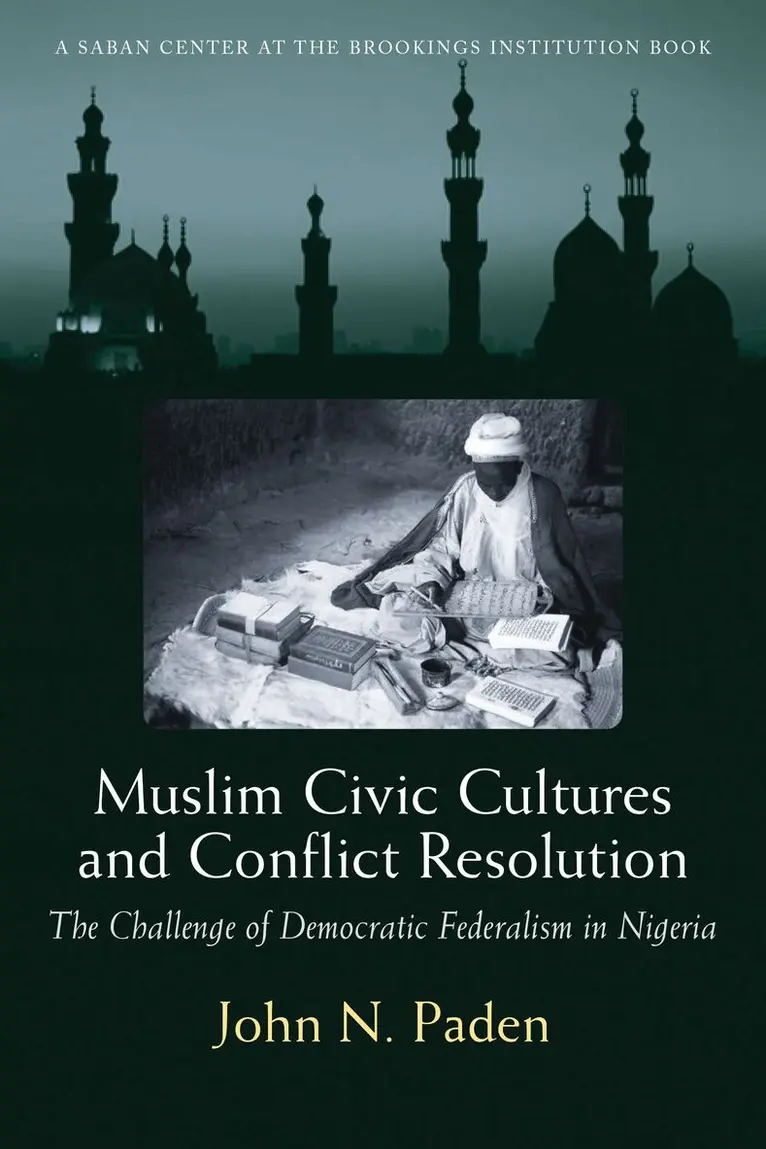
The question of whether Islam is compatible with democracy may best be answered not from the classical sources or even from the cauldron of Middle East politics but from the lived experiences of Muslim communities around the world. In large and diverse countries, the varied political values of different cultures can make or break the democratic experiment. Regardless of their cultural context, transitions from military to civilian rule require attention to the grassroots civic cultures that form the foundations of democratic federalism. John Paden, a noted expert on West African and Islamic societies, uses Nigeria as a critical case study of how a diverse country with a significant Muslim population is working to make the transition to a democratic society. Although little-studied, the non-Arab Muslim communities of West Africa are an important indicator as to whether Islamic democracy in a diverse nation is possible. Nigeria's success is vital to regional and global stability. As the largest country in Africa, with a population that is about half Muslim and half Christian or traditional animist, Nigeria is also the seventh largest producer of oil in the world and has gone through a series of political traumas ranging from civil war to military rule. The current democratic government is trying to balance rule-of-law concerns at a time when many communal tensions are coming to the surface. Muslim Civic Cultures and Conflict Resolution in Nigeria takes us inside the complex world of Nigerian politics, with a focus on the ways Muslim civic cultures deal with matters of leadership and conflict resolution. The book provides an essential context to the current international concern with issues ranging from Shari'a law and communal violence, to the broader war on terrorism. It argues that the requirement for regional political cooperation serves as a counterbalance to more extreme forms of political expression. Paden shows that if the Nigerian political model of democratic federalism works, then there is a real world, peaceful alternative to the ""clash of civilizations"" predicted by the intellectual world and threatened by al Qaeda.
E-bok
PDF, Engelska, 2006467 kr
Läs direkt efter köp
The question of whether Islam is compatible with democracy may best be answered not from the classical sources or even from the cauldron of Middle East politics but from the lived experiences of Muslim communities around the world. In large and diverse countries, the varied political values of different cultures can make or break the democratic experiment. Regardless of their cultural context, transitions from military to civilian rule require attention to the grassroots civic cultures that form the foundations of democratic federalism. John Paden, a noted expert on West African and Islamic societies, uses Nigeria as a critical case study of how a diverse country with a significant Muslim population is working to make the transition to a democratic society. Although little-studied, the non-Arab Muslim communities of West Africa are an important indicator as to whether Islamic democracy in a diverse nation is possible. Nigeria's success is vital to regional and global stability. As the largest country in Africa, with a population that is about half Muslim and half Christian or traditional animist, Nigeria is also the seventh largest producer of oil in the world and has gone through a series of political traumas ranging from civil war to military rule. The current democratic government is trying to balance rule-of-law concerns at a time when many communal tensions are coming to the surface. Muslim Civic Cultures and Conflict Resolution in Nigeria takes us inside the complex world of Nigerian politics, with a focus on the ways Muslim civic cultures deal with matters of leadership and conflict resolution. The book provides an essential context to the current international concern with issues ranging from Shari'a law and communal violence, to the broader war on terrorism. It argues that the requirement for regional political cooperation serves as a counterbalance to more extreme forms of political expression. Paden shows that if the Nigerian political model of democratic federalism works, then there is a real world, peaceful alternative to the ""clash of civilizations"" predicted by the intellectual world and threatened by al Qaeda.
E-bok
PDF, Engelska, 19891 119 kr
Läs direkt efter köp
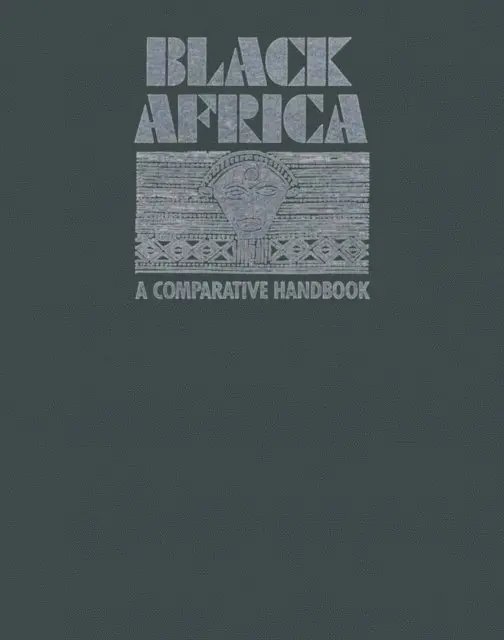
Black Africa presents political, economic and social data for 41 black African nations. The first edition was published in 1972 and included only data on 32 countries - which was the total number of independent African nations at that time. Enlarging on the first edition, this second edition covers in detail important aspects of the countries included, from demography to political development and social mobilization to a modern comparative analysis of African states. Black Africa is a complete and comprehensive handbook. The first edition of Black Africa won a Book of the Year Award from the American Library Association.
Häftad, Engelska
878 kr
Skickas inom 3-6 vardagar
Inbunden, Engelska
834 kr
Skickas inom 3-6 vardagar