John Plotz - Böcker
Visar alla böcker från författaren John Plotz. Handla med fri frakt och snabb leverans.
8 produkter
8 produkter
309 kr
Skickas inom 5-8 vardagar
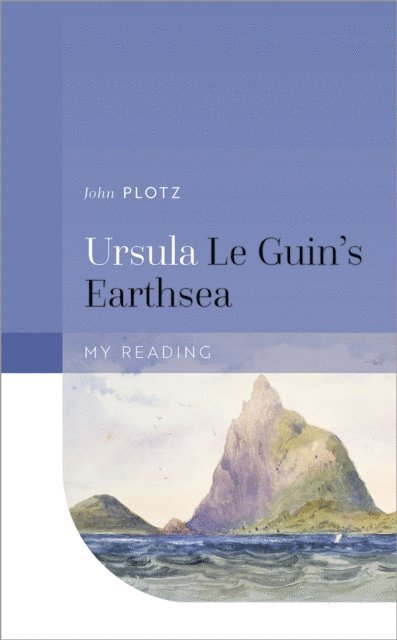
A book on the experience of reading Ursula Le Guin's Earthsea novels.What makes readers fall in love? You might want to start your answer by explaining Ursula Le Guin. She owned John Plotz at age eight, on the overlit and understaffed second floor of the DC library. Four decades and who knows how many re-readings later, her Earthsea owns him still.The reasons to love her Earthsea are many. Le Guin sets readers adrift among worlds: peripatetic but somehow at home. She sublimely mixes comfort and revelatory, emancipatory unsettlement. Ursula Le Guin's Earthsea aims to do justice to both Le Guin's passionate simplicity and her revenant complexity. Small wonder the inspiration she has been for later speculative writers like Neil Gaiman, Kim Stanley Robinson, and N. K. Jemisin. The boldness and coldness of the later three books of Earthsea is a revelation. In Tehanu, Tales from Earthsea, and The Other Wind, she turned a cold eye, a dragon's searching eye, back on the comfortable green world she herself had made decades earlier. They unfold a distinctive vision of the writer's task: worldbuilding as responsibility plus openness. Call it invitational realism. She builds a world that leaves the real task of building, of creating of imagining and of reimagining, with her readers. Drawing on his own crooked path--from a DC childhood to teaching in Prague to San Francisco journalism to graduate school and then parenthood--Plotz maps the ways that readers young and old find in Earthsea a kind of scholar's stone, a delightfully mutable surface that rewards recurrent contemplation.
203 kr
Kommande
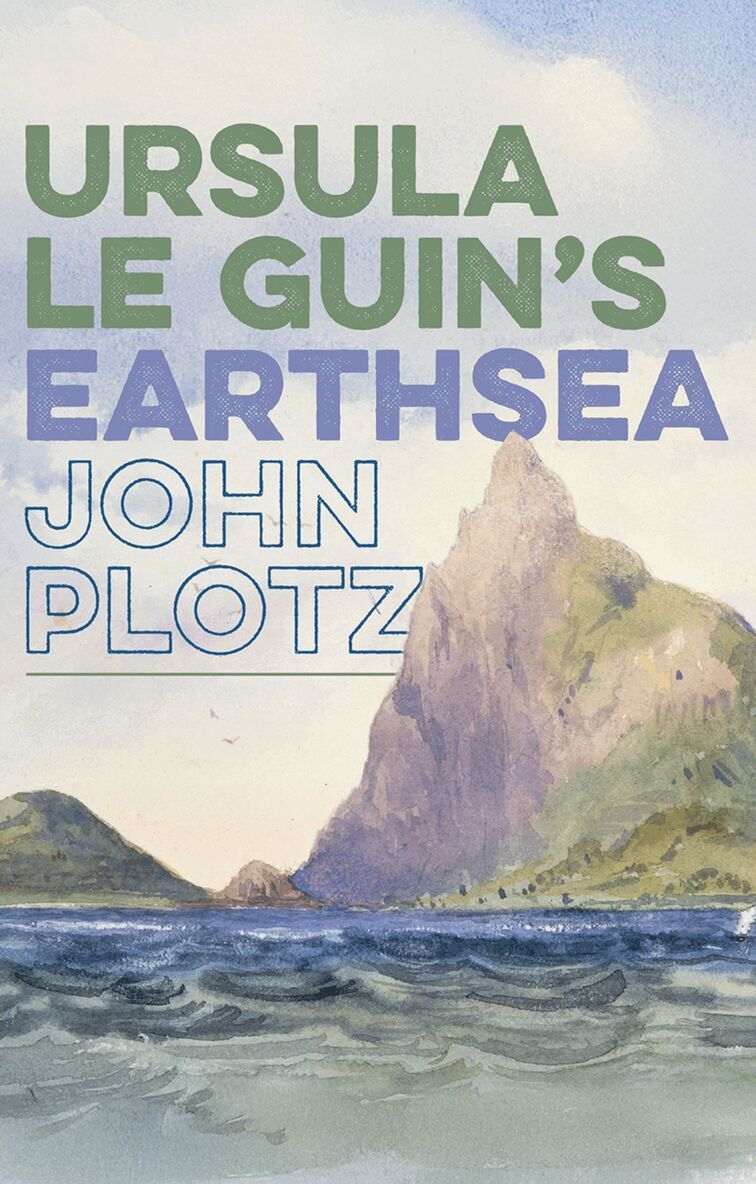
A book on the experience of reading Ursula Le Guin's Earthsea novels.What makes readers fall in love? You might want to start your answer by explaining Ursula Le Guin. She owned John Plotz at age eight, on the overlit and understaffed second floor of the DC library. Four decades and who knows how many re-readings later, her Earthsea owns him still. The reasons to love her Earthsea are many. Le Guin sets readers adrift among worlds: peripatetic but somehow at home. She sublimely mixes comfort and revelatory, emancipatory unsettlement. Ursula Le Guin's Earthsea aims to do justice to both Le Guin's passionate simplicity and her revenant complexity. Small wonder the inspiration she has been for later speculative writers like Neil Gaiman, Kim Stanley Robinson, and N. K. Jemisin. The boldness and coldness of the later three books of Earthsea is a revelation. In Tehanu, Tales from Earthsea, and The Other Wind, she turned a cold eye, a dragon's searching eye, back on the comfortable green world she herself had made decades earlier. They unfold a distinctive vision of the writer's task: world-building as responsibility plus openness. Call it invitational realism. She builds a world that leaves the real task of building, of creating, of imagining, and of reimagining, with her readers. Drawing on his own crooked path—from a DC childhood to teaching in Prague to San Francisco journalism to graduate school and then parenthood—Plotz maps the ways that readers young and old find in Earthsea a kind of scholar's stone, a delightfully mutable surface that rewards recurrent contemplation.
862 kr
Skickas inom 7-10 vardagar
There are the acknowledged classics of world literature: the canonical works assigned in schools, topping every must-read list . . . and then there are the B-Sides. These are the books that slipped through the cracks, went unread, missed their rightful appointment with posterity. They were ahead of their times or behind their times or on a whole different schedule than the rest of the universe.What do you do when a book that you love has been neglected or dismissed by everyone else? In B-Side Books, leading writers, critics, and scholars show why their favorite forgotten books deserve a new audience. From dusty westerns and far-out science fiction to obscure Czech novelists and romance-novel precursors, the contributors advocate for the unsung virtues of overlooked books. They write about unheralded novels, poetry collections, memoirs, and more with understanding, respect, passion, and love.In these thoughtful, often personal essays, contributors—including Stephanie Burt, Caleb Crain, Merve Emre, Ursula K. Le Guin, Carlo Rotella, and Namwali Serpell—read books by writers such as Helen DeWitt, Shirley Jackson, Stanislaw Lem, Dambudzo Marechera, Paule Marshall, and Charles Portis.
224 kr
Skickas inom 7-10 vardagar
There are the acknowledged classics of world literature: the canonical works assigned in schools, topping every must-read list . . . and then there are the B-Sides. These are the books that slipped through the cracks, went unread, missed their rightful appointment with posterity. They were ahead of their times or behind their times or on a whole different schedule than the rest of the universe.What do you do when a book that you love has been neglected or dismissed by everyone else? In B-Side Books, leading writers, critics, and scholars show why their favorite forgotten books deserve a new audience. From dusty westerns and far-out science fiction to obscure Czech novelists and romance-novel precursors, the contributors advocate for the unsung virtues of overlooked books. They write about unheralded novels, poetry collections, memoirs, and more with understanding, respect, passion, and love.In these thoughtful, often personal essays, contributors—including Stephanie Burt, Caleb Crain, Merve Emre, Ursula K. Le Guin, Carlo Rotella, and Namwali Serpell—read books by writers such as Helen DeWitt, Shirley Jackson, Stanislaw Lem, Dambudzo Marechera, Paule Marshall, and Charles Portis.
302 kr
Skickas inom 7-10 vardagar
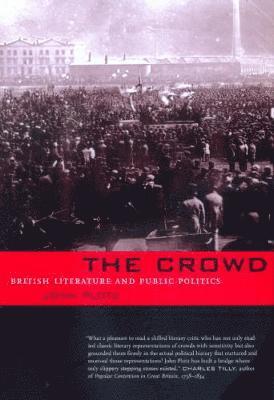
Between 1800 and 1850, political demonstrations and the tumult of a ballooning street life not only brought novel kinds of crowds onto the streets of London, but also fundamentally changed British ideas about public and private space. "The Crowd" sets out to demonstrate the influence of these new crowds, riots, and demonstrations on the period's literature. John Plotz offers compelling readings of works by Thomas De Quincey, Thomas Carlyle, William Wordsworth, Maria Edgeworth, and Charlotte Bronte, arguing that new 'representative' crowds became a potent rival for the representational claims of literary texts themselves. As rivals in representation, these crowds triggered important changes not simply in how these authors depicted crowds, but in their notions of public life and privacy in general. "The Crowd" is the first book devoted to an analysis of crowds in British literature. In addition to this being a noteworthy and innovative contribution to literary criticism, it addresses ongoing debates in political theory on the nature of the public-political realm and offers a new reading of the contested public discourses of class, nation, and gender.In the end, it provides a sophisticated and rich analysis of an important facet of the beginning of the modern age.
345 kr
Skickas inom 7-10 vardagar
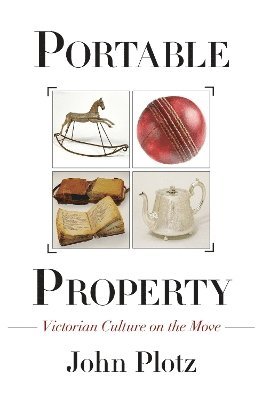
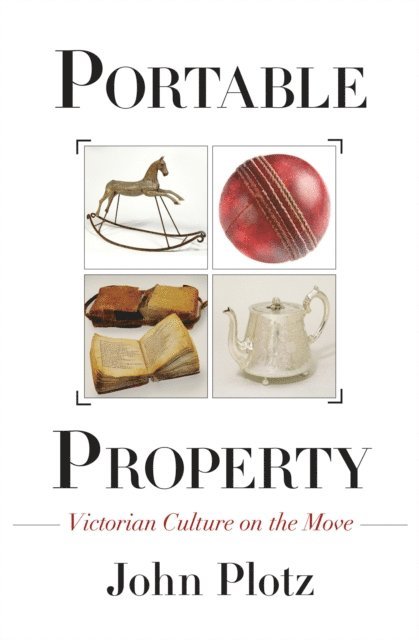
What fueled the Victorian passion for hair-jewelry and memorial rings? When would an everyday object metamorphose from commodity to precious relic? In Portable Property, John Plotz examines the new role played by portable objects in persuading Victorian Britons that they could travel abroad with religious sentiments, family ties, and national identity intact. In an empire defined as much by the circulation of capital as by force of arms, the challenge of preserving Englishness while living overseas became a central Victorian preoccupation, creating a pressing need for objects that could readily travel abroad as personifications of Britishness. At the same time a radically new relationship between cash value and sentimental associations arose in certain resonant mementoes--in teacups, rings, sprigs of heather, and handkerchiefs, but most of all in books. Portable Property examines how culture-bearing objects came to stand for distant people and places, creating or preserving a sense of self and community despite geographic dislocation. Victorian novels--because they themselves came to be understood as the quintessential portable property--tell the story of this change most clearly.Plotz analyzes a wide range of works, paying particular attention to George Eliot's Daniel Deronda, Anthony Trollope's Eustace Diamonds, and R. D. Blackmore's Lorna Doone. He also discusses Thomas Hardy and William Morris's vehement attack on the very notion of cultural portability. The result is a richer understanding of the role of objects in British culture at home and abroad during the Age of Empire.
422 kr
Skickas inom 7-10 vardagar
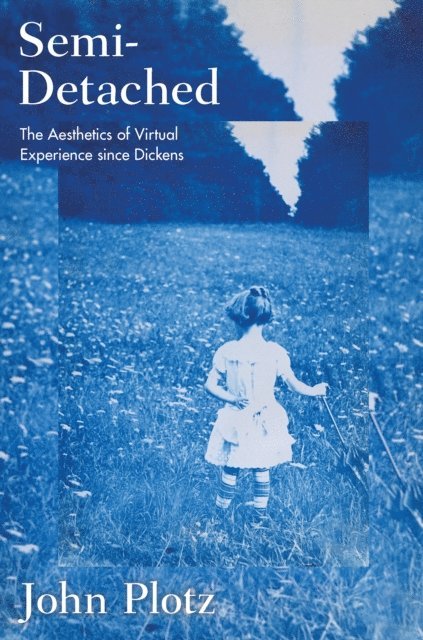
When you are half lost in a work of art, what happens to the half left behind? Semi-Detached delves into this state of being: what it means to be within and without our social and physical milieu, at once interacting and drifting away, and how it affects our ideas about aesthetics. The allure of many modern aesthetic experiences, this book argues, is that artworks trigger and provide ways to make sense of this oscillating, in-between place. John Plotz focuses on Victorian and early modernist writers and artists who understood their work as tapping into, amplifying, or giving shape to a suspended duality of experience. The book begins with the decline of the romantic tale, the rise of realism, and John Stuart Mill's ideas about social interaction and subjective perception. Plotz examines Pre-Raphaelite paintings that take semi-detached states of attention as their subject and novels that treat provincial subjects as simultaneously peripheral and central.He discusses how realist writers such as Charles Dickens, George Eliot, and Henry James show how consciousness can be in more than one place at a time; how the work of William Morris demonstrates the shifting forms of semi-detachment in print and visual media; and how Willa Cather created a form of modernism that connected aesthetic dreaming and reality. Plotz concludes with a look at early cinema and the works of Buster Keaton, who found remarkable ways to portray semi-detachment on screen. In a time of cyberdependency and virtual worlds, when it seems that attention to everyday reality is stretching thin, Semi-Detached takes a historical and critical look at the halfway-thereness that audiences have long comprehended and embraced in their aesthetic encounters.
265 kr
Skickas inom 7-10 vardagar
A critical look at the aesthetic encounter with semi-detachment through literature and artWhen you are half lost in a work of art, what happens to the half left behind? Semi-Detached delves into this state of being: what it means to be within and without our social and physical milieu, at once interacting and drifting away, and how it affects our ideas about aesthetics. The allure of many modern aesthetic experiences, this book argues, is that artworks trigger and provide ways to make sense of this oscillating, in-between place. John Plotz focuses on Victorian and early modernist writers and artists who understood their work as tapping into, amplifying, or giving shape to a suspended duality of experience.The book begins with the decline of the romantic tale, the rise of realism, and John Stuart Mill’s ideas about social interaction and subjective perception. Plotz examines Pre-Raphaelite paintings that take semi-detached states of attention as their subject and novels that treat provincial subjects as simultaneously peripheral and central. He discusses how realist writers such as Charles Dickens, George Eliot, and Henry James show how consciousness can be in more than one place at a time; how the work of William Morris demonstrates the shifting forms of semi-detachment in print and visual media; and how Willa Cather created a form of modernism that connected aesthetic dreaming and reality. Plotz concludes with a look at early cinema and the works of Buster Keaton, who found remarkable ways to portray semi-detachment on screen.In a time of cyberdependency and virtual worlds, when it seems that attention to everyday reality is stretching thin, Semi-Detached takes a historical and critical look at the halfway-thereness that audiences have long comprehended and embraced in their aesthetic encounters.