John Pullen – författare
Visar alla böcker från författaren John Pullen. Handla med fri frakt och snabb leverans.
43 produkter
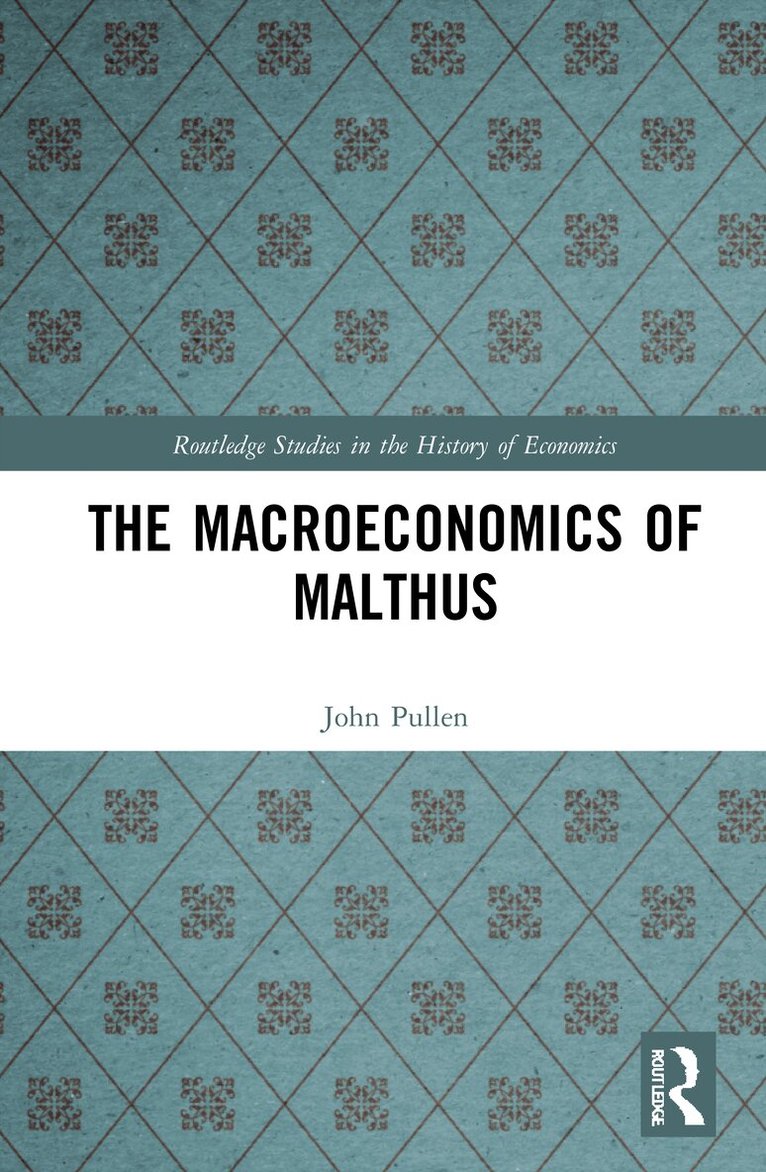
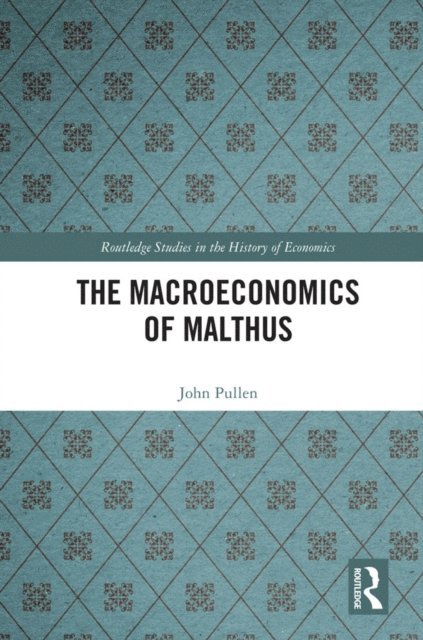
Macroeconomics of Malthus
Av John Pullen
Inbunden, 2021
2578 kr
Lägg i varukorg
The views of Thomas Robert Malthus (1766–1834) on population, first published in his Essay on the Principle of Population, 1798, continue to be hotly debated, either acclaimed or opposed, as do his views on macroeconomics. There is a widely held view that his macroeconomics lacks coherence and is …
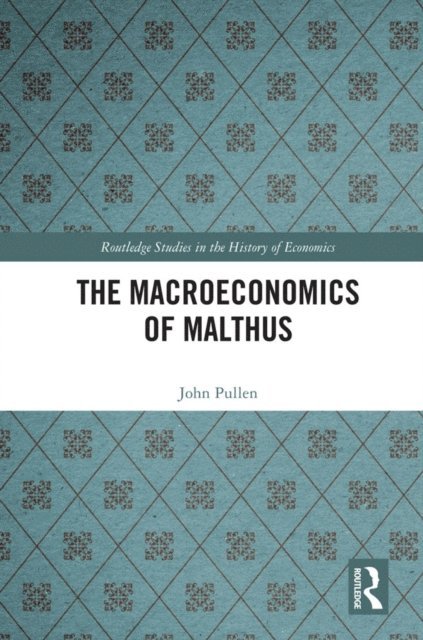
Macroeconomics of Malthus
Av John Pullen
Häftad, 2023
665 kr
Lägg i varukorg
The views of Thomas Robert Malthus (1766–1834) on population, first published in his Essay on the Principle of Population, 1798, continue to be hotly debated, either acclaimed or opposed, as do his views on macroeconomics. There is a widely held view that his macroeconomics lacks coherence and is …
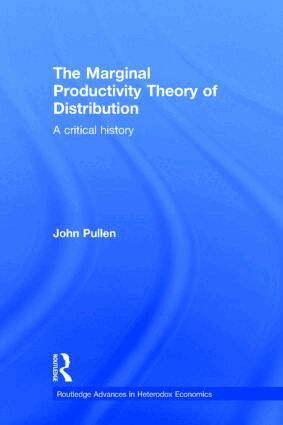
Marginal Productivity Theory of Distribution
A Critical History
Av John Pullen
Inbunden, 2009
2586 kr
Lägg i varukorg
The Marginal Productivity Theory of Distribution (MPTD) claims that in a free-market economy the demand for a factor of production will depend upon its marginal product – where "marginal product" is defined as the change in total product that is caused by, or that follows, the addition or …
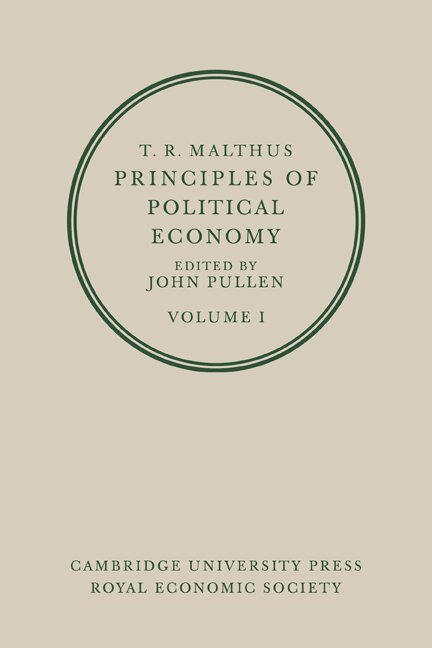
T. R. Malthus: Principles of Political Economy: Volume 1
Häftad, 2008
1427 kr
Lägg i varukorg
Published in two volumes or as a set this provides a definitive scholarly variorum edition of Malthus's Principles of Political Economy. It contains the full text of the first 1820 edition, including Malthus's own invaluable 70-page summary, and contains details of all the additions, omissions and …
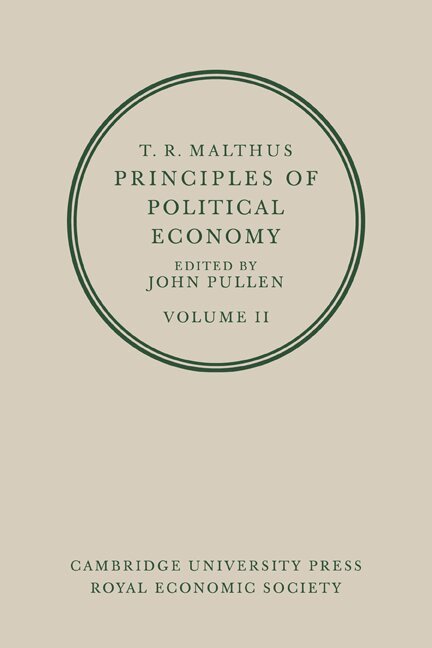
T. R. Malthus: Principles of Political Economy: Volume 2
Häftad, 2008
1089 kr
Lägg i varukorg
Published in two volumes or as a set this provides a definitive scholarly variorum edition of Malthus's Principles of Political Economy. It contains the full text of the first 1820 edition, including Malthus's own invaluable 70-page summary, and contains details of all the additions, omissions and …
T. R. Malthus: The Unpublished Papers in the Collection of Kanto Gakuen University: Volume 2
Av T. R. Malthus, John Pullen m. fl.
Häftad, 2011
687 kr
Lägg i varukorg
This is the second and final volume of manuscripts by or relating to Thomas Robert Malthus (1766-1834) that are now held at Kanto Gakuen University in Japan. Volume I contains 75 items of correspondence, while Volume II contains transcriptions of further original manuscripts, including: four of …
T. R. Malthus: The Unpublished Papers in the Collection of Kanto Gakuen University: Volume 1
Av T. R. Malthus, John Pullen m. fl.
Häftad, 2011
586 kr
Lägg i varukorg
This volume comprises a collection of manuscripts by or relating to T. R. Malthus, recently discovered in the estate of a distant nephew, and previously unpublished. They consist of correspondence, sermons, essays and lecture notes on political economy and history. The manuscripts provide insights …
T. R. Malthus: The Unpublished Papers in the Collection of Kanto Gakuen University
Av T. R. Malthus, John Pullen m. fl.
Inbunden, 1998
1777 kr
Lägg i varukorg
This volume comprises a collection of manuscripts by or relating to T. R. Malthus, recently discovered in the estate of a distant nephew, and previously unpublished. They consist of correspondence, sermons, essays and lecture notes on political economy and history. The manuscripts provide insights …
T. R. Malthus: The Unpublished Papers in the Collection of Kanto Gakuen University
Av T. R. Malthus, John Pullen m. fl.
Inbunden, 2004
1962 kr
Lägg i varukorg
This is the second and final volume of manuscripts by or relating to Thomas Robert Malthus (1766-1834) that are now held at Kanto Gakuen University in Japan. Volume I contains 75 items of correspondence, while Volume II contains transcriptions of further original manuscripts, including: four of …
Macroeconomics of Malthus
Av John Pullen
E-bok, 2021
785 kr
Lägg i varukorg
The views of Thomas Robert Malthus (1766–1834) on population, first published in his Essay on the Principle of Population , 1798, continue to be hotly debated, either acclaimed or opposed, as do his views on macroeconomics. There is a widely held view that his macroeconomics lacks coherence and …
Macroeconomics of Malthus
Av John Pullen
E-bok, 2021
785 kr
Lägg i varukorg
The views of Thomas Robert Malthus (1766–1834) on population, first published in his Essay on the Principle of Population , 1798, continue to be hotly debated, either acclaimed or opposed, as do his views on macroeconomics. There is a widely held view that his macroeconomics lacks coherence and …
Marginal Productivity Theory of Distribution
A Critical History
Av John Pullen
E-bok, 2009
953 kr
Lägg i varukorg
The Marginal Productivity Theory of Distribution (MPTD) claims that in a free-market economy the demand for a factor of production will depend upon its marginal product – where "marginal product" is defined as the change in total product that is caused by, or that follows, the addition or …
Marginal Productivity Theory of Distribution
A Critical History
Av John Pullen
E-bok, 2009
953 kr
Lägg i varukorg
The Marginal Productivity Theory of Distribution (MPTD) claims that in a free-market economy the demand for a factor of production will depend upon its marginal product – where "marginal product" is defined as the change in total product that is caused by, or that follows, the addition or …
Marginal Productivity Theory of Distribution
A Critical History
Av John Pullen
Häftad, 2014
907 kr
Lägg i varukorg
The Marginal Productivity Theory of Distribution (MPTD) claims that in a free-market economy the demand for a factor of production will depend upon its marginal product – where "marginal product" is defined as the change in total product that is caused by, or that follows, the addition or …
Original Plan, Progress, and Present State of the South-Sea-Company
Or, Some Occasional Thoughts Upon the State of the British Trade in the West-Indies, More Especially the South-Seas
Av John Pullen
Häftad, 2010
214 kr
Lägg i varukorg
Memoirs of the Maritime Affairs of Great-Britain
Especially in Relation to Our Concerns in the West-Indies ...
Av John Pullen
Häftad, 2012
238 kr
Lägg i varukorg
Original Plan, Progress, and Present State of the South-Sea-Company
Or, Some Occasional Thoughts Upon the State of the British Trade in the West-Indies, More Especially the South-Seas
Av John Pullen
Inbunden, 2018
367 kr
Lägg i varukorg