John Ratliff – författare
Visar alla böcker från författaren John Ratliff. Handla med fri frakt och snabb leverans.
3 produkter
3 produkter
1 425 kr
Skickas inom 10-15 vardagar
Quality reporting is a rapidly growing area. Each year, new regulations in the US from the Council of Medicare and Medicaid Services make quality reporting a larger factor in determining reimbursement practices. Quality metrics are common parts of European clinical practice. Value of care is a focus of all payers, with specific interest directed at assessing the quality of care provided by a given healthcare team. While there are many publications in this space, no text has sought to provide an overview of quality in spine care. Quality measurement and quality reporting are ever growing aspects of the healthcare environment. Quality assessment is valuable to all healthcare stakeholders: patients, physicians, facilities, and payers. Patients are drawn to facilities that provide high value care; public reporting systems and grading systems for hospitals offer one opinion with regard to “high quality care.” Most physicians email inboxes are inundated with offers of recognition for being a “Top Doc” for a nominal fee. Some payers offer incentives to patients who chose to be treated at “Centers of Excellence” or similar facilities; the definition of “Excellence” may be unclear. There is little consensus on how to measure quality, how to incorporate patient and procedure factors and achieve accurate risk adjustment, and how to define value of care. Regardless of these challenges, regulatory efforts in the US, as well as numerous international efforts, make quality assessment and quality reporting an important part of physician behaviour. Physician and facility reimbursement for procedures are often tied to quality metrics. Spine procedures are costly, elective, and are a focus of many payer-based programs. Hence, spine care is often a focus of quality reporting efforts. This text summarizes the state of the art with regard to quality measurement, reporting, and value assessment in spine care. We will review quality reporting in the US and internationally. Chapters will outline how quality improvement efforts have achieved success in hospital systems. The reader will be provided with insights in how to achieve success incorporating quality metrics into spine care.Features:1. Illustrates the state of the art in spine quality reporting: There is no text that thoroughly addresses quality assessment and quality reporting in spine care; there are, however, numerous articles in this space. This book provides a definitive text covering the state of the art for quality reporting in spine care and will be of value to the international orthopedic and neurosurgical spine community.2. Provides insight on quality reporting in different healthcare systems: The text will allow for comparison of different quality reporting systems from different health care systems. This will provide practitioners with insight into the strengths and weaknesses of different approaches to quality reporting, and may drive improvement in quality assessment and reporting systems. A single text that features review of US, European, and Australia/Asian health care systems’ quality reporting is novel and will be thought provoking for readers. 3. Describes the US and international Healthcare reimbursement systems: Practicing physicians are provided with little information and less insight into the vagaries of the US and other healthcare systems. The text will provide insight into code development, valuation, and how quality reporting affects physician reimbursement4. Explains risk adjustment: Appropriate risk adjustment and assessing patient and procedure factors that may impact quality reporting are invaluable to accurate quality measurement. The text will review risk adjustment, different approaches to risk assessment/mitigation, and provide physicians with insights into appropriate measures to capture in their clinical practices5. Provides a foundation for improved quality assessment in spine care: While there are many disparate elements and differing approaches to capturing spine quality metrics, no definitive text has attempted to summarize these efforts in a single volume. By synthesizing these variable approaches, the reader may be provided with insights into superior approaches to quality assessment and a foundation will be provided for improving healthcare systems.
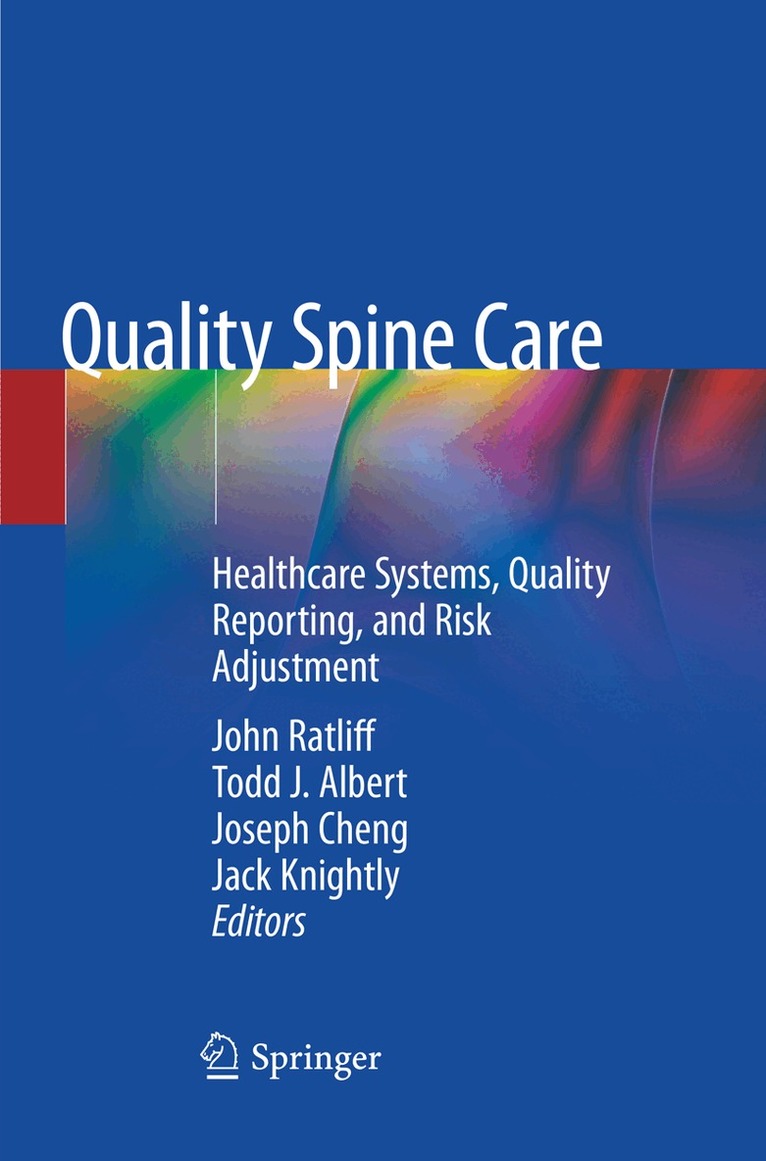
Quality Spine Care
Healthcare Systems, Quality Reporting, and Risk Adjustment
Inbunden, Engelska, 2018
1 425 kr
Skickas inom 10-15 vardagar
Illustrates the state of the art in spine quality reporting: There is no text that thoroughly addresses quality assessment and quality reporting in spine care; Provides insight on quality reporting in different healthcare systems: The text will allow for comparison of different quality reporting systems from different health care systems.
Del 10 - EU Energy Law series
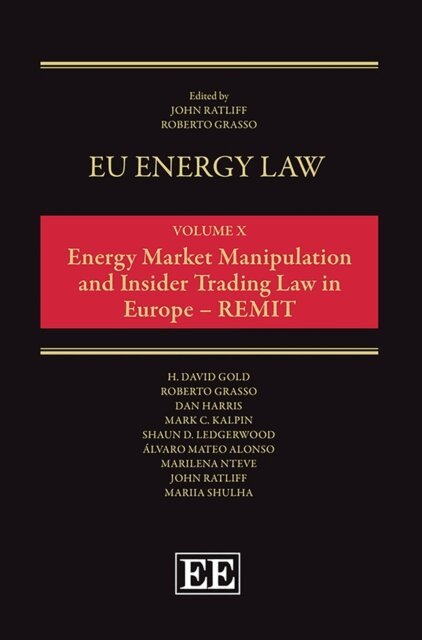
EU Energy Law Volume X: Energy Market Manipulation and Insider Trading Law in Europe – REMIT
Inbunden, Engelska, 2025
5 187 kr
Skickas inom 5-8 vardagar
This book addresses EU law on market manipulation, insider trading and the obligation to disclose inside information on wholesale electricity and gas markets in Europe, focussing on the EU REMIT Regulation. It provides in depth commentary on the articles of the Regulation and situates it within the wider legal, economic and political context.Key Features:Analyses the political and legislative road to the EU REMIT RegulationOutlines the law and administrative practice on energy market abuseExplores the relationship between REMIT and the EU Market Abuse RegulationHighlights economic considerations in market manipulationDescribes the latest amendments to REMIT in 2024Compares similar REMIT rules in the UK and energy market manipulation rules in the USCovers more than 50 published decisions across Europe, including in France, Hungary, Italy, the Netherlands, Spain and the UKThis book provides clear and practical guidance for in-house counsel of energy companies participating in EU or UK electricity and gas markets, as well as scholars, law firms and practitioners advising on energy matters. It may be useful also, as an independent view of the subject, to enforcing regulators such as the EU Agency for the Cooperation of Energy Regulators, national energy regulatory authorities, members of the European Commission and the European Securities and Markets Authority.