John S. Yu – författare
Visar alla böcker från författaren John S. Yu. Handla med fri frakt och snabb leverans.
3 produkter
3 produkter
1 094 kr
Skickas inom 10-15 vardagar
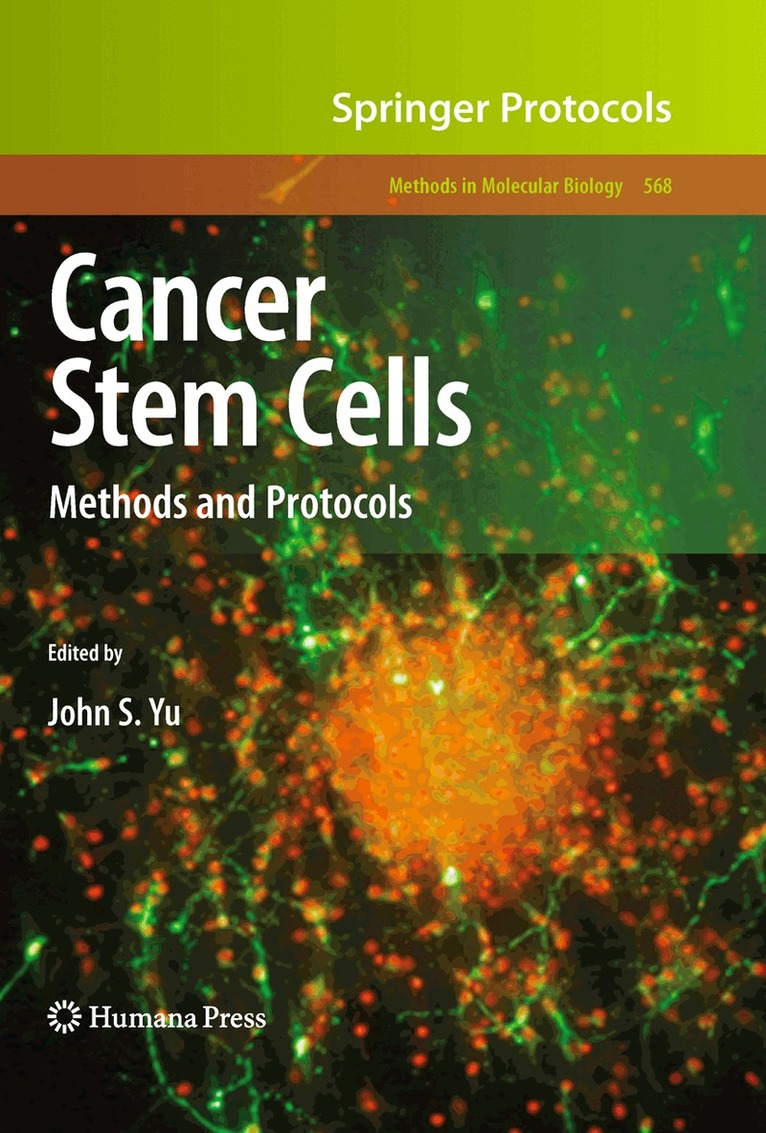
Cancer is a devastating disease that affects millions of people in the world. Our the- pies for tumors have mostly been based on classical chemotherapy and antiproliferative treatments. More recently, directed therapies against a causative oncogene have led to prominent reduction in tumor rates for some cancers. For instance, chronic myelogenous leukemia that is due to a BCR–ABL translocation can be targeted with Gleevec. Despite these advances in individual tumors, a number of patients are treated for their primary tumors and ultimately relapse. Relapsing tumors can be due to resistance to chemotherapy or to antioncogene drugs. Another hypothesis is that heterogeneity in the tumor leads to an inability of classical chemotherapy to completely eradicate all cells of the tumor. This concept of heterogeneity has led some investigators to propose a cancer stem cell model. As patients are treated with chemotherapy, most of the dividing cells are killed, but this leaves a small subset of cells that have the ability to remake the entire tumor. These are cancer stem cells. They possess the signals of self-renewal and yet can also differentiate. If one could understand more about the cells that remain after classical chemotherapy or the cells that can remake the tumor among the heterogeneous population, this information would have a huge impact on our treatment of cancer.
1 094 kr
Skickas inom 10-15 vardagar
Cancer is a devastating disease that affects millions of people in the world. Our the- pies for tumors have mostly been based on classical chemotherapy and antiproliferative treatments. More recently, directed therapies against a causative oncogene have led to prominent reduction in tumor rates for some cancers. For instance, chronic myelogenous leukemia that is due to a BCR–ABL translocation can be targeted with Gleevec. Despite these advances in individual tumors, a number of patients are treated for their primary tumors and ultimately relapse. Relapsing tumors can be due to resistance to chemotherapy or to antioncogene drugs. Another hypothesis is that heterogeneity in the tumor leads to an inability of classical chemotherapy to completely eradicate all cells of the tumor. This concept of heterogeneity has led some investigators to propose a cancer stem cell model. As patients are treated with chemotherapy, most of the dividing cells are killed, but this leaves a small subset of cells that have the ability to remake the entire tumor. These are cancer stem cells. They possess the signals of self-renewal and yet can also differentiate. If one could understand more about the cells that remain after classical chemotherapy or the cells that can remake the tumor among the heterogeneous population, this information would have a huge impact on our treatment of cancer.
2 506 kr
Skickas inom 10-15 vardagar
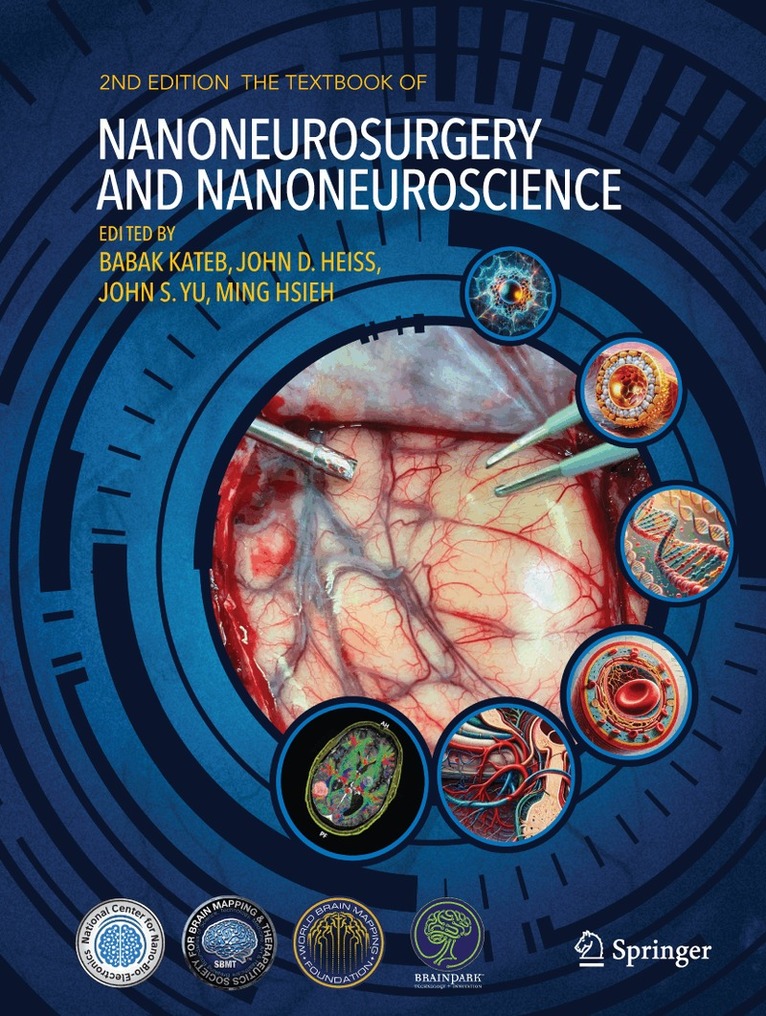
This textbook highlights the exciting field of nanoneuroscience and its potential to transform how we diagnose and treat neurological disorders. "The Textbook of Nanoneuroscience and Nanoneurosurgery," dives deep into this emerging field, exploring the latest tools and techniques currently being developed at the nanoscale level. Key areas of focus include:Nanoplatforms: The book explores how scientists utilize materials on a near-microscopic scale for neurosurgery, neurology, and brain imaging applications.Bridging the Gap: Regulatory hurdles for translating research from the lab to real-world use are addressed, paving the way for future advancements.The Future is Now: The book showcases recent breakthroughs already impacting patient care alongside promising areas with significant potential.Collaboration is Key: Insights from over 220 researchers and 5000+ references, along with illustrative figures in B/W and color, provide a comprehensive overview of this dynamic field.With its focus on minimally invasive procedures and the latest regulatory considerations,"The Textbook of Nanoneuroscience and Nanoneurosurgery" equips researchers and medical professionals with the knowledge to develop groundbreaking treatments for neurological conditions.The text also reviews the latest regulatory guidelines that influence the translation of nanotechnological research from the laboratory to the clinic and the most recent information on biodevices and pharmaceutical spinoffs. It highlights presidential and congressional initiatives and programs that may impact the field soon.Some reviews of the First edition of the textbook."…a significant contribution to the field of nanoneuroscience and nanoneurosurgery … the reader will come away with a deeper understanding of the history of nanotechnology and medicine."—Neuroscience"This is a monumental first textbook on nanoneurosurgery. … recommended reading for neurosurgeons, neurologists, neuroradiologists, and neuroscientists involved in research on new techniques for application in neurosurgery. Biomedical engineers and various companies developing instruments and devices would benefit from the wealth of information about trends for the development of new technologies for neurosurgery."K. K. Jain, MD, Basel, Switzerland"Phenomenal body of knowledge in this book that would take eons to collate by myself. Every answer to every one of my questions plus heaps more. Essential reading for everyone interested in the field. A must-have!"Albert Deme"This is an amazing foray into the future of a largely unexplored, but increasingly critical medical domain…..I have learned much from every page of this captivating text, and I highly recommend it to any medical student, researcher, medical professional in the neurosciences, or anyone who has an interest in the human brain and the future of medicine, to gather a glimpse of the incredible and beneficial paradigm shifts that will soon impact the field of neuroscience."Frank Boehm, British Columbia, Canada