John Stoye – författare
Visar alla böcker från författaren John Stoye. Handla med fri frakt och snabb leverans.
5 produkter
5 produkter
Häftad, Engelska, 1990
599 kr
Skickas inom 5-8 vardagar
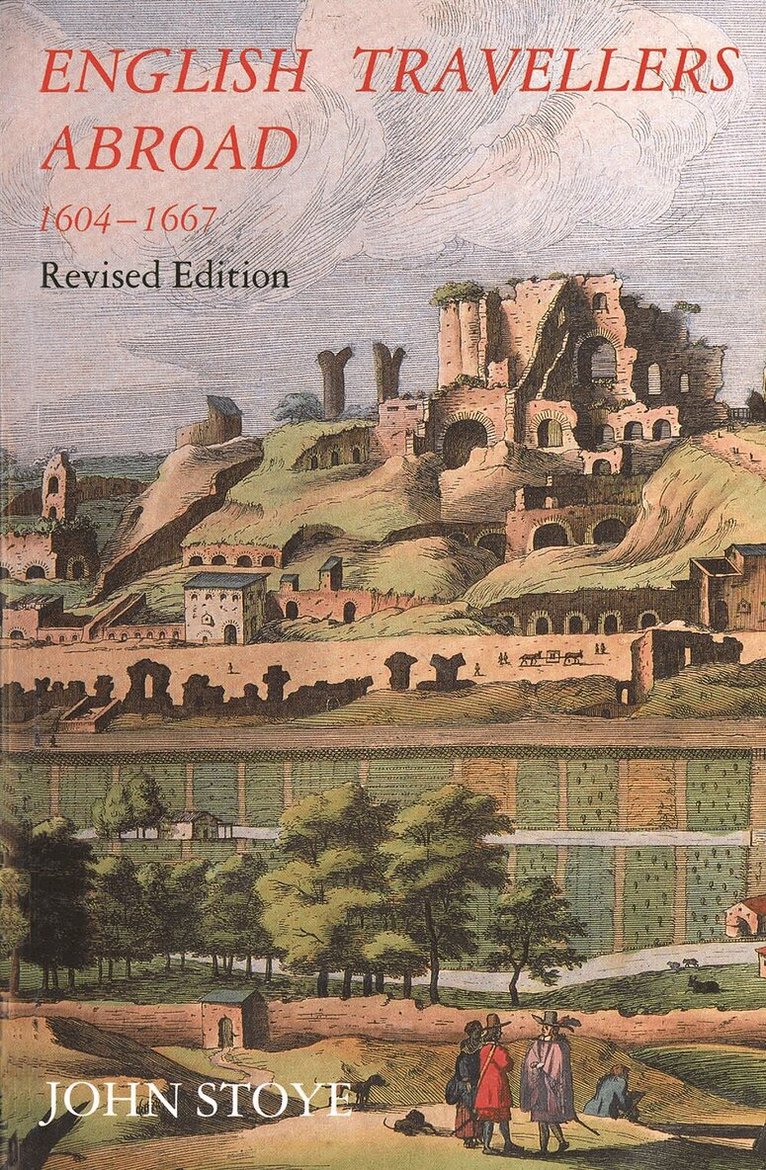
What were the experiences of English travelers who toured Western Europe in the seventeenth century? What influence did Continental travel have on English society and politics? This delightful book by John Stoye allows us to accompany the seventeenth-century British traveler on his journeys into France, Italy, Spain, and the Netherlands. It is a travel book for historians and a piece of history for travellers.Using a vast range of contemporary sources, Stoye describes the journeys of both famous figures and of more obscure travelers, relating common itineraries and the conditions of travel. He evokes the different types of travelers and their motives and interests—young men on the Grand Tour with their tutors in tow, diplomats, soldiers, religious refugees, and merchants. Stoye considers what the travellers brought home with them, from actual books and pictures to impressions of architecture and music to new ways of looking at the world. He traces through letters and diaries how travel affected the taste, education, and politics of the upper classes of society.This book, first published in 1952, is widely considered a classic. This new edition makes it available in paperback for the first time, with a new preface and illustrations, a fully revised text, and updated notes and bibliography.
Inbunden, Engelska, 1994
954 kr
Skickas inom 5-8 vardagar
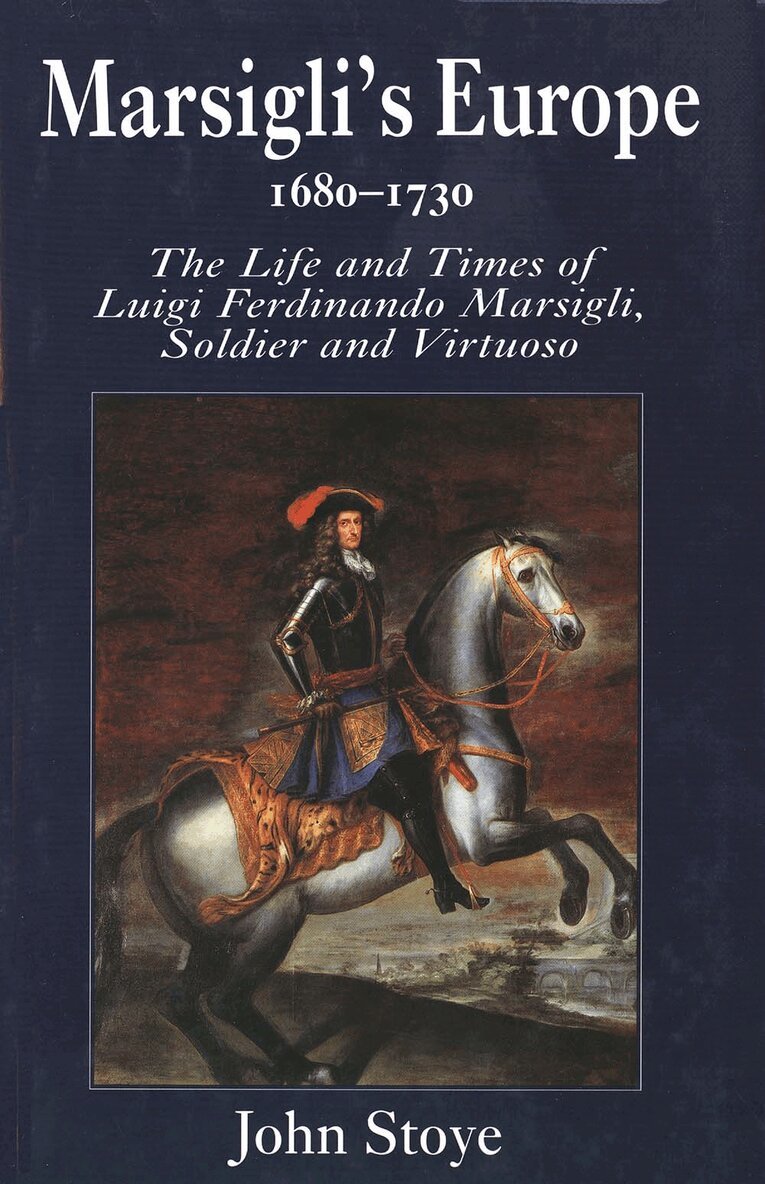
Count Luigi Marsigli (1658-1730) was a nobleman, Habsburg general, emissary of popes, scientist, and patron of the arts and letters. His fascinating life and activities—recounted for the first time by the eminent historian John Stoye—illuminate the many worlds of European civilization during this important period.Born in Bologna, Marsigli traveled throughout Europe from Istanbul to London, but spent much of his time in the Balkan countries and the lands south of the Danube. Stoye follows the count as he moved through the Habsburg Empire, mapping the terrain, determining boundary lines, and participating in a train of events with a crucial impact on Bosnia and Croatia today. He shows how Marsigli pursued his varied interests, classifying mushrooms, finding geological specimens, describing Roman ruins, studying marine biology, and making his place in the increasingly scientific community of the early Enlightenment.Stoye tells how Marsigli, founder of an observatory and museum in Bologna, was welcomed by academics and scientific societies throughout Europe, revealing that the interest in science and antiquity transcended national boundaries during this period. Through the activities of Marsigli, Stoye sheds light on the complexities of European social, political, and military life and the contrast between conditions of war and peace in the phases of European history. Brilliantly narrated by one of the best-known authorities on the era, this account of Marsigli's life is an engrossing and highly entertaining story.
Häftad, Engelska, 2000
609 kr
Skickas inom 5-8 vardagar
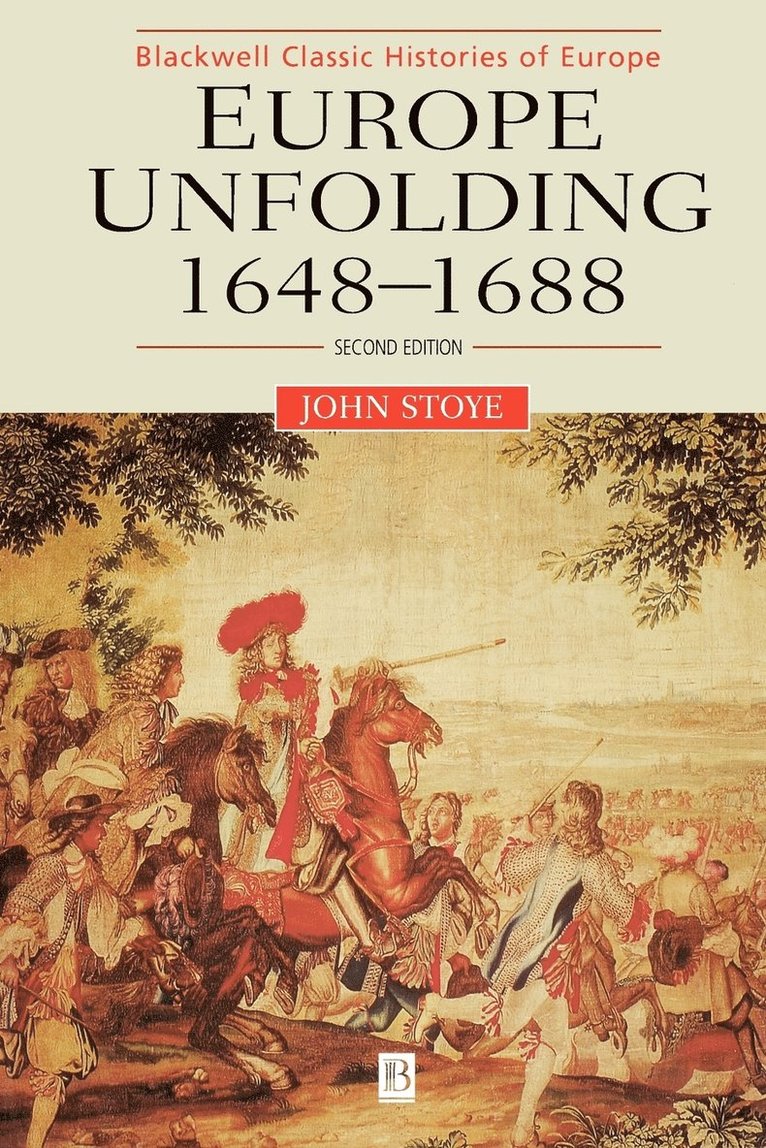
The revised edition of this classic text covers both the turbulence of war which raged throughout this period, and explores how, alongside such turbulence, it was possible for some countries to both flourish and produce spectacular advances in art, science and thinking.
Inbunden, Engelska, 2009
488 kr
Skickas inom 3-6 vardagar
E-bok
Spanska, 2018151 kr
Läs direkt efter köp
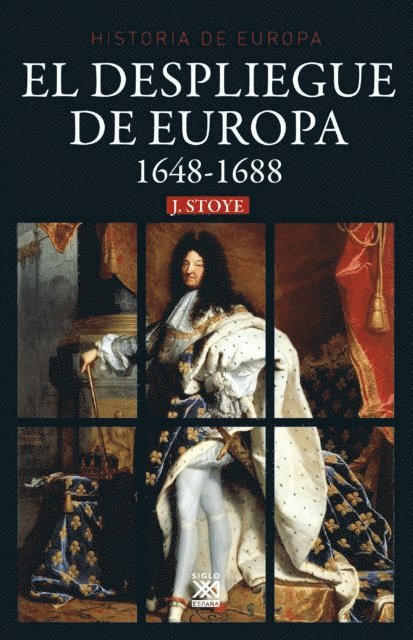
El periodo que abarca desde 1648 hasta 1688 a menudo se malinterpreta como una época de calma y estabilidad en la que las monarquías se vieron obligadas a recuperar sus posiciones después de una convulsa primera mitad de siglo de guerras dinásticas y tumultos sociales. En realidad, los retos políticos a los que se enfrentaron las grandes monarquías no fueron menores que los de sus antecesoras: la amenaza otomana, los disturbios y conflictos desde las fronteras tanto en Ucrania como en los Cárpatos, la tendencia expansionista francesa o las disputas por el dominio de los imperios comerciales de ultramar estuvieron presentes a lo largo de todo el periodo. Durante la segunda mitad del siglo xvii, el Viejo Mundo fue atravesado por tensiones políticas y guerras que se fueron salvando con una frenética actividad diplomática y tratados que fueron configurando el equilibrio de poder.J. Stoye, prestigioso modernista de Oxford, relata de forma magistral todas estas cuestiones, pero sin reducir la historia de Europa a las intrigas palaciegas y a los centros de poder que decidían el destino político de los pueblos. Asimismo, el autor muestra cómo la diversidad y la vitalidad de la ciencia y la cultura europeas, a pesar de los incesantes estragos de la guerra, la peste y el hambre, arcarían el recorrido que el conocimiento y el arte seguirían durante los siguientes siglos.