475 kr
Skickas inom 5-8 vardagar
475 kr
Skickas inom 5-8 vardagar
Seeing Through the South
437 kr
Skickas inom 5-8 vardagar
2 847 kr
Skickas inom 11-20 vardagar
503 kr
Skickas inom 3-6 vardagar
378 kr
Läs direkt efter köp
For as long as the United States owed its prosperity to a New World plantation complex, from colonial settlement until well into the twentieth century, the toxic practices associated with its permutations stimulated imaginary solutions to the contradiction with the nation’s enlightenment ideals and republican ideology. Ideals of liberty, democracy, and individualism could not be separated from a history of forcible coercion, oligarchic power, and state-protected economic opportunism. While recent historical scholarship about the relation of capitalism to slavery explores the depths at which U.S. ascension was indebted to global plantation slave economies, John T. Matthews probes how exemplary works of literature represented the determination to deny the open secret of a national atrocity. Difficult truths were hidden in plain sight, allowing beholders at once to recognize and disavow knowledge they would not act on.What were the habits of mind that enabled free Americans to acknowledge what was intolerable yet act as if they did not? In what ways did non-slave-owning Americans imagine a relation to slavery that both admitted its iniquity and accepted its benefits? How did the reconfiguration of the plantation system after the Civil War elicit new literary forms for dealing with its perpetuation of racial injustice, expropriation of labor, and exploitation for profit of the land? Hidden in Plain Sight examines signal nineteenth-century works by Edgar Allan Poe, Nathaniel Hawthorne, Herman Melville, and Joel Chandler Harris to show how writers portrayed a nation founded on the unseen seen of slavery’s capitalism.
427 kr
Skickas inom 3-6 vardagar
361 kr
Läs direkt efter köp
For as long as the United States owed its prosperity to a New World plantation complex, from colonial settlement until well into the twentieth century, the toxic practices associated with its permutations stimulated imaginary solutions to the contradiction with the nation’s enlightenment ideals and republican ideology. Ideals of liberty, democracy, and individualism could not be separated from a history of forcible coercion, oligarchic power, and state-protected economic opportunism. While recent historical scholarship about the relation of capitalism to slavery explores the depths at which U.S. ascension was indebted to global plantation slave economies, John T. Matthews probes how exemplary works of literature represented the determination to deny the open secret of a national atrocity. Difficult truths were hidden in plain sight, allowing beholders at once to recognize and disavow knowledge they would not act on.What were the habits of mind that enabled free Americans to acknowledge what was intolerable yet act as if they did not? In what ways did non-slave-owning Americans imagine a relation to slavery that both admitted its iniquity and accepted its benefits? How did the reconfiguration of the plantation system after the Civil War elicit new literary forms for dealing with its perpetuation of racial injustice, expropriation of labor, and exploitation for profit of the land? Hidden in Plain Sight examines signal nineteenth-century works by Edgar Allan Poe, Nathaniel Hawthorne, Herman Melville, and Joel Chandler Harris to show how writers portrayed a nation founded on the unseen seen of slavery’s capitalism.
1 832 kr
Skickas inom 5-8 vardagar
1 520 kr
Skickas inom 5-8 vardagar
648 kr
Skickas inom 5-8 vardagar
733 kr
Läs direkt efter köp
455 kr
Läs direkt efter köp
459 kr
Läs direkt efter köp
Seeing Through the South
1 235 kr
Skickas inom 5-8 vardagar
1 430 kr
Läs direkt efter köp
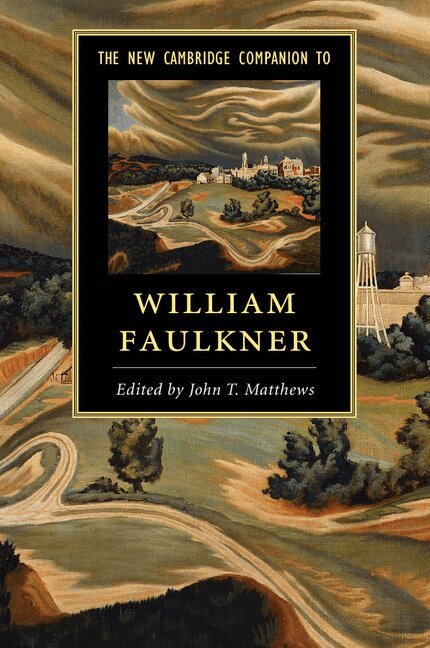
Considered by many to be the most influential US novelist the world has known, William Faulkner''s roots and his writing are planted in a single obscure county in the Deep South. A foremost international modernist, Faulkner''s subjects and characters, ironically, are more readily associated with the history and sociology of the most backward state in the Union. He experimented endlessly with narrative structure, developing an unorthodox writing style. Yet his main goal was to reveal the truth of "the human heart in conflict with itself," ultimately defining human nature through the lens of his own Southern experience.
This comprehensive account of Faulkner''s literary career features an exploration of his novels and key short stories, including The Sound and the Fury, As I Lay Dying, Absalom, Absalom!, and many more. Drawing on psychoanalytic, post-structuralist, feminist, and post-colonial theory, it offers an imaginative topography of Faulkner''s efforts to reckon with his Southern past, to acknowledge its modernization, and to develop his own modernist method.
3 302 kr
Läs direkt efter köp
513 kr
Läs direkt efter köp
Considered by many to be the most influential US novelist the world has known, William Faulkner''s roots and his writing are planted in a single obscure county in the Deep South. A foremost international modernist, Faulkner''s subjects and characters, ironically, are more readily associated with the history and sociology of the most backward state in the Union. He experimented endlessly with narrative structure, developing an unorthodox writing style. Yet his main goal was to reveal the truth of "the human heart in conflict with itself," ultimately defining human nature through the lens of his own Southern experience.
This comprehensive account of Faulkner''s literary career features an exploration of his novels and key short stories, including The Sound and the Fury, As I Lay Dying, Absalom, Absalom!, and many more. Drawing on psychoanalytic, post-structuralist, feminist, and post-colonial theory, it offers an imaginative topography of Faulkner''s efforts to reckon with his Southern past, to acknowledge its modernization, and to develop his own modernist method.