John Whitney Hall - Böcker
Visar alla böcker från författaren John Whitney Hall. Handla med fri frakt och snabb leverans.
6 produkter
6 produkter
835 kr
Skickas inom 3-6 vardagar
The Muromachi age may well emerge in the eyes of historians as one of the most seminal periods in Japanese history. So concluded the participants in the 1973 Conference on Japan. The proceedings, as edited for this volume, reveal this new interpretation of the Muromachi age (1334?1573), which was among the most neglected and misunderstood chapters in Japanese history. Both Western and Japanese scholars looked upon the period chiefly as an interlude between a classical era (the Heian period) and an early modern age (the Tokugawa period), the interim being regarded as a time of social confusion and institutional decay. As they learned more, historians saw the Muromachi age giving rise to new patterns that became important elements in a distinctly Japanese tradition; e.g., the arts of noh drama, suiboku painting, landscape gardening and the tea ceremony were perfected during Muromachi times.The volume brings together the work of Japanese and American specialists and shows that many features of Edo-period culture were anticipated by Muromachi developments. Although the volume was first published nearly three decades ago, it remains of great interest for anyone wanting to know more about Japan's historical development.This title is part of UC Press's Voices Revived program, which commemorates University of California Press's mission to seek out and cultivate the brightest minds and give them voice, reach, and impact. Drawing on a backlist dating to 1893, Voices Revived makes high-quality, peer-reviewed scholarship accessible once again using print-on-demand technology. This title was originally published in 1977.The Muromachi age may well emerge in the eyes of historians as one of the most seminal periods in Japanese history. So concluded the participants in the 1973 Conference on Japan. The proceedings, as edited for this volume, reveal this new interpretation o
1 513 kr
Skickas inom 3-6 vardagar
The Muromachi age may well emerge in the eyes of historians as one of the most seminal periods in Japanese history. So concluded the participants in the 1973 Conference on Japan. The proceedings, as edited for this volume, reveal this new interpretation of the Muromachi age (1334?1573), which was among the most neglected and misunderstood chapters in Japanese history. Both Western and Japanese scholars looked upon the period chiefly as an interlude between a classical era (the Heian period) and an early modern age (the Tokugawa period), the interim being regarded as a time of social confusion and institutional decay. As they learned more, historians saw the Muromachi age giving rise to new patterns that became important elements in a distinctly Japanese tradition; e.g., the arts of noh drama, suiboku painting, landscape gardening and the tea ceremony were perfected during Muromachi times.The volume brings together the work of Japanese and American specialists and shows that many features of Edo-period culture were anticipated by Muromachi developments. Although the volume was first published nearly three decades ago, it remains of great interest for anyone wanting to know more about Japan's historical development.This title is part of UC Press's Voices Revived program, which commemorates University of California Press's mission to seek out and cultivate the brightest minds and give them voice, reach, and impact. Drawing on a backlist dating to 1893, Voices Revived makes high-quality, peer-reviewed scholarship accessible once again using print-on-demand technology. This title was originally published in 1977.The Muromachi age may well emerge in the eyes of historians as one of the most seminal periods in Japanese history. So concluded the participants in the 1973 Conference on Japan. The proceedings, as edited for this volume, reveal this new interpretation o
1 096 kr
Skickas inom 7-10 vardagar
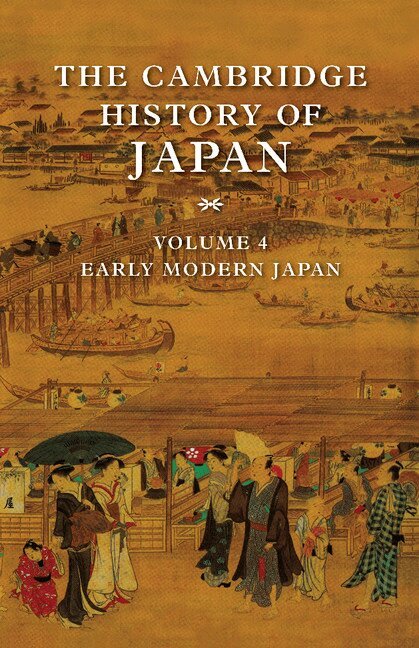
This is the fourth of six volumes designed to explore the history of Japan from prehistoric to modern times. Volume 4 covers the years from 1550 to 1800, a short but surprisingly eventful period in Japanese history commonly referred to as Japan's Early Modern Age. At the start, in the sixteenth century, much of the country was being pulled apart by local military lords engaged in a struggle for land and local hegemony. These daimyo succeeded in dividing Japan into nearly autonomous regional domains. This volume attempts to flesh out the historical tale with insights into the way that people lived and worked. It examines the relationship between peasant and local lord, and between the lord, as a unit of local government, and the emerging shogunate. It offers insights into the evolution of indigenous thought and religion and it also deals with Japan's foreign relations, particularly the impact of the Christian missionary movement.
598 kr
Skickas inom 7-10 vardagar
This study contains twenty-two essays by leading historians on the Tokugawa Period (1600-1868), eight of which have never before been published. The Tokugawa Period has long been seen as one of Eastern feudalism, awaiting the breakthrough that came with the Meiji enlightenment and the opening of Japan to the West. The general thrust of these papers is to show that in many institutional aspects Japan was far from backward before the Meiji Period, and that many of the preconditions of modernization were present and developing much earlier than has generally been believed. This collection will be particularly valuable to students and scholars of comparative and Japanese modernization. Originally published in 1968. The Princeton Legacy Library uses the latest print-on-demand technology to again make available previously out-of-print books from the distinguished backlist of Princeton University Press. These editions preserve the original texts of these important books while presenting them in durable paperback and hardcover editions.The goal of the Princeton Legacy Library is to vastly increase access to the rich scholarly heritage found in the thousands of books published by Princeton University Press since its founding in 1905.
2 801 kr
Skickas inom 3-6 vardagar
This study contains twenty-two essays by leading historians on the Tokugawa Period (1600-1868), eight of which have never before been published. The Tokugawa Period has long been seen as one of Eastern feudalism, awaiting the breakthrough that came with the Meiji enlightenment and the opening of Japan to the West. The general thrust of these papers is to show that in many institutional aspects Japan was far from backward before the Meiji Period, and that many of the preconditions of modernization were present and developing much earlier than has generally been believed. This collection will be particularly valuable to students and scholars of comparative and Japanese modernization. Originally published in 1968. The Princeton Legacy Library uses the latest print-on-demand technology to again make available previously out-of-print books from the distinguished backlist of Princeton University Press. These editions preserve the original texts of these important books while presenting them in durable paperback and hardcover editions.The goal of the Princeton Legacy Library is to vastly increase access to the rich scholarly heritage found in the thousands of books published by Princeton University Press since its founding in 1905.
309 kr
Skickas inom 10-15 vardagar
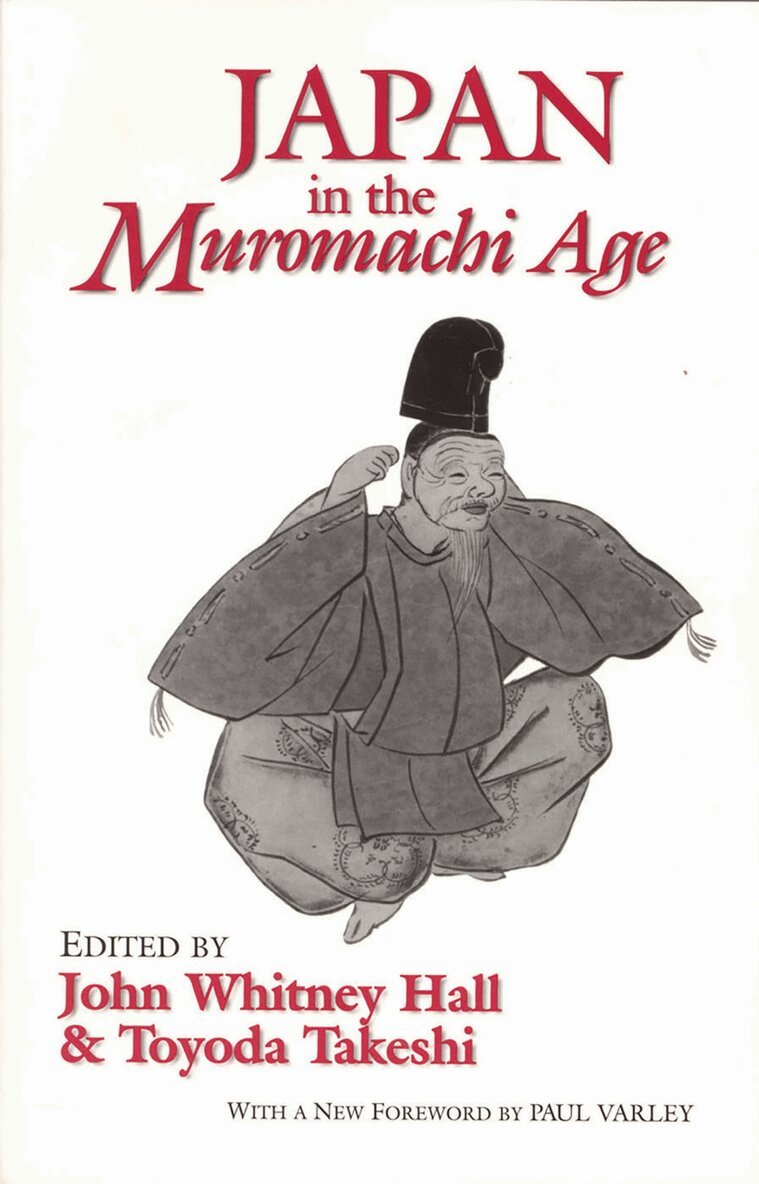
The Muromachi age may well emerge in the eyes of historians as one of the most seminal periods in Japanese history. So concluded the participants in the 1973 Conference on Japan. The proceedings, as edited for this volume, reveal this new interpretation of the Muromachi age (1334–1573), which was among the most neglected and misunderstood chapters in Japanese history. Both Western and Japanese scholars looked upon the period chiefly as an interlude between a classical era (the Heian period) and an early modern age (the Tokugawa period), the interim being regarded as a time of social confusion and institutional decay. As they learned more, historians saw the Muromachi age giving rise to new patterns that became important elements in a distinctly Japanese tradition; e.g., the arts of noh drama, suiboku painting, landscape gardening and the tea ceremony were perfected during Muromachi times.The volume brings together the work of Japanese and American specialists and shows that many features of Edo-period culture were anticipated by Muromachi developments. Although the volume was first published nearly three decades ago, it remains of great interest for anyone wanting to know more about Japan's historical development.