Jonathan Betts – författare
Visar alla böcker från författaren Jonathan Betts. Handla med fri frakt och snabb leverans.
10 produkter
10 produkter
Inbunden, Engelska, 2023
172 kr
Skickas
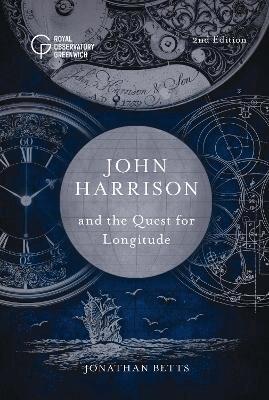
John Harrison and the Quest for Longitude is a fascinating account of one man driven by the need to solve one of the greatest practical problems of his time.Following one of the most intriguing and fascinating stories linked to the Royal Observatory, Greenwich, the book centres onthe life and achievements of John Harrison - designer and builder of the first accurate marine chronometers. Inspired by the official prize offered in 1714 to anyone who could solve the problem of finding longitudinal position at sea, Harrisonproduced his four famous 'H' timepieces. In doing so, he helped revolutionise navigation at sea, saving many thousands of lives.This new edition contains beautiful technical drawings of the mechanisms of clocks and the technology involved in Harrison'screations, bringing to life this inspiring story.
Häftad, Engelska, 2023
528 kr
Skickas inom 5-8 vardagar
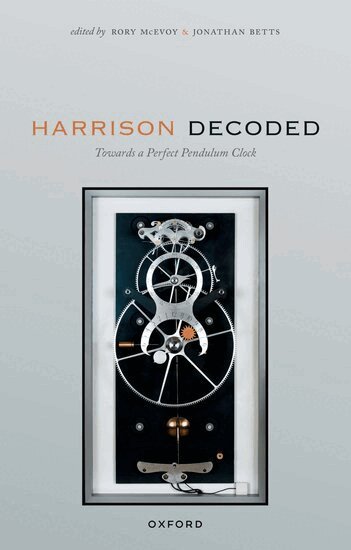
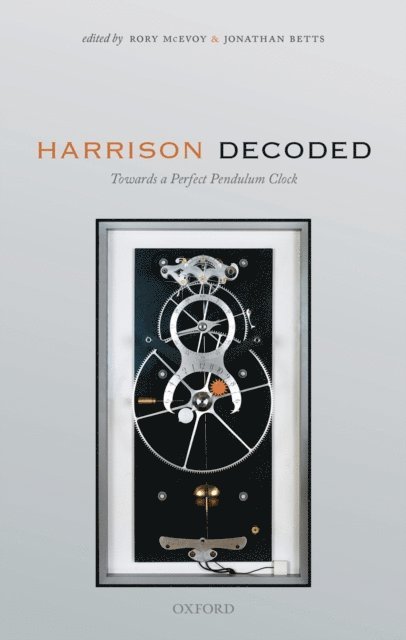
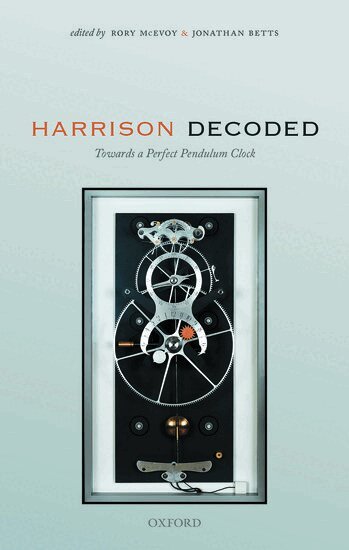
Harrison Decoded: Towards a Perfect Pendulum Clock brings together the output of a forty-year collaborative research project that unpicked and put into practice the fine details of John Harrison's extraordinary pendulum clock system. Harrison predicted that his unique method of making pendulum clocks could provide as much as one-hundred-times the stability of those made by his contemporaries. However, his final publication, which promised to describe the system, was a chaotic jumble of information, much of which had nothing to do with clockwork. One contemporary reviewer of Harrison's book could only suggest that the end result was a product of Harrison's 'superannuated dotage.'The focus of this book centres on the making, adjusting, and testing of Clock B which was the subject of various trials at the Royal Observatory, Greenwich. The modern history of Clock B is accompanied by scientific analysis of the clock system, Clock B's performance, the methods of data-gathering alongside historical perspectives on Harrison's clockmaking, that of his contemporaries, and some evaluation of the possible influence of early 18th century scientific thought.
E-bok
PDF, Engelska, 20181 701 kr
Läs direkt efter köp
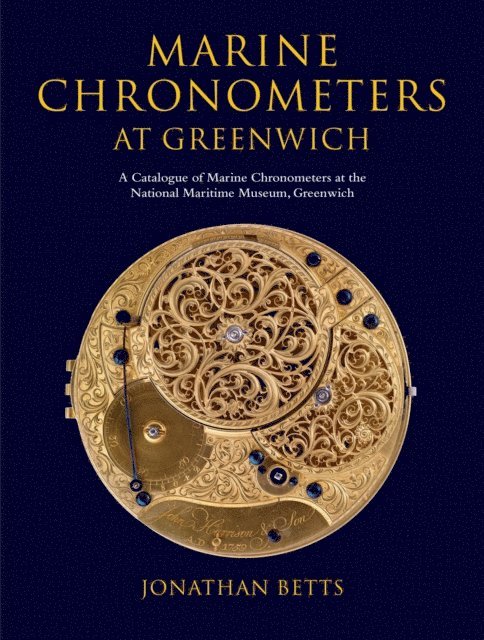
The Marine Chronometers at Greenwich is the fifth, and largest, of the distinguished series of catalogues of instruments in the collections of the National Maritime Museum. Housed at the Royal Observatory Greenwich — the ''home of time'' and the Prime Meridian of the world — this extraordinary collection, which includes the celebrated marine timekeepers by John Harrison (1693-1776), is generally considered to be the finest of its kind in existence.The book is however much more than just a catalogue, and includes an accessible and engaging history of the chronometer, revealing why these instruments were important in our scientific and cultural history, and explaining, in simple terms, how they worked and were used. A comprehensive Glossary and Bibliography are included to ensure any technicalities are explained and that the reader has suggestions for useful ''further reading''. Over 480 photographs and illustrations, including many finemacro-photographs and line drawings, illustrate the ''jewel-like'' beauty of the chronometer''s construction and explain the function and subtleties of its mechanism.A chapter on ''How the Chronometer was Made'', describes the fine sub-division of labour used to create these special machines, from bare metal, right up to delivery on board ship, and brief biographies of the makers tell the human story behind this important nineteenth-century industry. Another chapter, ''The Evolution of the Chronometer'', aimed at collectors, historians and curators, provides clearly structured information on assessing and dating the chronometer, something many find difficult.And, for the dedicated specialist, there is extensive tabulated data on the technical structure of this important collection, a unique resource for future research.
E-bok
PDF, Engelska, 2006551 kr
Läs direkt efter köp
This is the story of Rupert T. Gould (1890-1948), the polymath and horologist. A remarkable man, Lt Cmdr Gould made important contributions in an extraordinary range of subject areas throughout his relatively short and dramatically troubled life. From antique clocks to scientific mysteries, from typewriters to the first systematic study of the Loch Ness Monster, Gould studied and published on them all. With the title The Stargazer, Gould was an early broadcaster onthe BBC''s Children''s Hour when, with his encyclopaedic knowledge, he became known as The Man Who Knew Everything. Not surprisingly, he was also part of that elite group on BBC radio who formed The Brains Trust, giving on-the-spot answers to all manner of wide ranging and difficult questions. With hiswide learning and photographic memory, Gould awed a national audience, becoming one of the era''s radio celebrities.During the 1920s Gould restored the complex and highly significant marine timekeepers constructed by John Harrison (1693-1776), and wrote the unsurpassed classic, The Marine Chronometer, its History and Development. Today he is virtually unknown, his horological contributions scarcely mentioned in Dava Sobel''s bestseller Longitude. The TV version of Longitude, in which Jeremy Irons played Rupert Gould, did at least introduce Gould''s name to a wider public.Gould suffered terrible bouts of depression, resulting in a number of nervous breakdowns. These, coupled with his obsessive and pedantic nature, led to a scandalously-reported separation from his wife and cost him his family, his home, his job, and his closest friends.In this first-ever biography of Rupert Gould, Jonathan Betts, the Royal Observatory Greenwich''s Senior Horologist, has given us a compelling account of a talented but flawed individual. Using hitherto unknown personal journals, the family''s extensive collection of photographs, and the polymath''s surviving records and notes, Betts tells the story of how Gould''s early life, his naval career, and his celebrity status came together as this talented Englishman restored part of Britain''s - and theworld''s - most important technical heritage: John Harrison''s marine timekeepers.
E-bok
Engelska, 2011551 kr
Läs direkt efter köp
This is the story of Rupert T. Gould (1890-1948), the polymath and horologist. A remarkable man, Lt Cmdr Gould made important contributions in an extraordinary range of subject areas throughout his relatively short and dramatically troubled life. From antique clocks to scientific mysteries, from typewriters to the first systematic study of the Loch Ness Monster, Gould studied and published on them all. With the title The Stargazer, Gould was an early broadcaster onthe BBC''s Children''s Hour when, with his encyclopaedic knowledge, he became known as The Man Who Knew Everything. Not surprisingly, he was also part of that elite group on BBC radio who formed The Brains Trust, giving on-the-spot answers to all manner of wide ranging and difficult questions. With hiswide learning and photographic memory, Gould awed a national audience, becoming one of the era''s radio celebrities.During the 1920s Gould restored the complex and highly significant marine timekeepers constructed by John Harrison (1693-1776), and wrote the unsurpassed classic, The Marine Chronometer, its History and Development. Today he is virtually unknown, his horological contributions scarcely mentioned in Dava Sobel''s bestseller Longitude. The TV version of Longitude, in which Jeremy Irons played Rupert Gould, did at least introduce Gould''s name to a wider public.Gould suffered terrible bouts of depression, resulting in a number of nervous breakdowns. These, coupled with his obsessive and pedantic nature, led to a scandalously-reported separation from his wife and cost him his family, his home, his job, and his closest friends.In this first-ever biography of Rupert Gould, Jonathan Betts, the Royal Observatory Greenwich''s Senior Horologist, has given us a compelling account of a talented but flawed individual. Using hitherto unknown personal journals, the family''s extensive collection of photographs, and the polymath''s surviving records and notes, Betts tells the story of how Gould''s early life, his naval career, and his celebrity status came together as this talented Englishman restored part of Britain''s - and theworld''s - most important technical heritage: John Harrison''s marine timekeepers.
E-bok
PDF, Engelska, 2020447 kr
Läs direkt efter köp
Harrison Decoded: Towards a Perfect Pendulum Clock brings together the output of a forty-year collaborative research project that unpicked and put into practice the fine details of John Harrison''s extraordinary pendulum clock system. Harrison predicted that his unique method of making pendulum clocks could provide as much as one-hundred-times the stability of those made by his contemporaries. However, his final publication, which promised to describe thesystem, was a chaotic jumble of information, much of which had nothing to do with clockwork. One contemporary reviewer of Harrison''s book could only suggest that the end result was a product of Harrison''s ''superannuated dotage.''The focus of this book centres on the making, adjusting, and testing of Clock B which was the subject of various trials at the Royal Observatory, Greenwich. The modern history of Clock B is accompanied by scientific analysis of the clock system, Clock B''s performance, the methods of data-gathering alongside historical perspectives on Harrison''s clockmaking, that of his contemporaries, and some evaluation of the possible influence of early 18th century scientific thought.
Inbunden, Engelska, 2006
1 383 kr
Skickas inom 7-10 vardagar
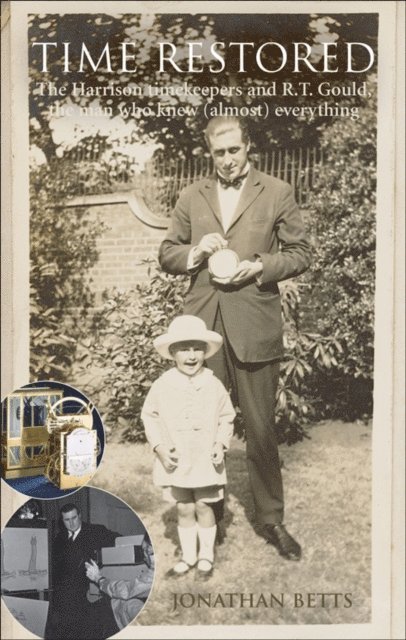
This is the story of Rupert T. Gould (1890-1948), the polymath and horologist. A remarkable man, Lt Cmdr Gould made important contributions in an extraordinary range of subject areas throughout his relatively short and dramatically troubled life. From antique clocks to scientific mysteries, from typewriters to the first systematic study of the Loch Ness Monster, Gould studied and published on them all. With the title The Stargazer, Gould was an early broadcaster on the BBC's Children's Hour when, with his encyclopaedic knowledge, he became known as The Man Who Knew Everything. Not surprisingly, he was also part of that elite group on BBC radio who formed The Brains Trust, giving on-the-spot answers to all manner of wide ranging and difficult questions. With his wide learning and photographic memory, Gould awed a national audience, becoming one of the era's radio celebrities. During the 1920s Gould restored the complex and highly significant marine timekeepers constructed by John Harrison (1693-1776), and wrote the unsurpassed classic, The Marine Chronometer, its History and Development. Today he is virtually unknown, his horological contributions scarcely mentioned in Dava Sobel's bestseller Longitude. The TV version of Longitude, in which Jeremy Irons played Rupert Gould, did at least introduce Gould's name to a wider public. Gould suffered terrible bouts of depression, resulting in a number of nervous breakdowns. These, coupled with his obsessive and pedantic nature, led to a scandalously-reported separation from his wife and cost him his family, his home, his job, and his closest friends.In this first-ever biography of Rupert Gould, Jonathan Betts, the Royal Observatory Greenwich's Senior Horologist, has given us a compelling account of a talented but flawed individual. Using hitherto unknown personal journals, the family's extensive collection of photographs, and the polymath's surviving records and notes, Betts tells the story of how Gould's early life, his naval career, and his celebrity status came together as this talented Englishman restored part of Britain's - and the world's - most important technical heritage: John Harrison's marine timekeepers.
Inbunden, Engelska, 2020
1 566 kr
Skickas inom 3-6 vardagar
Brings together the output of a forty-year collaborative research project that unpicked and put into practice the fine details of John Harrison's extraordinary pendulum clock system. Harrison predicted that his unique method of making pendulum clocks could provide as much as one-hundred-times the stability of those made by his contemporaries. However, his final publication, which promised to describe the system, was a chaotic jumble of information, much of which had nothing to do with clockwork. One contemporary reviewer of Harrison's book could only suggest that the end result was a product of Harrison's 'superannuated dotage.' The focus of this book centres on the making, adjusting, and testing of Clock B which was the subject of various trials at the Royal Observatory, Greenwich. The modern history of Clock B is accompanied by scientific analysis of the clock system, Clock B's performance, the methods of data-gathering alongside historical perspectives on Harrison's clockmaking, that of his contemporaries, and some evaluation of the possible influence of early 18th century scientific thought.
Inbunden, Engelska, 2022
2 612 kr
Skickas inom 5-8 vardagar
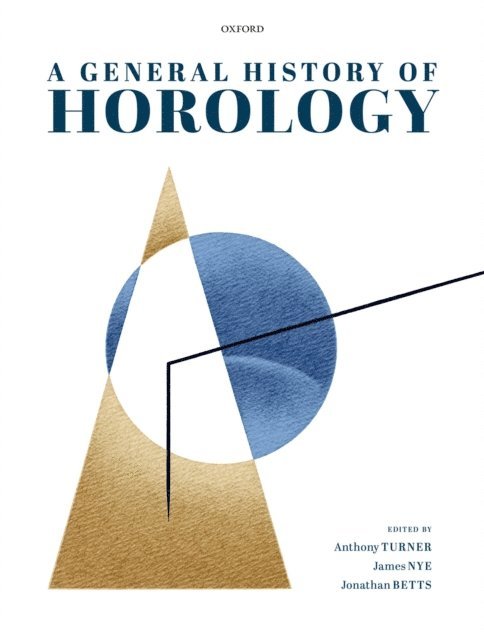
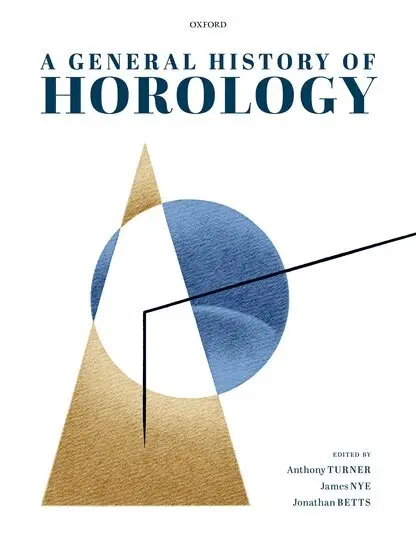
A General History of Horology describes instruments used for the finding and measurement of time from Antiquity to the 21st century. In geographical scope it ranges from East Asia to the Americas. The instruments described are set in their technical and social contexts, and there is also discussion of the literature, the historiography and the collecting of the subject. The book features the use of case studies to represent larger topics that cannot be completely covered in a single book. The international body of authors have endeavoured to offer a fully world-wide survey accessible to students, historians, collectors, and the general reader, based on a firm understanding of the technical basis of the subject. At the same time as the work offers a synthesis of current knowledge of the subject, it also incorporates the results of some fundamental, new and original research.
Häftad, Engelska, 2011
684 kr
Skickas inom 7-10 vardagar
This is the story of Rupert T. Gould (1890-1948), the polymath and horologist. A remarkable man, Lt Cmdr Gould made important contributions in an extraordinary range of subject areas throughout his relatively short and dramatically troubled life. From antique clocks to scientific mysteries, from typewriters to the first systematic study of the Loch Ness Monster, Gould studied and published on them all. With the title The Stargazer, Gould was an early broadcaster on the BBC's Children's Hour when, with his encyclopaedic knowledge, he became known as The Man Who Knew Everything. Not surprisingly, he was also part of that elite group on BBC radio who formed The Brains Trust, giving on-the-spot answers to all manner of wide ranging and difficult questions. With his wide learning and photographic memory, Gould awed a national audience, becoming one of the era's radio celebrities. During the 1920s Gould restored the complex and highly significant marine timekeepers constructed by John Harrison (1693-1776), and wrote the unsurpassed classic, The Marine Chronometer, its History and Development. Today he is virtually unknown, his horological contributions scarcely mentioned in Dava Sobel's bestseller Longitude. The TV version of Longitude, in which Jeremy Irons played Rupert Gould, did at least introduce Gould's name to a wider public. Gould suffered terrible bouts of depression, resulting in a number of nervous breakdowns. These, coupled with his obsessive and pedantic nature, led to a scandalously-reported separation from his wife and cost him his family, his home, his job, and his closest friends.In this first-ever biography of Rupert Gould, Jonathan Betts, the Royal Observatory Greenwich's Senior Horologist, has given us a compelling account of a talented but flawed individual. Using hitherto unknown personal journals, the family's extensive collection of photographs, and the polymath's surviving records and notes, Betts tells the story of how Gould's early life, his naval career, and his celebrity status came together as this talented Englishman restored part of Britain's - and the world's - most important technical heritage: John Harrison's marine timekeepers.