Jonathan Gross – författare
Visar alla böcker från författaren Jonathan Gross. Handla med fri frakt och snabb leverans.
6 produkter
6 produkter
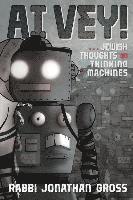
Häftad, Engelska, 2016
269 kr
Skickas inom 3-6 vardagar
Del 1 - Anthem Studies in Global English Literatures
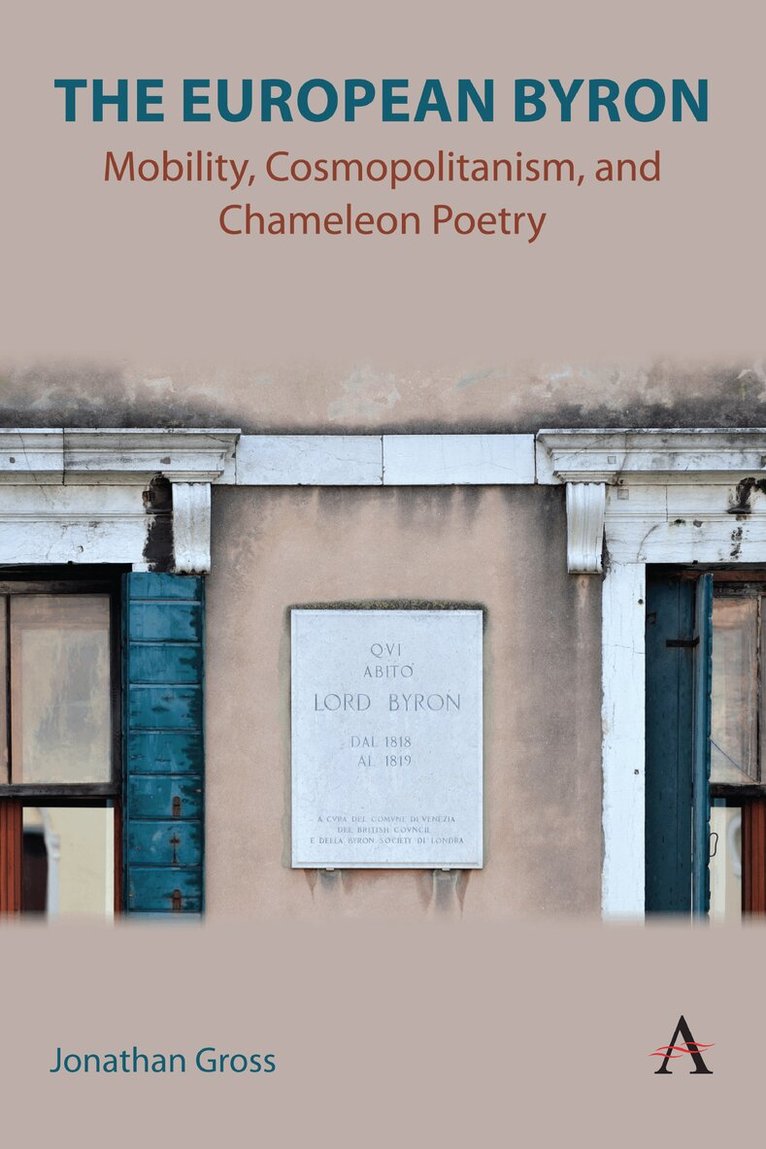
European Byron
Mobility, Cosmopolitanism, and Chameleon Poetry
Inbunden, Engelska, 2025
1 337 kr
Skickas
Byron concealed himself in various literary disguises, a process he called “mobility.” In this study of influences on Byron’s verse and Byron’s European impact, I explore these borrowings and transformations as they manifested themselves in his reading. At issue is the very concept of romantic poetic voice. Framing himself in the tradition of the Irish yet cosmopolitan Thomas Moore, Byron adopted continental guises, imitating both Italian writers and political heroes, such as Dante, Machiavelli, and Tasso. In establishing an Italian identity, Byron relied upon the Italian writers he translated (Pulci, Dante), Thomas Moore’s “Fudge Family in Paris,” and Shelley’s “Julian and Maddalo,” as well as Goethe’s Faust. This Europeanization of Byron should not conceal the fact that Byron adopted poses from his predecessors, such as Walter Scott, in order to fashion himself as a Scottish poet who also happened to be English. Byron became the writers he read: Moore, Shelley, Wordsworth, Scott, Foscolo, Lady Morgan, and Madame de Staël. Those who imitated Byron, particularly Alexander Pushkin and Adam Mickiewicz, became the best interpreters of his literary example while transforming it, and explained what it meant to be a Harold in Muscovite Cloak, or a Polish Byron, to be both delimited and emancipated by Byron’s example.
Del 246 - Studies in Critical Social Sciences
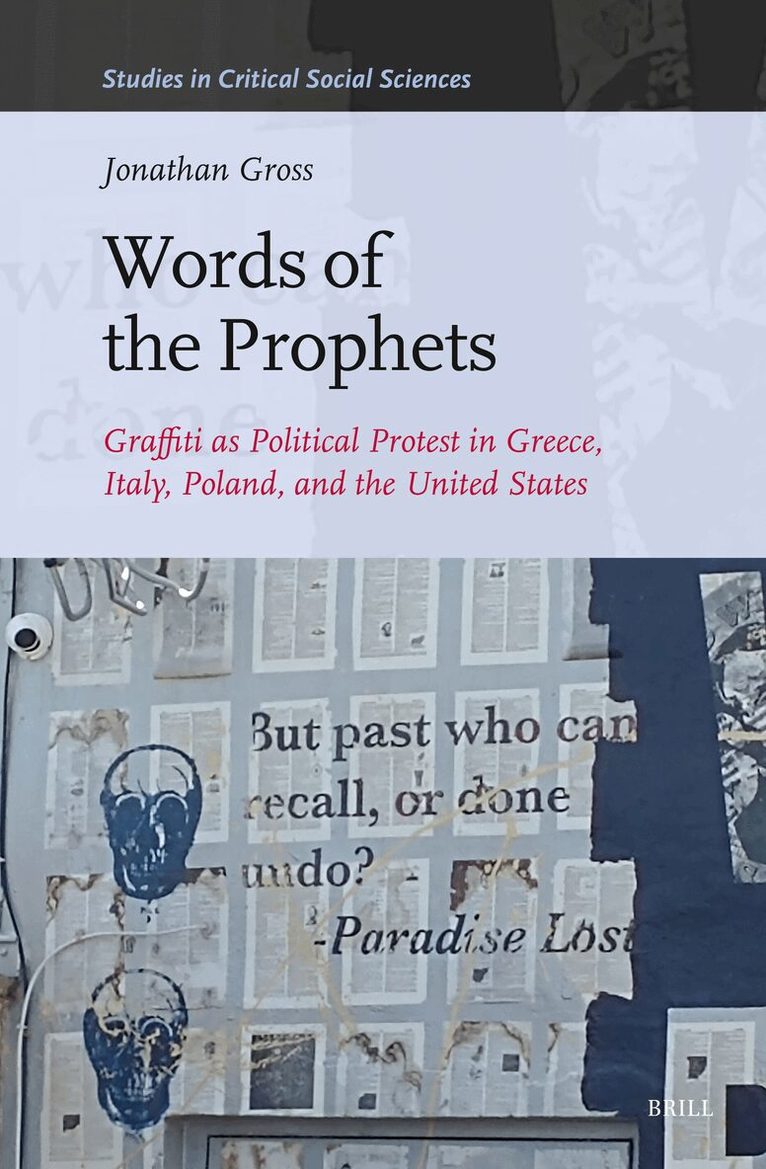
Words of the Prophets
Graffiti as Political Protest in Greece, Italy, Poland, and the United States
Inbunden, Engelska, 2023
3 632 kr
Skickas inom 5-8 vardagar
Words of the Prophets treats graffiti as a form of political prophecy. Whether we consider austerity in Thessaloniki, Camorra infiltration in Naples, the fall of Communism in Gdansk, or the rise of gang warfare in Chicago, graffiti is a form of democratic self-expression that dates back to Periclean Athens and the Book of Daniel. Words of the Prophets offers close readings of 400 original photographs taken between 2014 and 2021 in Philadelphia, Venice, Milan, Florence, Syracuse, and Warsaw, alongside literary works by Pawel Huelle, films by Andrezj Wajda, Antonio Capua, and music videos by Natasha Bedingfield and Beyoncé. A third of the book is dedicated to interviews with Krik Kong, Iwona Zajac, Ponchee.193, Jay Pop, Ser, Simoni Fontana, and Mattia Campo Dall’Orto.
Häftad, Engelska, 2024
500 kr
Skickas inom 3-6 vardagar
Words of the Prophets treats graffiti as a form of political prophecy.Whether we consider austerity in Thessaloniki, Camorra infiltration in Naples, the fall of Communism in Gdansk, or the rise of gang warfare in Chicago, graffiti is a form of democratic self-expression that dates back to Periclean Athens and the Book of Daniel. Words of the Prophets offers close readings of 400 original photographs taken between 2014 and 2021 in Philadelphia, Venice, Milan, Florence, Syracuse, and Warsaw, alongside literary works by Pawel Huelle, films by Andrezj Wajda, Antonio Capua, and music videos by Natasha Bedingfield and Beyoncé.A third of the book is dedicated to interviews with Krik Kong, Iwona Zajac, Ponchee.193, Jay Pop, Ser, Simoni Fontana, and Mattia Campo Dall’Orto.
Engelska, 2025
505 kr
Tillfälligt slut
Explores Byron's borrowings from Thomas Moore, Torquato Tasso, Percy Shelley, and so on, and transformations as they manifested themselves in his reading.Byron concealed himself in various literary disguises, a process he called mobility. In this study of influences on Byron s verse and Byron s European impact, I explore these borrowings and transformations as they manifested themselves in his reading. At issue is the very concept of romantic poetic voice. Framing himself in the tradition of the Irish yet cosmopolitan Thomas Moore, Byron adopted continental guises, imitating both Italian writers and political heroes, such as Dante, Machiavelli, and Tasso in such works as The Lament of Tasso and Don Juan . In establishing an Italian identity, Byron relied upon the Italian writers he translated (Boiardo, Pulci, Dante), Thomas Moore s Fudge Family in Paris, and Shelley s Julian and Maddalo, as well as his transformation of Goethe s Faust in Manfred . This Europeanization of Byron should not conceal the fact that Byron adopted poses from his predecessors, such as Walter Scott, in order to fashion himself as a Scottish poet who also happened to be English. Byron became the writers he read: Moore, Shelley, Wordsworth, Scott, Foscolo, Lady Morgan, and Madame de Stael. Those who imitated Byron, particularly Alexander Pushkin and Adam Mickiewicz, often read him in French translations, but became acute interpreters of his literary example. They explained how the European Byron was created in the nineteenth century, and what it meant to be a Harold in Muscovite Cloak, or a Polish Byron, or any national reincarnation of this complex, chameleon poet.By borrowing from a wide eighteenth-century field, Byron showed how reading could become writing, fulfilling, for Pushkin and Mickiewicz, a mobile and chameleon definition of the epic, as a novel in verse or product of digressions and improvisations. I begin by examining Thomas Moore, whose Fudge Family in Paris helped shape the tone and style of Byron s Don Juan, despite its more obvious European borrowings. Byron s conversations with Madame de Stael encouraged him to Stick to the East, and he followed her example during his years in England. By examining the manuscripts and marginalia of Byron, the author shows the key influence of Madame de Stael s Corinne, Ugo Foscolo s Last Letters of Jacopo Ortis, and Lady Morgan s Italy on Childe Harold I-II, Hebrew Melodies, and Childe Harold IV, and Don Juan.In The Ironic Mode in Politics, the author considers Byron s support for the Greek Revolution, which he cast in cynical terms. His political/poetic example led Pushkin to enlist and Adam Mickiewicz as well, the latter of whom died in Istanbul. The museums that honor them present narratives of Byron s European impact, particularly his legacy in political liberalism. The book thus concludes by considering how scholarship on Alexander Pushkin s Eugene Onegin transformed the epic into a novel in verse. Adam Mickiewicz's translation of "e;The Giaour"e; and his improvisations, which impressed Pushkin, draw on Byron s digressive style. Their epics, Eugene Onegin and Pan Tadeusz, show the legacy of Byron s poetic influence and his political support for freedom of speech.
Engelska, 2025
505 kr
Tillfälligt slut
Explores Byron's borrowings from Thomas Moore, Torquato Tasso, Percy Shelley, and so on, and transformations as they manifested themselves in his reading.Byron concealed himself in various literary disguises, a process he called mobility. In this study of influences on Byron s verse and Byron s European impact, I explore these borrowings and transformations as they manifested themselves in his reading. At issue is the very concept of romantic poetic voice. Framing himself in the tradition of the Irish yet cosmopolitan Thomas Moore, Byron adopted continental guises, imitating both Italian writers and political heroes, such as Dante, Machiavelli, and Tasso in such works as The Lament of Tasso and Don Juan . In establishing an Italian identity, Byron relied upon the Italian writers he translated (Boiardo, Pulci, Dante), Thomas Moore s Fudge Family in Paris, and Shelley s Julian and Maddalo, as well as his transformation of Goethe s Faust in Manfred . This Europeanization of Byron should not conceal the fact that Byron adopted poses from his predecessors, such as Walter Scott, in order to fashion himself as a Scottish poet who also happened to be English. Byron became the writers he read: Moore, Shelley, Wordsworth, Scott, Foscolo, Lady Morgan, and Madame de Stael. Those who imitated Byron, particularly Alexander Pushkin and Adam Mickiewicz, often read him in French translations, but became acute interpreters of his literary example. They explained how the European Byron was created in the nineteenth century, and what it meant to be a Harold in Muscovite Cloak, or a Polish Byron, or any national reincarnation of this complex, chameleon poet.By borrowing from a wide eighteenth-century field, Byron showed how reading could become writing, fulfilling, for Pushkin and Mickiewicz, a mobile and chameleon definition of the epic, as a novel in verse or product of digressions and improvisations. I begin by examining Thomas Moore, whose Fudge Family in Paris helped shape the tone and style of Byron s Don Juan, despite its more obvious European borrowings. Byron s conversations with Madame de Stael encouraged him to Stick to the East, and he followed her example during his years in England. By examining the manuscripts and marginalia of Byron, the author shows the key influence of Madame de Stael s Corinne, Ugo Foscolo s Last Letters of Jacopo Ortis, and Lady Morgan s Italy on Childe Harold I-II, Hebrew Melodies, and Childe Harold IV, and Don Juan.In The Ironic Mode in Politics, the author considers Byron s support for the Greek Revolution, which he cast in cynical terms. His political/poetic example led Pushkin to enlist and Adam Mickiewicz as well, the latter of whom died in Istanbul. The museums that honor them present narratives of Byron s European impact, particularly his legacy in political liberalism. The book thus concludes by considering how scholarship on Alexander Pushkin s Eugene Onegin transformed the epic into a novel in verse. Adam Mickiewicz's translation of "e;The Giaour"e; and his improvisations, which impressed Pushkin, draw on Byron s digressive style. Their epics, Eugene Onegin and Pan Tadeusz, show the legacy of Byron s poetic influence and his political support for freedom of speech.