Jonathan Pearlman – författare
Visar alla böcker från författaren Jonathan Pearlman. Handla med fri frakt och snabb leverans.
41 produkter
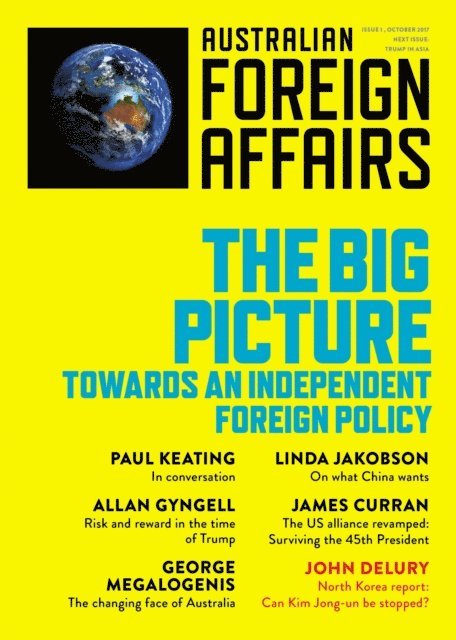
Big Picture
Australian Foreign Affairs; Issue 1
E-bok, 2017
154 kr
Lägg i varukorg
‘We need to determine a foreign policy of our own – one that looks after Australia’s interest in the new order; an order which will have China as its centre of gravity.’ —Paul Keating Australia’s top thinkers on foreign affairs address the most significant foreign affairs dynamics affecting …
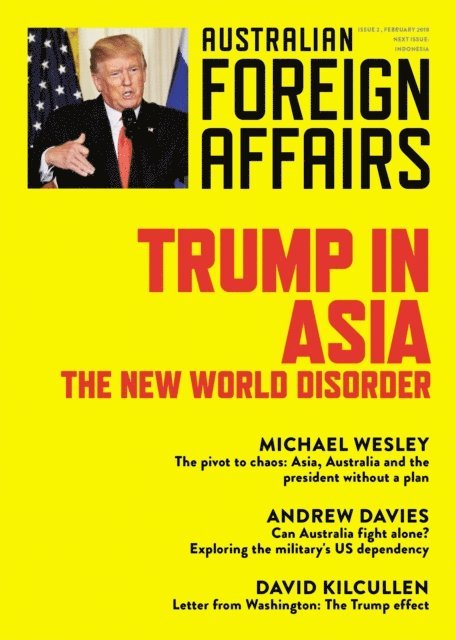
Trump in Asia
Australian Foreign Affairs; Issue 2
E-bok, 2018
144 kr
Lägg i varukorg
The second issue of Australian Foreign Affairs, Trump in Asia , examines the United States’ sudden shift from the Asia Pivot to America First. It provides insights into Donald Trump’s White House and explores how his unpredictable approach to international affairs is affecting the volatile Asian …
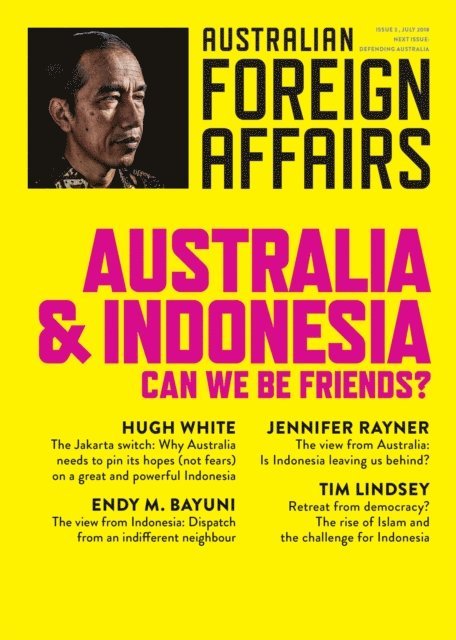
Australia and Indonesia
Australian Foreign Affairs; Issue 3
E-bok, 2018
154 kr
Lägg i varukorg
Feature articles Hugh White : ‘Australia, Overshadowed: Keeping the peace with our rising northern neighbour’ Jen Rayner : ‘The View from Australia: more Jakarta, less condescension’ PLUS ‘The View from Indonesia: How to say “deputy sheriff” in Bahasa Indonesia’ ‘One Country, 18,000 Islands: …
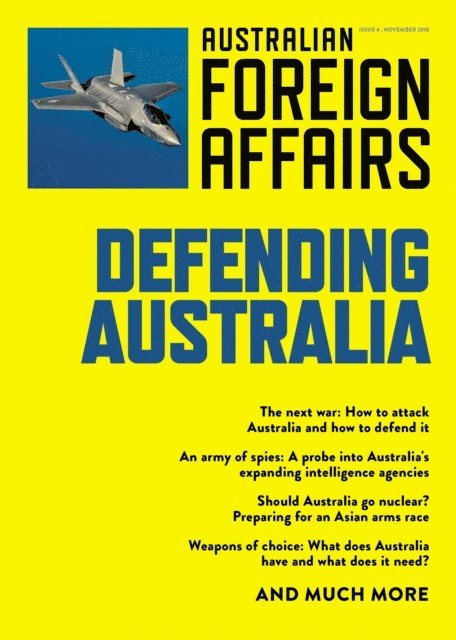
Defending Australia
Australian Foreign Affairs; Issue 4
E-bok, 2018
154 kr
Lägg i varukorg
“Whether we like it or not, the challenge of defending Australia will become much harder in the twenty-first century. We are no longer a strategic backwater.” MICHAEL WESLEY The fourth issue of Australian Foreign Affairs examines the challenge of defending Australia at a time of regional …
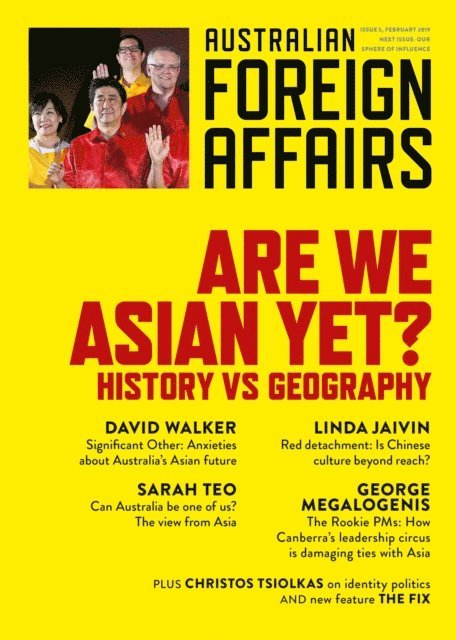
Are We Asian Yet?
Australian Foreign Affairs; Issue 5
E-bok, 2019
154 kr
Lägg i varukorg
“One of Australia’s defining characteristics is the belief that the nation is headed for an Asian future. Destiny allows little room for choice.” DAVID WALKER The fifth issue of Australian Foreign Affairs examines Australia’s struggle to define its place in Asia as it balances its historic ties to …
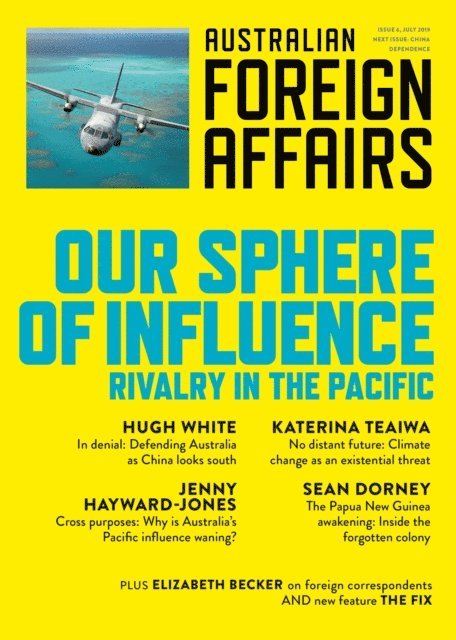
Our Sphere of Influence
Australian Foreign Affairs; Issue 6
E-bok, 2019
154 kr
Lägg i varukorg
The latest issue of Australian Foreign Affairs examines Australia’s struggle to retain influence among its Pacific island neighbours as foreign powers play a greater role and as small nations brace for the impacts of climate change. Australia’s Sphere of Influence explores the security challenges …
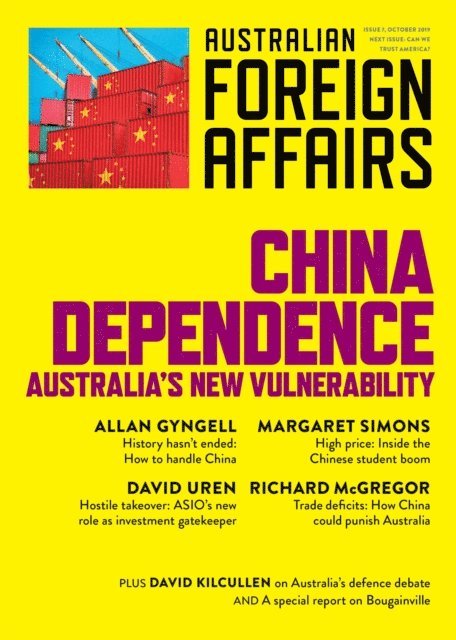
China Dependence
Australia''s New Vulnerability
E-bok, 2019
150 kr
Lägg i varukorg
“There is no Australian future – sunlit or shadowed – in which China will not be central.” ALLAN GYNGELL The seventh issue of Australian Foreign Affairs explores Australia’s status as the most China-dependent country in the developed world, and the potential risks this poses to its future …
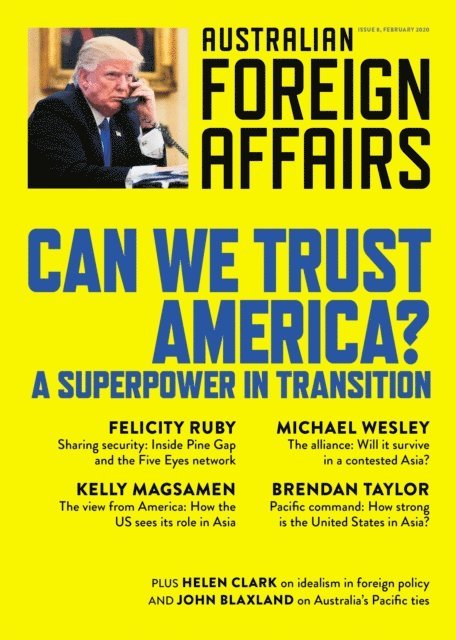
Can We Trust America?
A Superpower in Transition
E-bok, 2020
154 kr
Lägg i varukorg
The eighth issue of Australian Foreign Affairs examines the changing status of the United States as its dominance in the Asia-Pacific faces challenge from China and its “America First” foreign policy marks a shift away from global engagement. Can We Trust America? looks at the uncertainties for …
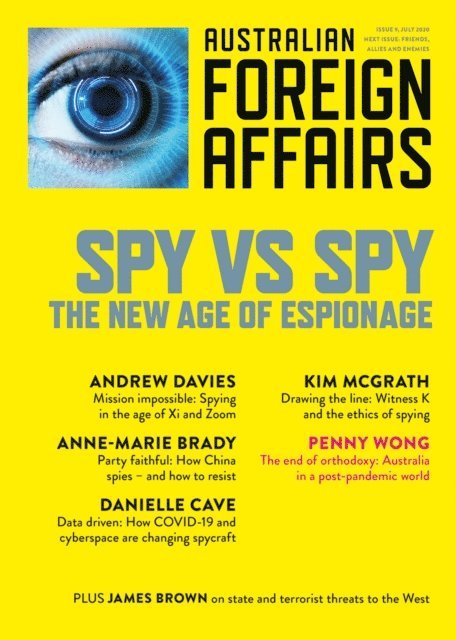
Spy vs Spy
Australia Foreign Affairs 9
E-bok, 2020
154 kr
Lägg i varukorg
The ninth issue of Australian Foreign Affairs explores the rapidly evolving espionage threat facing Australia as changes in technology enable malign actors to target individuals, officials, businesses and infrastructure. Spy vs Spy examines how Australian agencies can defend against this attempt to …
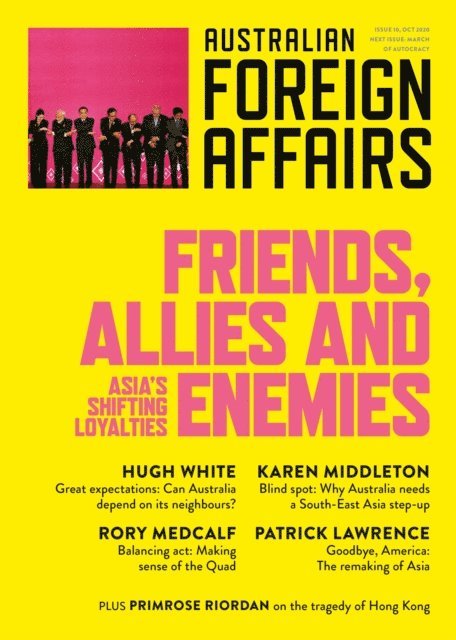
Friends, Allies and Enemies
Asia''s Shifting Loyalties
E-bok, 2020
154 kr
Lägg i varukorg
“These are anxious times. Not since early 1942 have Australians felt so in need of allies, yet been so unsure of their major ally … Canberra is eagerly, even desperately, looking for new protectors.” HUGH WHITE The tenth issue of Australian Foreign Affairs examines the alliances, blocs and …
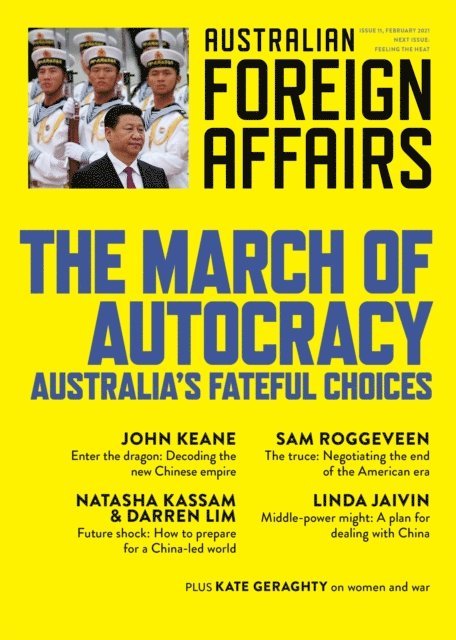
March of Autocracy
Australia''s Fateful Choices
E-bok, 2021
154 kr
Lägg i varukorg
“China is an emergent empire of a kind never seen before . . . It’s not a gunpowder or dreadnought battleship or B-52 bomber empire. It’s an information empire, propelled by commercial interests.” JOHN KEANE The eleventh issue of Australian Foreign Affairs examines the rise of authoritarian and …
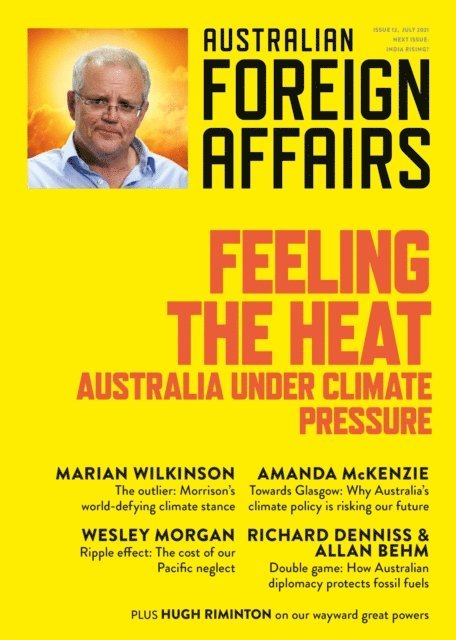
Feeling the Heat
Australia Under Climate Pressure
E-bok, 2021
154 kr
Lägg i varukorg
“Australia’s climate and energy policy is a ‘toxic time bomb’ . . . Now Morrison, feeling the heat from Australia’s allies, from growing numbers in the business community and from a majority of voters, needs to work out how he will handle that bomb.” MARIAN WILKINSON The twelfth issue of Australian …
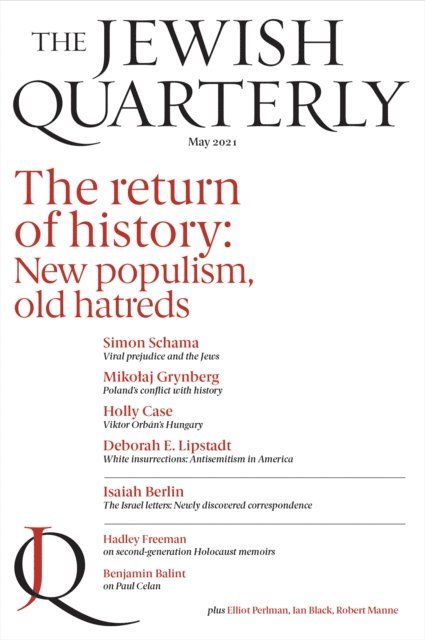
Jewish Quarterly 244 The Return of History
New Populism, Old Hatreds
E-bok, 2021
154 kr
Lägg i varukorg
“For a long time now, the authority of knowledge has been under siege from those who march under the banner of pure belief.” —Simon Schama Welcome to the new JQ. The Return of History investigates rising global populism, and the forces propelling modern nativism and xenophobia. In wide-ranging, …
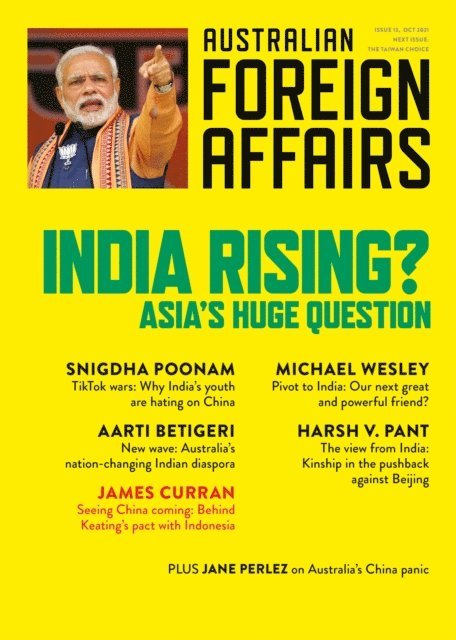
India Rising?
Asia''s Huge Question
E-bok, 2021
154 kr
Lägg i varukorg
Could India, an emerging giant and growing geopolitical player, change the balance of power in the Indo-Pacific? “As Australia’s relationship with China has soured, probably irretrievably, India has emerged as the great new hope.” MICHAEL WESLEY The thirteenth issue of Australian Foreign Affairs …
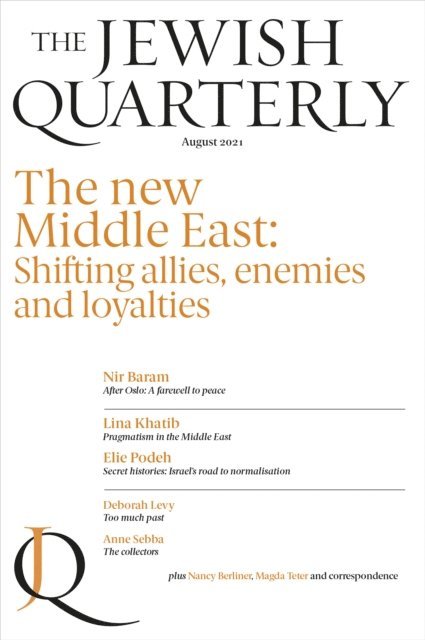
Jewish Quarterly 245 The New Middle East
Shifting allies, enemies and loyalties
E-bok, 2021
154 kr
Lägg i varukorg
“Traditional principles and allegiances have given way to realpolitik.” –Lina Khatib The New Middle East examines the dramatic changes unfolding in the region as new rivalries, blocs and partnerships are formed – based not on ideology, but on pragmatism. In a graceful, elegiac piece, Nir Baram …
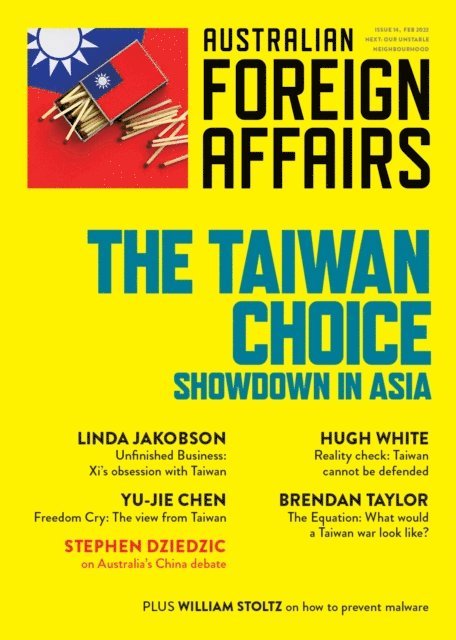
Taiwan Choice
Showdown in Asia
E-bok, 2022
150 kr
Lägg i varukorg
The latest issue of Australian Foreign Affairs examines the rising tensions over the future of Taiwan as China’s pursuit of ‘unification’ pits it against the United States and US allies such as Australia. The Taiwan Choice looks at the growing risk of a catastrophic war and the outlook for …
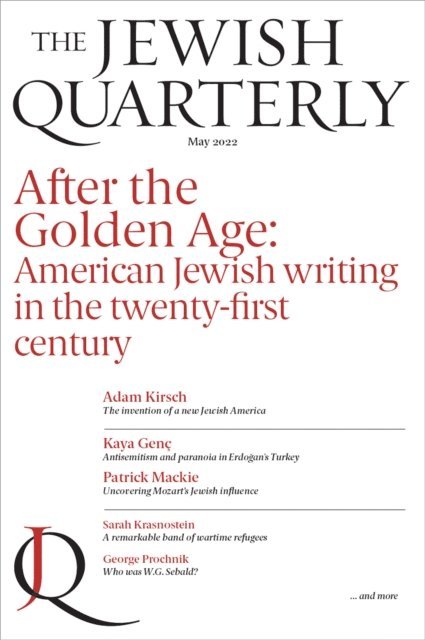
After the Golden Age
American Jewish Writing in the Twenty-First Century; Jewish Quarterly 248
E-bok, 2022
200 kr
Lägg i varukorg
What’s obsessing Jewish American writers today? "Younger writers were freed to think about specifically Jewish questions. [Their] work has a narrower appeal. Only time will tell if it is also a deeper one." —Adam Kirsch After the Golden Age examines the current generation of leading American Jewish …
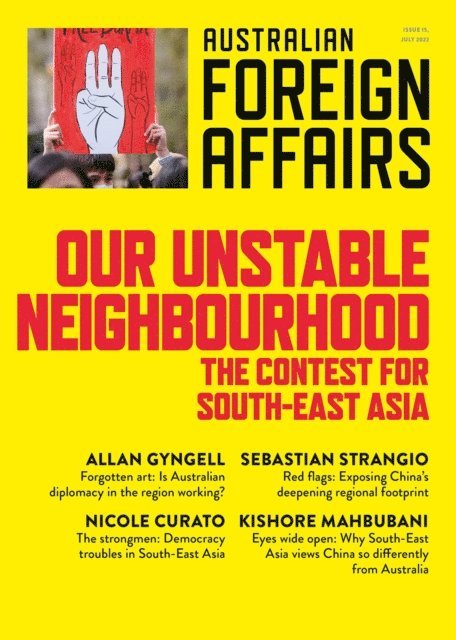
Our Unstable Neighbourhood
The Contest for South-East Asia: Australian Foreign Affairs 57
E-bok, 2022
150 kr
Lägg i varukorg
The latest issue of Australian Foreign Affairs examines the challenges confronting South-East Asia as it finds itself at the epicentre of the rivalry between the United States and China. Our Unstable Neighbourhood looks at the fragile state of democracy and the growing threat of instability in the …
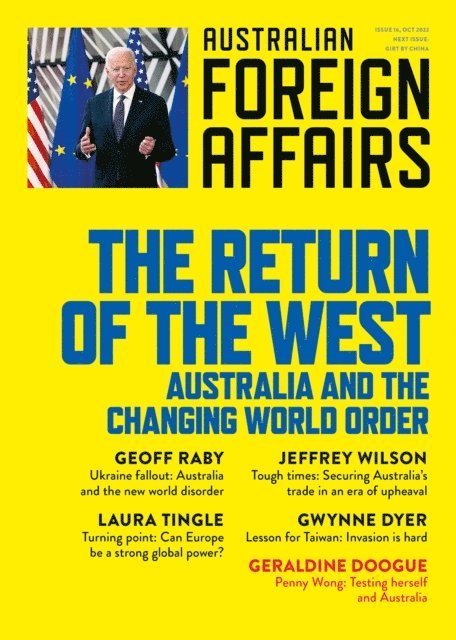
Return of the West
Australia and the Changing World Order: Australian Foreign Affairs 16
E-bok, 2022
154 kr
Lägg i varukorg
How has Russia''s invasion of Ukraine changed the international security, economic and political terrain? “The war in Europe will leave China in a stronger position, as it unifies the West. This is something Canberra has largely failed to recognise.” Geoff Raby The sixteenth issue of Australian …
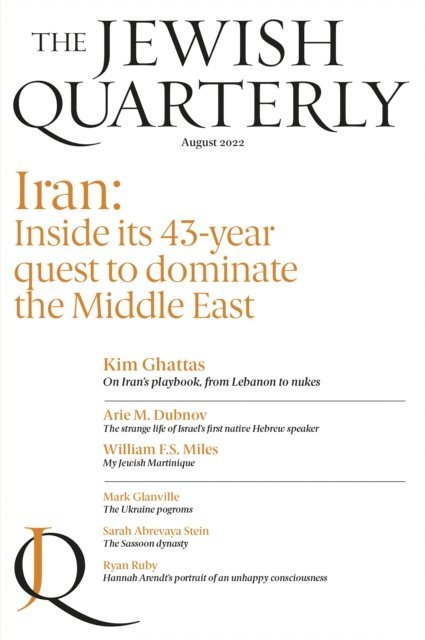
Iran
Inside its 43-year quest to dominate the Middle East; Jewish Quarterly 249
E-bok, 2022
200 kr
Lägg i varukorg
‘Iran's strategy is to eat away at American power, while legitimising its own role as a regional power with nuclear ambitions.’ —Kim Ghattas In this issue of The Jewish Quarterly, renowned writer and analyst Kim Ghattas examines the motivations behind Iran's changing role and influence in the …
Pen and the Sword
Israel, Writing, Politics: Jewish Quarterly 250
E-bok, 2022
200 kr
Lägg i varukorg
Successive generations of Israeli writers have charted the hopes of peace and the pain of conflict. What does the nation''s writing reveal about the challenges of today? “The process of saying goodbye to these two authors, who had been a visible presence in Israeli society for decades, is far from …
Jews of Ukraine
Baal Shem Tov to Zelensky: Jewish Quarterly 251
E-bok, 2023
200 kr
Lägg i varukorg
As war devastates Eastern Europe, the Jews of Ukraine - who have played pivotal roles in modern Jewish culture and Ukrainian political life - face an uncertain future. ‘Ukrainians voted for a mixture of Benny Hill and Boris Johnson, and they somehow wound up with Churchill.’ —Vladislav Davidzon …
Girt by China
Power play in the Pacific: Australian Foreign Affairs 17
E-bok, 2023
154 kr
Lägg i varukorg
What challenges does Australia face as the world''s great powers battle for a foothold in the Pacific? The latest issue of Australian Foreign Affairs examines the growing rivalry and increasing tension in the Pacific as it becomes a stage for a great-power contest to gain influence and a strategic …
AMIA Bombing
An Attack on Argentina''s Jewish Centre in 1994 Killed 85 People. It Remains Unsolved. Why?: Jewish Quarterly 252
E-bok, 2023
200 kr
Lägg i varukorg
The bombing of Argentina''s Jewish centre killed 85 people and devastated a community. Who did it? Who covered it up? Why? This issue of The Jewish Quarterly examines the unresolved questions and political intrigue surrounding the AMIA bombing – a terrorist attack that destroyed the Jewish …
Ivrit
The Language That Makes a People: Jewish Quarterly 253
E-bok, 2023
196 kr
Lägg i varukorg
The story of Hebrew -- its origins, revival and continuing evolution - is the story of a people. "Our religion, our story, is, at its heart, a love of this language and a refusal to let it go."--Ben Judah Ivrit explores the remarkable evolution and revival of Hebrew -- a language whose trajectory …
We Need to Talk about America
An Alliance in Flux: Australian Foreign Affairs 18
E-bok, 2023
154 kr
Lägg i varukorg
The latest issue of Australian Foreign Affairs examines Australia''s evolving ties with the United States as the power balance in Asia changes and as Washington continues to face bitter domestic divides. We Need to Talk about America looks at the future of the alliance in an era in which the US''s …
New Domino Theory
Does China really want to attack Australia?: Australian Foreign Affairs 19
E-bok, 2023
154 kr
Lägg i varukorg
The latest issue of Australian Foreign Affairs examines China''s ultimate goals as an emerging superpower, including the extent of its territorial ambitions. New Domino Theory looks at Australia''s place in China''s long-term plans and at the threat – if any – that Beijing poses to Australian …
Dead in the Water
The AUKUS delusion: Australian Foreign Affairs 20
E-bok, 2024
168 kr
Lägg i varukorg
"Canberra's strategic illusions are the ultimate cause of our AUKUS debacle, but politics is involved too." HUGH WHITE The twentieth issue of Australian Foreign Affairs examines Australia's momentous decision to form a security pact with the United States and the United Kingdom that includes an …
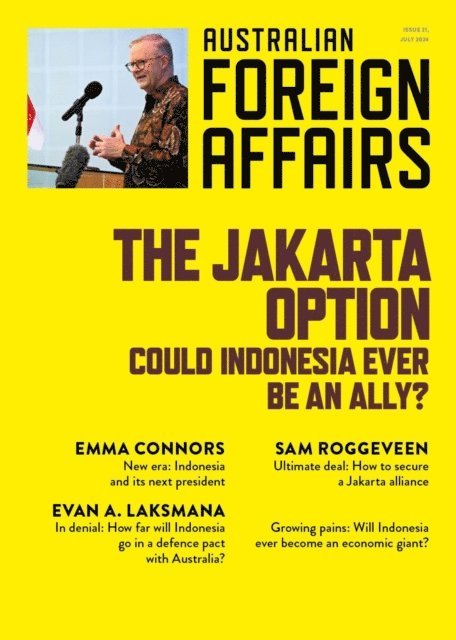
Jakarta Option
Could Indonesia ever be an ally?; Australian Foreign Affairs 21
E-bok, 2024
168 kr
Lägg i varukorg
Canberra and Jakarta face similar threats in a changing Asia. Could this lead to closer ties? "Indonesia's commitment to Cold War–era non-alignment has only been possible because no force was capable of pressuring Jakarta to move beyond it. China may be that force." SAM ROGGEVEEN Canberra and …
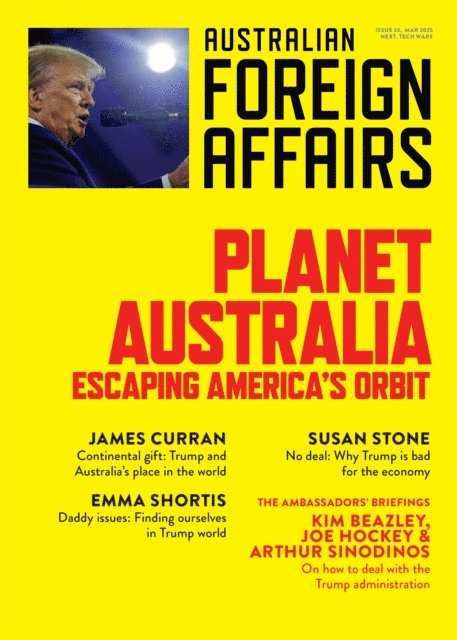
Planet Australia
Escaping America''s Orbit; Australian Foreign Affairs 23
E-bok, 2025
200 kr
Lägg i varukorg
What will America's next president mean for Australia and the world? "Trump's return does not signal an American retreat from the world . . . Rather, it foreshadows a president even more determined to get his way on the world stage, and with fewer voices of caution and restraint around him." JAMES …