Jonathan Pinckney – författare
Visar alla böcker från författaren Jonathan Pinckney. Handla med fri frakt och snabb leverans.
6 produkter
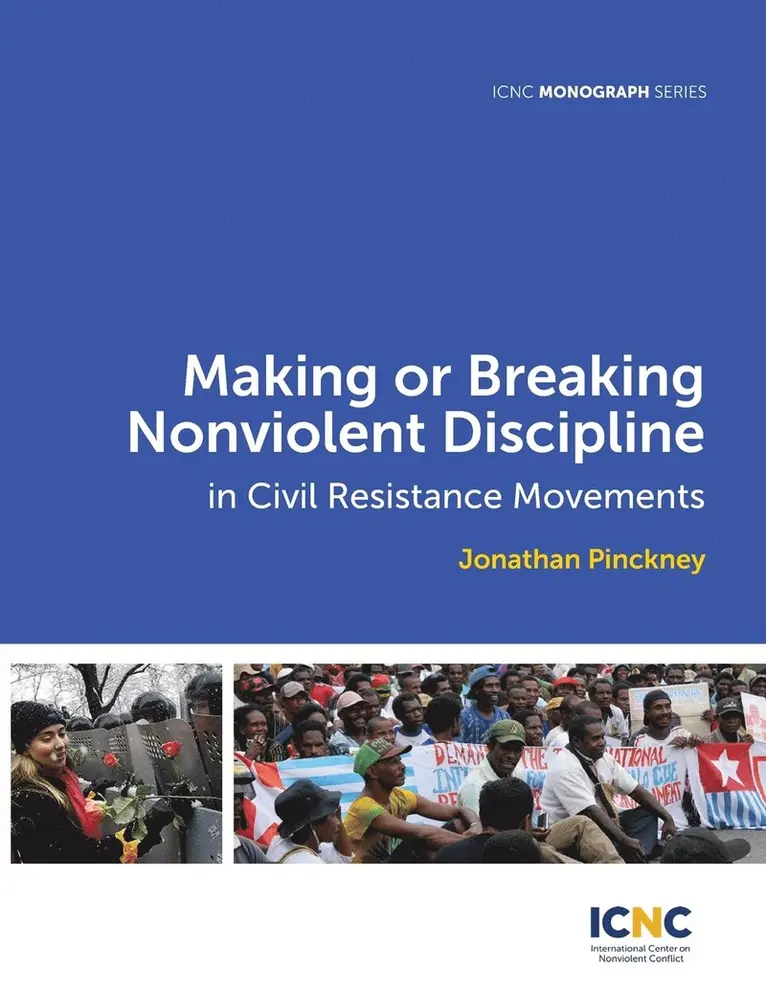
Making or Breaking Nonviolent Discipline in Civil Resistance Movements
Häftad, 2016
143 kr
Lägg i varukorg
When Civil Resistance Succeeds
Building Democracy After Nonviolent Uprisings
Av Jonathan Pinckney, Maciej Bartkowski m. fl.
Häftad, 2018
140 kr
Lägg i varukorg
How to Win Well
Civil Resistance Breakthroughs and the Path to Democracy
Häftad, 2021
96 kr
Lägg i varukorg
Making or Breaking Nonviolent Discipline in Civil Resistance Movements
E-bok, 2016
63 kr
Lägg i varukorg
How can we understand — when nonviolent movements will stay nonviolent? When are they likely to break down into violence? In this monograph, Jonathan Pinckney analyzes both what promotes and undermines nonviolent discipline in civil resistance movements. Combining quantitative research on thousands …
When Civil Resistance Succeeds
Building Democracy After Nonviolent Uprisings
Av Jonathan Pinckney, Amber French m. fl.
E-bok, 2018
66 kr
Lägg i varukorg
Why do some nonviolent revolutions lead to successful democratization while others fail to consolidate democratic change? And what can activists do to push toward a victory over dictatorship that results in long-term political freedom? When Civil Resistance Succeeds: Building Democracy After …
How to Win Well
Civil Resistance Breakthroughs and the Path to Democracy
E-bok, 2021
66 kr
Lägg i varukorg
Civil resistance is one of the most powerful forces for moving countries from dictatorship to democracy. Yet many civil resistance campaigns, even when they achieve a breakthrough against their authoritarian opponents, fail to result in high-quality new democratic regimes. I argue that one key …