
Jorge Alberto Calvo – författare
Visar alla böcker från författaren . Handla med fri frakt och snabb leverans.
3 produkter
3 produkter
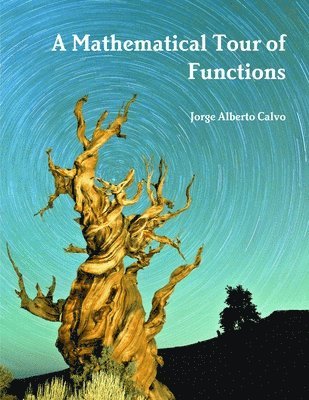
Häftad, Engelska, 2013
437 kr
Skickas inom 5-8 vardagar
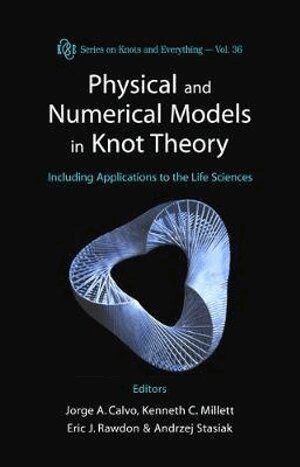
Del 36 - Series on Knots & Everything
Physical And Numerical Models In Knot Theory: Including Applications To The Life Sciences
Inbunden, Engelska, 2005
2 665 kr
Skickas inom 11-20 vardagar
The physical properties of knotted and linked configurations in space have long been of interest to mathematicians. More recently, these properties have become significant to biologists, physicists, and engineers among others. Their depth of importance and breadth of application are now widely appreciated and valuable progress continues to be made each year.This volume presents several contributions from researchers using computers to study problems that would otherwise be intractable. While computations have long been used to analyze problems, formulate conjectures, and search for special structures in knot theory, increased computational power has made them a staple in many facets of the field. The volume also includes contributions concentrating on models researchers use to understand knotting, linking, and entanglement in physical and biological systems. Topics include properties of knot invariants, knot tabulation, studies of hyperbolic structures, knot energies, the exploration of spaces of knots, knotted umbilical cords, studies of knots in DNA and proteins, and the structure of tight knots. Together, the chapters explore four major themes: physical knot theory, knot theory in the life sciences, computational knot theory, and geometric knot theory.
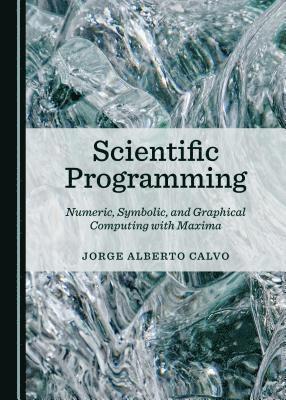
Inbunden, Engelska, 2018
1 575 kr
Tillfälligt slut
This book offers an introduction to computer programming, numerical analysis, and other mathematical ideas that extend the basic topics learned in calculus. It illustrates how mathematicians and scientists write computer programs, covering the general building blocks of programming languages and a description of how these concepts fit together to allow computers to produce the results they do. Topics explored here include binary arithmetic, algorithms for rendering graphics, the smooth interpolation of discrete data, and the numerical approximation of non-elementary integrals. The book uses an open-source computer algebra system called Maxima. Using Maxima, first-time programmers can perform familiar tasks, such as graphing functions or solving equations, and learn the basic structures of programming before moving on to other popular programming languages. The epilogue provides some simple examples of how this process works in practice. The book will particularly appeal to students who have finished their calculus sequence.