Jorge Ancheyta – författare
727 kr
Skickas inom 10-15 vardagar
1 718 kr
Skickas inom 5-8 vardagar
2 009 kr
Läs direkt efter köp
3 607 kr
Skickas inom 10-15 vardagar
2 942 kr
Läs direkt efter köp
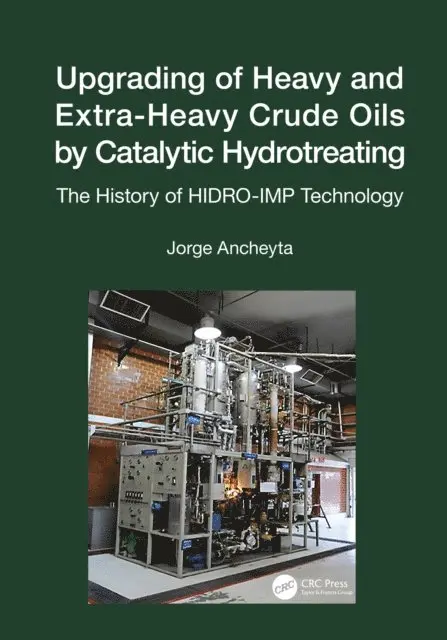
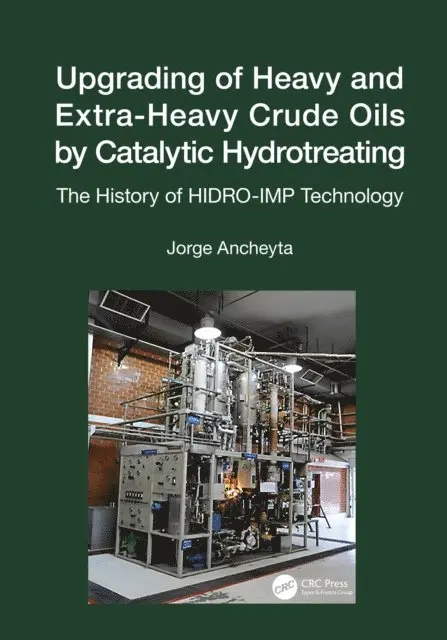
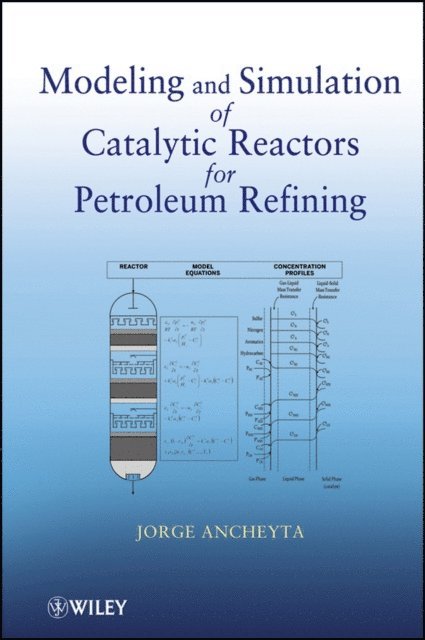
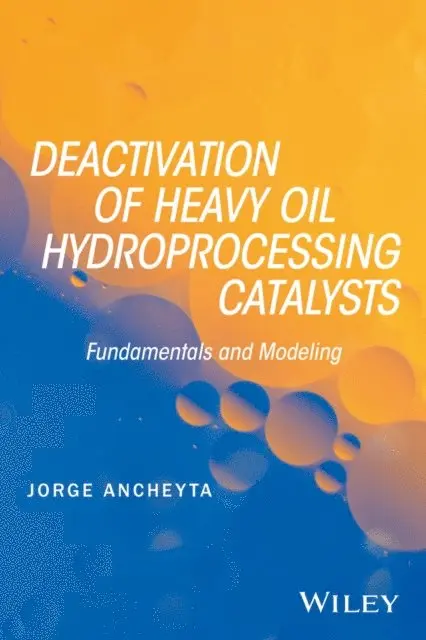
This book explores the common approaches to upgrade heavy and extra-heavy crude oils by means of catalytic hydrotreating, emphasizing hydrogen addition technology as well as carbon rejection alternatives. Kinetic and reactor models are combined with experimental data to simulate and optimize commercial-scale reactor performance.
Key Features• Focuses on fixed-bed catalytic hydrotreating and catalysts and process scheme characteristics for commercial application.• Guides readers on hydrotreating process technology development from batch reactor experiments to semi-commercial test.• Describes step-by-step methodologies for development of kinetic models based on experimental data generated at different reaction scales.• Provides detailed explanation on how to formulate a reactor model for the simulation of catalytic hydrotreating of heavy oils.
A comprehensive guide to the upgrading of crude oils, this book has particular appeal for petroleum refining industry professionals, catalyst developers, workshop instructors, professors, and their graduate and postgraduate students.
2 942 kr
Läs direkt efter köp
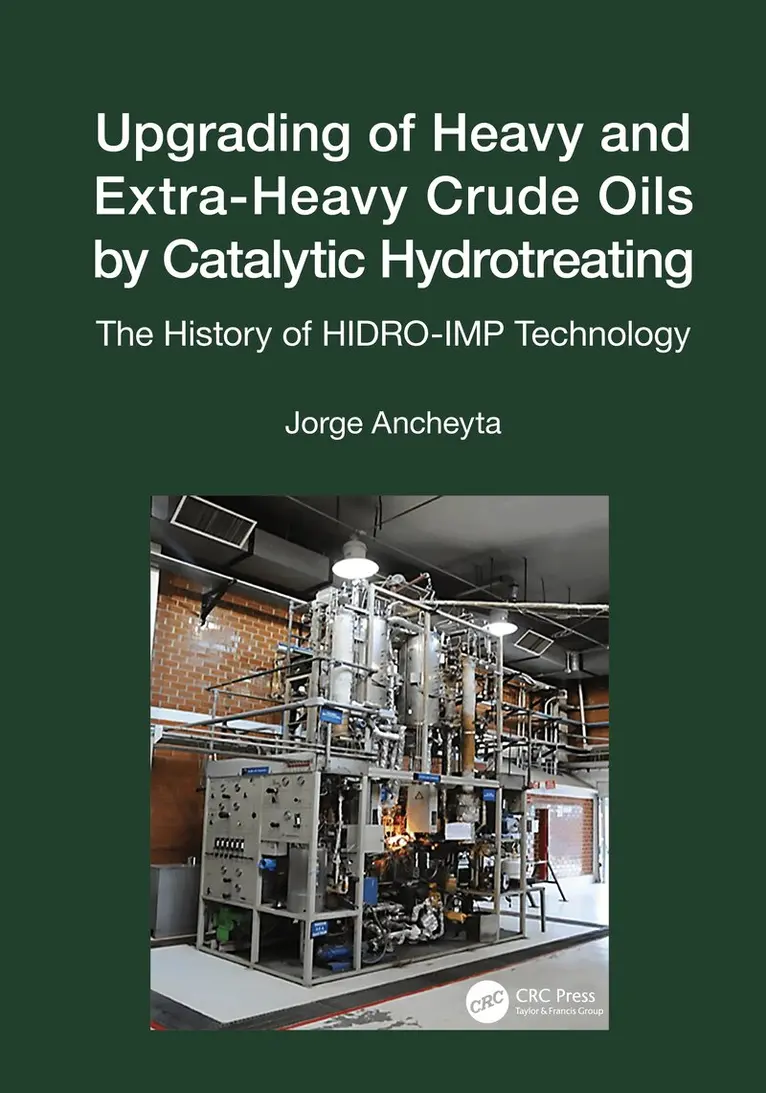
This book explores the common approaches to upgrade heavy and extra-heavy crude oils by means of catalytic hydrotreating, emphasizing hydrogen addition technology as well as carbon rejection alternatives. Kinetic and reactor models are combined with experimental data to simulate and optimize commercial-scale reactor performance.
Key Features• Focuses on fixed-bed catalytic hydrotreating and catalysts and process scheme characteristics for commercial application.• Guides readers on hydrotreating process technology development from batch reactor experiments to semi-commercial test.• Describes step-by-step methodologies for development of kinetic models based on experimental data generated at different reaction scales.• Provides detailed explanation on how to formulate a reactor model for the simulation of catalytic hydrotreating of heavy oils.
A comprehensive guide to the upgrading of crude oils, this book has particular appeal for petroleum refining industry professionals, catalyst developers, workshop instructors, professors, and their graduate and postgraduate students.
2 661 kr
Skickas inom 10-15 vardagar
967 kr
Skickas inom 10-15 vardagar
3 362 kr
Läs direkt efter köp
1 395 kr
Läs direkt efter köp
828 kr
Läs direkt efter köp
1 977 kr
Läs direkt efter köp
2 025 kr
Läs direkt efter köp
1 759 kr
Skickas inom 5-8 vardagar
2 025 kr
Läs direkt efter köp
1 080 kr
Skickas inom 5-8 vardagar
1 250 kr
Läs direkt efter köp
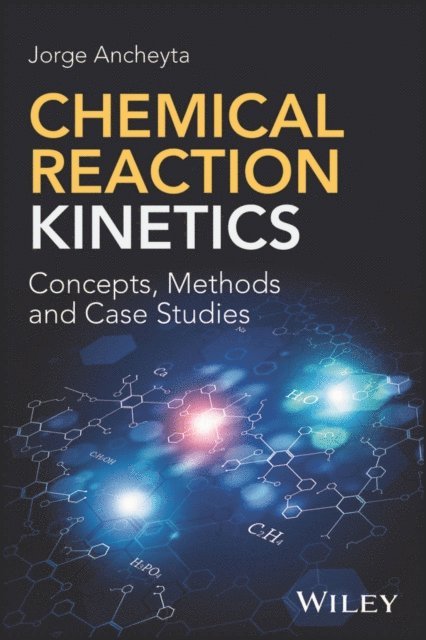
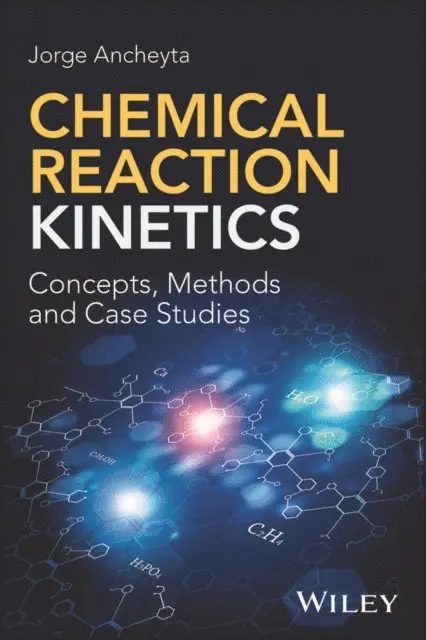
A practical approach to chemical reaction kinetics—from basic concepts to laboratory methods—featuring numerous real-world examples and case studies
This book focuses on fundamental aspects of reaction kinetics with an emphasis on mathematical methods for analyzing experimental data and interpreting results. It describes basic concepts of reaction kinetics, parameters for measuring the progress of chemical reactions, variables that affect reaction rates, and ideal reactor performance. Mathematical methods for determining reaction kinetic parameters are described in detail with the help of real-world examples and fully-worked step-by-step solutions. Both analytical and numerical solutions are exemplified. The book begins with an introduction to the basic concepts of stoichiometry, thermodynamics, and chemical kinetics. This is followed by chapters featuring in-depth discussions of reaction kinetics; methods for studying irreversible reactions with one, two and three components; reversible reactions; and complex reactions. In the concluding chapters the author addresses reaction mechanisms, enzymatic reactions, data reconciliation, parameters, and examples of industrial reaction kinetics. Throughout the book industrial case studies are presented with step-by-step solutions, and further problems are provided at the end of each chapter.
Takes a practical approach to chemical reaction kinetics basic concepts and methods Features numerous illustrative case studies based on the author’s extensive experience in the industry Provides essential information for chemical and process engineers, catalysis researchers, and professionals involved in developing kinetic models Functions as a student textbook on the basic principles of chemical kinetics for homogeneous catalysis Describes mathematical methods to determine reaction kinetic parameters with the help of industrial case studies, examples, and step-by-step solutionsChemical Reaction Kinetics is a valuable working resource for academic researchers, scientists, engineers, and catalyst manufacturers interested in kinetic modeling, parameter estimation, catalyst evaluation, process development, reactor modeling, and process simulation. It is also an ideal textbook for undergraduate and graduate-level courses in chemical kinetics, homogeneous catalysis, chemical reaction engineering, and petrochemical engineering, biotechnology.
1 250 kr
Läs direkt efter köp
A practical approach to chemical reaction kinetics—from basic concepts to laboratory methods—featuring numerous real-world examples and case studies
This book focuses on fundamental aspects of reaction kinetics with an emphasis on mathematical methods for analyzing experimental data and interpreting results. It describes basic concepts of reaction kinetics, parameters for measuring the progress of chemical reactions, variables that affect reaction rates, and ideal reactor performance. Mathematical methods for determining reaction kinetic parameters are described in detail with the help of real-world examples and fully-worked step-by-step solutions. Both analytical and numerical solutions are exemplified. The book begins with an introduction to the basic concepts of stoichiometry, thermodynamics, and chemical kinetics. This is followed by chapters featuring in-depth discussions of reaction kinetics; methods for studying irreversible reactions with one, two and three components; reversible reactions; and complex reactions. In the concluding chapters the author addresses reaction mechanisms, enzymatic reactions, data reconciliation, parameters, and examples of industrial reaction kinetics. Throughout the book industrial case studies are presented with step-by-step solutions, and further problems are provided at the end of each chapter.
Takes a practical approach to chemical reaction kinetics basic concepts and methods Features numerous illustrative case studies based on the author’s extensive experience in the industry Provides essential information for chemical and process engineers, catalysis researchers, and professionals involved in developing kinetic models Functions as a student textbook on the basic principles of chemical kinetics for homogeneous catalysis Describes mathematical methods to determine reaction kinetic parameters with the help of industrial case studies, examples, and step-by-step solutionsChemical Reaction Kinetics is a valuable working resource for academic researchers, scientists, engineers, and catalyst manufacturers interested in kinetic modeling, parameter estimation, catalyst evaluation, process development, reactor modeling, and process simulation. It is also an ideal textbook for undergraduate and graduate-level courses in chemical kinetics, homogeneous catalysis, chemical reaction engineering, and petrochemical engineering, biotechnology.
2 003 kr
Skickas inom 5-8 vardagar
2 325 kr
Läs direkt efter köp
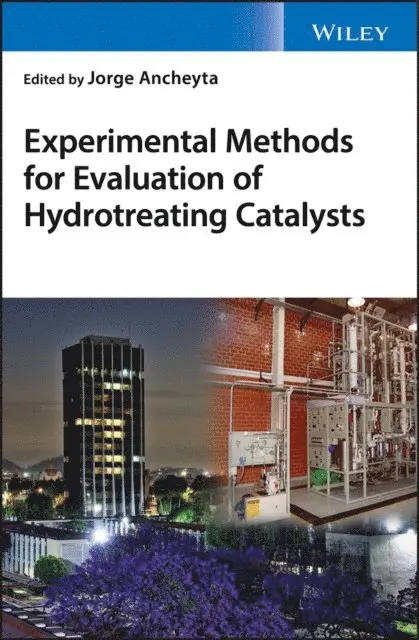
Presents detailed information and study cases on experiments on hydrotreating catalysts for the petroleum industry
Catalytic hydrotreating (HDT) is a process used in the petroleum refining industry for upgrading hydrocarbon streams—removing impurities, eliminating metals, converting asphaltene molecules, and hydrocracking heavy fractions. The major applications of HDT in refinery operations include feed pretreatment for conversion processes, post-hydrotreating distillates, and upgrading heavy crude oils. Designing HDT processes and catalysts for successful commercial application requires experimental studies based on appropriate methodologies. Experimental Methods for Evaluation of Hydrotreating Catalysts provides detailed descriptions of experiments in different reaction scales for studying the hydrotreating of various petroleum distillates.
Emphasizing step-by-step methodologies in each level of experimentation, this comprehensive volume presents numerous examples of evaluation methods, operating conditions, reactor and catalyst types, and process configurations. In-depth chapters describe experimental setup and procedure, analytical methods, calculations, testing and characterization of catalyst and liquid products, and interpretation of experiment data and results. The text describes experimental procedure at different levels of experimentation—glass reactor, batch reactor, continuous stirred tank reactor, and multiple scales of tubular reactors—using model compounds, middle distillates and heavy oil. This authoritative volume:
Introduces experimental setups used for conducting research studies, such as type of operation, selection of reactor, and analysis of products Features examples focused on the evaluation of different reaction parameters and catalysts with a variety of petroleum feedstocks Provides experimental data collected from different reaction scales Includes experiments for determining mass transfer limitations and deviation from ideality of flow pattern Presents contributions from leading scientists and researchers in the field of petroleum refiningExperimental Methods for Evaluation of Hydrotreating Catalysts is an indispensable reference for researchers and professionals working in the area of catalytic hydrotreating, as well as an ideal textbook for courses in fields such as chemical engineering, petrochemical engineering, and biotechnology.
2 325 kr
Läs direkt efter köp
Presents detailed information and study cases on experiments on hydrotreating catalysts for the petroleum industry
Catalytic hydrotreating (HDT) is a process used in the petroleum refining industry for upgrading hydrocarbon streams—removing impurities, eliminating metals, converting asphaltene molecules, and hydrocracking heavy fractions. The major applications of HDT in refinery operations include feed pretreatment for conversion processes, post-hydrotreating distillates, and upgrading heavy crude oils. Designing HDT processes and catalysts for successful commercial application requires experimental studies based on appropriate methodologies. Experimental Methods for Evaluation of Hydrotreating Catalysts provides detailed descriptions of experiments in different reaction scales for studying the hydrotreating of various petroleum distillates.
Emphasizing step-by-step methodologies in each level of experimentation, this comprehensive volume presents numerous examples of evaluation methods, operating conditions, reactor and catalyst types, and process configurations. In-depth chapters describe experimental setup and procedure, analytical methods, calculations, testing and characterization of catalyst and liquid products, and interpretation of experiment data and results. The text describes experimental procedure at different levels of experimentation—glass reactor, batch reactor, continuous stirred tank reactor, and multiple scales of tubular reactors—using model compounds, middle distillates and heavy oil. This authoritative volume:
Introduces experimental setups used for conducting research studies, such as type of operation, selection of reactor, and analysis of products Features examples focused on the evaluation of different reaction parameters and catalysts with a variety of petroleum feedstocks Provides experimental data collected from different reaction scales Includes experiments for determining mass transfer limitations and deviation from ideality of flow pattern Presents contributions from leading scientists and researchers in the field of petroleum refiningExperimental Methods for Evaluation of Hydrotreating Catalysts is an indispensable reference for researchers and professionals working in the area of catalytic hydrotreating, as well as an ideal textbook for courses in fields such as chemical engineering, petrochemical engineering, and biotechnology.
2 538 kr
Skickas inom 5-8 vardagar
2 870 kr
Läs direkt efter köp
A comprehensive guide to a cutting-edge and cost-effective refinement process for heavy oil
Oil sufficiently viscous that it cannot flow normally from production wells is called heavy oil and constitutes as much as 70% of global oil reserves. Extracting and refining this oil can pose significant challenges, including very high transportation costs. As a result, processes which produce and partially refine heavy oil in situ, known as catalytic upgrading, are an increasingly important part of the heavy oil extraction process, and the reduced carbon footprint associated with these methods promises to make them even more significant in the coming years.
Catalytic In-Situ Upgrading of Heavy and Extra-Heavy Crude Oils provides a comprehensive introduction to these processes. It introduces the properties and characteristics of heavy and extra-heavy oil before discussing different catalysts and catalyzing processes, their mechanisms and underlying physics, and more. It offers the full sweep of description and analysis required for petroleum and chemical engineers to understand this vital aspect of the modern oil industry.
Readers will also find:
Detailed discussion of subjects including electron paramagnetic resonance spectroscopy, nuclear magnetic resonance spectroscopy, and more Analysis of both liquid catalysts and nanoparticle catalysts A numerical simulation of the catalytic in-situ oil upgrading processCatalytic In-Situ Upgrading of Heavy and Extra-Heavy Crude Oils is a valuable reference for petroleum and chemical engineers as well as advanced undergraduate and graduate students in related fields.
2 974 kr
Läs direkt efter köp
A comprehensive guide to a cutting-edge and cost-effective refinement process for heavy oil
Oil sufficiently viscous that it cannot flow normally from production wells is called heavy oil and constitutes as much as 70% of global oil reserves. Extracting and refining this oil can pose significant challenges, including very high transportation costs. As a result, processes which produce and partially refine heavy oil in situ, known as catalytic upgrading, are an increasingly important part of the heavy oil extraction process, and the reduced carbon footprint associated with these methods promises to make them even more significant in the coming years.
Catalytic In-Situ Upgrading of Heavy and Extra-Heavy Crude Oils provides a comprehensive introduction to these processes. It introduces the properties and characteristics of heavy and extra-heavy oil before discussing different catalysts and catalyzing processes, their mechanisms and underlying physics, and more. It offers the full sweep of description and analysis required for petroleum and chemical engineers to understand this vital aspect of the modern oil industry.
Readers will also find:
Detailed discussion of subjects including electron paramagnetic resonance spectroscopy, nuclear magnetic resonance spectroscopy, and more Analysis of both liquid catalysts and nanoparticle catalysts A numerical simulation of the catalytic in-situ oil upgrading processCatalytic In-Situ Upgrading of Heavy and Extra-Heavy Crude Oils is a valuable reference for petroleum and chemical engineers as well as advanced undergraduate and graduate students in related fields.
1 179 kr
Skickas inom 10-15 vardagar
1 953 kr
Skickas inom 5-8 vardagar
2 278 kr
Läs direkt efter köp
Master the fundamentals of reaction systems modeling for the age of decarbonization
Reactor design is one of the most important parts of the oil and gas industry, with reactor processes and the accompanying technologies constantly evolving to meet industry needs. A crucial component of effective reactor design is modelling complex reaction systems, which can help predict commercial performance, shape safety procedures, and more. At a time when decarbonization and clean energy transition are among the fundamental global technological challenges, it has never been more important for engineers to grasp the cutting edge of reaction system modelling.
Mathematical Modeling of Complex Reaction Systems in the Oil and Gas Industry provides a systematic introduction to this timely subject. Each chapter provides a step-by-step description of the kinetic and reactor models for a particular kind of process and its accompanying systems. Backed by voluminous experimental data and incorporating extensive simulation results, the book constitutes an indispensable contribution to the global search for clean energy solutions.
Mathematical Modeling of Complex Reaction Systems in the Oil and Gas Industry readers will also find:
All the required tools for developing new reactor models for different reaction scales Detailed discussion of topics including hydrocracking of heavy oils, catalyst deactivation, oxidative regeneration of catalysts, and many more Extensive treatment of both steady-state and dynamic simulationsMathematical Modeling of Complex Reaction Systems in the Oil and Gas Industry is ideal for chemical and process engineers, computational chemists and modelers, catalysis researchers, and any other researchers or professionals in petrochemical engineering and the oil and gas industry.
2 278 kr
Läs direkt efter köp
Master the fundamentals of reaction systems modeling for the age of decarbonization
Reactor design is one of the most important parts of the oil and gas industry, with reactor processes and the accompanying technologies constantly evolving to meet industry needs. A crucial component of effective reactor design is modelling complex reaction systems, which can help predict commercial performance, shape safety procedures, and more. At a time when decarbonization and clean energy transition are among the fundamental global technological challenges, it has never been more important for engineers to grasp the cutting edge of reaction system modelling.
Mathematical Modeling of Complex Reaction Systems in the Oil and Gas Industry provides a systematic introduction to this timely subject. Each chapter provides a step-by-step description of the kinetic and reactor models for a particular kind of process and its accompanying systems. Backed by voluminous experimental data and incorporating extensive simulation results, the book constitutes an indispensable contribution to the global search for clean energy solutions.
Mathematical Modeling of Complex Reaction Systems in the Oil and Gas Industry readers will also find:
All the required tools for developing new reactor models for different reaction scales Detailed discussion of topics including hydrocracking of heavy oils, catalyst deactivation, oxidative regeneration of catalysts, and many more Extensive treatment of both steady-state and dynamic simulationsMathematical Modeling of Complex Reaction Systems in the Oil and Gas Industry is ideal for chemical and process engineers, computational chemists and modelers, catalysis researchers, and any other researchers or professionals in petrochemical engineering and the oil and gas industry.
858 kr
Läs direkt efter köp
3 183 kr
Skickas inom 10-15 vardagar